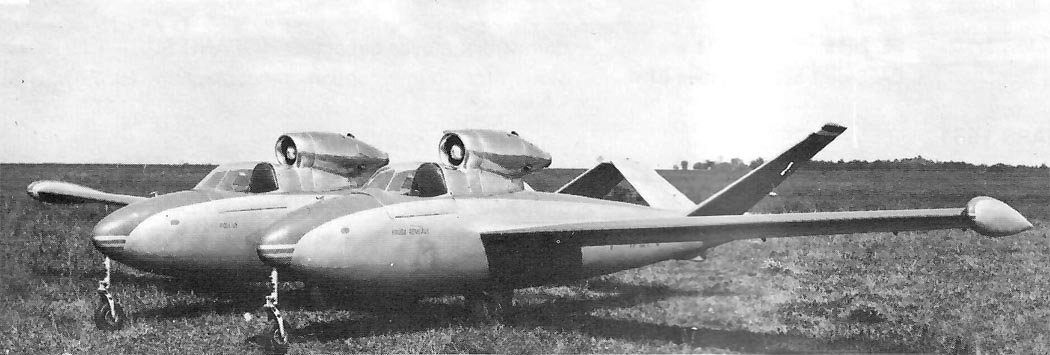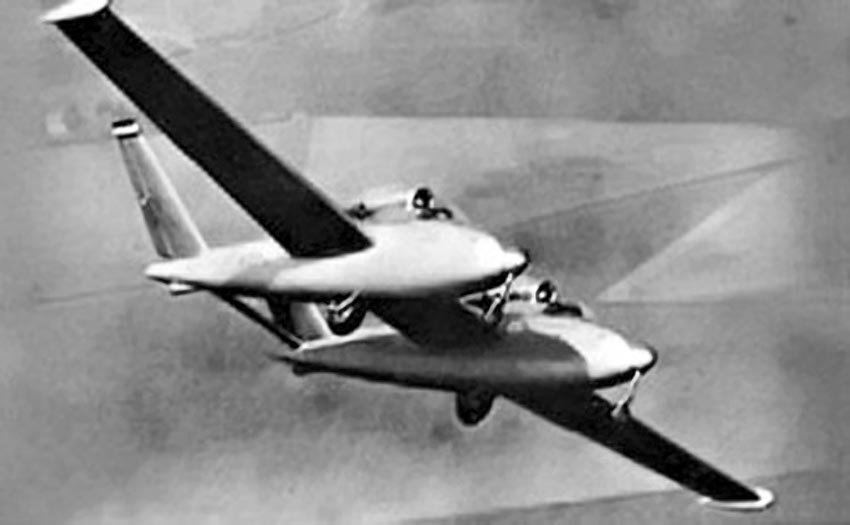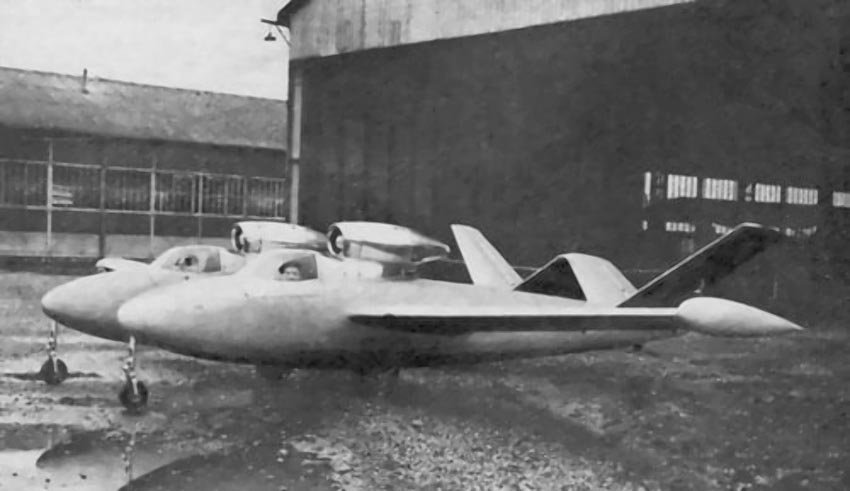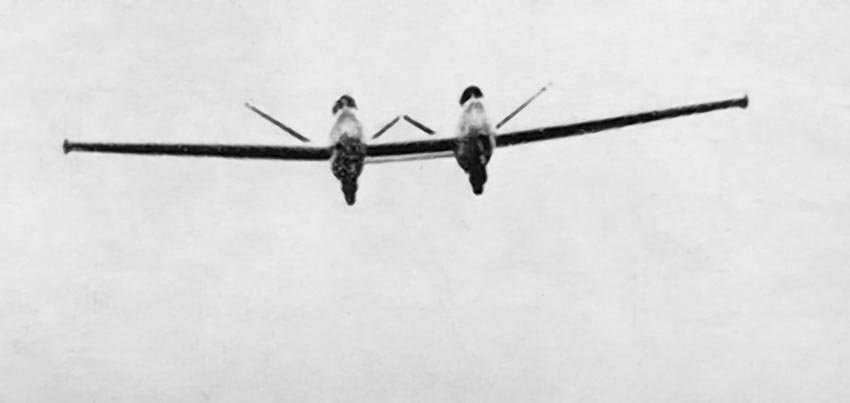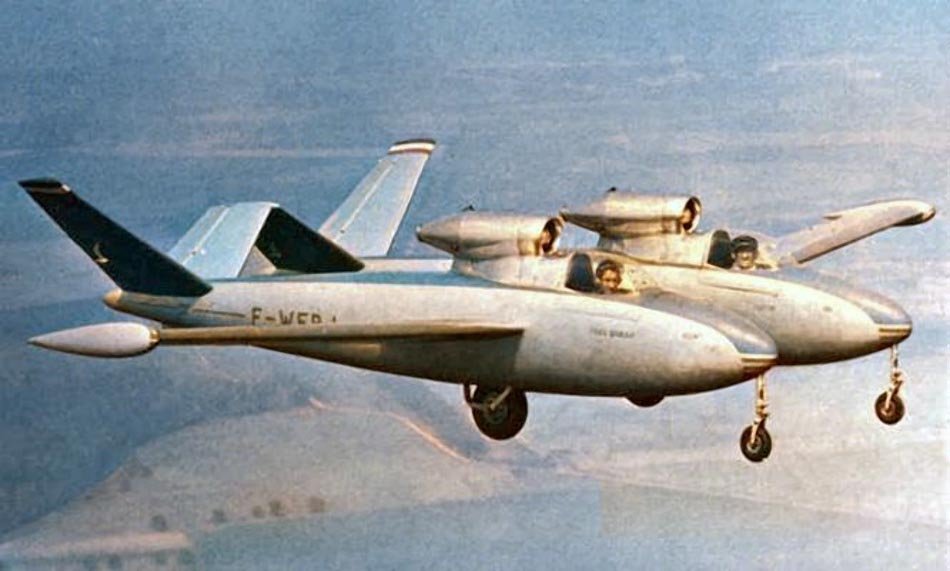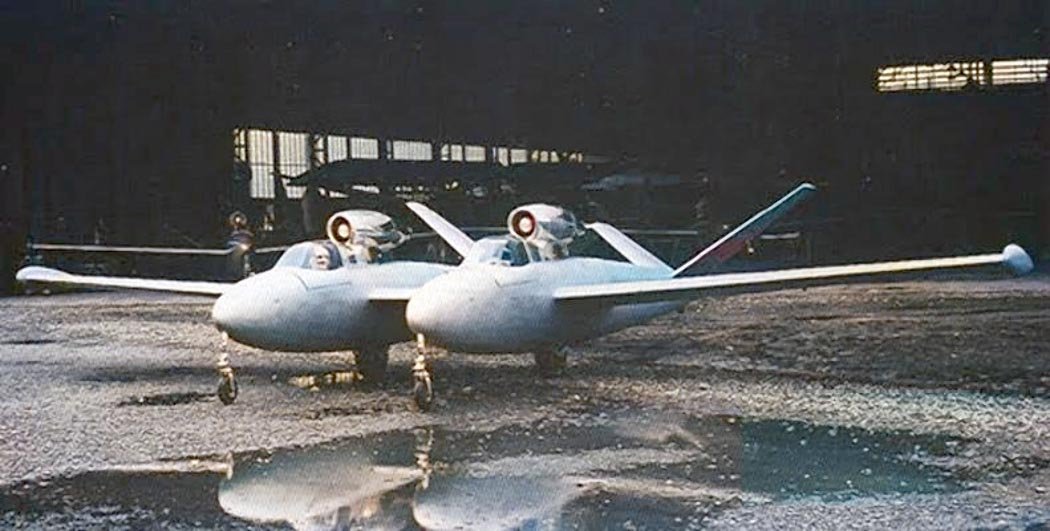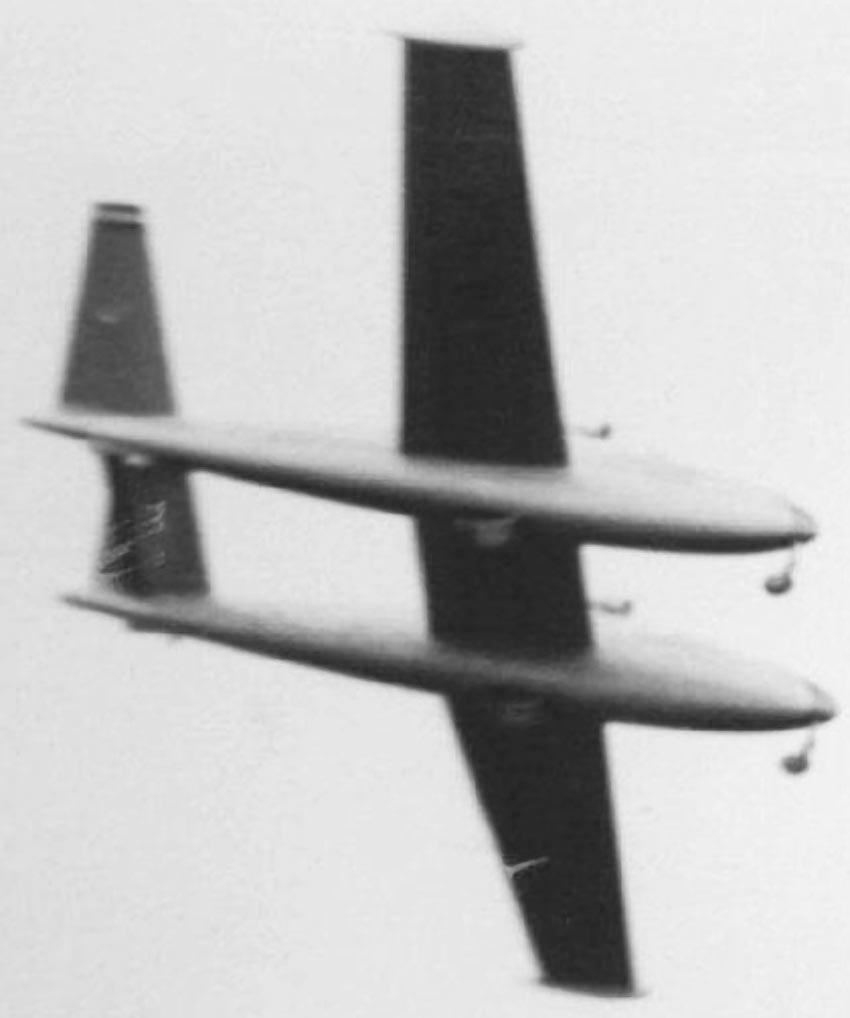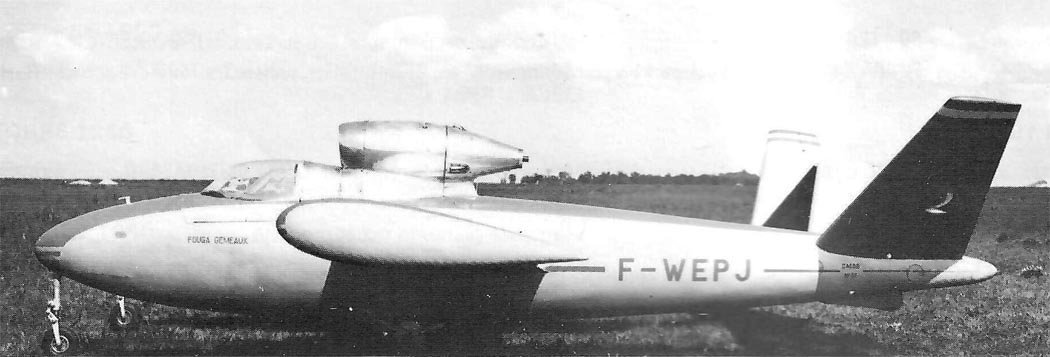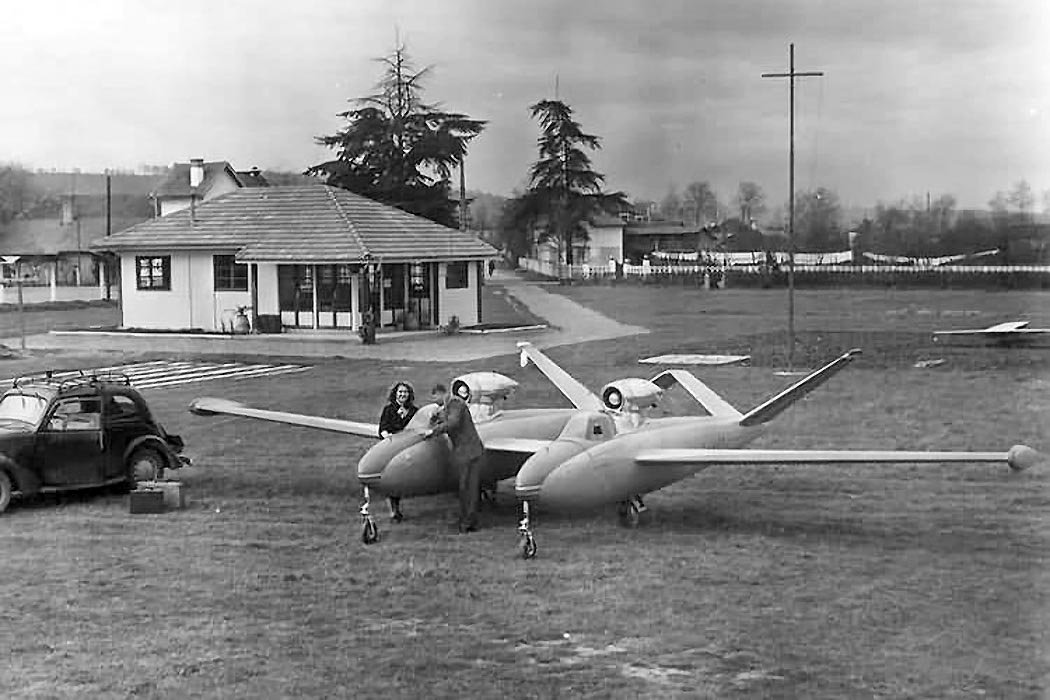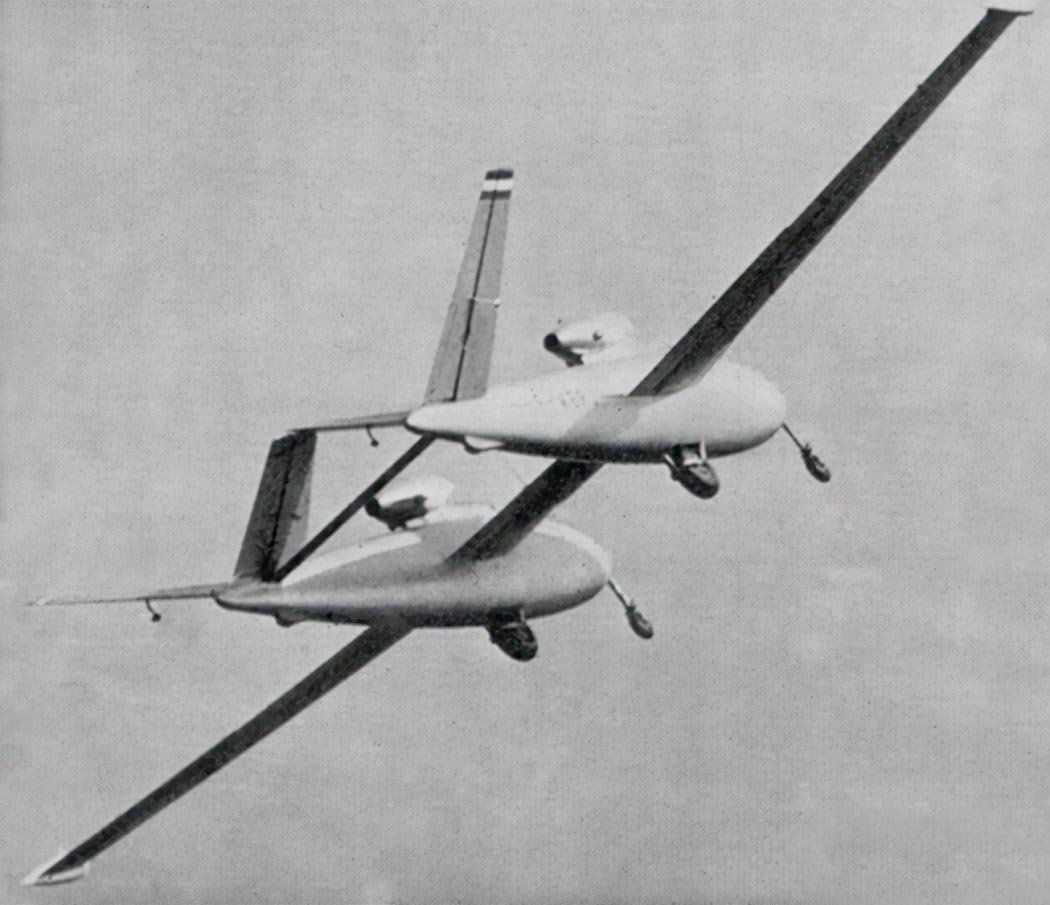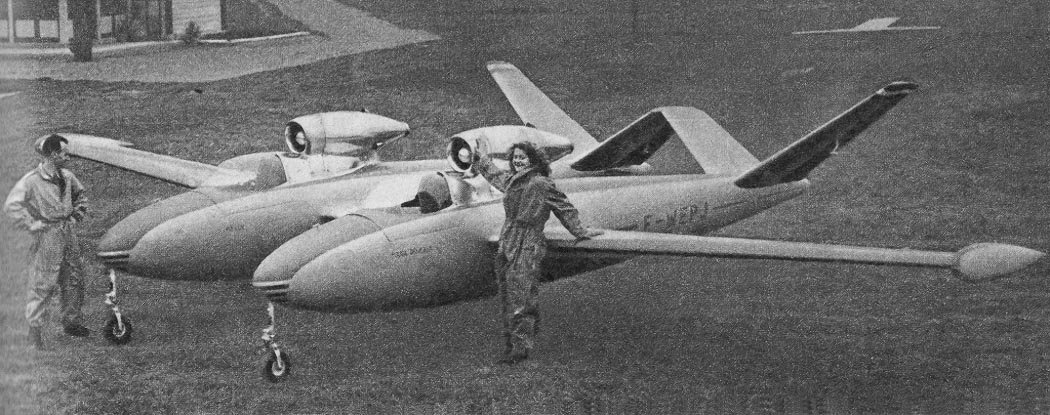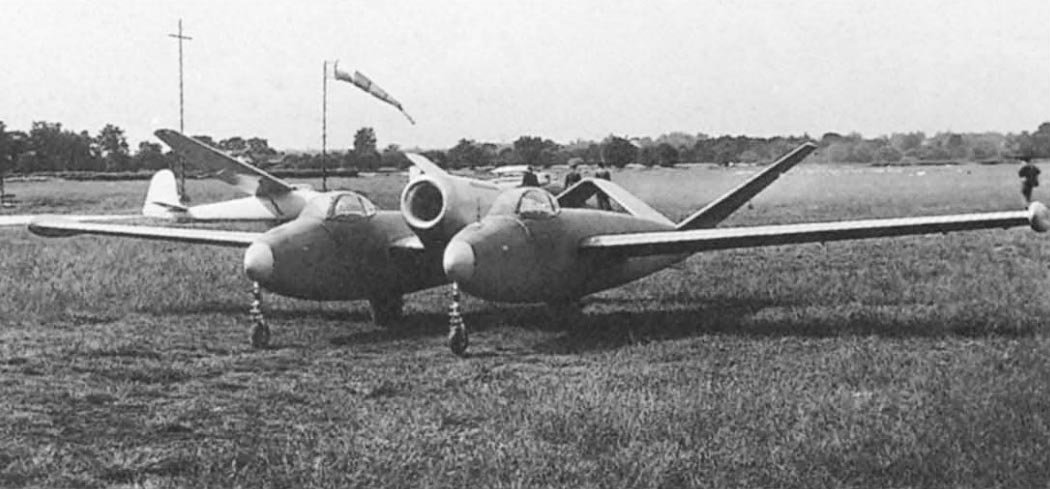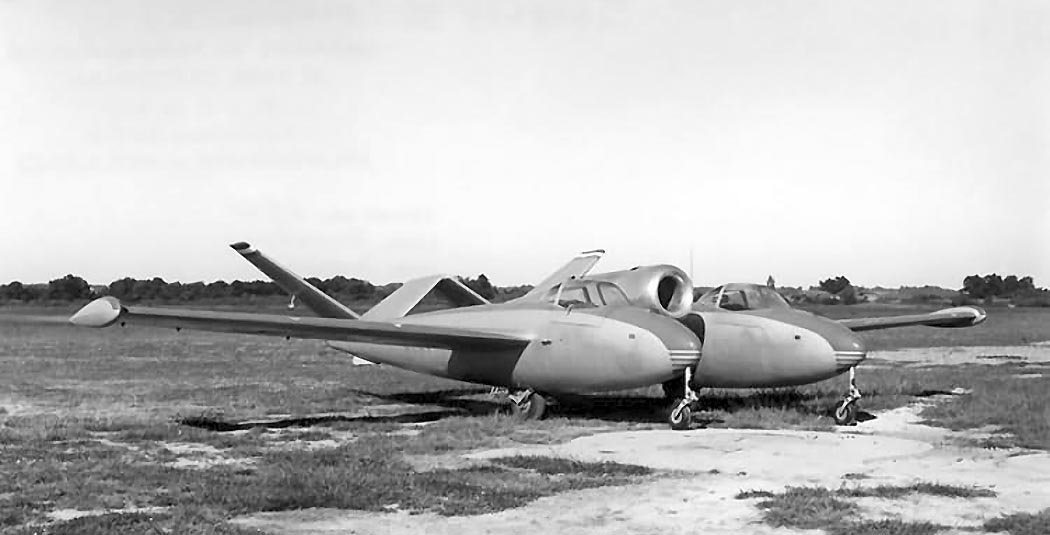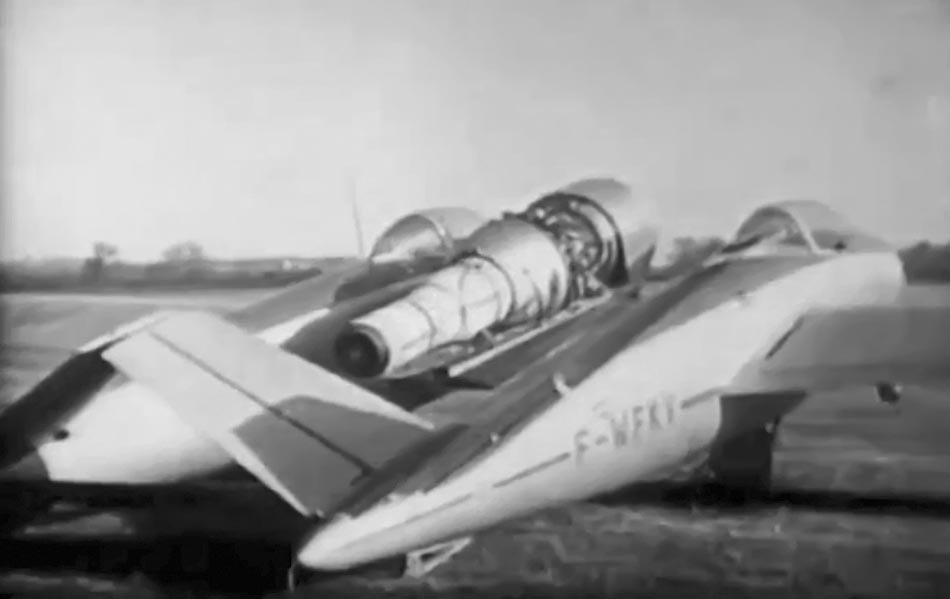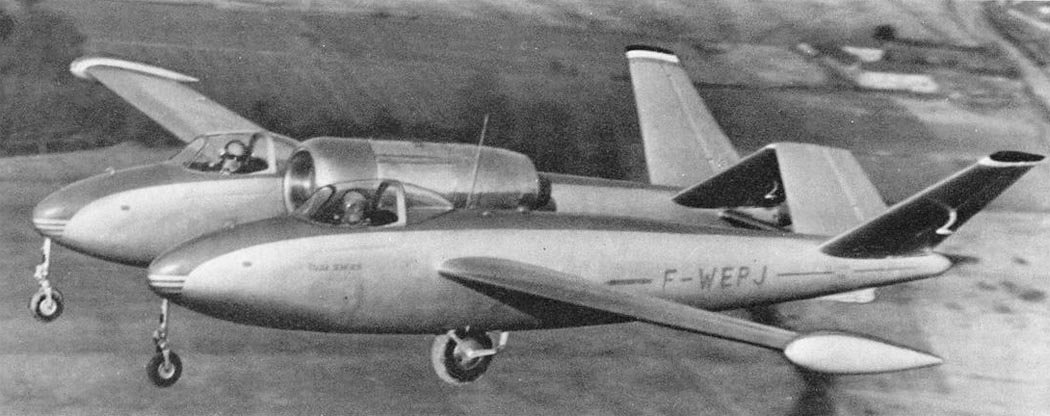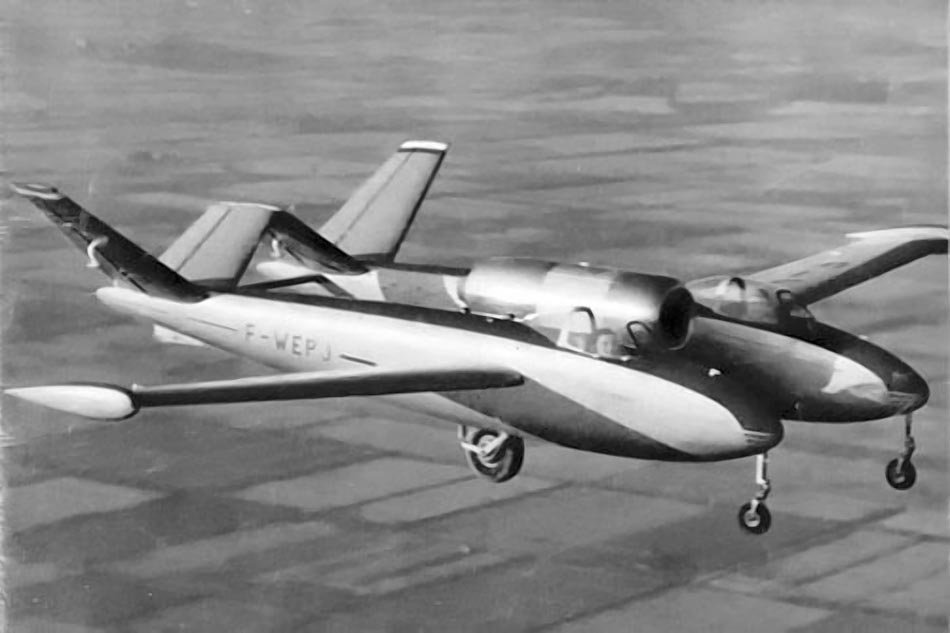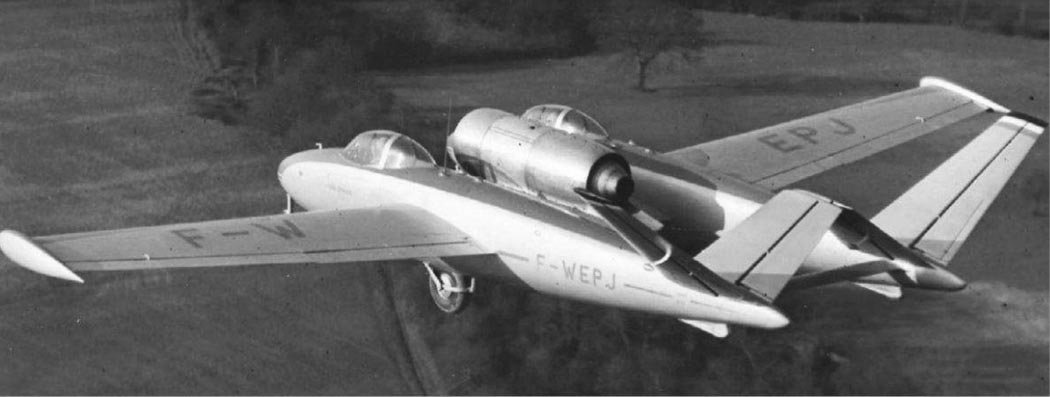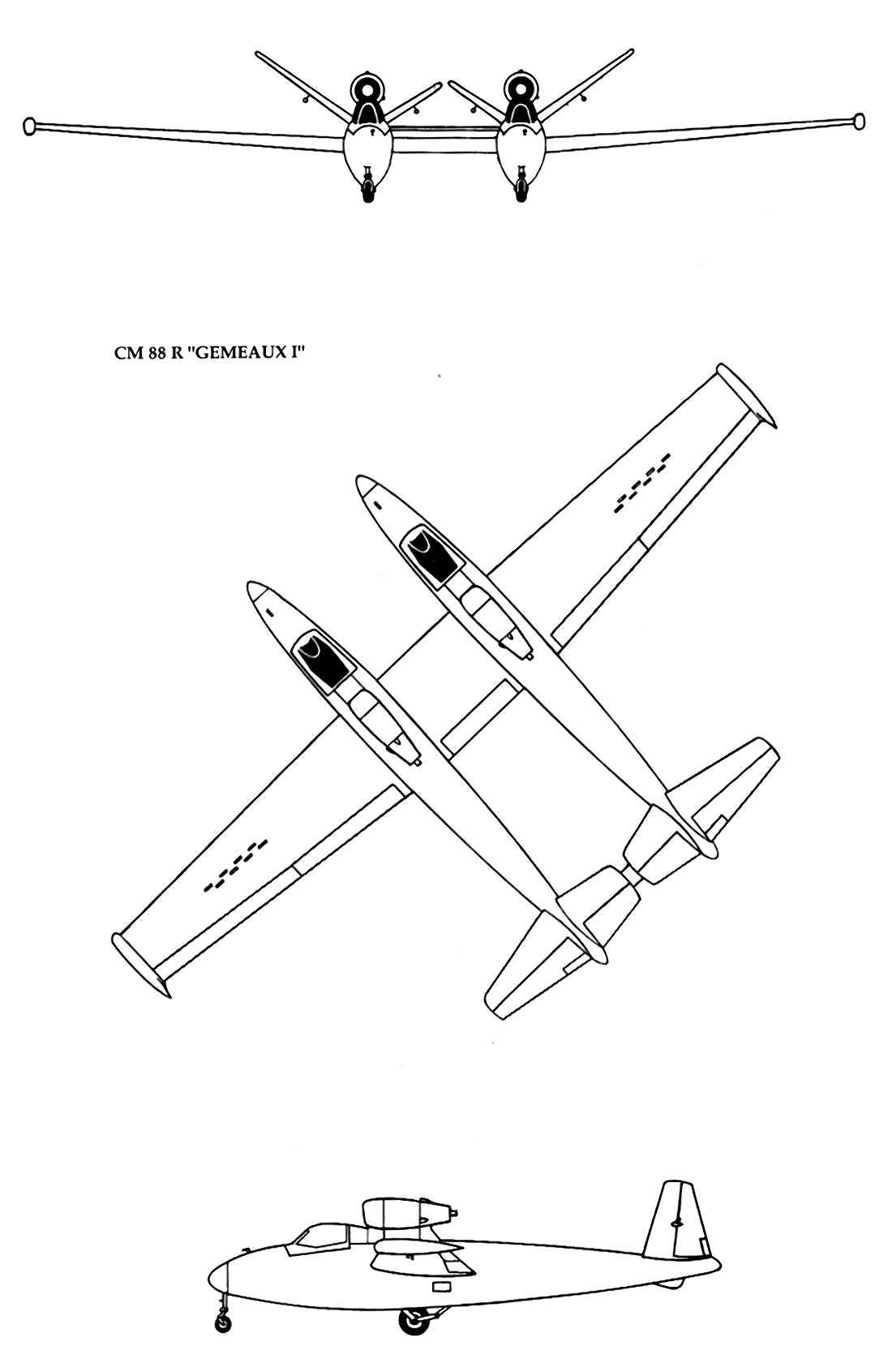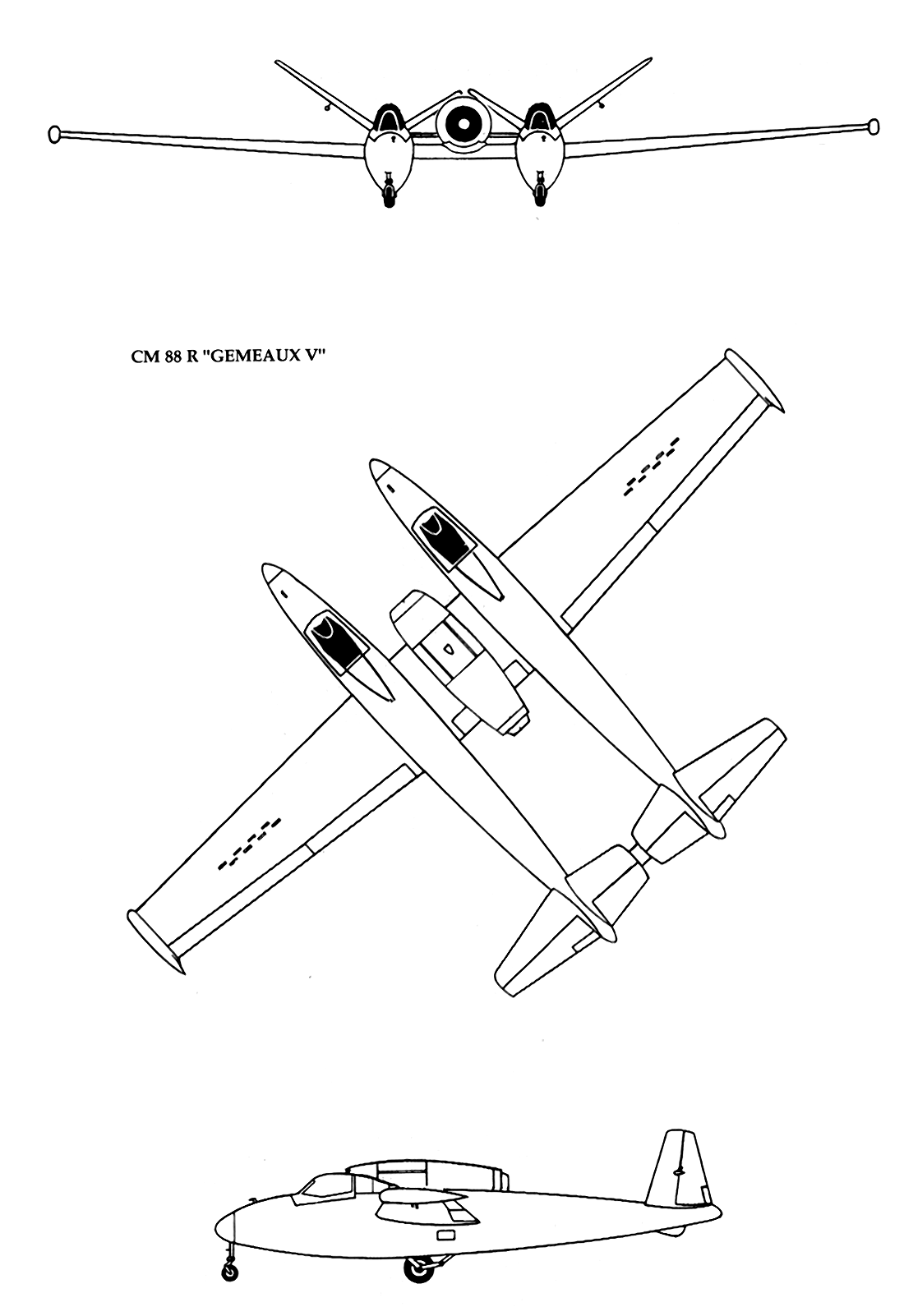
The CM.88-R Gemeaux was an experimental aircraft developed by the French firm Fouga, based on the CM.8R Midjet trainer. Fouga aimed to create a flying testbed for Turbomeca engines. To achieve this, they combined two CM.8R-9.8 fuselages with a central wing section and linked their rear parts with the inner consoles of a V-tail stabilizer.
Conception and First Flight
This aircraft, designated CM.88-R Gemeaux I, made its maiden flight on March 6, 1951, achieving a maximum speed of 285 km/h. Its unique design facilitated the testing of various propulsion systems, setting the stage for future developments.
Evolution of the Gemeaux Variants
Following the Gemeaux I, several other variants were introduced. The Gemeaux II, powered by a single Turbomeca Marbore I turbojet engine with 275 kgf of thrust, first flew on June 16, 1951. The Gemeaux III, featuring a single Turbomeca Marbore II turbojet, initially flew on August 24, 1951, with an experimental engine delivering 350 kgf, and later on January 2, 1952, with a production engine providing 400 kgf.
The development continued with the Gemeaux IV, equipped with a single Turbomeca Aspin I turbofan engine generating 200 kgf, which had its first flight on November 6, 1951. The final variant mentioned, the Gemeaux V, was fitted with a single Turbomeca Aspin II turbofan engine, producing 360 kgf, and made its inaugural flight on June 21, 1952. These iterations showcased Fouga’s commitment to engine testing and aerodynamic innovation.
Technical Specifications
| Modification | СМ.88-R |
| Wingspan, m | 10.76 |
| Length, m | 6.66 |
| Height, m | 1.93 |
| Wing area, m2 | 12.80 |
| Empty weight | 724 |
| Normal takeoff weight | 1080 |
| Engine type | 2 Turbojet Turbomeca Pimene |
| Thrust, kgf | 2 x 111 |
| Maximum speed, km/h | 330 |
| Flight endurance, h | 1.30 |
| Service ceiling, m | 9500 |
| Crew, crew members | 2 |
Image gallery of the CM.88 Gemeaux