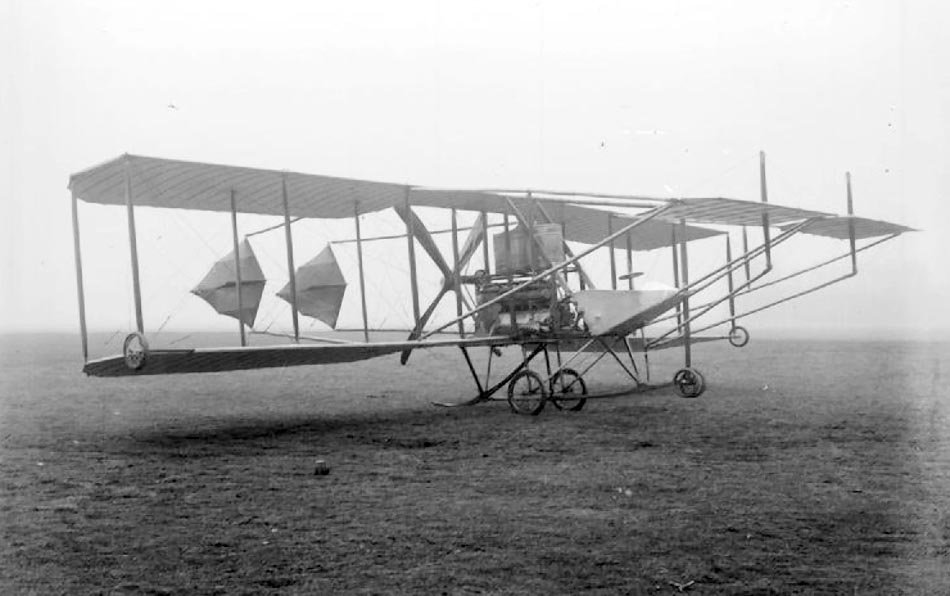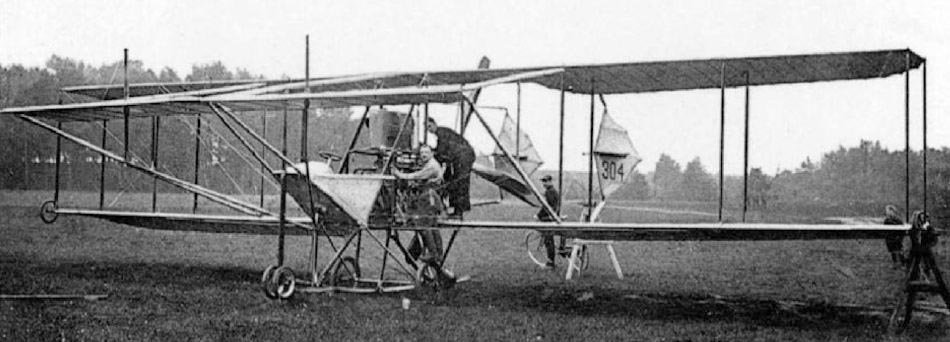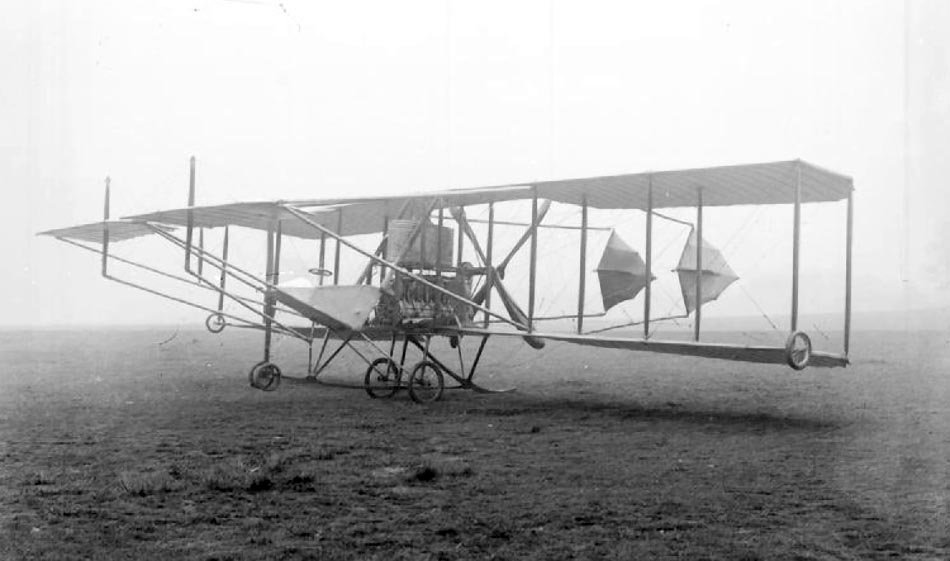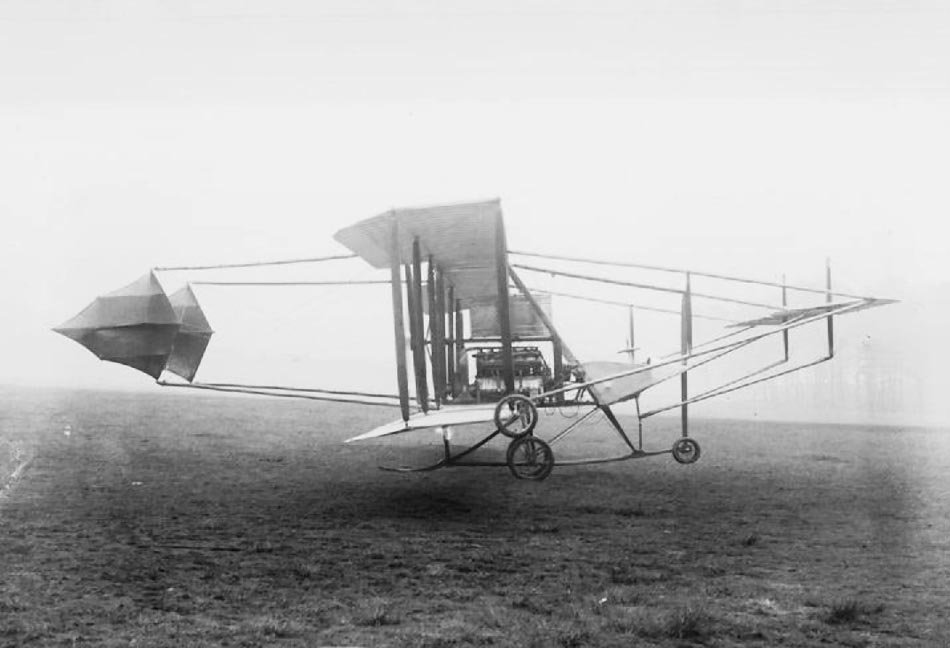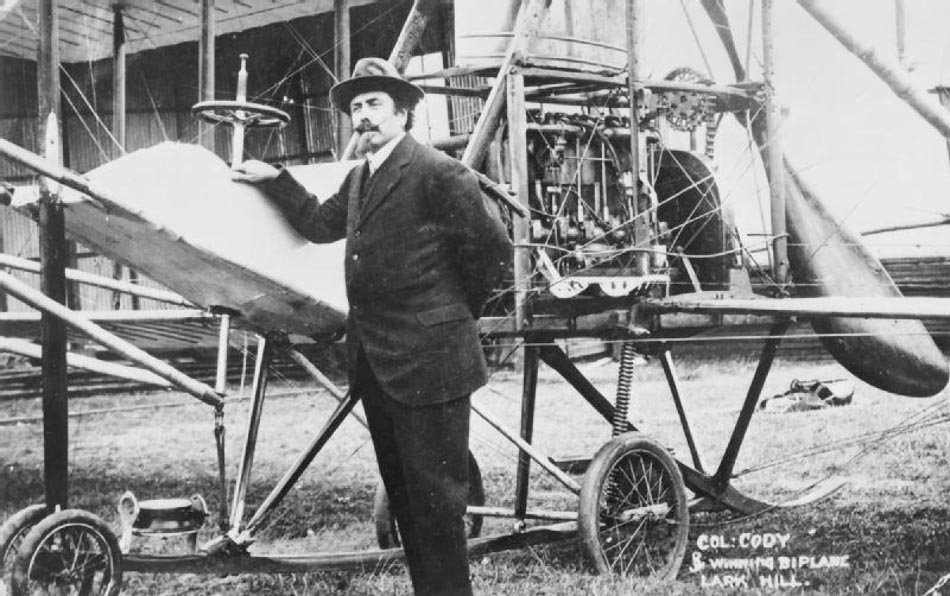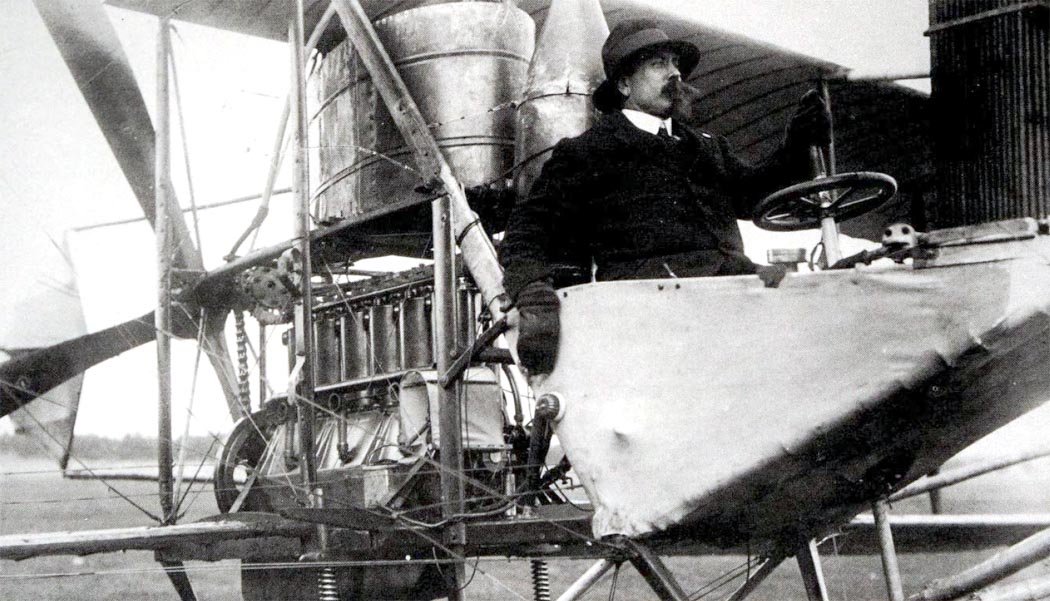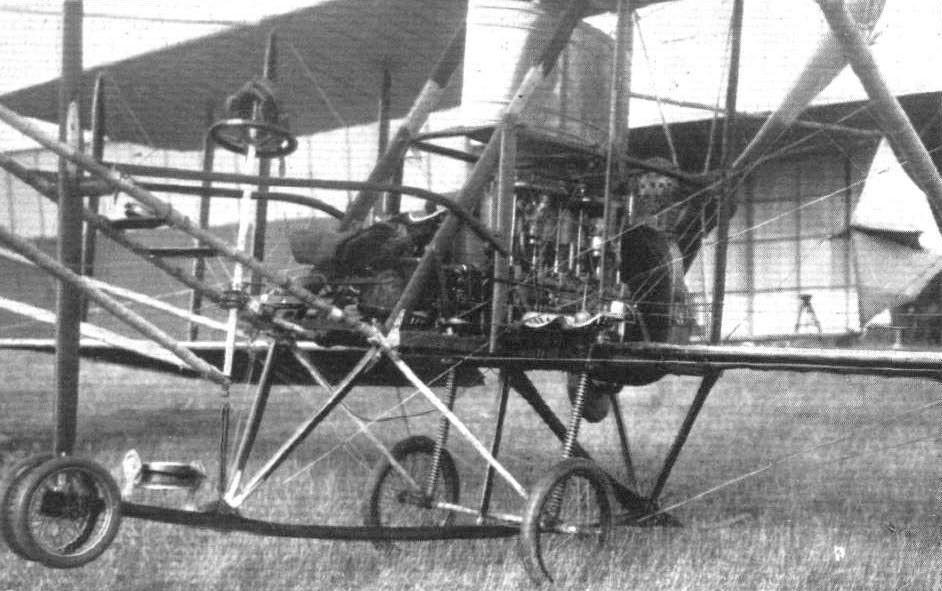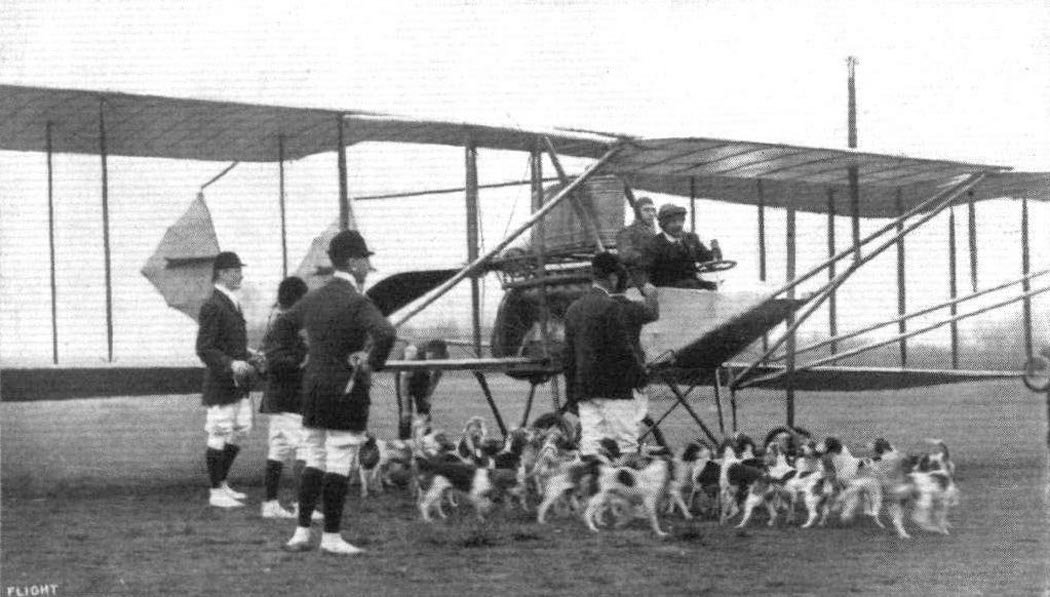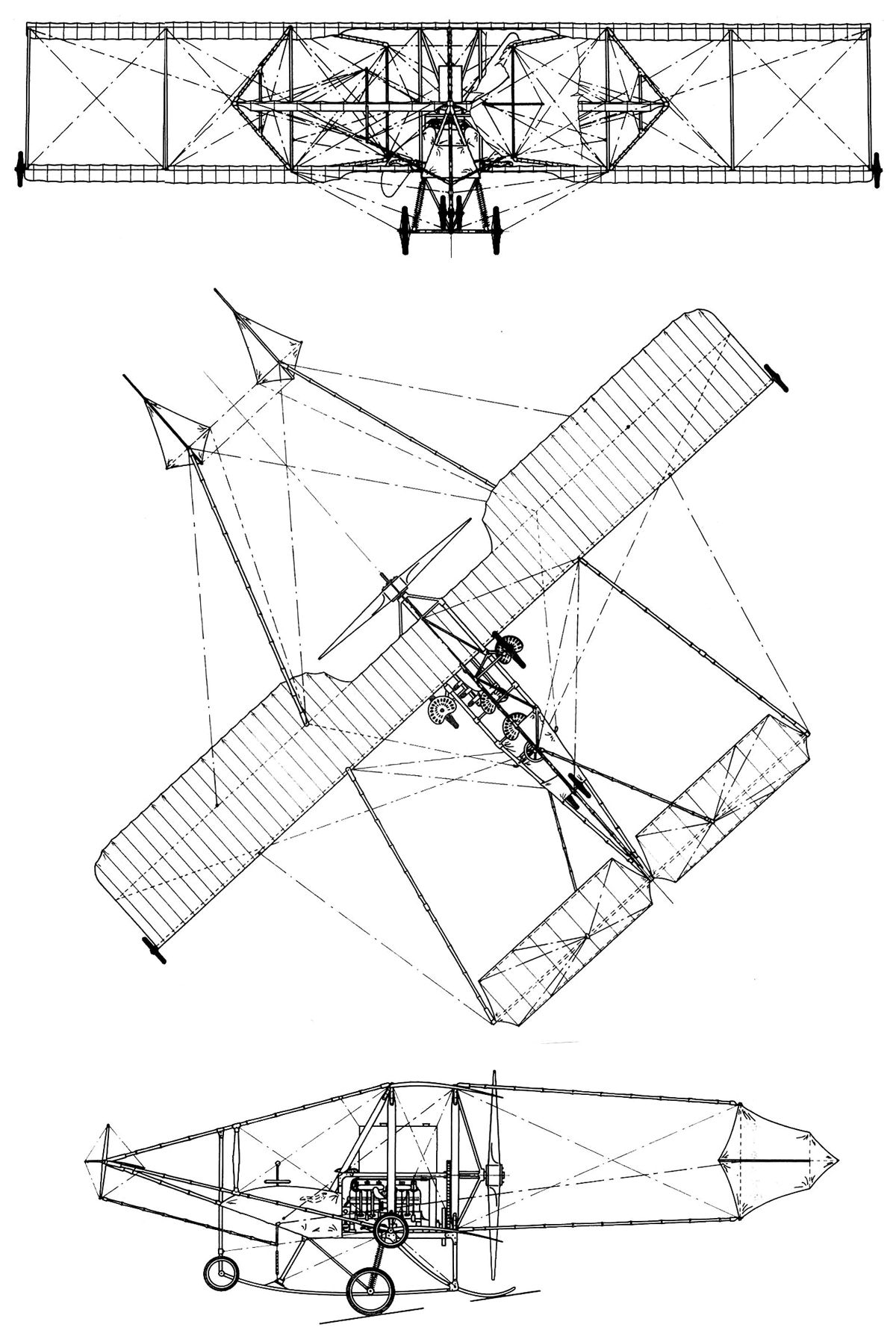
Samuel Franklin Cody was confident he would win the military trials with the Cody No.4, but it was not to be: the monoplane sustained irreparable damage in one of its first flights—the result of a collision with a cow! Cody found solace in the intact Austro-Daimler engine, which he then installed in a biplane of his characteristic design.
This new aircraft, the Military Trials Biplane (Cody No.5), was declared the winner of the 1912 military trials. However, the B.E.2 was built with government money, meaning the superintendent of the Farnborough factory, who was on the competition committee, could not formally award the Cody No.5 first place and the 5000-pound prize.
Cody No.5: Triumph at the Trials
Despite the B.E.2 controversy, the Cody No.5 proved its superiority in the demanding military trials. Its robust construction and the performance of the original Austro-Daimler engine set it apart as a formidable competitor, solidifying Cody’s reputation as an aviation pioneer.
Inspired by this success, Cody replaced the Austro-Daimler engine with a 100 hp (75 kW) Green engine to make the aircraft “fully British.” With this modification, the machine went on to win the British Empire Michelin Cup for the third time, a testament to his ingenuity and persistence.
A Fully British Achievement
Cody’s decision to incorporate a Green engine transformed the Cody No.5 into a machine of national pride. This strategic move not only asserted British independence in aeronautical engineering but also secured another prestigious victory, highlighting the evolution and adaptability of his designs.
Technical Specifications
| Modification | Cody No.5 |
| Wingspan, m | 13.11 |
| Aircraft length, m | 11.51 |
| Wing area, m2 | 40.00 |
| Empty weight | 862 |
| Maximum takeoff weight | 2500 |
| Engine type | 1 Piston engine Austro-Daimler |
| Power, hp | 1 x 120 |
| Maximum speed, km/h | 117 |
| Practical range, km | 541 |
| Rate of climb, m/min | 88 |
| Crew, crew members | 1 |
| Payload: | 3 passengers |
Image gallery of the Cody No.5