Origins and Early Development
Due to the lack of clear prospects for an airplane-car hybrid, Studebaker, which primarily funded the work on the Arrowbile, ceased its financing. However, Waldo Waterman bought the unfinished fourth apparatus in 1940, and William Bushnell Stout acquired the fifth machine. Stout was conducting similar work for the American company Consolidated Vultee Aircraft, later Convair.
Military Rejection and Civilian Ambitions
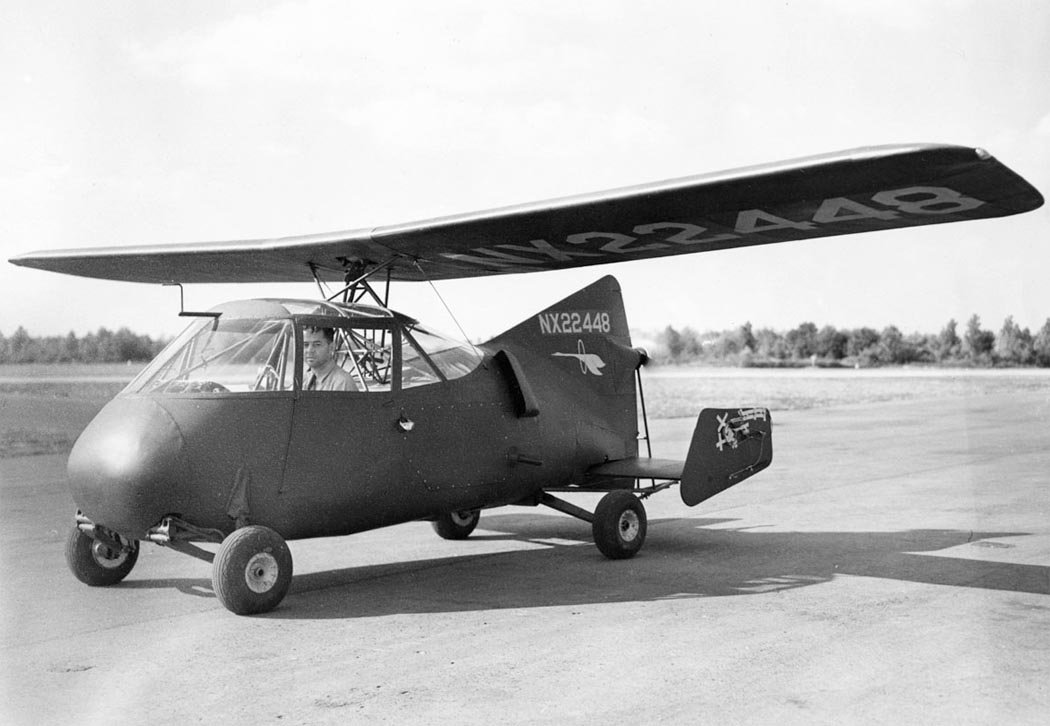
Stout’s refined aircraft, designated Stout SkyCar IV, was presented in 1944. Towards the end of the war, the company offered this “flying car” for “commando” units, but it failed to gain military interest.
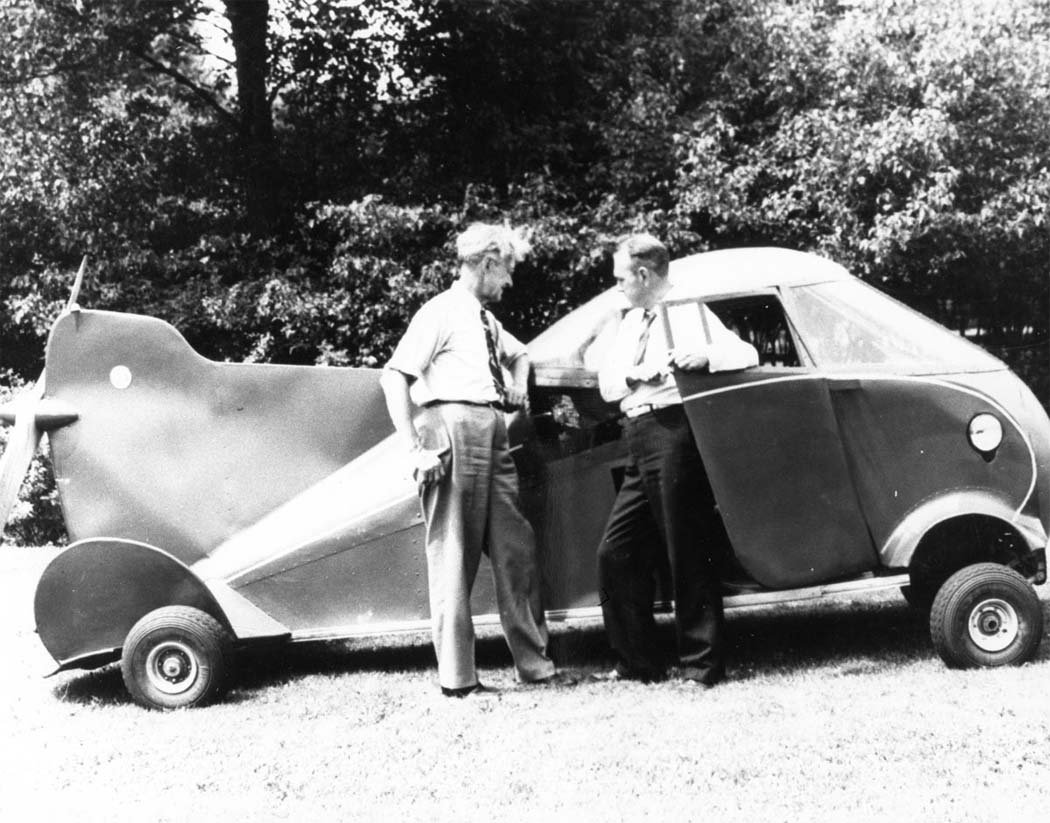
The project was then handed over to another designer, George Spratt, with the task of modifying the aircraft into a light touring model. The plan was to mass-produce it for private customers after the war.
The Convair Model 103 Prototype
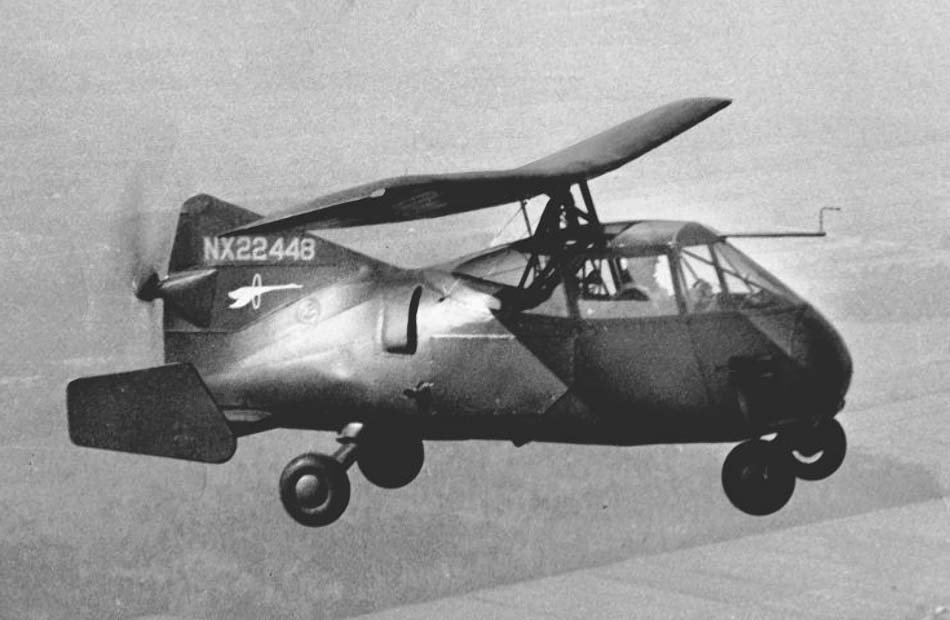
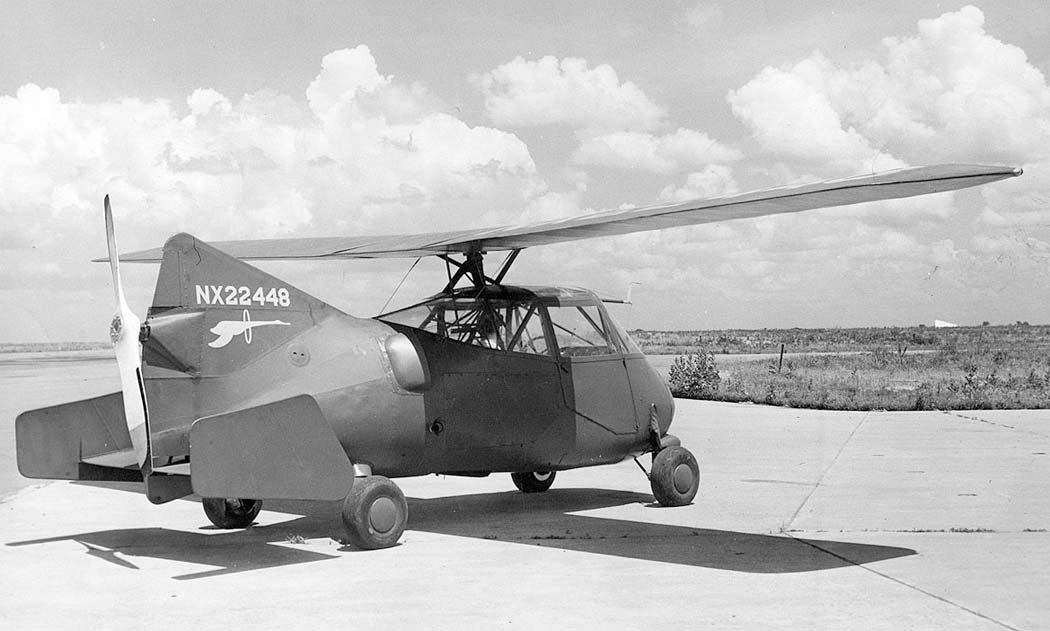
The prototype aircraft Model 103 (or Spratt-Stout Model 8 Skycar) was built at the Stinson Division and underwent a series of tests at the company’s Stout Research Division. However, the project did not progress further; during testing, the engine was replaced with a 125-hp Lycoming O-290C, but even this did not significantly help. It was then decided to switch to more advanced projects, the Convair Model 111 and 116.
Technical Specifications
| Modification | Convair 1 03 |
| Wingspan, m | 10.97 |
| Length, m | 6.57 |
| Height, m | 1.92 |
| Engine type | 1 Piston engine Franklin 4ACG-199-H3 |
| Power, kW | 1 x 90 |
| Maximum speed, km/h | 183 |
| Cruising speed, km/h | 165 |
| Crew | 2 |
Image gallery of the Convair Model 103