Following the unsuccessful combat experience of reconnaissance-attack aircraft and fighters in direct air support during the Spanish Civil War, where strong enemy air defenses proved costly, specialists from the Air Force Research Institute (NII VVS), P.A. Losyukov and P.V. Rudintsev, urgently proposed a specialized armored attack aircraft. This proposal, made on December 16, 1937, for the 1938 experimental aircraft development plan, called for an aircraft “operating at low altitude, possessing powerful offensive and defensive armaments, and with an engine developing maximum power near the ground.”
About six weeks later, S.V. Ilyushin, Head of the 1st Main Directorate of NKOP and Chief Designer of Factory No. 39, submitted a similar initiative. In early February 1938, he sent a memo to I.V. Stalin, V.M. Molotov, K.E. Voroshilov, M.M. Kaganovich, and Air Force Chief A.D. Loktionov. His report emphasized the dire need for a new aircraft type, stating that “current attack aircraft will suffer very heavy losses” due to modern defense depth and overwhelming enemy fire.
Ilyushin highlighted the vulnerability of existing and experimental attack aircraft like the VUL-TI, KhAI-5, and the “Ivanov” designs by Sukhoi and Neman. None of these protected vital components such as the crew, engine, oil system, fuel system, or bombs. He concluded that this severe vulnerability would significantly diminish the offensive capabilities of Soviet attack aviation, necessitating the creation of an armored attack aircraft, “or, in other words, a flying tank, with all vital parts armored.”
Designing the “Flying Tank”
For several months, Ilyushin had been working on this difficult problem, resulting in a preliminary design for an armored attack aircraft. He detailed its projected flight and combat characteristics, arguing that this “outstanding aircraft” would immeasurably enhance the offensive capabilities of Soviet attack aviation, enabling it to inflict “crushing blows on the enemy with no losses or very minimal losses.” He requested to be relieved of his administrative duties to personally oversee the aircraft’s development and bring it to state trials by November 1938.
The proposed design, initially designated LT-AM34FRN, was to be powered by an AM-34FRN engine. It was expected to achieve a maximum ground speed of 385-400 km/h during an attack and a flight range of up to 750-800 km under optimal conditions. The armament included four forward-firing ShKAS machine guns in the wings (500 rounds each) and one rear-firing ShKAS on a turret (500 rounds).
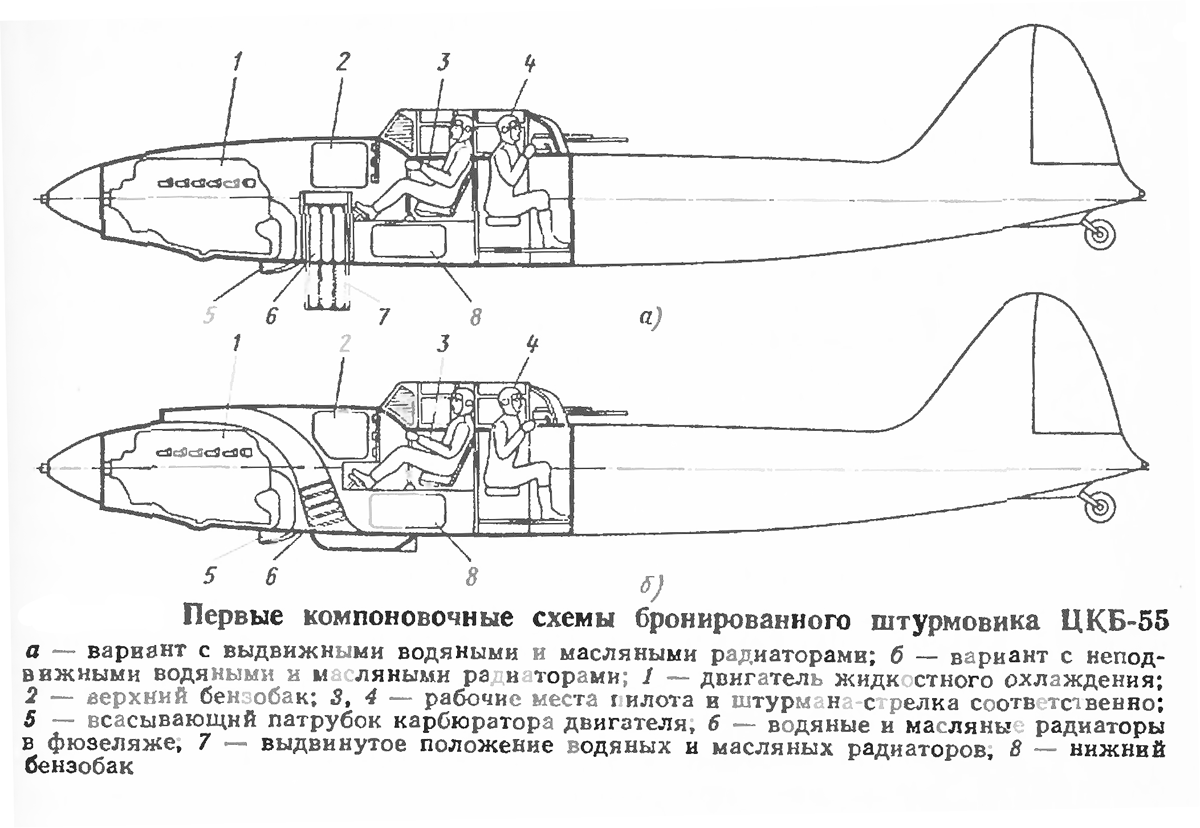
Bomb load options ranged from 100x 2kg bombs (200kg total) to 2x 100kg bombs (200kg total), with intermediate options like 10x 25kg or 5x 50kg, both totaling 250kg. The armor scheme involved an armored hull for the front section of the aircraft, protecting the engine, water and oil radiators, oil and fuel tanks, and both the pilot and gunner-navigator. Additional localized armor capsules were planned internally for critical components.
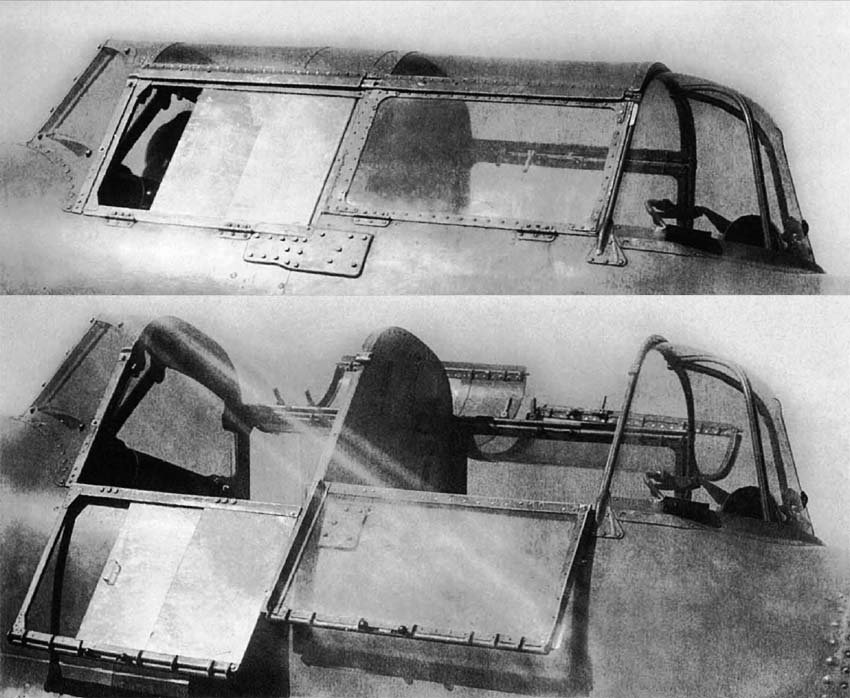
The pilot was protected from the front by the armored hull, capsules, special armored shields, and a 5mm armored glass visor. The canopy also featured armored glass for the pilot and gunner-navigator, providing protection from above and the rear hemisphere. All metal armor was uniformly 5mm thick.
Trials, Engine Challenges, and Redesign
Ilyushin’s memo led to a resolution by the Committee of Defense in February 1938, approving the “Flying Tank” project (LT-AM34FRN) and appointing him Chief Designer of Factory No. 39. However, the AM-34FRN engine, designed for bombers, proved unsuitable due to its high altitude rating (3050m) and insufficient power at ground level (1050 hp). This resulted in an inadequate thrust-to-weight ratio and wing loading for an armored attack aircraft.
Despite these shortcomings, the military supported the inclusion of Ilyushin’s aircraft in the experimental program, hoping for the future development of a more powerful, low-altitude engine. On May 5, 1938, the government approved the experimental aircraft plan for 1938-39, designating Ilyushin’s two-seat armored attack aircraft as BSh-2. Three prototypes were ordered from Factory No. 39, with state trials scheduled for December 1938, March 1939, and May 1939, respectively.
The BSh-2’s primary mission was “to destroy enemy manpower and combat assets, disrupt troop transfers, demolish airfields and bases, eliminate air defenses, and support ground troops.” Key requirements included robust armor for the crew, engine, fuel, and bombs; a maximum ground speed of 385-400 km/h; a landing speed of 105-110 km/h; a range of 800 km (up to 1000 km with overload); and a service ceiling of 8000 m. Armament specified two ShKAS and two heavy machine guns for the pilot, and a twin ShKAS for the gunner-navigator, with a bomb capacity of 250-300 kg.
During detailed design, Ilyushin’s OKB simplified the armor scheme, abandoning internal capsules and retaining a continuous armored hull. This hull protected the engine, radiators, tanks, pilot, and gunner-navigator, supplemented by localized armored shields for crew protection. The armor thickness remained 5 mm throughout. By January 3, 1939, Ilyushin presented the mockup of the BSh-2 (factory designation TsKB-55) with the AM-34FRN engine for approval.
The mockup commission approved the design, but recommended armor thickness adjustments (4-8mm in various areas), range adjustments, and additional fuel tank integration. However, the project faced significant delays as specialized double-curved aviation armor and its manufacturing technology were not ready, and the AM-34FRN engine was withdrawn from production. This made meeting the original deadlines impossible.
In February 1939, Ilyushin and Y.V. Smushkevich proposed new tactical and technical requirements for the TsKB-55, incorporating the more powerful AM-35 engine, which had recently passed factory tests. The AM-35 was a modified AM-34FRN, delivering 1200 hp at its altitude limit (4500m) and 1130 hp at ground level. Improvements included a single-speed centrifugal supercharger with adjustable vanes, four carburetors (instead of one), and two sequential fuel pumps. The dry weight of the engine was 785 kg.
The updated requirements broadened the TsKB-55’s role to include all-altitude, day/night, and all-weather operations, emphasizing maneuverability for high-speed, low-altitude flight. The service ceiling increased to 9000-9500 m, climb time to 5000m reduced to 8-9 minutes, and takeoff/landing distances shortened. Forward armament was reduced to four ShKAS machine guns (3000 rounds total), and the rear turret retained one ShKAS (750 rounds). Bomb load and armor requirements remained unchanged.
Construction of two experimental TsKB-55 prototypes with AM-35 engines began immediately after the new requirements were approved on February 15, 1939. However, work was halted when the AM-35 failed its 100-hour state trials in February 1939 due to a crack in the upper crankcase. After design modifications, the engine successfully passed factory tests in March and repeated state trials in April.
The State Commission’s report confirmed the AM-35’s satisfactory performance, highlighting its unique supercharger design that boosted effective ground power by 90-100 hp. However, it also noted defects such as water pump impeller destruction, reducer shaft spline damage, and poor idle mixture, which needed rectification. A.A. Mikulin, chief designer of the AM-35, sharply criticized Ilyushin’s initial engine placement and cooling system design for the TsKB-55, stating that existing radiators were suitable and that the TsKB-55 design lacked proper cooling provisions.
Ilyushin eventually settled on a revised cooling system design: the water radiator, with an enlarged cooling surface, was integrated into a fuselage air channel, while the oil radiator was moved beneath the armored hull into a rectangular armored box. This box featured an armored flap that could fully close the oil radiator’s intake during ground attacks or emergency landings. The front, side, and lower armored covers of the hull also incorporated air intakes for engine ignition system cooling, exhaust pipes, and internal hull ventilation.
State Trials and Future Prospects
Factory trials for the TsKB-55 No. 2 spanned five months, concluding on March 26, 1940, with 14 flights totaling 4 hours and 46 minutes. The primary issues were the AM-35 engine’s unsatisfactory performance and inadequate water/oil cooling. The initial internal placement of radiators, designed for combat survivability, led to poor airflow. Ilyushin experimented with glycol cooling and external radiator configurations before arriving at the final design.
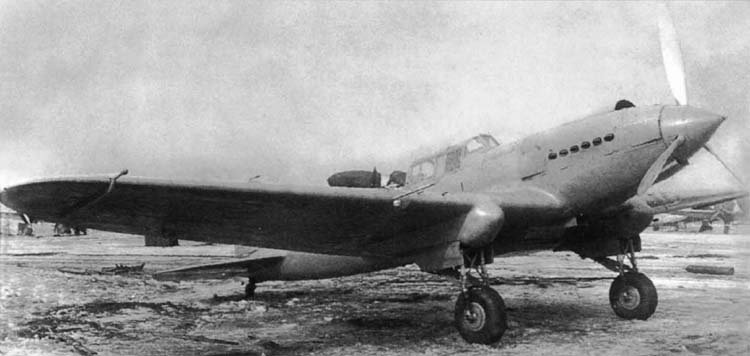
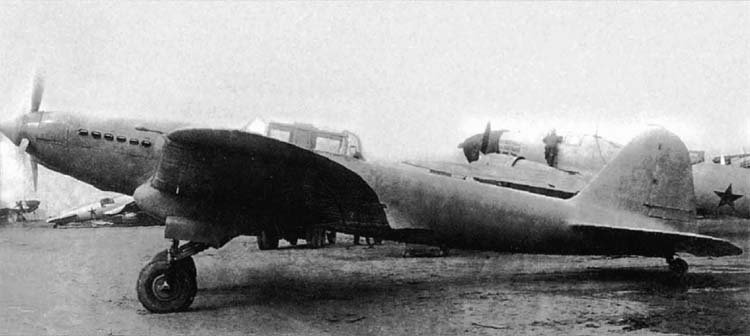
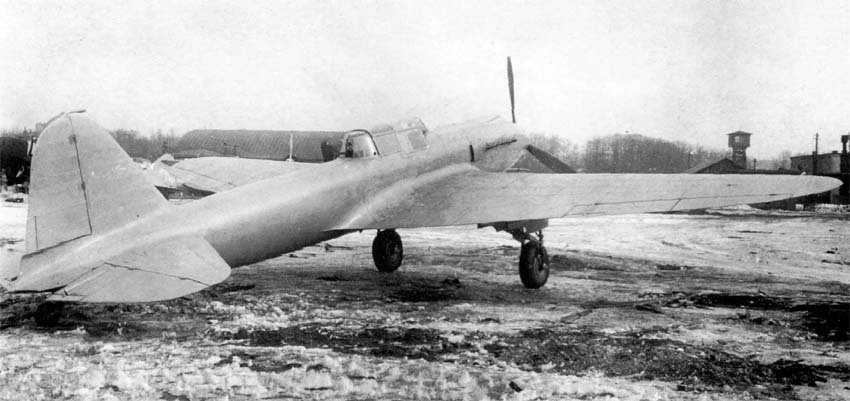
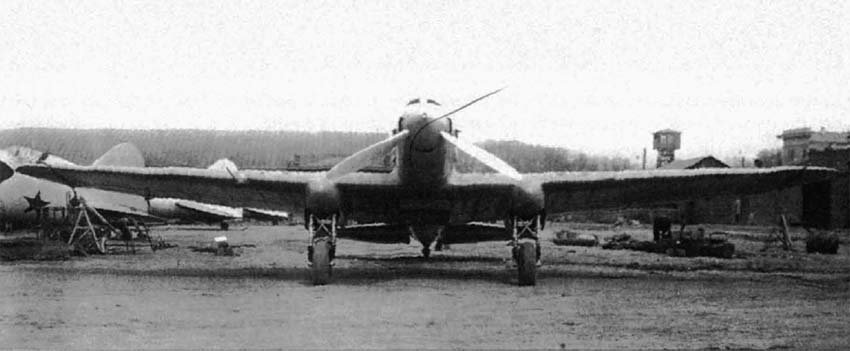
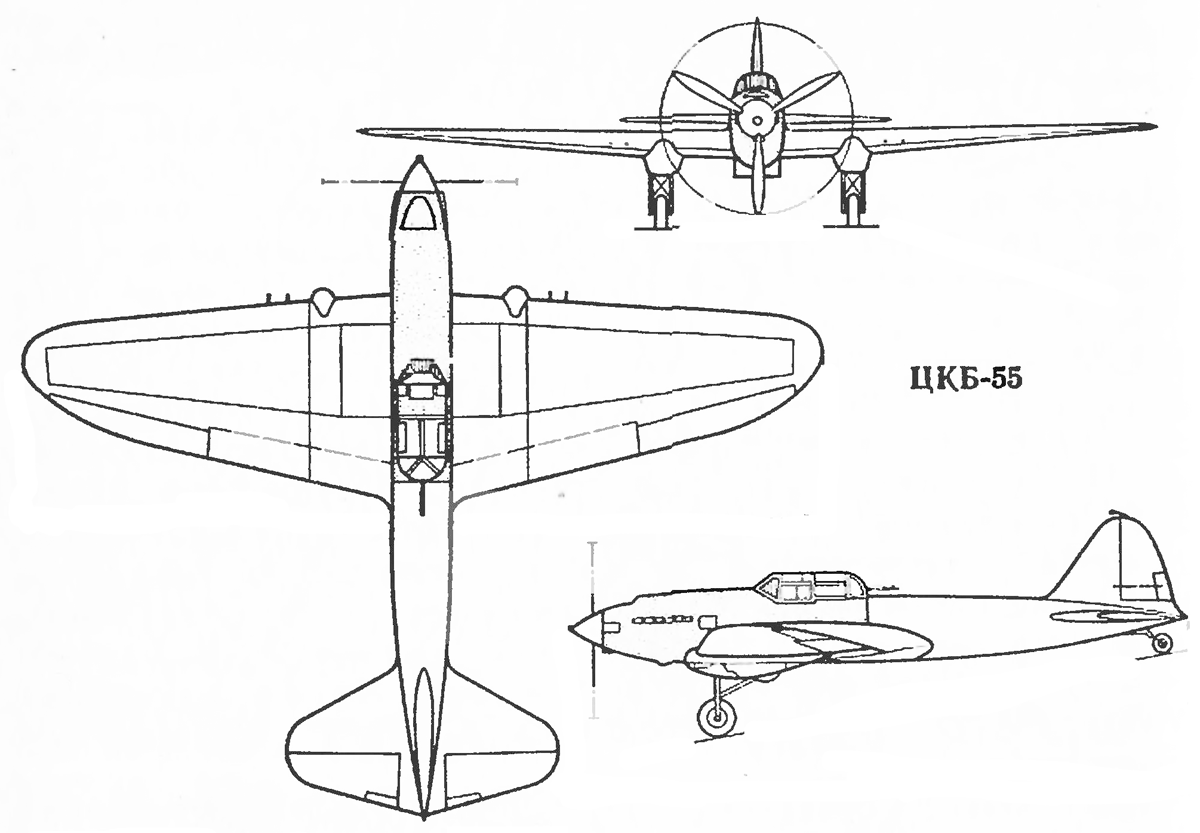
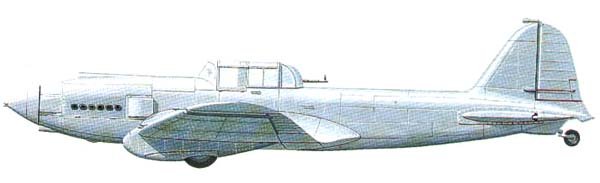
On March 31, 1940, TsKB-55 No. 2 officially began state trials at the NII VVS, completing 38 flights over 19 hours and 20 minutes by April 19. The aircraft had a takeoff weight of 4725 kg and was characterized by a streamlined armored hull made of AB-1 aviation armor steel, designed for double-curved stamping. This hull formed a significant part of the airframe’s load-bearing structure, protecting the engine, fuel/oil tanks, radiators, pilot, and gunner-navigator.
Armor thickness varied from 4 to 7 mm based on ballistic analysis and structural loads, with its streamlined shape enhancing protection at the design attack speeds of 350-400 km/h. The total armor weight was 700 kg. The rear fuselage was a wooden monocoque, while the wings and stabilizer were all-metal duralumin. The landing gear retracted backward into fairings, designed for easier belly landings.
The AM-35 engine provided 1130 hp at ground level and 1350 hp for takeoff, with a pressurized cooling system. Fuel was stored in two protected tanks (175L and 245L), and a 47L oil tank. Armament included four fixed 7.62mm ShKAS machine guns in the wings (750 rounds each) and one flexible ShKAS in the rear turret (500 rounds) with wide firing angles. Pneumatic gun reloading and an emergency bomb release system were also installed. The normal bomb load was 400 kg (up to 600 kg overloaded), housed in four bomb bays, partially protected by armor plates.
Despite the “satisfactory” report from the Technical Council of the NII VVS on May 7, 1940, the BSh-2 AM-35 fell short of its requirements. It was 15 months late, and performance metrics like maximum ground speed (362 km/h vs. 385-400 km/h required) and range (618 km vs. 800-1000 km) were lower. Landing speed was too high, takeoff run too long, and maneuverability/stability were poor. The AM-35 engine itself showed poor throttle response and reliability during trials.
The Technical Council recommended installing the more powerful, low-altitude AM-38 engine (1625 hp at ground level) to address speed deficiencies. Other issues noted included poor forward-down visibility, insufficient pilot protection (60mm plexiglass visor), heavy aileron controls, unfinished wing gun installations, and a missing radio. Nevertheless, the council concluded that the BSh-2 AM-35 was “the only type of well-armored aircraft” with significant potential, recommending its use as a short-range attack-bomber and suggesting a small series of 65 aircraft for troop trials.
The military leadership, keen to rectify a 15-year gap in dedicated attack aircraft, strongly supported Ilyushin. Air Force Chief Y.V. Smushkevich pressed for immediate series production, citing Ilyushin’s guarantees to improve performance with upgraded engines (AM-35A/AM-37), heavier armament (2x 20/23mm cannons), and dive-bombing capabilities. This unusual dive-bombing requirement, perhaps influenced by the Red Army’s struggles against Finnish fortifications in 1940, was later abandoned as a dedicated dive-bomber was developed.
In June 1940, leading test pilots from the Flight Research Institute, including M.M. Gromov, also praised the BSh-2’s combat and structural design, pilot visibility, and armor protection, while echoing concerns about speed, range, and longitudinal instability. They concurred that with an AM-38 engine and wing modifications, the aircraft had potential for large-scale production. However, Marshal S.K. Timoshenko, the People’s Commissar of Defense, reduced the proposed troop trial series from 65 to 10-15 aircraft, citing the BSh-2 AM-35’s identified shortcomings and pointing to Sukhoi’s competing BSh M-71, which promised superior performance. Despite this, the BSh-2 paved the way for the legendary Il-2 Shturmovik.
Technical Specifications
| Modification | TsKB-55 |
| Wingspan, m | 14.60 |
| Length, m | 11.60 |
| Height, m | 4.17 |
| Wing area, m2 | 38.50 |
| Empty weight | 3615 |
| Normal takeoff weight | 4725 |
| Engine type | 1 Piston engine Mikulin AM-35 |
| Power, hp | 1 x 1130 |
| Speed at sea level, km/h | 362 |
| Speed at altitude, km/h | 422 |
| Practical range, km | 618 |
| Rate of climb, m/min | 435 |
| Practical ceiling, m | 9000 |
| Crew | 2 crew |
| Armament | Four 7.62-mm ShKAS machine guns and an identical machine gun behind the cockpit; bomb load – 400 kg of bombs in various configurations (up to 600 kg with overload) |
Image gallery of the Ilyushin BSh-2 (TsKB-55)