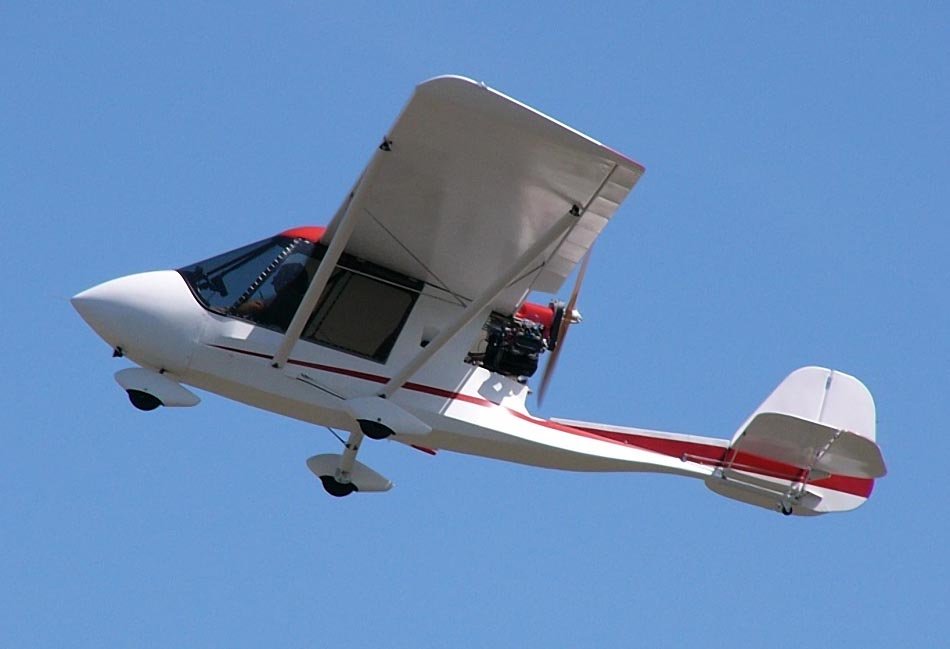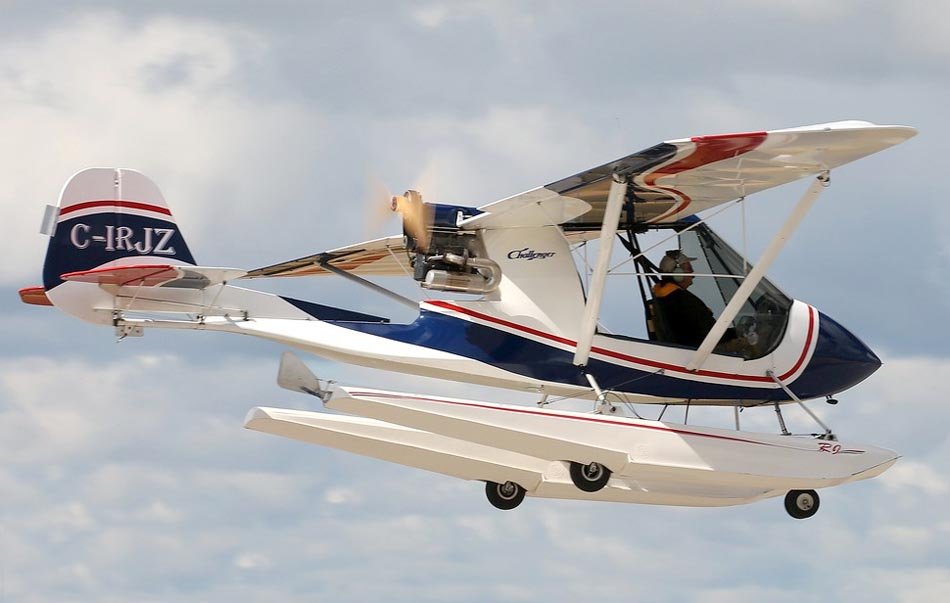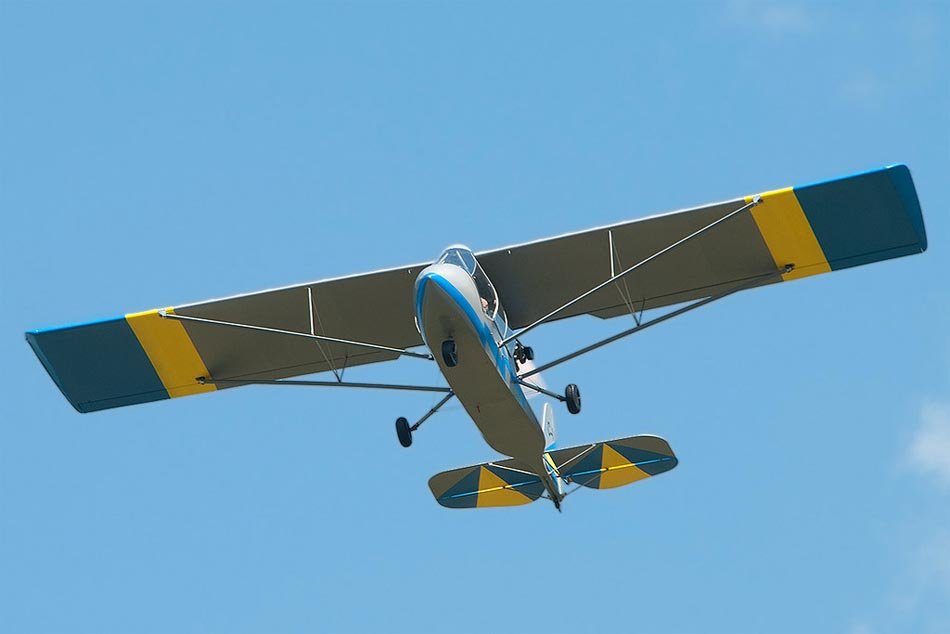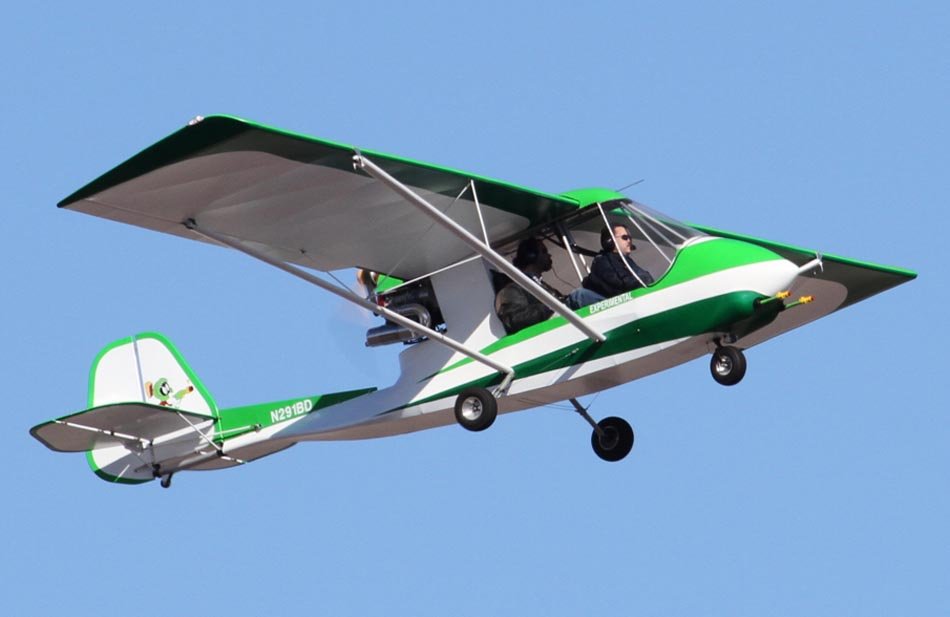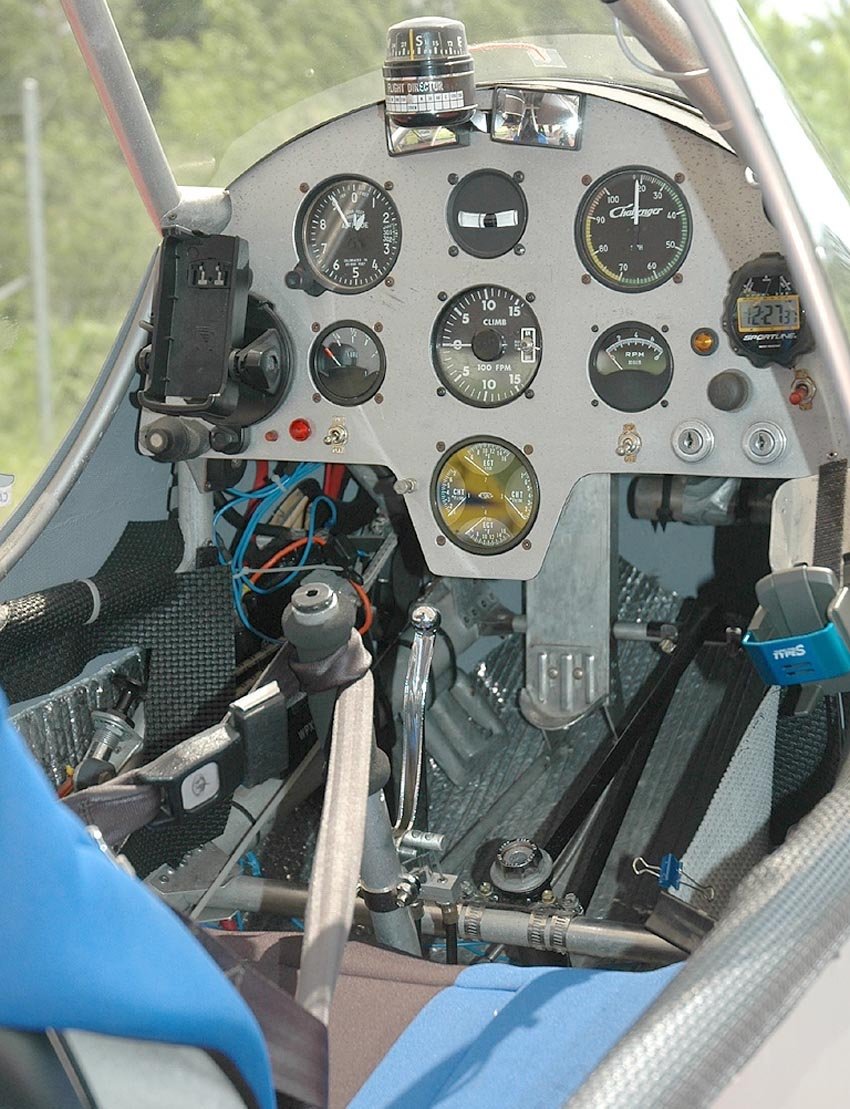
The Quad City Challenger is a light multi-purpose aircraft produced by the American aerospace company Quad City Aircraft Corporation. Dave Goulet began designing the aircraft in 1980. The prototype’s first flight took place in 1983.
Design and Variants
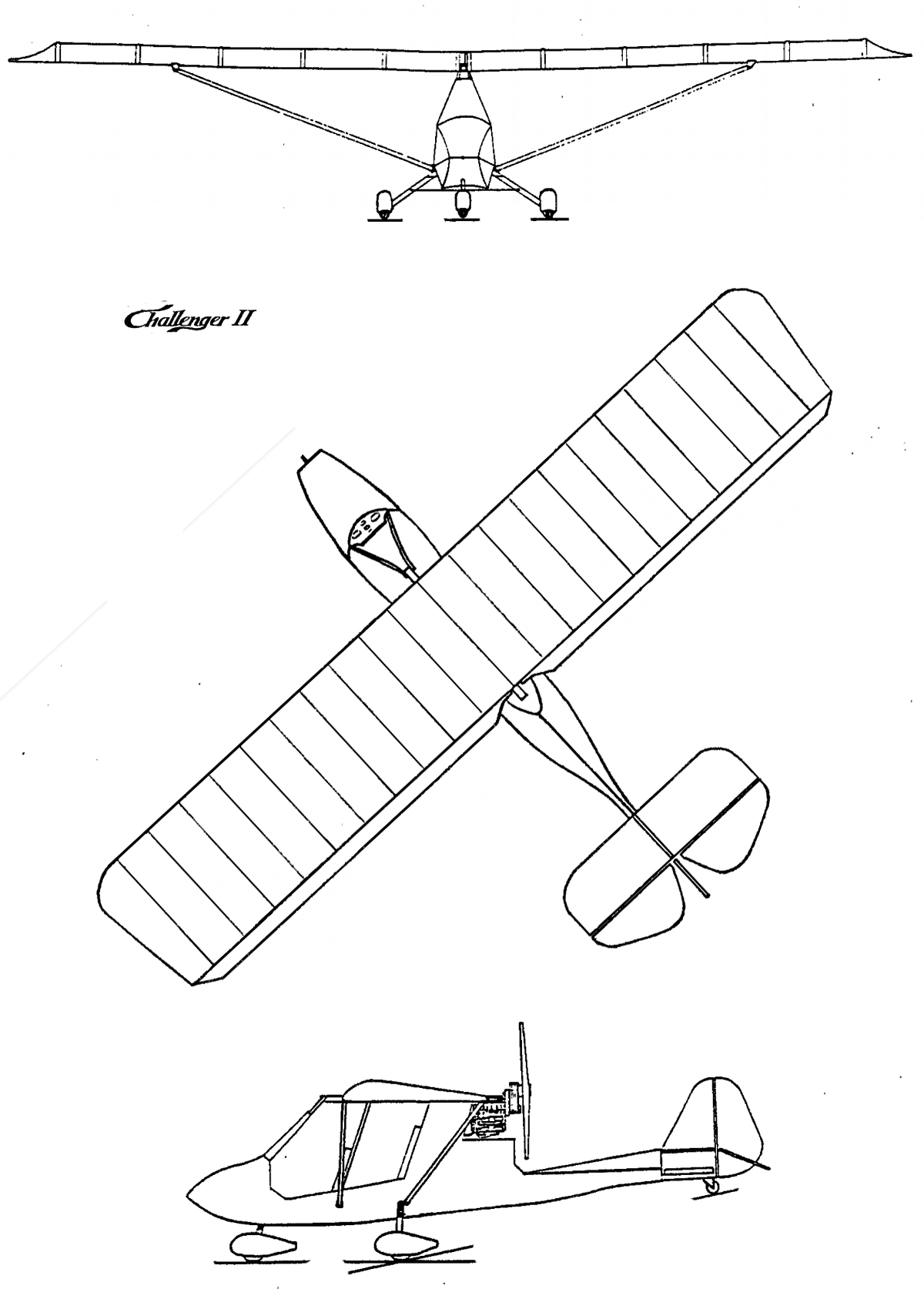
The Quad City Challenger is a strut-braced high-wing aircraft equipped with a single piston engine with a pusher propeller. It is produced in two main variants: the single-seat Challenger I and the two-seat Challenger II (in this variant, the crew is seated in tandem).
Engine Options and Versatility
For the power plant, the Challenger I uses a Hirth F-33 with 22 hp (16 kW). Other variants use a Rotax 447 with 40 hp (30 kW), a Rotax 503 with 50 hp (37 kW), a Rotax 582 with 64 hp (48 kW), or an HKS 700E with 60 hp (45 kW).
Challenger aircraft can be equipped with a tricycle landing gear with a nose wheel, skis, or floats.
Kit Assembly and Production Success
The Challenger is produced as a kit for self-assembly. The kit can be purchased in four main parts: empennage, fuselage, wings, and engine.
In total, over 4,000 aircraft of this type have been sold during serial production.
Technical Specifications
| Modification | Challenger II |
| Wingspan, m | 9.60 |
| Length, m | 6.10 |
| Height, m | 1.83 |
| Wing area, m2 | 16.40 |
| Empty weight | 209 |
| Maximum takeoff weight | 435 |
| Engine type | 1 Piston engine Rotax 503 |
| Power, hp | 1 x 50 |
| Maximum speed, km/h | 154 |
| Cruising speed, km/h | 137 |
| Practical range, km | 320 |
| Rate of climb, m/min | 228 |
| Crew, crew | 2 |
Image gallery of the Quad City Challenger