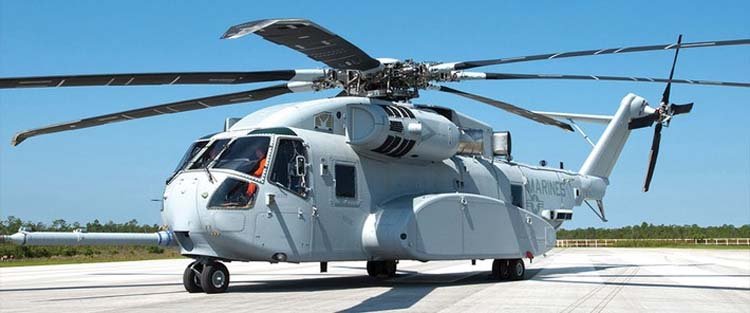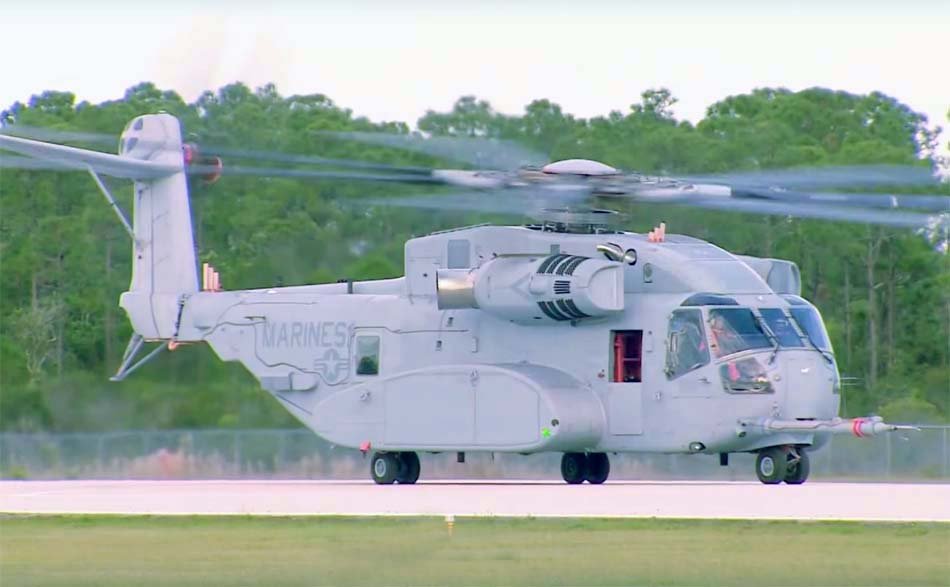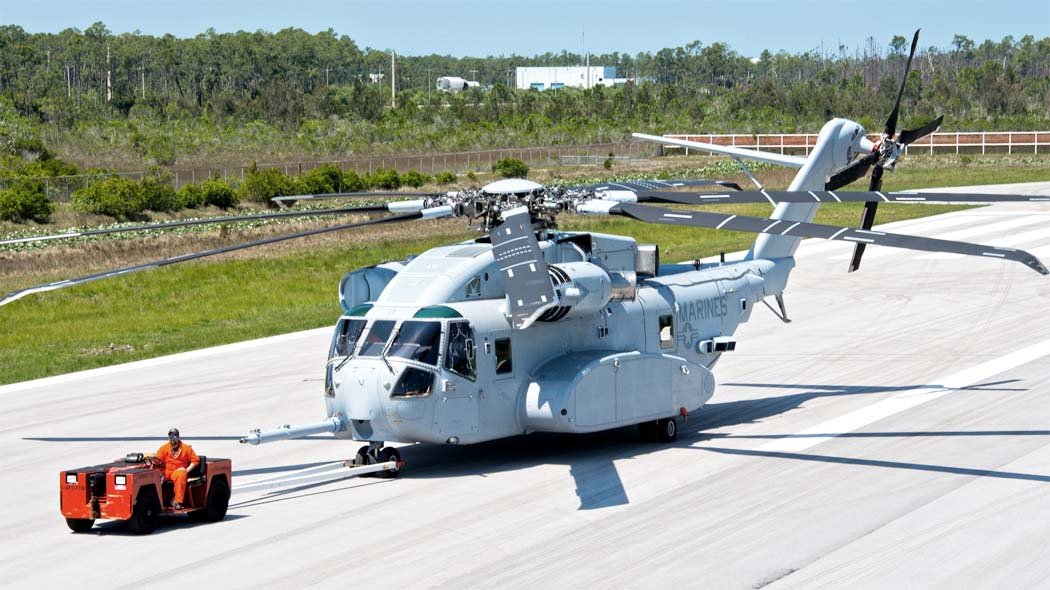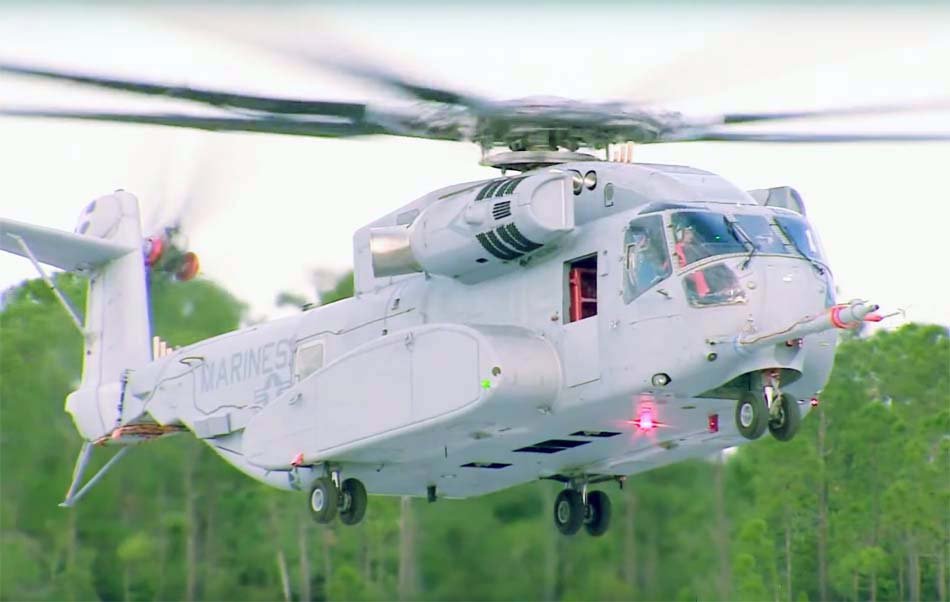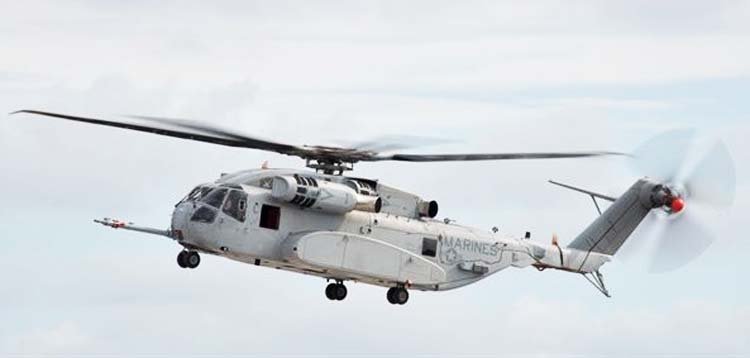
The Sikorsky CH-53K King Stallion is a heavy transport and cargo American helicopter, developed by “Sikorsky Aircraft” in 2015. The CH-53K program began as an extension of the service life for 111 CH-53E helicopters. In 2000, it was determined that intensive operation of these helicopters would deplete their service life before 2025, the year planned for their replacement.
The situation further worsened with the commencement of CH-53E operations in Afghanistan and Iraq. As with the UH-1Y, the conclusion was drawn that building new aircraft was preferable to modernizing old ones. In December 2004, a contract was signed with “Sikorsky” for the development of the CH-53K under the Heavy Lift Replacement CH-53X program.
Advanced Development and Design
This aircraft was developed by American aircraft manufacturers as a worthy replacement for previous generations of this model of helicopters. Specifically, American engineers were able to effectively optimize the design of the Sikorsky CH-53K King Stallion, ensure the multi-purpose application of this aircraft, and, in essence, make the helicopter more advanced operationally.
The external design of the Sikorsky CH-53K King Stallion remained virtually unchanged compared to previous versions. However, at the same time, it acquired a number of additional elements that do not technically affect the operation of this aircraft but actually provide higher aerodynamic performance.
Performance and Cargo Capacity
Like its predecessors, the Sikorsky CH-53K King Stallion helicopter is considered exclusively as a transport and cargo aircraft, primarily applicable for the needs of the U.S. Air Force. Depending on the intended goals, the helicopter can accommodate up to 55 people, or an equivalent volume of cargo.
Nevertheless, the cargo capacity of the Sikorsky CH-53K King Stallion helicopter has significantly increased. American aircraft manufacturers note that, if necessary, the helicopter can transport up to 15,900 kilograms of payload, either internally or via an external sling, including the capability to air-transport various types of oversized objects and equipment.
The armament present on the helicopter does not allow it to engage in open combat encounters. However, should such a need arise, the helicopter can provide aerial fire support and very effectively combat lightly armored enemy vehicles, aided by the presence of three large-caliber 12.7 mm machine guns.
The power plant of the Sikorsky CH-53K King Stallion helicopter has undergone a number of significant changes. It uses three General Electric GE38-1B turboshaft aircraft engines, each capable of developing 7,500 hp, which is one of the reasons for this aircraft’s significantly high lift capacity.
The flight speed of this aircraft has also significantly increased, with the cruising speed now at 315 km/h, while the maximum flight speed can reach 345 km/h. As for the maximum flight range, here the changes were reversed – the maximum distance this model can fly has decreased to 865 kilometers. However, as before, the helicopter can be refueled in flight if necessary.
Testing and Future Deployment
Developed specifically for the U.S. Marine Corps (USMC), the first and second prototypes of the prospective American heavy transport helicopter CH-53K King Stallion, designated EDM (Engineering Development Models), made their maiden flights on October 27, 2015, and January 22, 2016, respectively.
As of today, the total flight time for these helicopters exceeds 35 hours, including several flights with a pilot actively serving in the USMC at the controls.
It is planned that two more prototypes will later join these two helicopters to complete the flight test program (approximately over three years). This is to determine the flight characteristics of the new generation of heavy helicopters at various flight stages and to research their flight qualities.
Special emphasis will be placed on expanding the flight envelope and verifying the structural strength of the aircraft to ensure its safe operation across the entire range of loads during further use. After two more CH-53K test models begin flight testing in 2016, the main focus will be on flight performance, power plant operation, and onboard equipment.
Comparing the three-engine King Stallion with its predecessor, the CH-53E Super Stallion, the parameters of both helicopters are similar. However, the fuel consumption of the CH-53K is lower. At the same time, its combat load has increased by more than threefold.
The helicopter can carry a load of up to 27,000 pounds (12.25 tons) over a distance of more than 203 km in hot climatic conditions. Advantages of the CH-53K helicopter include an advanced glass cockpit, fly-by-wire control systems, and 4th-generation main rotor blades with negative blade profile deflection at the tip.
It also features a more powerful engine, high survivability, increased reliability, operational and repair maintainability, and suitability for long-term operation. Under the U.S. Department of Defense Program, the USMC expects to receive 200 CH-53K helicopters, which will be distributed among 8 operational, one training, and one reserve squadron to meet their operational needs.
Technical Specifications
| Modification | CH-53K |
| Main rotor diameter, m | 24.08 |
| Tail rotor diameter, m | 4.88 |
| Length, m | 22.35 |
| Height, m | 8.46 |
| Empty weight | 15071 |
| Maximum takeoff weight | 33600 |
| Engine type | 3 General Electric GE-38-1B turboshaft engines |
| Power, kW | 2 x 5600 |
| Maximum speed, km/h | 315 |
| Cruising speed, km/h | 278 |
| Practical range, km | 852 |
| Combat radius, km | 204 |
| Rate of climb, m/min | 780 |
| Service ceiling, m | 4380 |
| Static ceiling, m | 3 200 |
| Crew | 5 |
| Payload | 37-55 soldiers or 24 stretchers or 12250 kg of cargo |
| Armament | two or three 12.7 mm GAU-21 machine guns |
Image gallery of the Sikorsky CH-53K King Stallion