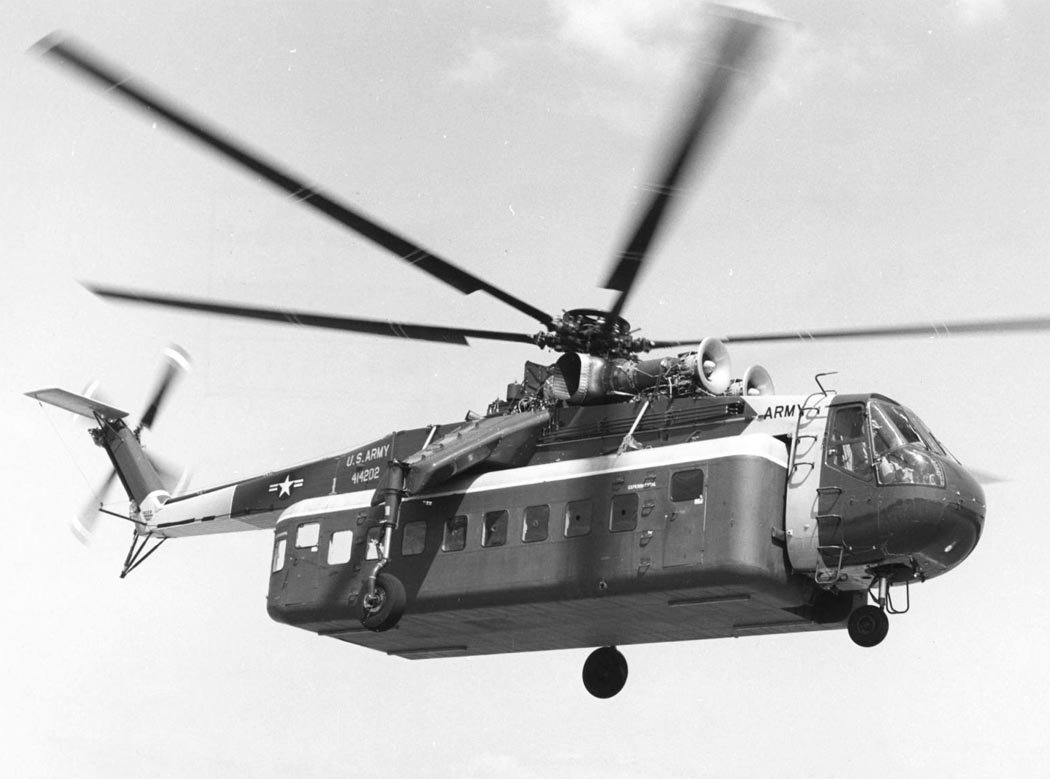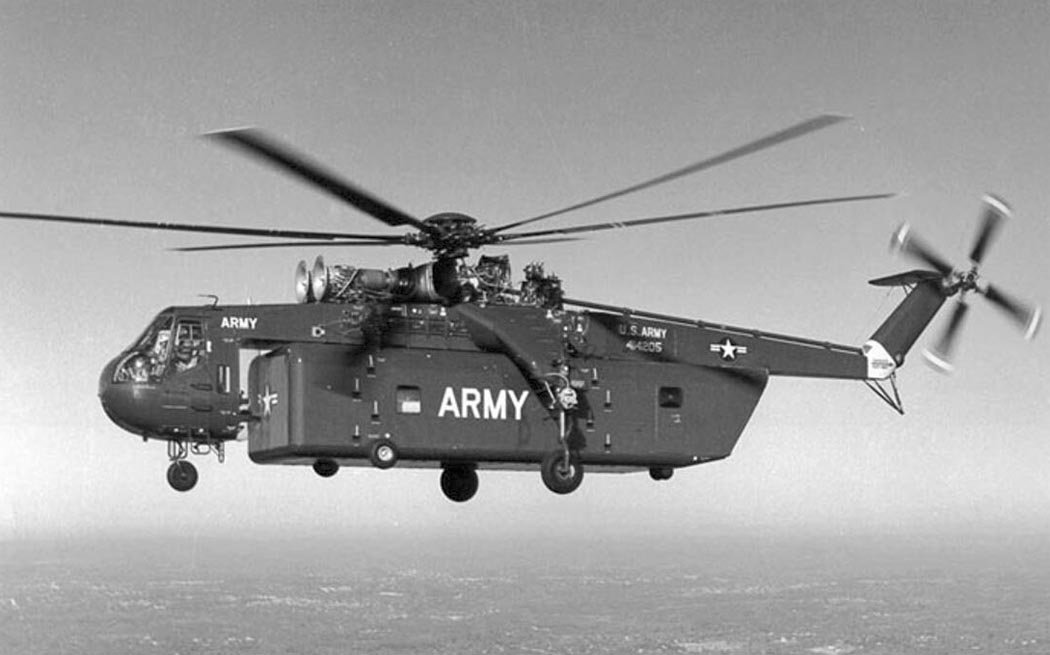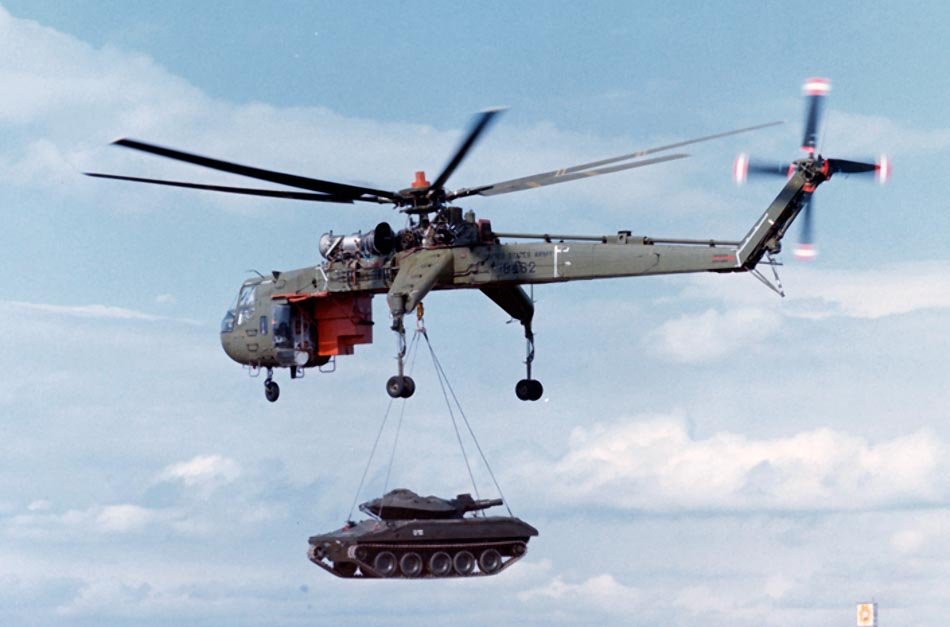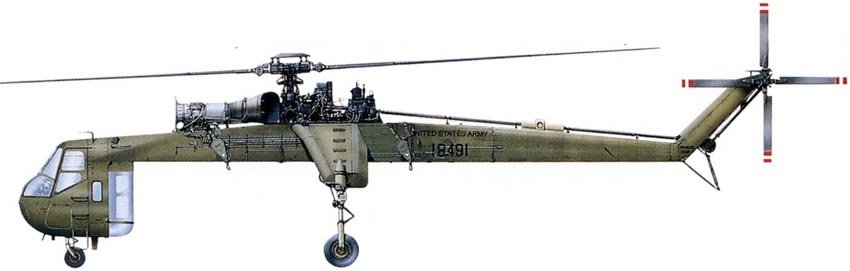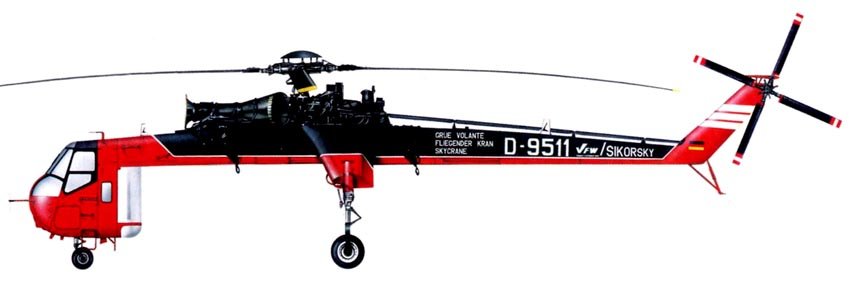
The enormous effort to create the S-60 crane helicopter was not in vain. The Sikorsky company, commissioned by the U.S. Army and the West German government, began building a new crane with two gas turbine engines. The firm owed its German participation in the project to the aircraft designer’s son, Sergei Sikorsky, who was then the corporation’s trade representative in Europe.
Construction of the new S-64 was completed in April 1962, and it made its first flight on May 9. The helicopter was designed to carry 9000 kg over a distance of 85 km, or 6000 kg over 340 km, achieving a weight efficiency of up to 54%.
Innovative Design and Performance
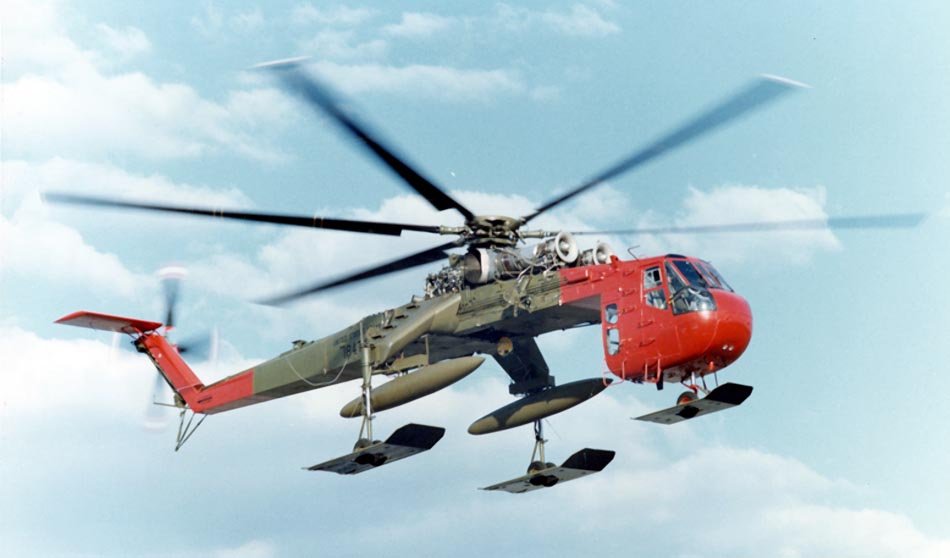
The power plant consisted of two Pratt & Whitney JFTD 12A-4A gas turbine engines, each rated at 4500 hp. They were positioned forward of the main gearbox, counterbalancing the tail boom. The power plant also included a Solar T-62 auxiliary turbostarter engine. Two fuel tanks, each with a capacity of 1664 liters, were located fore and aft of the main gearbox. Two additional tanks could be suspended under the main landing gear struts.
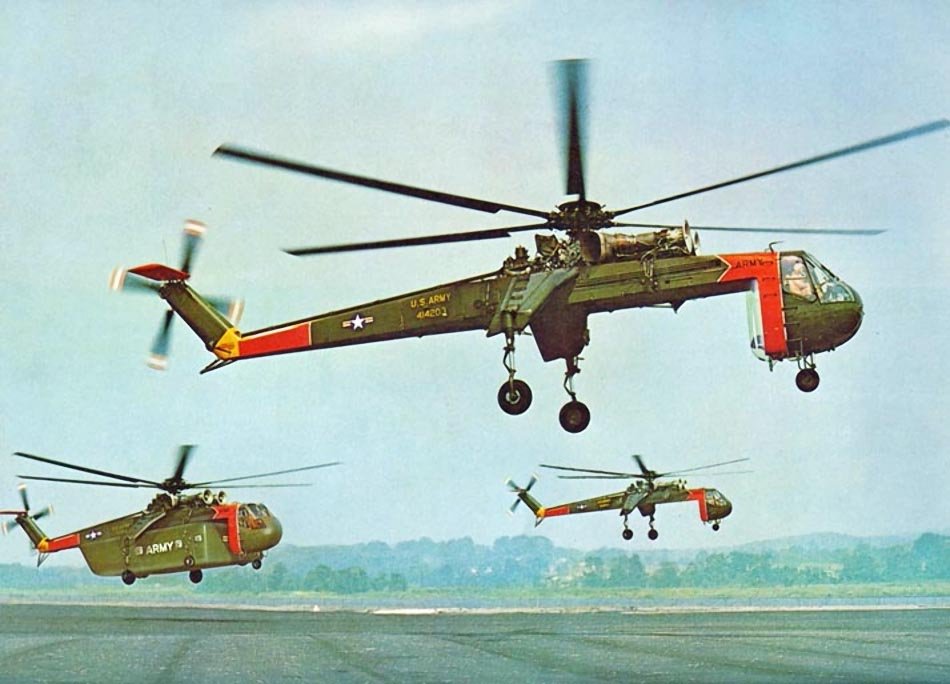
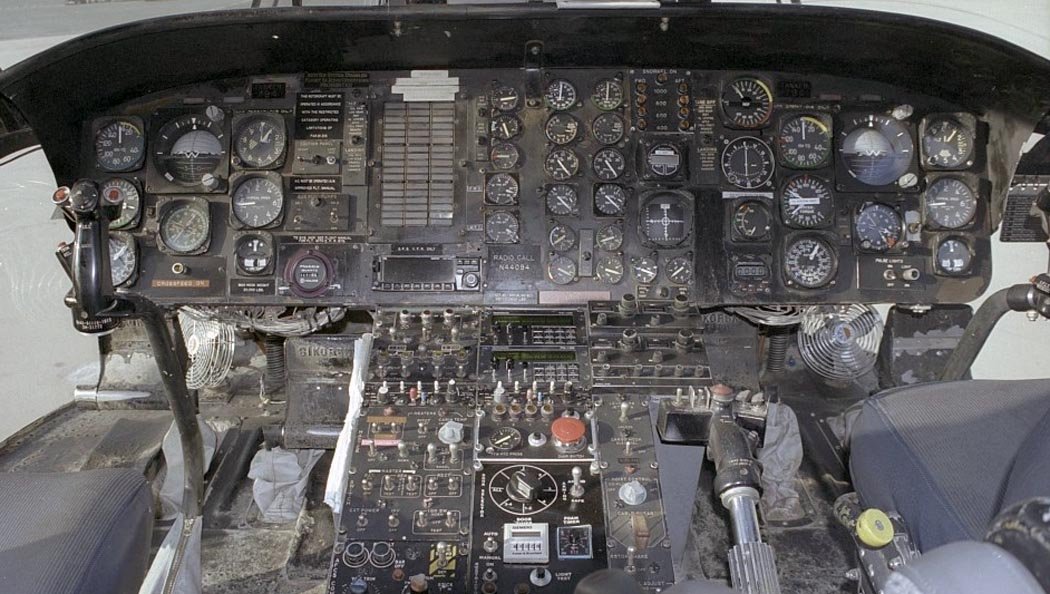
The fuselage was a semi-monocoque box-beam structure, to which the landing gear, gearbox, and external suspension system were attached. At the front was a five-seat cockpit. In addition to two standard pilot seats, there was an additional operator’s position, facing backward for observing and controlling loading and unloading. For convenience, all controls were brought to a single handle on the armrest.
The pilot sitting in the operator’s position had an excellent view and could effectively control the helicopter and manipulate the cargo. The S-64’s main rotor design incorporated many elements from the S-56. The main rotor diameter remained the same at 22 meters, though it now had six blades. The articulated hub was made of steel and aluminum alloys.
The all-metal blades, made of aluminum alloy, had a rectangular shape. The four-bladed tail rotor still featured hinged attachment of all-metal blades. A rigidly fixed stabilizer was attached to the tail boom on the opposite side of the tail rotor.
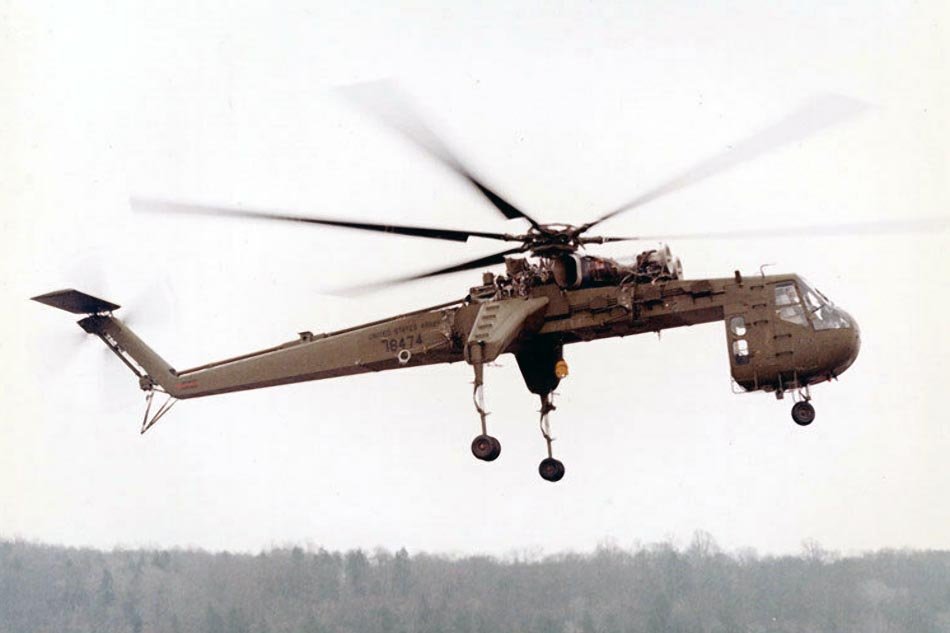
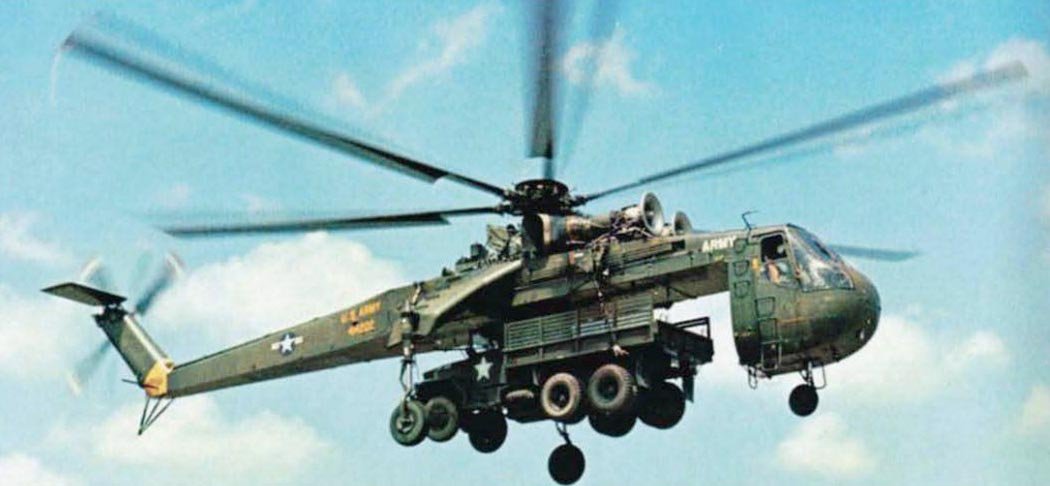
The helicopter had a tricycle landing gear with a nose support. A tractor with a trailer could freely drive underneath the fuselage. The increased spread of the main struts and their greater length expanded the range of transported goods. A special design of the shock-absorbing struts allowed the helicopter to “crouch” by 20 cm and settle over a load to then hook it. For protection of the tail rotor, the tail boom had a retractable mechanical support.
Loading Capabilities and Strategic Applications
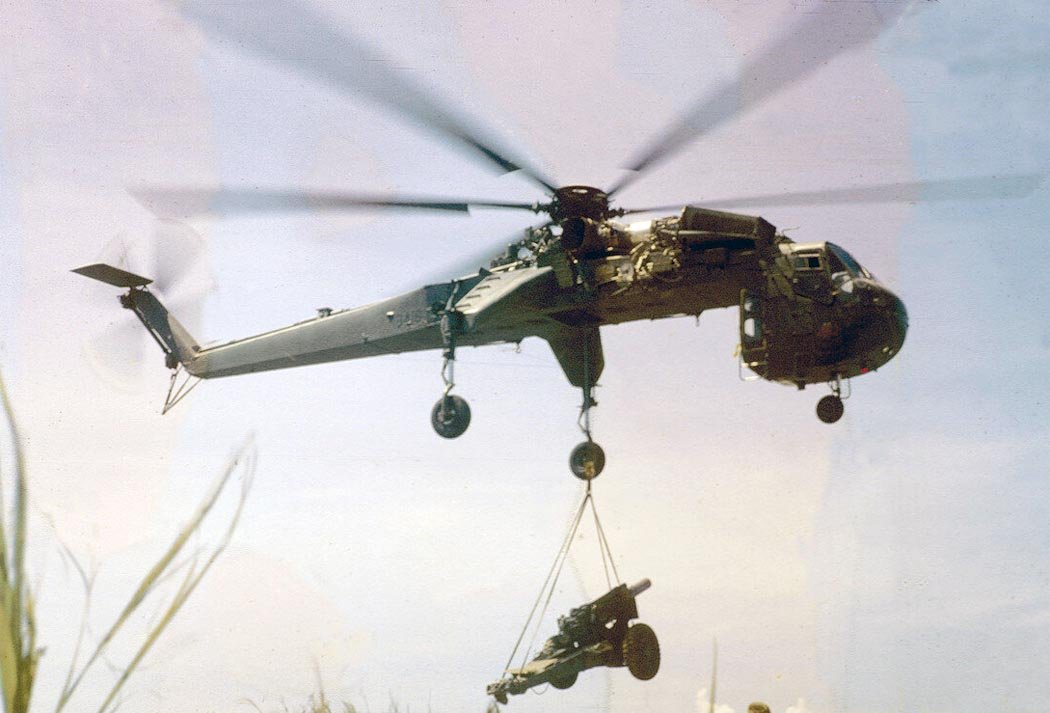
The helicopter’s loading equipment included a hydraulic winch designed for a force of up to 11340 kg, a cable with a hook, a suspended load stabilization system, four side winches for loads up to 4540 kg, and a number of attachment points for containers under the fuselage.
Sikorsky developed a universal suspended container (internal dimensions 8.36×2.69×1.98 m) for transporting cargo and up to 60 soldiers, equipped with communication gear, ventilation, lighting, two side doors, and a rear cargo hatch with a ramp. A total of 22 such containers were supplied to the army. Four attachment points on the container’s roof allowed its suspension and fixation under the fuselage’s lower surface.
After testing, one aircraft remained with the company, and two others were transferred to West Germany. S-64 operations began with the U.S. Army. The experimental factory helicopter was assigned to the 478th Flying Crane Company. This unit was part of the experimental 11th Air Assault Division of airmobile forces, where the concept of mass helicopter use within ground troops was being refined.
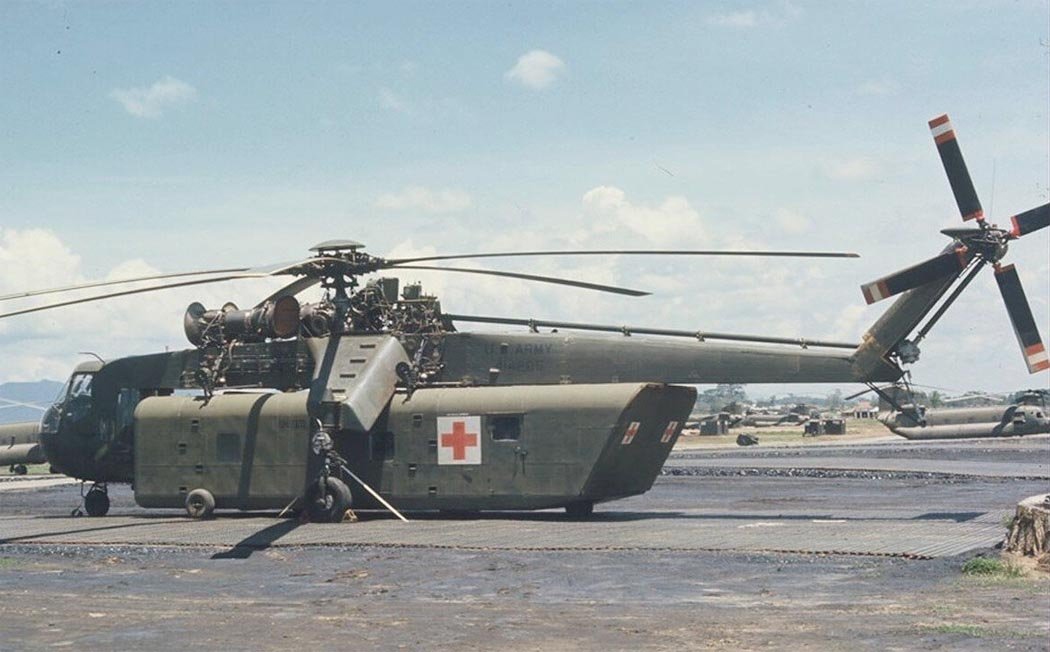
The tests were successful, and the army ordered six S-64s, designated YCH-54A. Five YCH-54A performed well in Vietnam, operating as part of the 1st Cavalry (Airmobile) Division. They evacuated over 380 damaged aircraft from the combat zone, recovering their cost many times over. They were also used to transport troops and equipment to the battlefield and remote jungle areas. In January 1966, a container hospital was equipped in Vietnam with air conditioning, two operating tables, an X-ray room, and a power station. The S-64 also proved highly effective in restoring bridges destroyed by guerrillas.
After acquiring 60 CH-54As, the army purchased another 29 CH-54Bs with Pratt & Whitney JFTD-2-5A engines rated at 4800 hp, rotor blades with increased chord (from 0.61 m to 0.674 m), reinforced transmission and landing gear, and a new autopilot. Deliveries began in 1969. This machine set nine world records, including lifting a 15-ton load to an altitude of 3307 m.
Civilian Impact and Future of the Concept
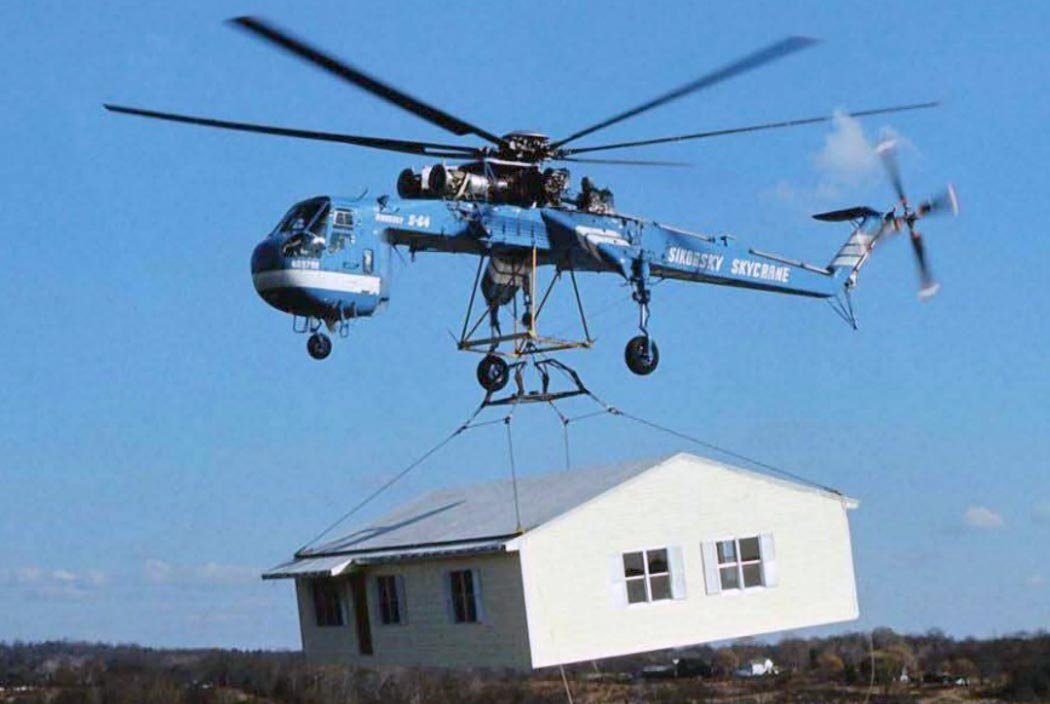
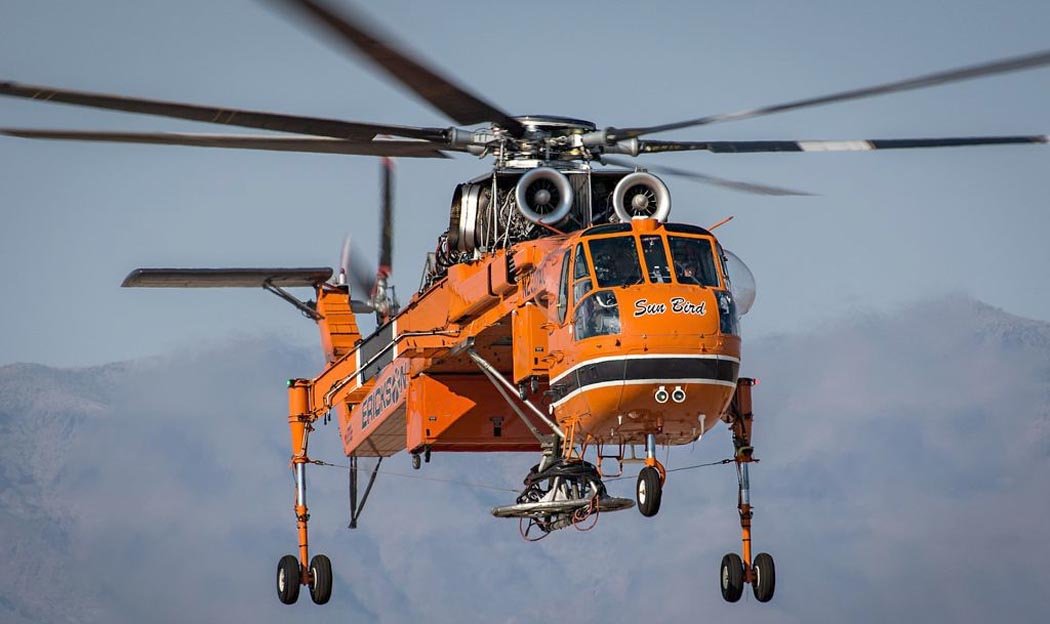
The military helicopters were followed by their civilian variants, the S-64E, certified in 1969. For operations in Alaska, the first two aircraft were bought by Rowan Drilling Company. Erickson Air-Crane Company followed, acquiring its first crane in 1972, and three more after that. Evergreen Helicopters bought two aircraft.
The S-64F was a civilian modification of the CH-54B. It was certified but not mass-produced, as airlines preferred to buy decommissioned CH-54A and CH-54B models from the army. In total, Sikorsky Aircraft built 99 S-64 helicopters of all modifications, including prototypes.
Commercial operation of the S-64 began in 1969. The two aforementioned S-64E models were sent to northern Alaska. There, they supported oil exploration and supplied remote areas. Over three months of summer work, both cranes flew over 900 hours and moved over 10000 tons of equipment and supplies. A record achievement for the S-64 was transporting 200 tons of cargo in a single day. Three months of crane work ensured the company’s operations for the entire season, including the assembly of oil rigs.
In Alaska, Sikorsky’s flying cranes confirmed the effectiveness of helicopter-based coastal unloading operations. They were used to supply Eskimo villages from ships. In a few days, the flying cranes completed work that previously took weeks. Ship roll did not hinder unloading. Cargo damage was only 2% instead of the usual 20-30%. Sikorsky had earlier effectively demonstrated the capabilities of rapid unloading of the container ship “Container Dispatcher” using an experimental S-64.
After completing its flight and military testing program, this helicopter was used as a demonstrator and even received its own name “Olga,” in memory of the aircraft designer’s elder sister. In five and a half hours, the helicopter-crane transported 31 containers, each weighing 9.8 tons, from a ship anchored eight kilometers offshore to the Bridgeport heliport. The helicopter-crane was also highly effective in assembling construction structures. For example, at the Chrysler car assembly plant near Pittsburgh, an S-64 moved 263 ventilation and heating elements to the roof, with a total weight of over 650 tons, in six days.
In November 1967, at a mountain resort in New Jersey, “Olga” demonstratively carried five-ton, fifteen-meter sections of a 300-seat restaurant from the foot of Hamburg Mountain to its summit, where they were assembled. The job took only two hours and 12 minutes of flight time, and the restaurant began operating two days later. In several cases, the flying crane became the only means of resolving a difficult situation. For example, during storms in the Gulf of Mexico, “Olga” provided offshore drilling rigs with necessary supplies. It was also useful when building a tall crane was very expensive, such as the rapid assembly and disassembly of power transmission line towers.
In a swampy area near the Louisiana Canal, “Olga” disassembled the old 50-meter towers in just over two hours and then extended their bases to 90 meters in 4 hours and 11 minutes. In Toronto, a demonstrator helicopter-crane helped assemble the top section of the tallest TV tower of its time, at 553 meters high. Helicopter-cranes were even used in harvesting valuable timber. Near Portland, Oregon, in the Siskiyou National Park, “Olga” participated in selective logging, extracting the most valuable species with minimal environmental damage.
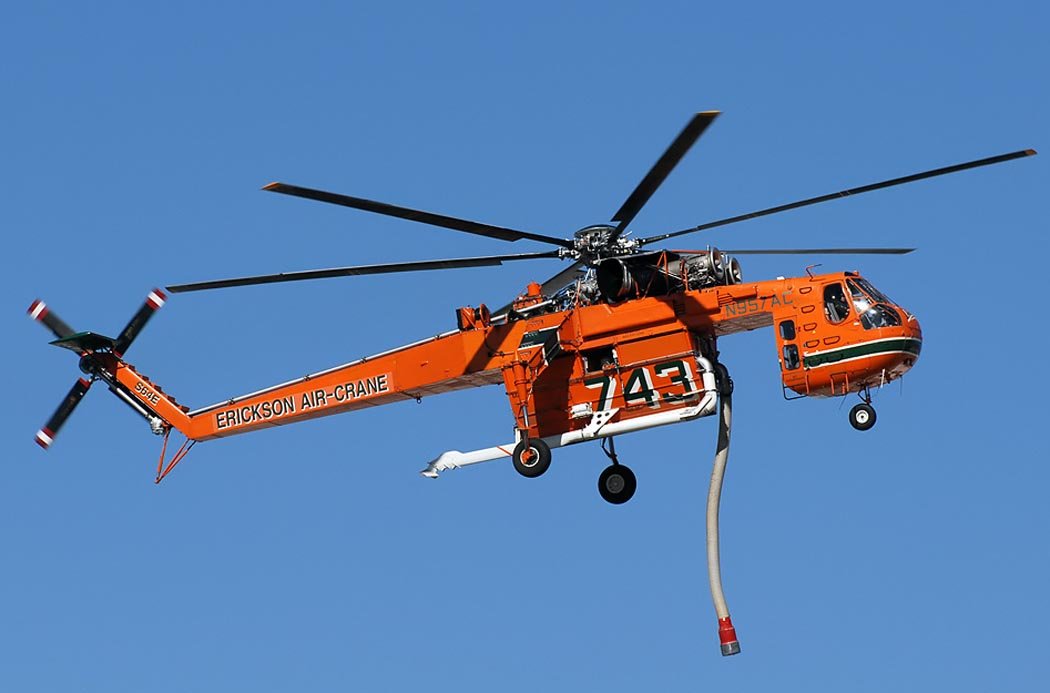
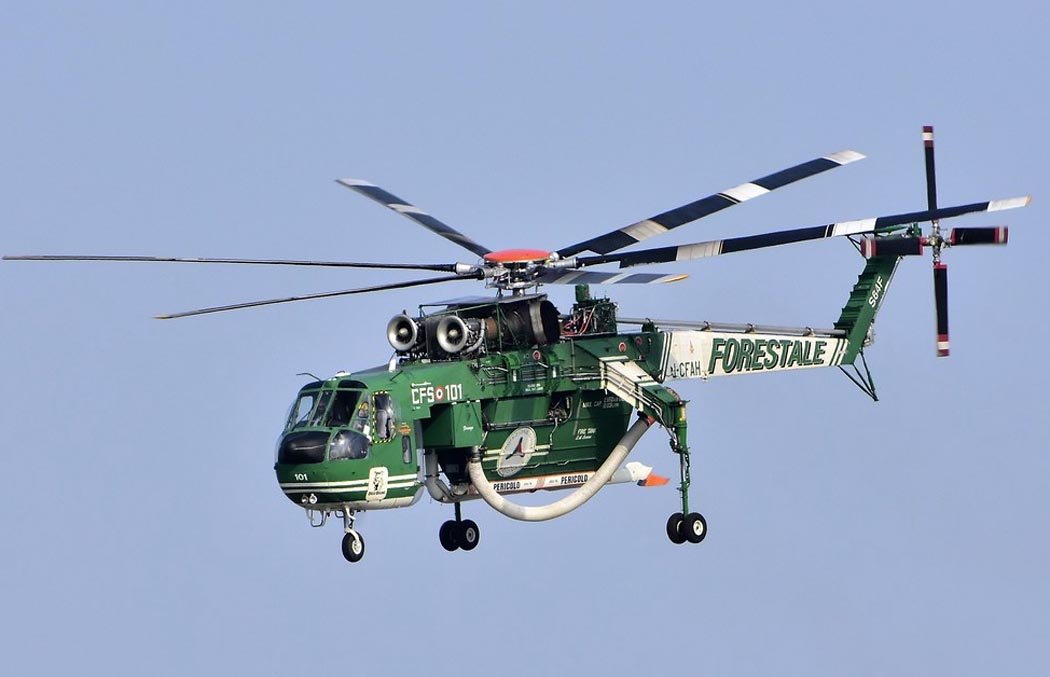
S-64s served in U.S. Army aviation until the early 1980s. They were then transferred to the National Guard and sold to civilian organizations. Today, cranes that still have remaining service life are in the hands of civilian users. The aforementioned Erickson Air-Crane company owns the largest fleet, with a dozen helicopters, and is the leading foreign specialist in crane and installation work, operating worldwide. In May 1993, an S-64F from this company replaced the 6.8-ton Statue of Freedom on the U.S. Capitol dome. One of Erickson’s helicopters was converted into a firefighting aircraft by suspending a water tank under the fuselage.
Although there were a number of successful examples of helicopter-crane use, this concept, despite its external attractiveness, proved not to be as fruitful. The gains from using fuselage-less helicopters were often “eaten up” by losses from ferrying “flying cranes” empty to job sites. Necessary containers were often not at hand. It was cheaper to use fuselage-equipped multi-purpose helicopters with external slings. The “crane” concept only justified itself for super-heavy helicopters and specialized crane-mounting work.
This is confirmed by the experience of operating the Mi-10 in the Soviet Union, created in 1961 on the basis of the Mi-6. A clear analogy can be seen here: S-56 and S-60. Design thought proceeded in parallel and arrived at the same result. Sikorsky’s helicopter-crane concept, apparently, was ahead of its time. It is sure to be developed further in the future, when the main resources in helicopter manufacturing will be spent not on creating weapons, but on building new super-heavy lifting technological means for peaceful construction.
The experience of building the S-56, S-60, and S-64 made it possible for Sikorsky to develop projects for even higher capacity helicopters. In 1960, the S-63 helicopter was developed with a takeoff weight of 42.8 tons, a payload capacity of 18 tons, and a main rotor diameter of 30 meters. In 1961, the DS-103 project featured a takeoff weight of 114 tons, a payload capacity of 40 tons, and a rotor diameter of 48.3 meters.
According to Sikorsky, the level of science and technology development at that time would have allowed the S-63 to be built by the mid-1960s, and the DS-103 by the early 1970s. While the realization of the DS-103 project was linked to the need to solve several complex problems, the embodiment of the S-63 project, designed for the same engines as the S-64, caused no doubts among specialists. This machine was expected to use 10-11 bladed main rotors and four engines.
Instead of one tail rotor, the giants were envisioned with two, having axes tilted in different directions. This would allow the resulting vertical component of thrusts to balance the weight of the long tail boom and ensure longitudinal balance. The effectiveness of such a tail unit was investigated on a specially modified experimental S-56 and proved fully functional. A project for a multi-rotor aircraft with a payload capacity of 80 tons was also being developed.
Despite the high degree of development of the S-63 project, the construction of full-scale machines did not proceed. In the early 1960s, the U.S. armed forces abandoned the concept of transporting heavy loads, tanks, ballistic missiles, etc., by helicopter.
The Vietnam War demanded huge appropriations for the construction of a large number of light aircraft. There were also no civilian customers capable of supporting the construction of giant “flying cranes.” Moreover, in the 1960s, the “coupling” of two S-64s was mastered for transporting loads significantly exceeding the weight and dimensions transportable by a single “crane.” Two S-64s effortlessly lifted 20-ton loads.
From the mid-1960s, Sikorsky considered increasing payload capacity by a less ambitious method: further improving the S-64 by installing a third engine and increasing the main rotor diameter, bringing the useful load to 14.5 tons. The S-64B project was developed for three General Electric T64-S4D-1 engines, each rated at 3780 hp. This evolved into the S-80—the heaviest third-generation helicopter in the West, which will be discussed later.
In the early 1960s, with the construction of the S-64 and S-65, the dimensional growth of Sikorsky helicopters paused. Projects for heavier machines did not receive financial support. At the same time, Sikorsky’s successes stimulated research in the USSR. In the design bureaus of M.L. Mil and N.I. Kamov, work continued on increasing the payload capacity of rotorcraft.
Detailed Technical Specifications
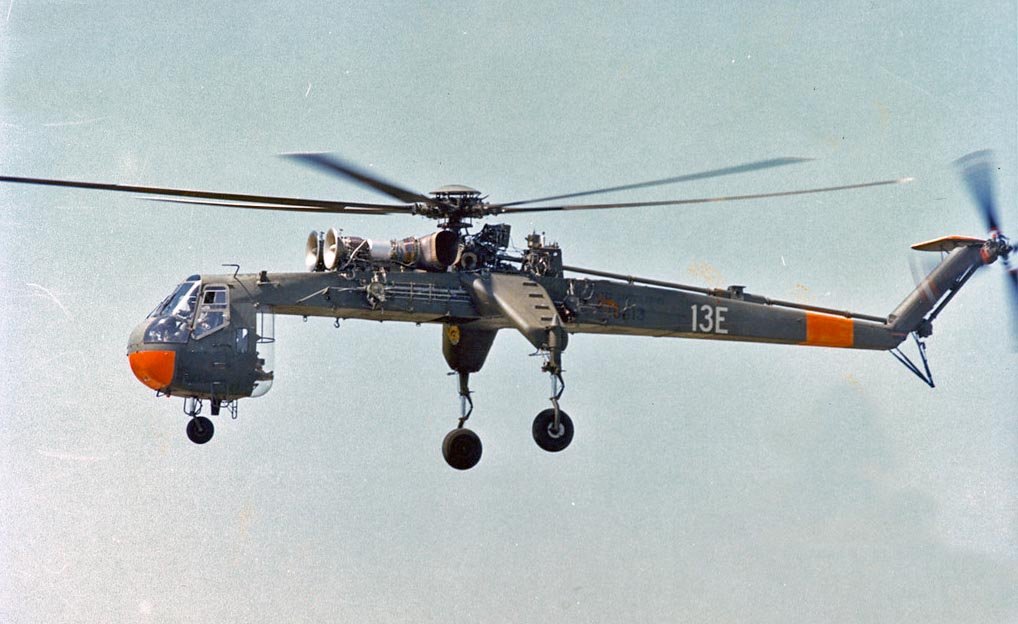
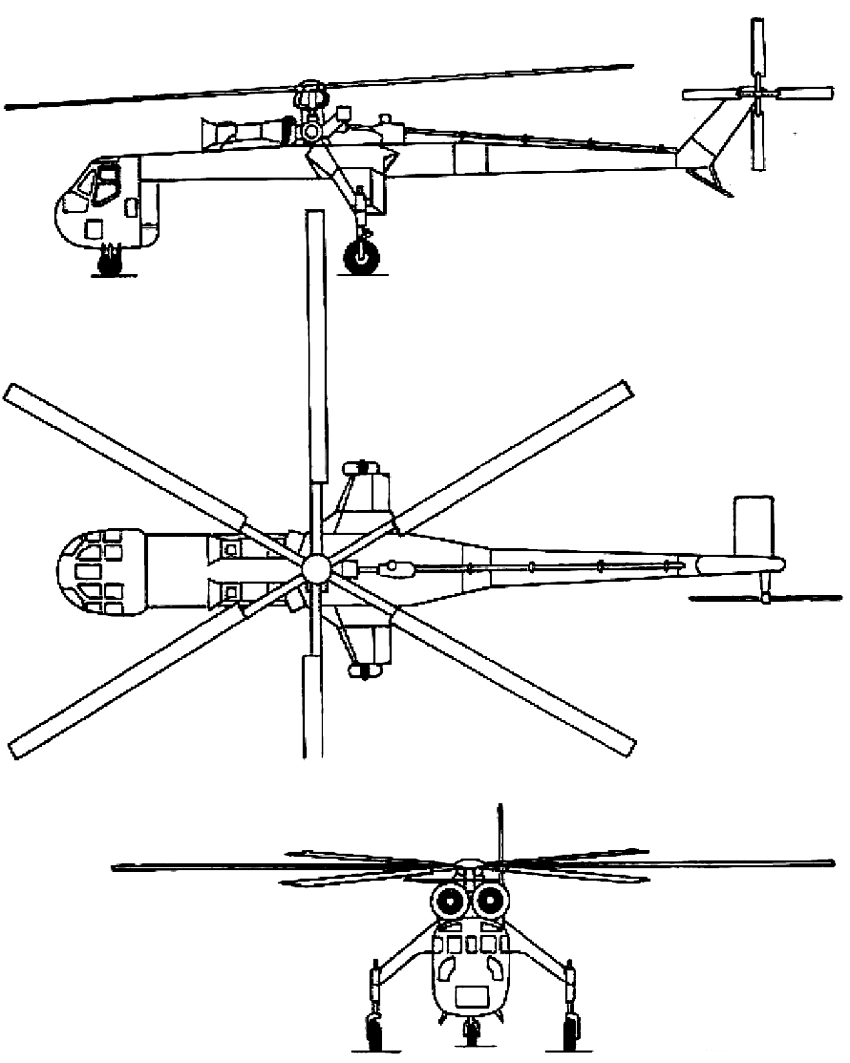
The helicopter features a single-rotor design, with a tail rotor, two turboshaft engines, and a tricycle landing gear. The fuselage is all-metal, semi-monocoque type, constructed as a box-section beam, featuring four attachment points for containers or cargo platforms, designed for forces up to 4540 kg.
The crew cabin is three-seater, with two pilot seats arranged side-by-side and a rear-facing seat with a view of the rear hemisphere for the operator, who controls the helicopter during loading and unloading operations. The CH-54B helicopter’s structure is reinforced. It is possible to transport 45 passengers in a universal container under the fuselage or 24 wounded on stretchers in a sanitary configuration.
The landing gear is a tricycle type, with a nose support. The pressure in the nose wheel tire is 0.67 MPa, and in the main wheel tires is 0.63 MPa. The main supports of the CH-54B helicopter have dual wheels with a tire pressure of 0.67 MPa. Adjustment of the fuselage height above the ground within 0.2m is provided by changing the stroke of the main landing gear struts. The landing gear track is 6.02m, and the wheelbase is 7.44m.
The main rotor is six-bladed, with hinged blade attachment. The hub is made of steel and aluminum alloys. The blades are rectangular in plan, with linear geometric twist, and are made of aluminum alloy. The main rotor axis is tilted 3° forward and sideways from the helicopter’s vertical axis. The chord of the main rotor blades for the CH-54A helicopter is 0.61m, for the CH-54B it is increased to 0.674m. The blade profile is NACA 0012, and the peripheral speed of the blade tips is 212m/s.
The tail rotor, with a diameter of 4.88m, is four-bladed, with hinged blade attachment, and has all-metal blades of rectangular planform. The power plant consists of two engines, placed side-by-side on top of the fuselage without fairings. The auxiliary power unit is a Solar T-62-16A gas turbine engine with a power output of 55kW, which, through the main gearbox, drives the electrical and hydraulic systems when the helicopter is parked.
The transmission includes the main and intermediate gearboxes and connecting shafts, which are not covered by fairings, and the tail rotor drive gearbox. The main gearbox of the CH-54A helicopter is designed to transmit 4850kW of power, and that of the CH-54B, 5800kW. The reduction ratio from the engine to the main rotor is 49.6:1, and to the tail rotor is 10.6:1. The transmission’s service life is 500 hours.
The fuel system includes two fuel tanks, each with a capacity of 1664 liters, located in the fuselage before and after the main gearbox. Provision is made for installing an additional 1664-liter tank. The control system is duplicated, hydraulic, and includes an automatic stabilization system. Additional equipment consists of a hydraulic winch designed for a force of 11340 kg, a cable with a hook, a suspended load stabilization system, and attachment points for containers to the fuselage and landing gear struts.
Universal containers were developed for transporting cargo and soldiers, equipped with communication equipment, ventilation and lighting systems, and featuring two side doors and a cargo hatch located at the rear of the container. The internal dimensions of the container are 8.36 x 2.69 x 1.98m; 22 containers were supplied to the army.
The CH-54A was the base helicopter with turboshaft engines of 3310kW each and a maximum takeoff weight of 19050kg. In 1965, three international records were set on this helicopter, including lifting a load of 1000kg to a height of 8943m.
The CH-54B modification featured more powerful engines of 3530kW each and a maximum takeoff weight of 21320kg. In October 1970, during tests to lift heavy structures using a system of two CH-54B helicopters, a load weighing 18488kg was lifted. In 1971-1972, the CH-54B helicopters set nine international records for altitude and rate of climb, including lifting a 15-ton load to a height of 3307m, 10 tons to 5246m, and 5 tons to 7778m (Note: these latter records also belong to a “system of two helicopters,” as a CH-54 cannot have a higher lifting capacity than a Mi-6).
The S-64A is the civil variant of the CH-54A helicopter; it received its airworthiness certificate in 1969 for transporting external loads of up to 10160kg.
Technical Specifications
| Modification | CH-54A |
| Main rotor diameter, m | 21.95 |
| Tail rotor diameter, m | 4.88 |
| Length, m | 21.46 |
| Height, m | 5.67 |
| Empty weight | 7820 |
| Normal takeoff weight | 17237 |
| Maximum takeoff weight | 19051 |
| Internal fuel, l | 3331 + optionally 1666 |
| Engine type | 2 Gas turbine engines Pratt Whitney T73-P-1 (JFTD12A-4A) |
| Takeoff power | 2 x 3355 |
| Flight power | 2 x 2982 |
| Maximum speed, km/h | 203 |
| Cruising speed, km/h | 169 |
| Range, km | 370 |
| Rate of climb, m/min | 405 |
| Service ceiling, m | 4745 |
| Static ceiling, m | 3230 |
| Crew | 2 crew |
| Payload | up to 9072 kg of cargo |
Image gallery of the Sikorsky CH-54 Tarhe