C-101 Aviojet
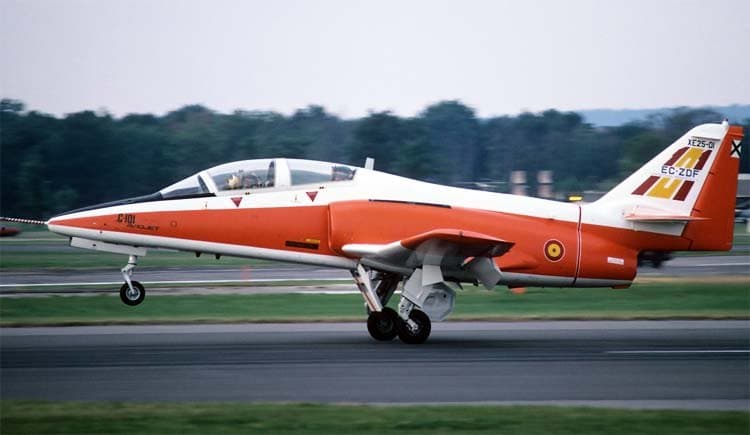
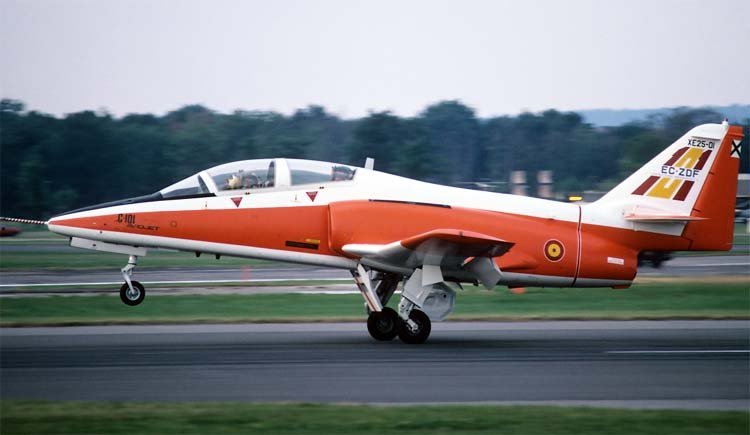
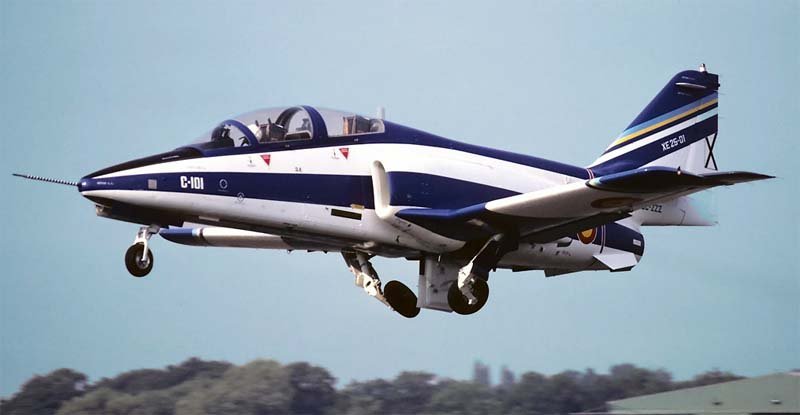
Designed by CASA in collaboration with MBB and Northrop, the C.101 Aviojet, an advanced trainer, combat, and light attack aircraft, was supplied to Spain, Chile, Honduras, and Jordan. The first and last of four prototypes took to the air on June 27, 1977, and April 17, 1978, respectively. By late 1978, all four aircraft were handed over to the Spanish Air Force for evaluation trials.
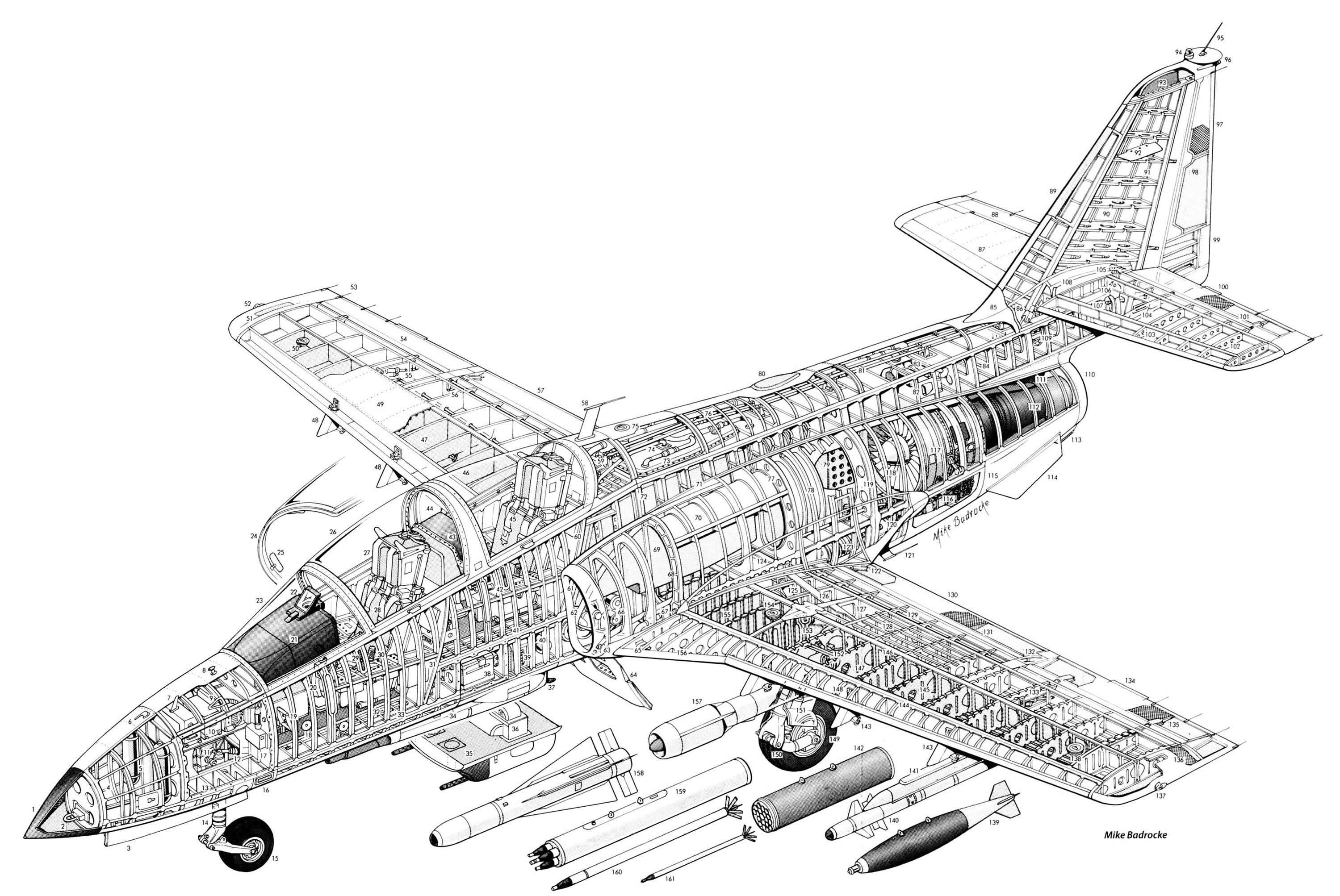
The C.101 was a low-cost, moderately complex aircraft featuring a modular design with spacious compartments specifically intended for the future installation of new avionics or other equipment. Key features included straight wings and stabilizer, a swept fin, a single high-bypass turbofan engine with improved fuel economy, side air intakes above the wing, tandem stepped Martin-Baker Mk 10L “0-0” ejection seats, a pressurized cockpit with separate canopies, and slotted flaps. Its most significant feature was a large fuselage bay beneath the rear cockpit, capable of accommodating armament, reconnaissance equipment, electronic warfare (EW) stations, laser designators, or other devices.
Variants and Spanish Service
Initially, the Spanish Air Force acquired 60 C.101EB-01 trainer/combat aircraft, designated E.25 Mirlo, powered by a TFE731-2-2J engine with 15.57 kN of thrust. A second contract secured 28 additional aircraft. Between 1990 and 1992, all surviving units underwent a modernization of their navigation and weapon control systems.
While the C.101EB’s low-altitude performance proved somewhat better than projected, its high-altitude capabilities were weak. Consequently, the export version of the light attack/advanced trainer, the C.101BB, was fitted with a TFE731-3-1J engine, offering an increased thrust of 0.89 kN. This also provided the aircraft with the capability to carry various weapons on six underwing pylons, a feature present but unused on Spanish C.101EB aircraft. The lower fuselage compartment of the C.101BB could house quickly interchangeable containers with reconnaissance equipment, EW apparatus, a laser designator, or twin 12.7mm machine guns, in place of a centerline-mounted 30mm DEFA cannon.
Export and Upgrades
C.101BB-02 aircraft were exported to Chile, with four units assembled by CASA and ten assembled in Chile by ENAER from kits. In service, these aircraft were designated T-36 Halcon. Although intended for advanced training, a radar rangefinder was installed in their nose for use as A-36BB combat trainers, providing instruction in the application of various armaments.
The C.101CC light attack aircraft made its first flight on November 16, 1983, equipped with a single TFE731-5-1J turbofan engine. While the pylons were not replaced and the suspended armament mass did not increase, the rise in maximum takeoff weight allowed for a greater fuel capacity. In 1984, Chile ordered 23 C.101CC-02 light attack aircraft: one was assembled in Spain, three were delivered as kits, and the remaining 19 were manufactured under license in Chile.
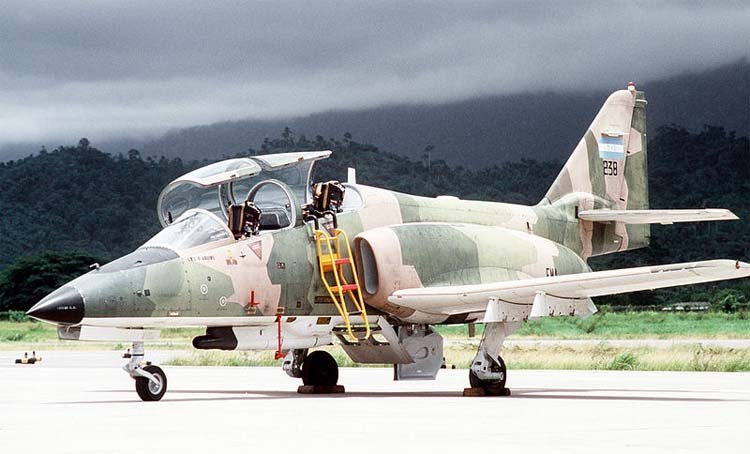
Four very similar C.101BB-03 aircraft were supplied to Honduras. The first A-36 was briefly used as a demonstrator for the prospective A-36M, performing flights with mock-ups of BAE Sea Eagle missiles under the wing, though this project was rejected. Sixteen C.101CC-04 units were supplied to Jordan as advanced flight training aircraft.
On May 25, 1985, CASA test-flew the C.101DD prototype, featuring the TFE731-5-1J engine and new avionics, including a collimated display (HUD). These aircraft also incorporated HOTAS controls and could be armed with AGM-65 missiles. The C-101 Aviojet, designed as an advanced trainer (combat) and light attack aircraft, continues to be in high demand.
Design and Equipment
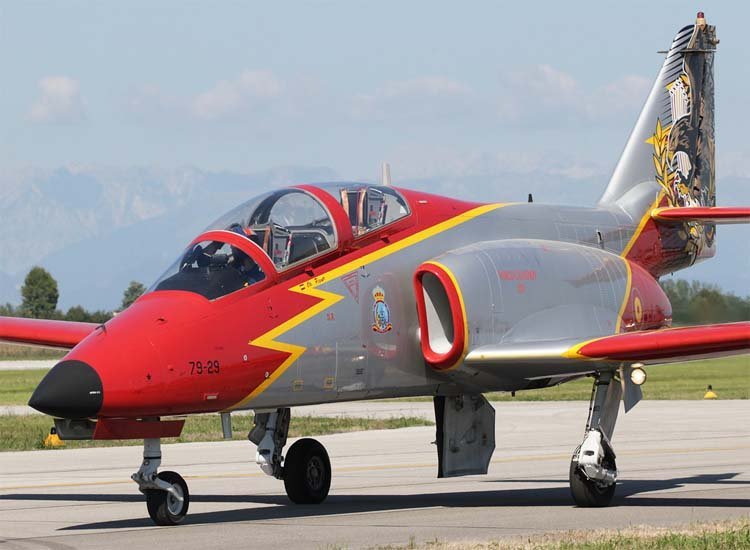
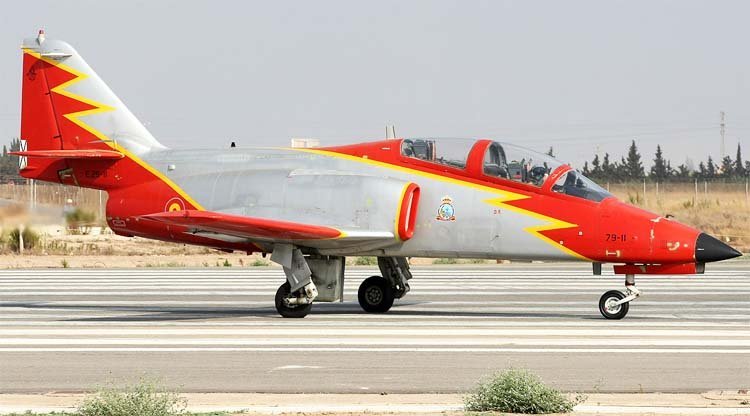
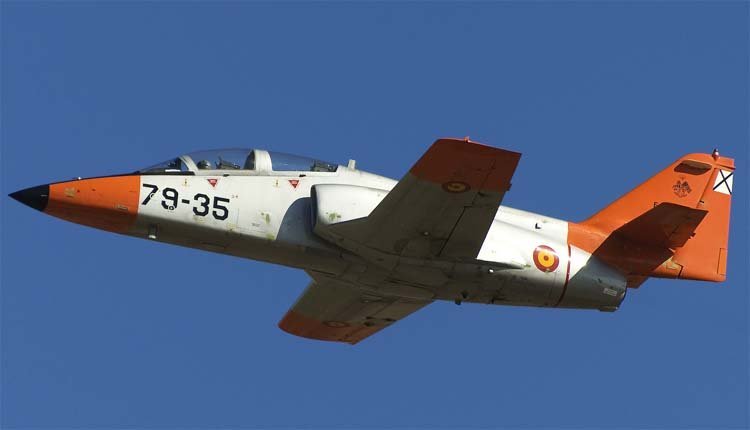
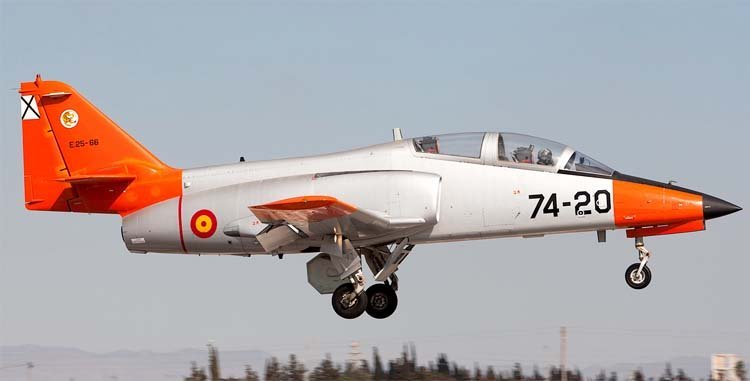
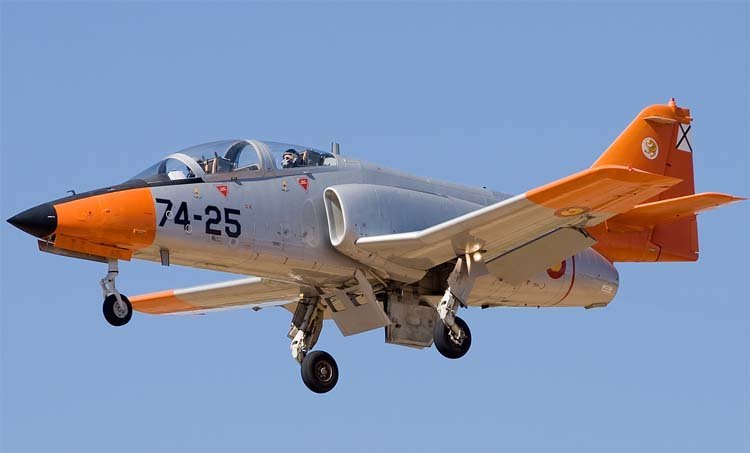
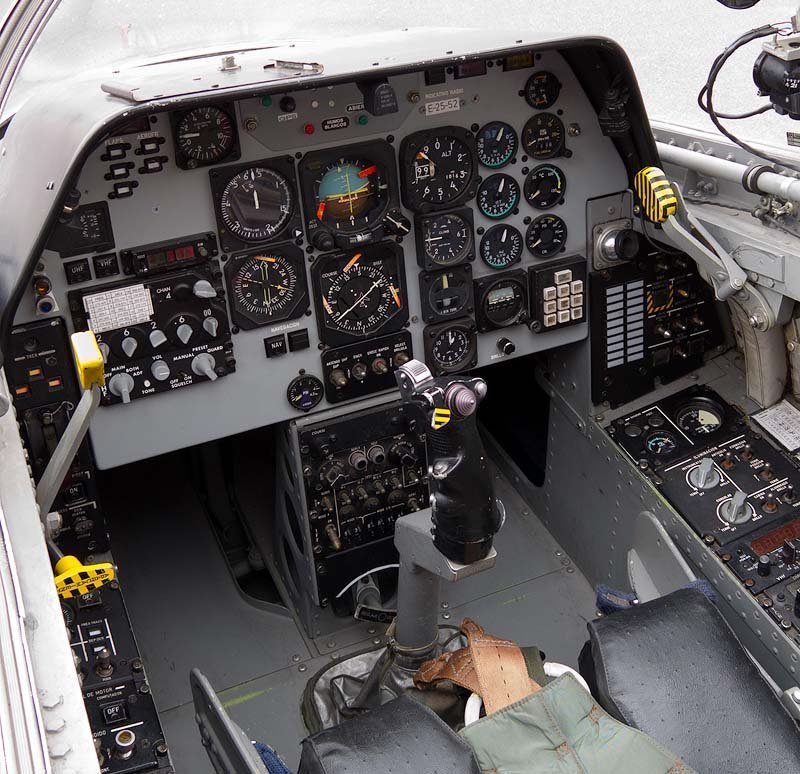
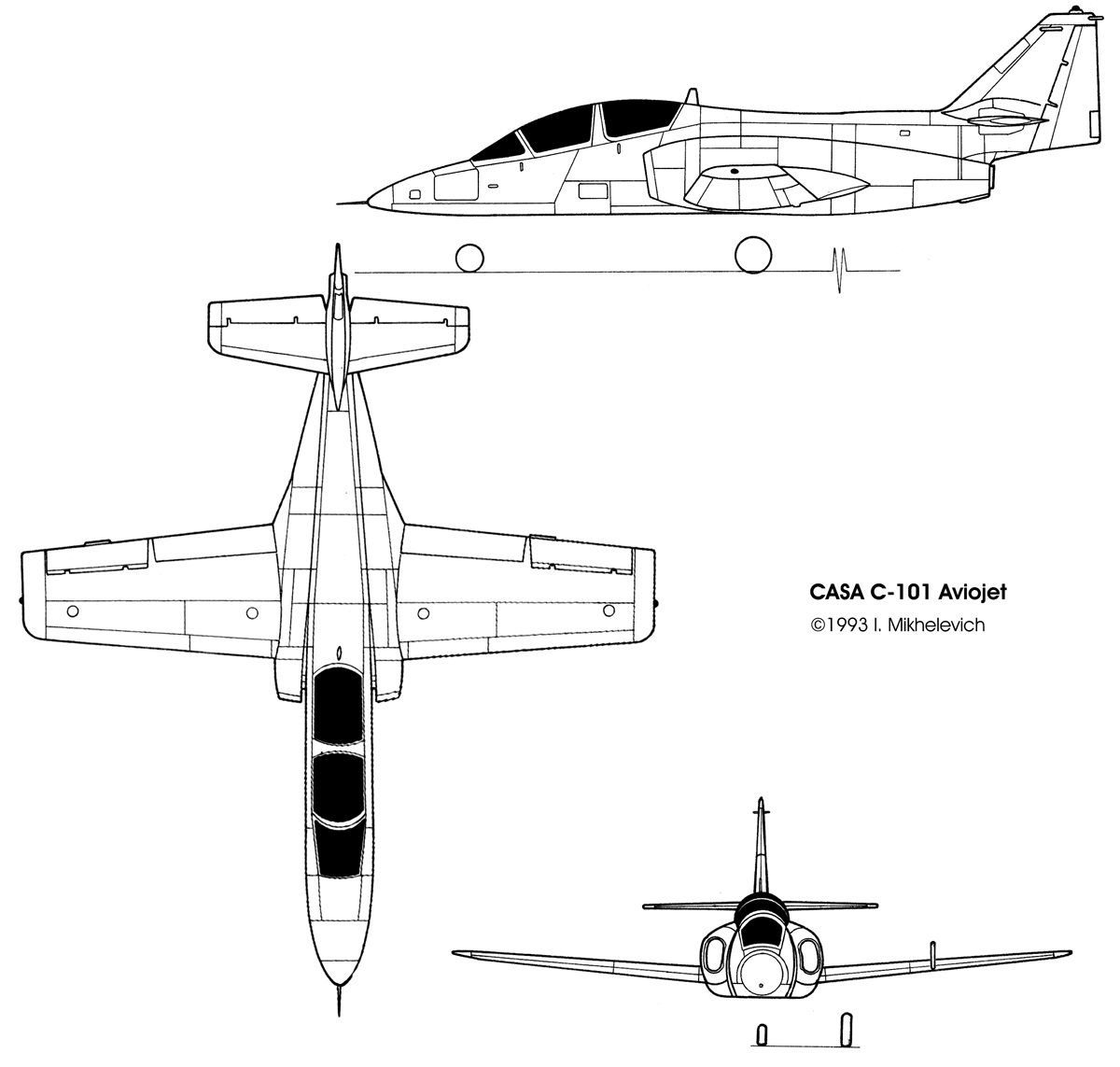
Structurally, the C.101 Aviojet is a two-seat, all-metal monoplane with a low-mounted wing. It features a single fin tail unit and a tricycle landing gear with a nose wheel. The forward fuselage houses a two-seat cockpit equipped with Martin-Baker Mk.E 10 ejection seats. The rear seat is slightly elevated to provide a better view for the instructor pilot.
On both sides of the fuselage are the air intakes for the American-made TFE 731-2-25 twin-spool turbofan engine, producing 1600 kgf of thrust. Overall, the aircraft’s design is characterized by simplicity and rationality, which simplifies its production, repair, and operation.
The aircraft’s radio-electronic equipment includes HF and VHF radio stations, TACAN radionavigation system instruments, a radar identification system, and targeting devices. The fuselage bay can accommodate a 30mm Defa cannon or two 12.7mm machine guns. Various reconnaissance equipment or electronic warfare apparatus can also be installed here.
Technical Specifications
| Modification | С.101 |
| Wingspan, m | 10.60 |
| Length, m | 12.50 |
| Height, m | 4.25 |
| Wing area, m2 | 20.00 |
| Empty weight | 3470 |
| Normal takeoff weight | 4850 |
| Maximum takeoff weight | 5600 |
| Internal fuel, kg | 1822 |
| Engine type | 1 Turbojet Garrett TFE731-3-1J |
| Non-afterburning thrust, kN | 1 х 16.46 |
| Maximum speed, km/h | 834 |
| Cruising speed, km/h | 656 |
| Practical range, km | 3706 |
| Combat radius, km | 370-964 |
| Flight endurance, h.min | 3.30 |
| Maximum rate of climb, m/min | 1152 |
| Service ceiling, m | 12190 |
| Maximum operational overload | 7.5 |
| Crew, crew | 2 |
| Armament: | One 30-mm DEFA 553 cannon with 130 rounds or two 12.7-mm FN-Browning M3 machine guns (with 220 rounds); combat load – 1150 kg on 6 hardpoints: 2x 500-kg bombs or 4x 375-kg bombs or 6x 250-kg bombs, or 4 BLU-27 napalm bombs, or 4 LAU-10 4×127-mm rocket pods or 6 LAU-68 19×70-mm rocket pods or 6 Matra 155 18×68-mm unguided rockets, or 2 AIM-9 Sidewinder air-to-air missiles. |
Image and diagram gallery of the C-101 Aviojet
 C-101 Aviojet |
 C-101 Aviojet |
 C-101 Aviojet |
 C-101 Aviojet |
 C-101 Aviojet |
 C-101 Aviojet |
 C-101 Aviojet |
 C-101 Aviojet |
 C-101 Aviojet |
 C-101 Aviojet |
 C-101 Aviojet |
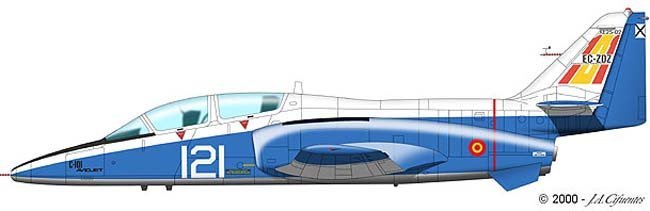 C-101 Aviojet |
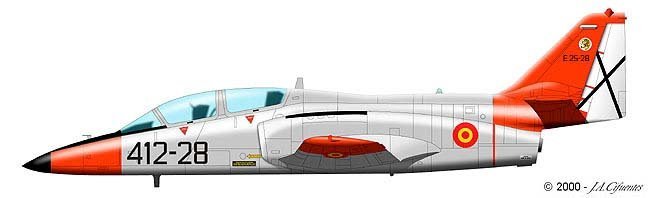 C-101 Aviojet |
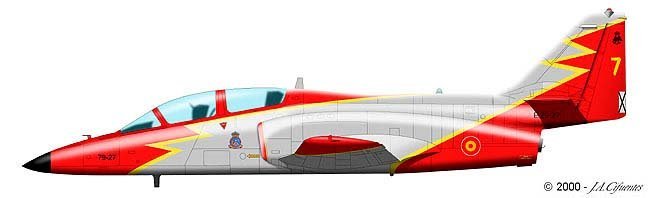 C-101 Aviojet |
Equipo Editorial de ArchivoAéreo
Grupo de investigadores y entusiastas de la aviación dedicados a documentar y preservar la historia aeronáutica mundial. Todos los artículos son revisados para garantizar precisión histórica.
Fuentes y Rigurosidad
La información presentada en esta ficha técnica ha sido compilada a partir de manuales de vuelo desclasificados, archivos históricos y bibliografía especializada. Aunque nos esforzamos por mantener la máxima precisión, algunos datos de rendimiento pueden variar según la variante específica o las condiciones operativas.