Anyone with even a slight familiarity with aviation knows the “Caravelle,” an aircraft that inspired numerous imitations in other countries, and whose technical solutions became classic. Leading French aviation firms had been developing the design of a jet transport aircraft since 1946, a fact their representatives did not conceal at post-war Parisian air shows.
The approach of French specialists to solving the problem was not unique. The first experimental jet transport aircraft was created in 1950, commissioned by the Ministry of Aviation, by converting a piston-powered “Bellatrix” transport. This machine was fitted with two Rolls-Royce “Nene” engines, manufactured under license by Hispano-Suiza. Later, a modified SO-30R was similarly adapted to test the French SNECMA “Atar” jet engine. Both aircraft were experimental and not intended for serial production or airline operation.
Early French Jet Development
Finally, in November 1951, the French government established a technical and industrial committee for aviation technology to support national aviation firms in creating civil jet aircraft. The initial technical specifications from November 1951 envisioned the development of a 55-65-seat aircraft, capable of transporting passengers and 1000 kg of cargo over a distance of 2000 km at an average speed of 600 km/h.
Nothing specific was said about the engines. It was evident that the sole powerful French turbojet, the “Atar” with 2800 kgf of thrust (developed from the German BMW003), was too weak for a twin-engine aircraft. Therefore, the first projects from the national enterprise SNCASE, from the X-200 to the X-210, envisaged the placement of three “Atar” engines in the rear fuselage section.
The competing SNCASO SO-60 project was a conversion of a piston aircraft with two British Rolls-Royce “Avon” jet engines and two auxiliary Turbomeca “Marbore” engines, mainly used during takeoff and climb. In the first stage of the competition, a third project, the Urel-Dubois HD-45, was also considered. It used two “Avon” engines combined with an extravagant straight wing of high aspect ratio, a Urel design that proved incompatible in this case. Another participating project was the Breguet 978 with three rear-mounted “Atars,” which was very rational and a serious competitor.
For further work, the civil aviation committee selected the very promising X-210 and tasked SNCASE with redesigning it for two more powerful engines. The Rolls-Royce RA-16 “Avon” turbojet with 4080 kg of thrust was chosen, as its characteristics were ideal for an aircraft in the X-210 category. The developers submitted the redesigned project in July 1952, and two months later, received news of their victory in the competition.
In February 1953, two prototypes were built for flight tests and two for strength and fatigue tests. In the working documentation, the experimental index X-210 was replaced by the subsequently renowned company designation SE-210. During the aircraft’s design, SNCASE collaborated very closely with Air France, anticipating its future support, and with the British firm De Havilland, which provided its experimental materials on the first passenger jet, the “Comet 1.”
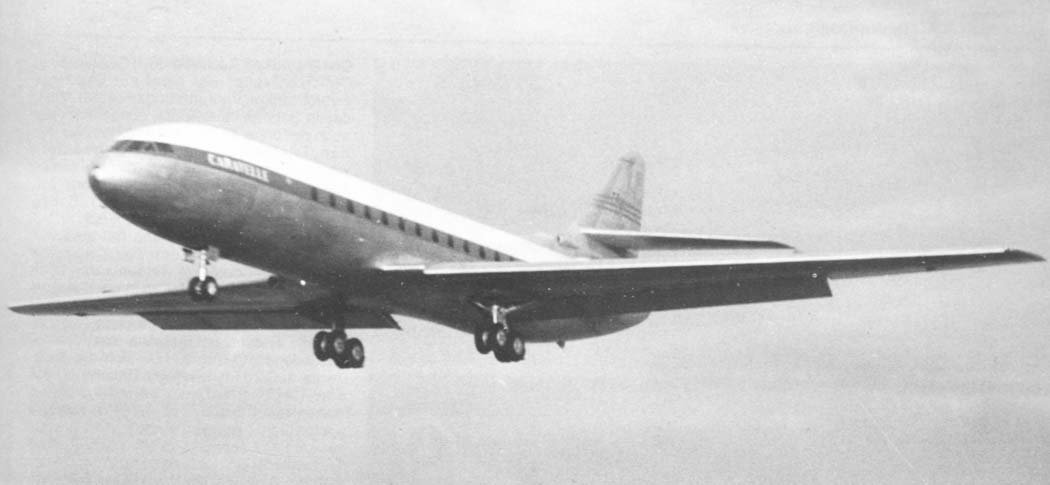
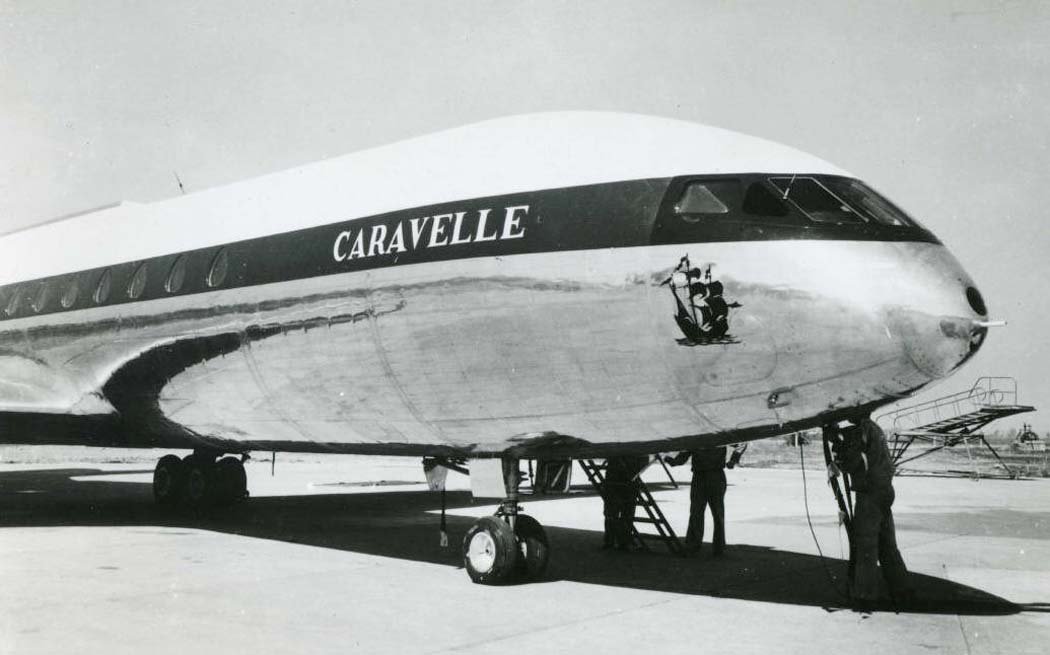
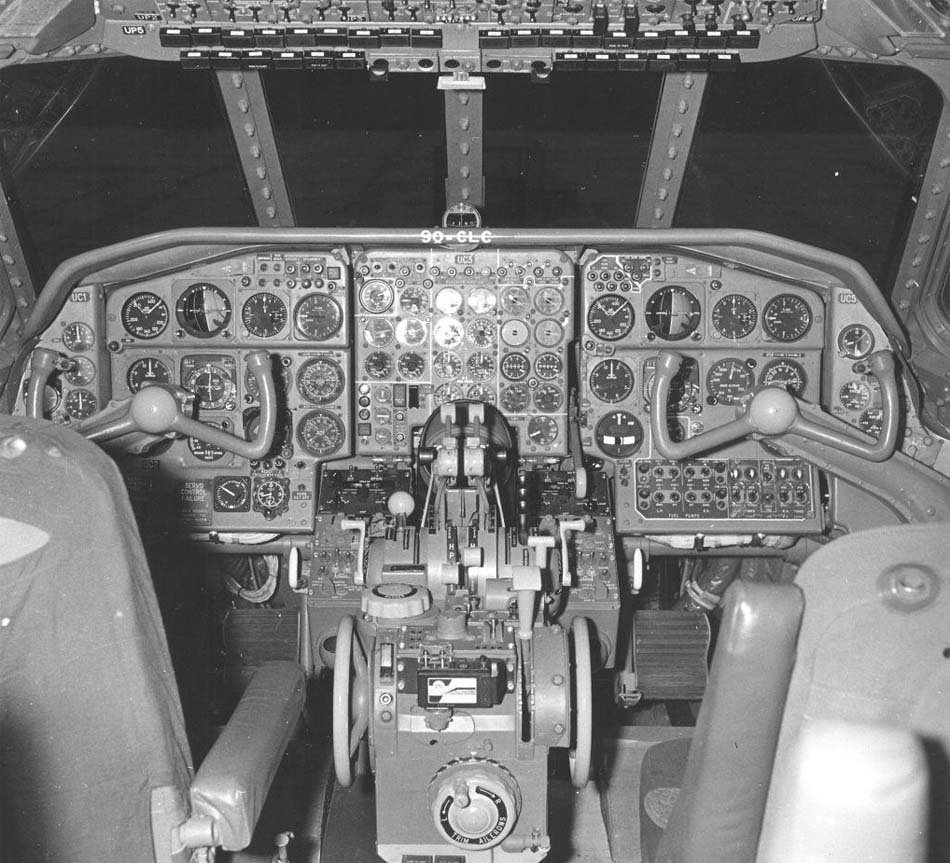
SNCASE’s interaction with English specialists influenced technological solutions, visible in the contours of the fuselage’s nose section, the cockpit layout, and the moderate wing sweep of 20°. Such a wing was optimal for cruising speeds and contributed to the aircraft’s very good behavior at low speeds. On April 21, 1955, prototype E-210 taxied out of the hangar, and on May 27, it made its first flight lasting 41 minutes.
Caravelle’s Design Innovations
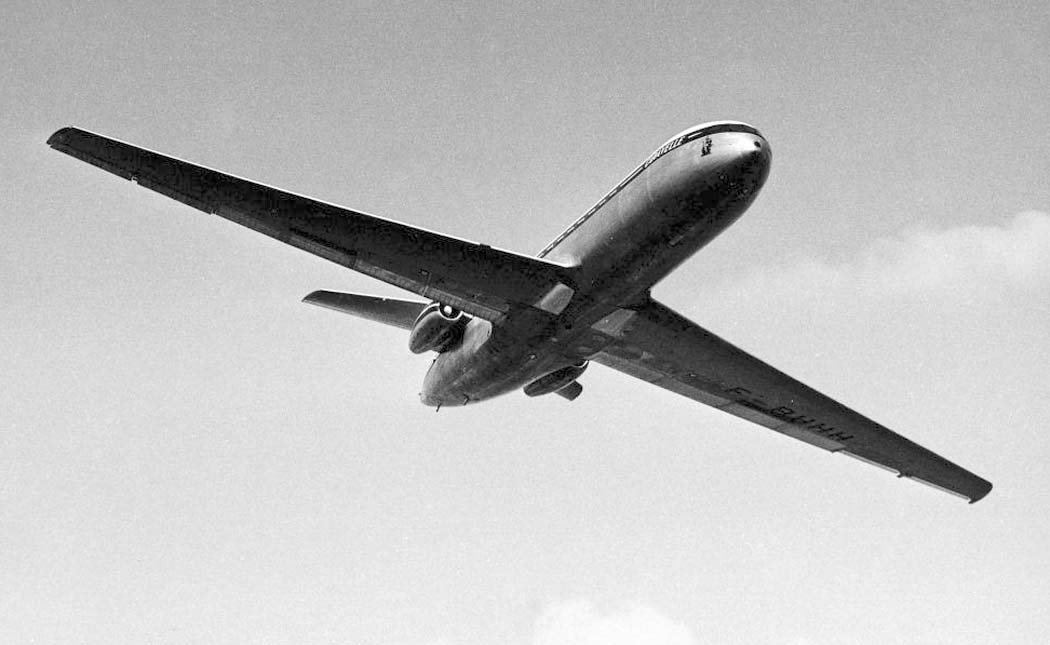
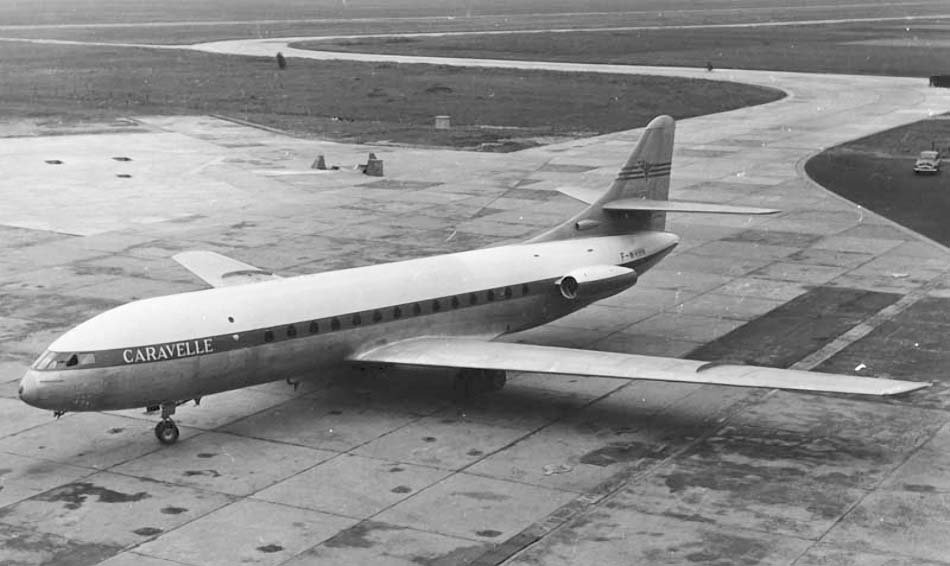
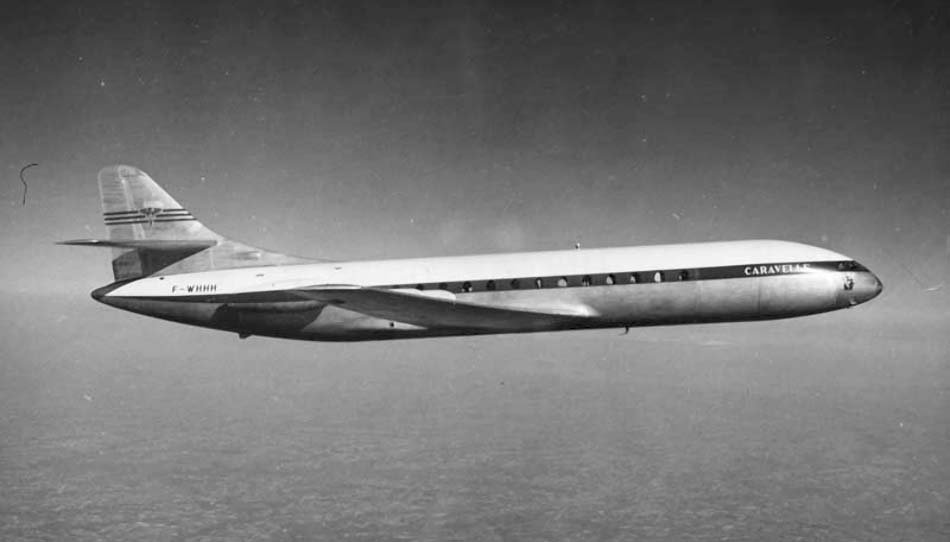
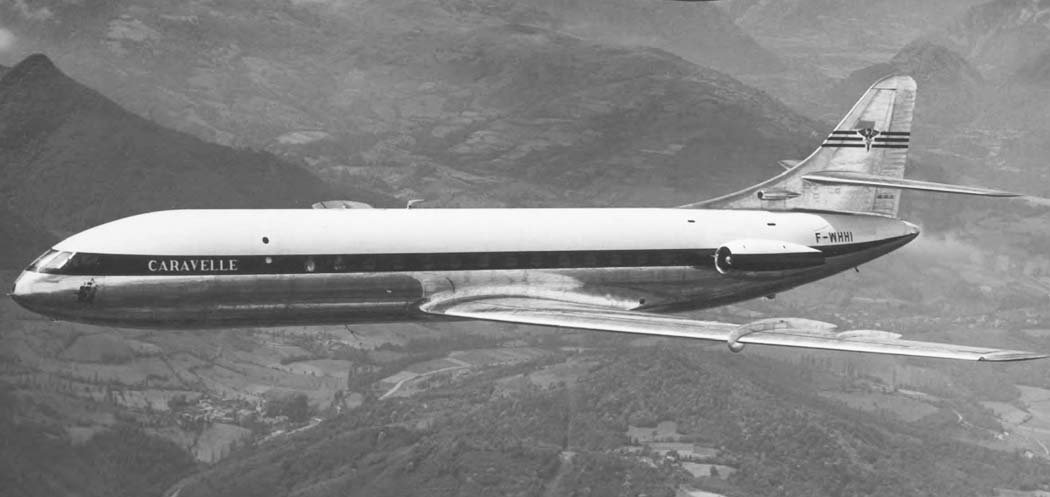
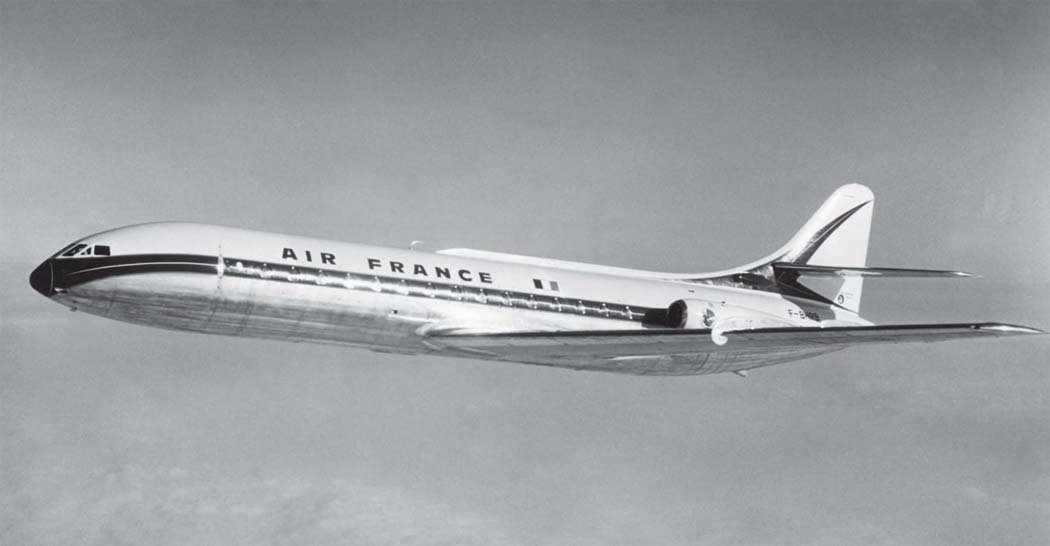
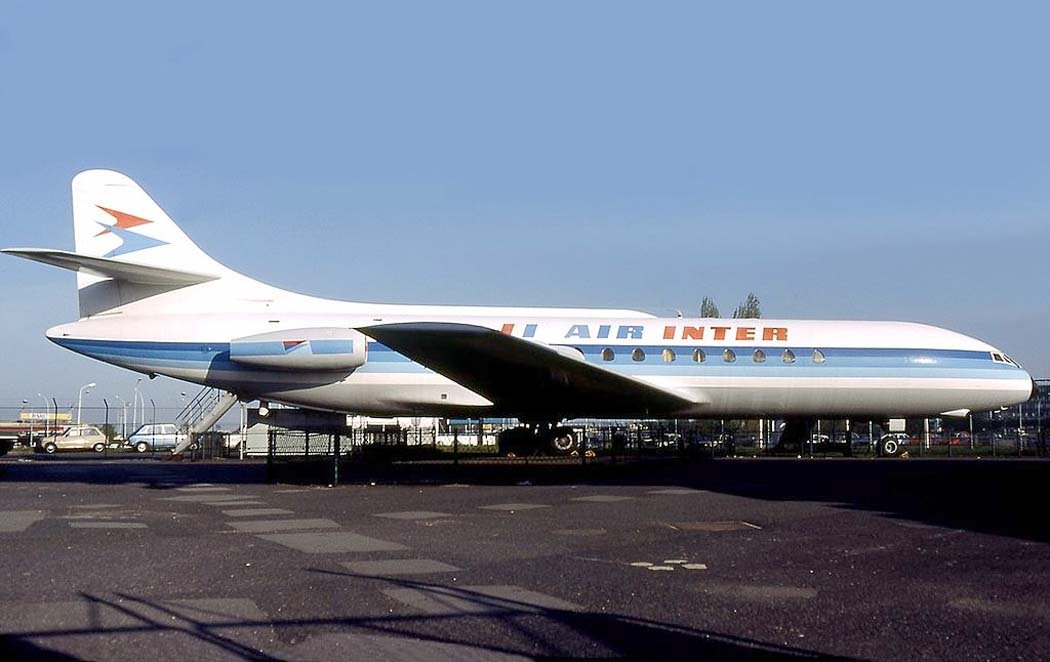
The creators of the “Caravelle” could not come up with a better and more memorable name for it. The ideas of SNCASE chief designer Pierre Satre became the “Caravelle’s” hallmark: primarily, the mutual arrangement of the wing and the power plant. The engines on both prototypes, improved Avon RA-26, were located on the sides of the rear fuselage section.
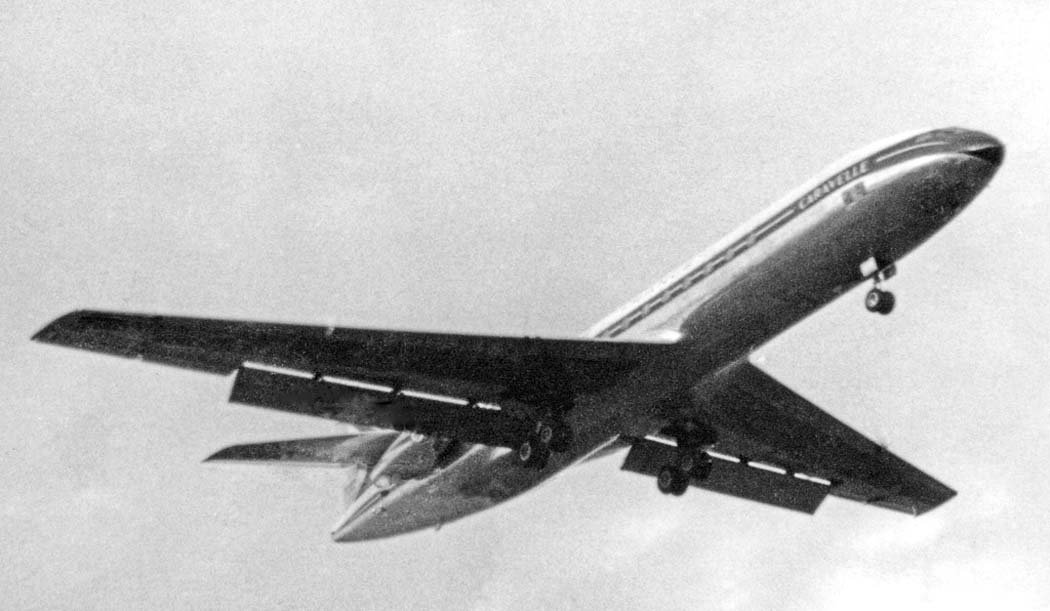
This engine placement significantly reduced cabin noise, increased intake efficiency, decreased the likelihood of foreign object ingestion on the ground, and provided easy access to the power plant for maintenance. Simultaneously, it allowed for the wing to be free of superstructures, nacelles, and other elements that disrupted its contours and worsened aerodynamic characteristics. Satre’s main goal was a clean wing, and he achieved it.
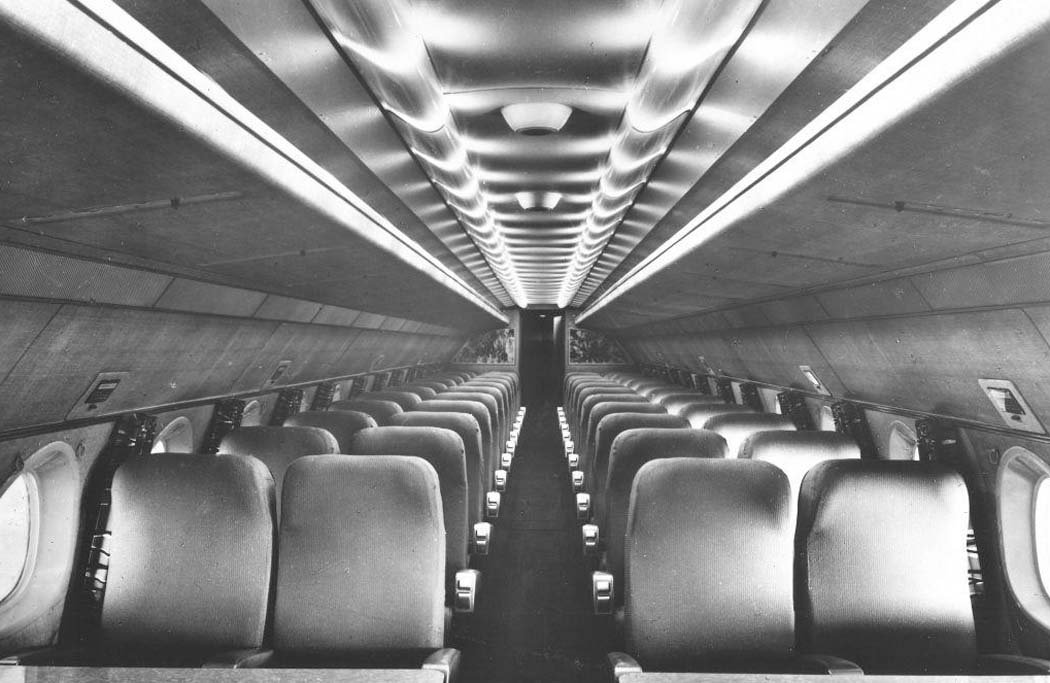
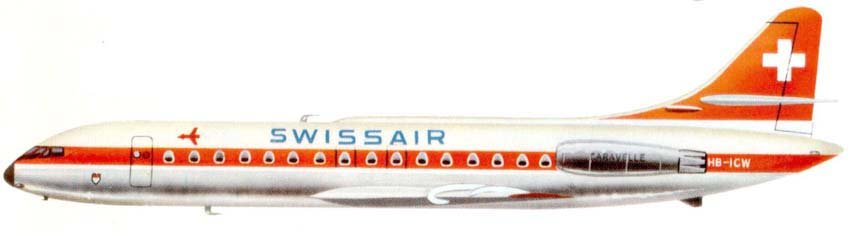
Another original design element was the passenger airstair, lowered at the airfield from the lower rear fuselage section. The stair frame simultaneously served as an additional support for the fuselage during loading, significantly increasing the airliner’s autonomy at the airport. Passengers gladly entered the aircraft through that mysterious tunnel. During the flight, they could appreciate the view from the relatively large, “Gothic”-shaped windows.
The Caravelle in Commercial Service
Prototype F-WHHH performed 13 flights with a total of 411 flight hours during the first twelve months of testing, including a round trip between Paris and Casablanca in September 1956. The “Caravelle” completed all four flights without intermediate landings, and later even with one engine operating to prove the machine’s reliability.
In February 1956, Air France ordered 12 aircraft of the first production model, the “Caravelle 1,” with Avon 522 engines producing 4760 kgf of thrust and a maximum takeoff weight of 43 tons. The economic cruising speed of 734 km/h met the carrier’s requirements, as did the flight range of 1850 km with a full commercial load of 8120 kg. Serial production of the “Caravelle 1” began under modified technical specifications.
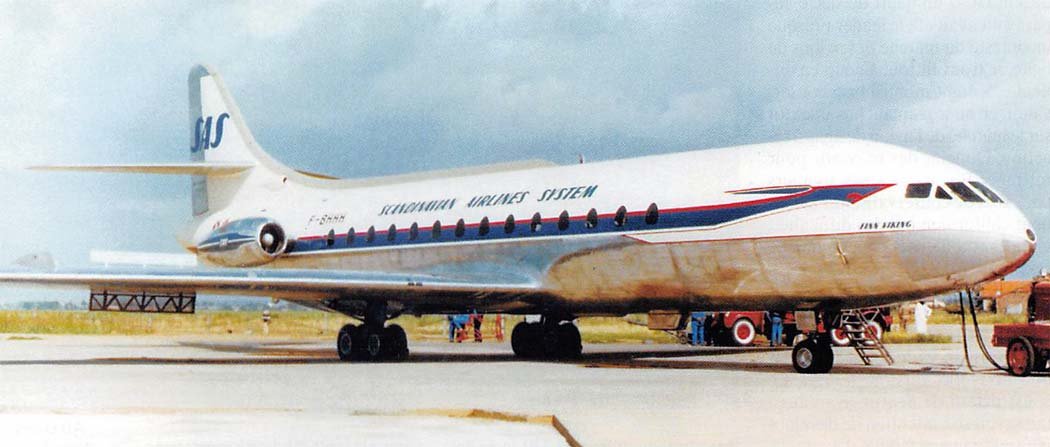
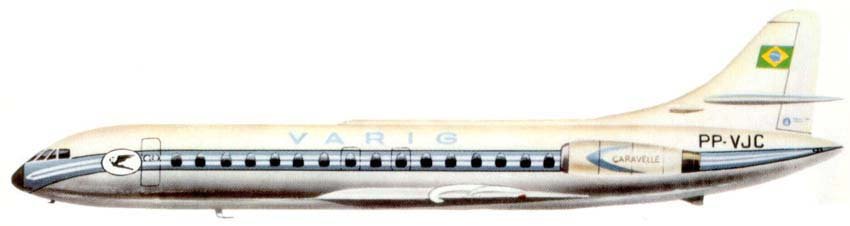
In March 1957, the two national companies “Sud-Est” and “Sud-Ouest” merged into a single “Sud Aviation.” Under this manufacturer’s brand, the “Caravelle” gained widespread recognition, although production had begun under the original designation SE-210. The first batch included 5 aircraft for Air France, 4 for Scandinavian SAS, and one machine purchased by the Brazilian company Varig.
SAS was the first to begin commercial operations of the “Caravelle” on April 26, 1959, on Scandinavia – Middle East routes. Air France followed, opening a new Paris-Istanbul air route in May of the same year. In December, Varig introduced the “Caravelle” on South American routes. The series of 20 “Caravelle I” was followed by the IA variant, which differed from its predecessor with Avon 522A or 526 engines. The first of 13 built were introduced by the Finnish company Finnair in April 1960 on the Helsinki-Stockholm route.
Technical Specifications
| Modification | Caravelle I |
| Wingspan, m | 34.30 |
| Length, m | 32.01 |
| Height, m | 8.72 |
| Wing area, m2 | 146.70 |
| Empty weight | 23400 |
| Maximum takeoff weight | 43500 |
| Internal fuel, l | 19000 |
| Engine type | 2 Rolls-Royce Avon RA.29 Mk 522 Turbojets |
| Thrust, kgf | 2 x 4760 |
| Maximum speed, km/h | 800 |
| Cruising speed, km/h | 734 |
| Practical range, km | 1850 |
| Practical ceiling, m | 10000 |
| Crew | 3 |
| Payload | 55-56 passengers |
Image gallery of the SE.210 Caravelle