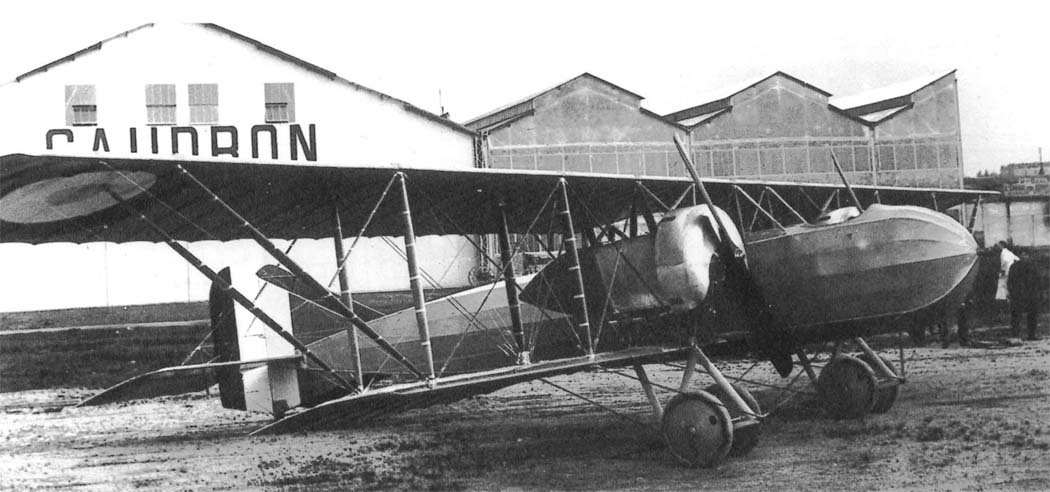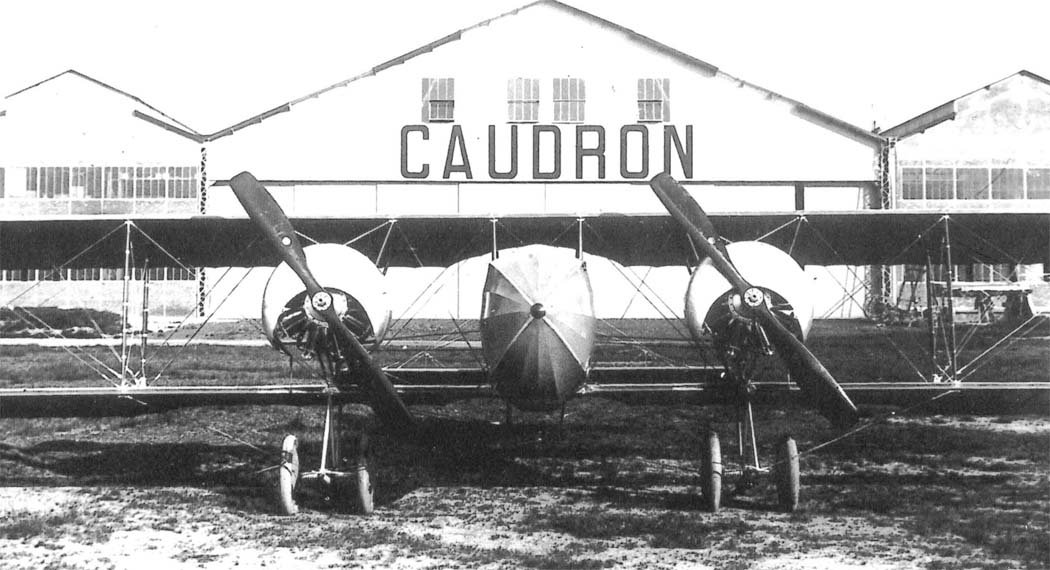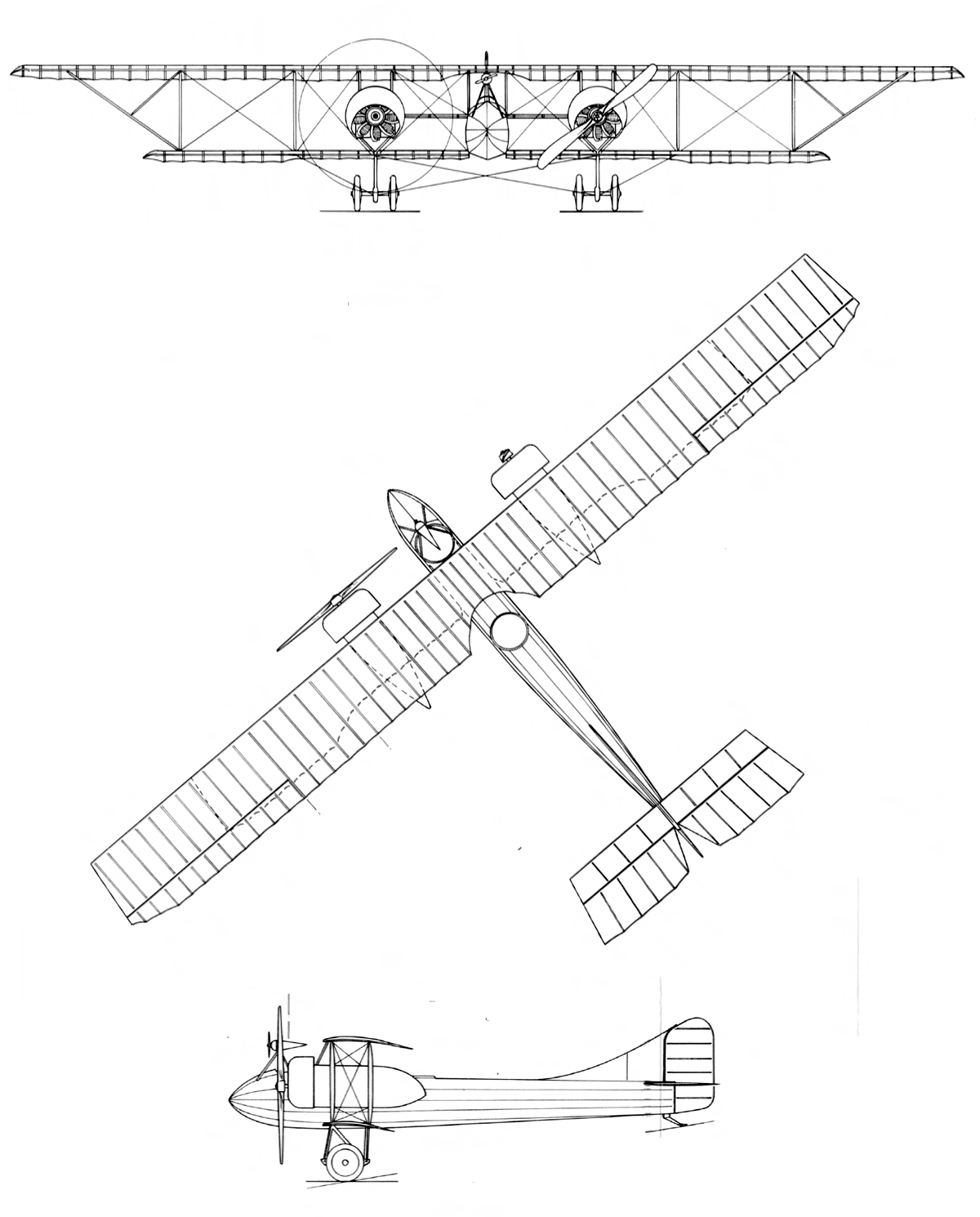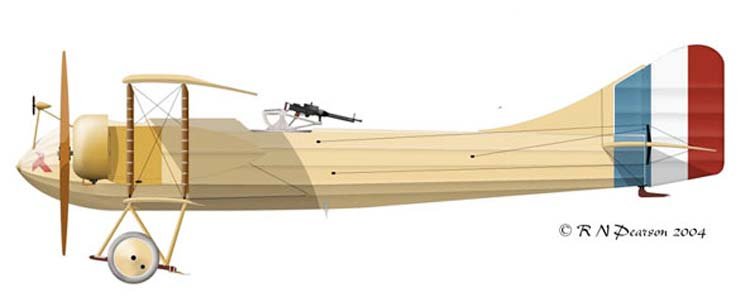
In early 1915, after analyzing the operational experience of the Caudron G.IV, the military commissioned Gaston Caudron to create a new aircraft that would correct the G.IV’s shortcomings. As a result, in the spring of the same year, the Caudron G.V light bomber-reconnaissance aircraft emerged, built under specification A3.
The aircraft featured an enlarged fuselage, capable of accommodating an additional gunner as required by the A3 specification. The G.V made its maiden flight in mid-spring 1915.
Specifications and Armament
This was a three-seater, two-bay biplane, equipped with two 80 hp Le Rhone engines. The aircraft’s armament consisted of two Winchester semi-automatic rifles and an 8mm Chauchat machine gun.
During testing, significant flaws were identified in the aircraft. Caudron began modernization work, which led to the Caudron G.VI appearing in early 1916 (though René Caudron completed its development after Gaston’s death).
Operational Service and Evolution
Despite these clear shortcomings, the military ordered several G.V units. In May 1915, they entered service with squadrons SAL.202 (one aircraft), C.10 (two), and C.27 (two). These bombers were used until 1916 when they were replaced by the more advanced G.VI.
Technical Specifications
| Modification | G.V |
| Wingspan, m | 17.22 |
| Length, m | 8.60 |
| Wing area, m2 | 38.00 |
| Empty weight | 850 |
| Engine type | 2 Piston engine Le Rhone |
| Power, hp | 2 x 80 |
| Crew | 2-3 crew members |
| Armament | one 8-mm Lewis machine gun, two Winchester rifles, up to 100 kg of bombs |
Image gallery of the Caudron G.V