In 1937, as part of the overall rearmament program of pre-war France’s Air Force, the French Navy’s Admiralty formulated requirements for aircraft carriers and the deck-based aircraft that would form their air groups. At that time, the French fleet had only one aircraft carrier, the old “Béarn”. This venerable ship operated equally old biplane aircraft: torpedo bombers and reconnaissance planes, products of the French Navy’s traditional supplier, Levasseur.
These machines featured boat-like hulls and stabilizing floats attached to the lower surface of the bottom wing; all this was done as a precautionary measure for emergency landings.
French Naval Aviation Requirements
Also in 1937, preparations began in France for the construction of two aircraft carriers, the “Joffre” and “Painlevé”. Simultaneously, the Admiralty’s aeronautical technical service issued tactical and technical requirements A47 for new modern aircraft intended for basing on these ships.
Specification A47 outlined the expected flight characteristics and design features of multi-purpose machines, which were to be used as torpedo bombers, bombers, and reconnaissance aircraft. As a torpedo bomber and bomber, it was to be a two-seater, while the reconnaissance aircraft’s crew was to consist of three people. A surprising feature of the specification was that, as a guarantee of safe operation at sea, the power plant had to be twin-engined.
In this regard, the French concept of a deck-based aircraft differed fundamentally from the concept of machines in other countries with naval aviation. From the perspective of the French Navy’s aeronautical technical service, a twin-engined machine, besides increasing operational safety, was ideal because the crew could be positioned in the forward part of the fuselage to ensure good visibility.
The Innovative SNCAO CAO-600 Design
Among the companies that participated in the prototype competition was the National Society of Aeronautical Construction of the West (Societe Nationale de Constructions Aeronautique de l’Ouest – SNCAO), whose competitor was the national association SNCAM, which developed the multi-purpose deck-based aircraft SNCAM (Dewoitine) D-750.
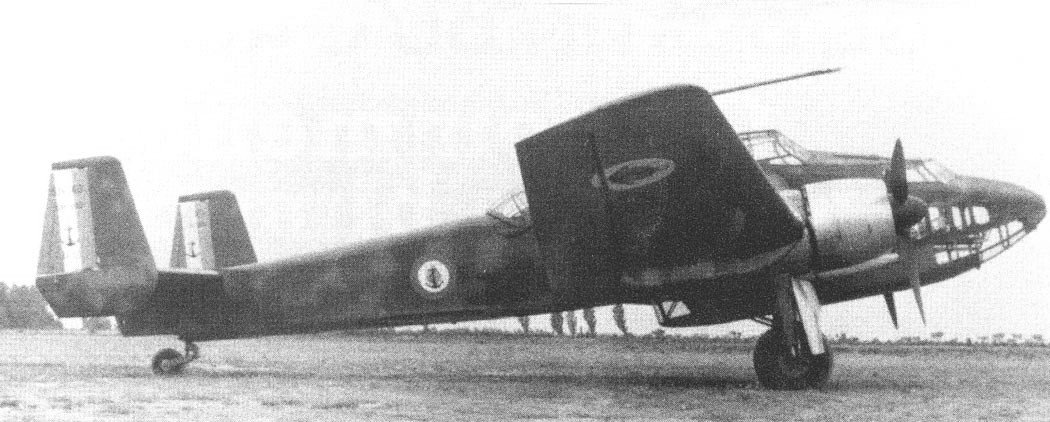
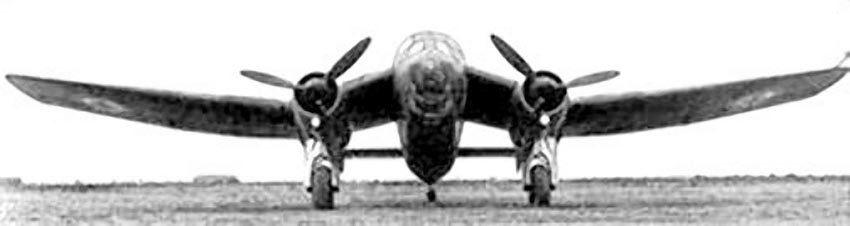
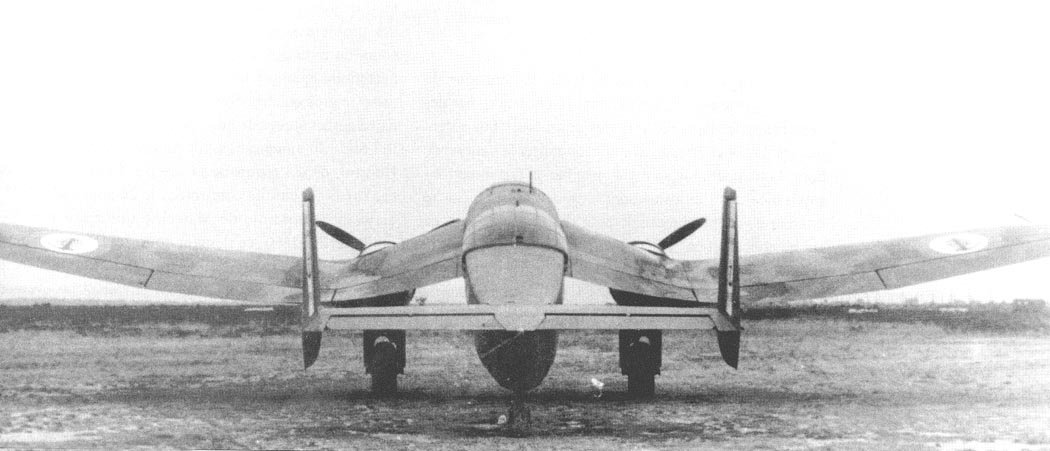
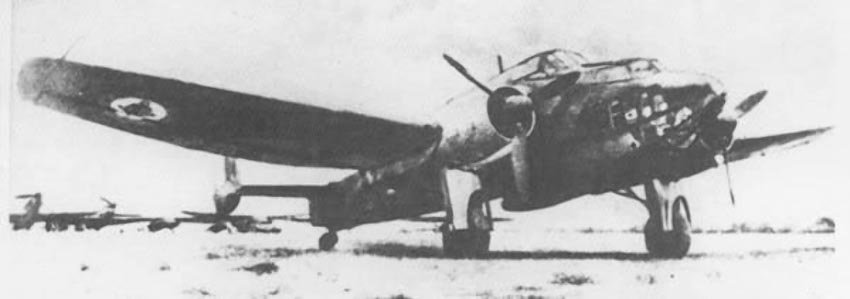
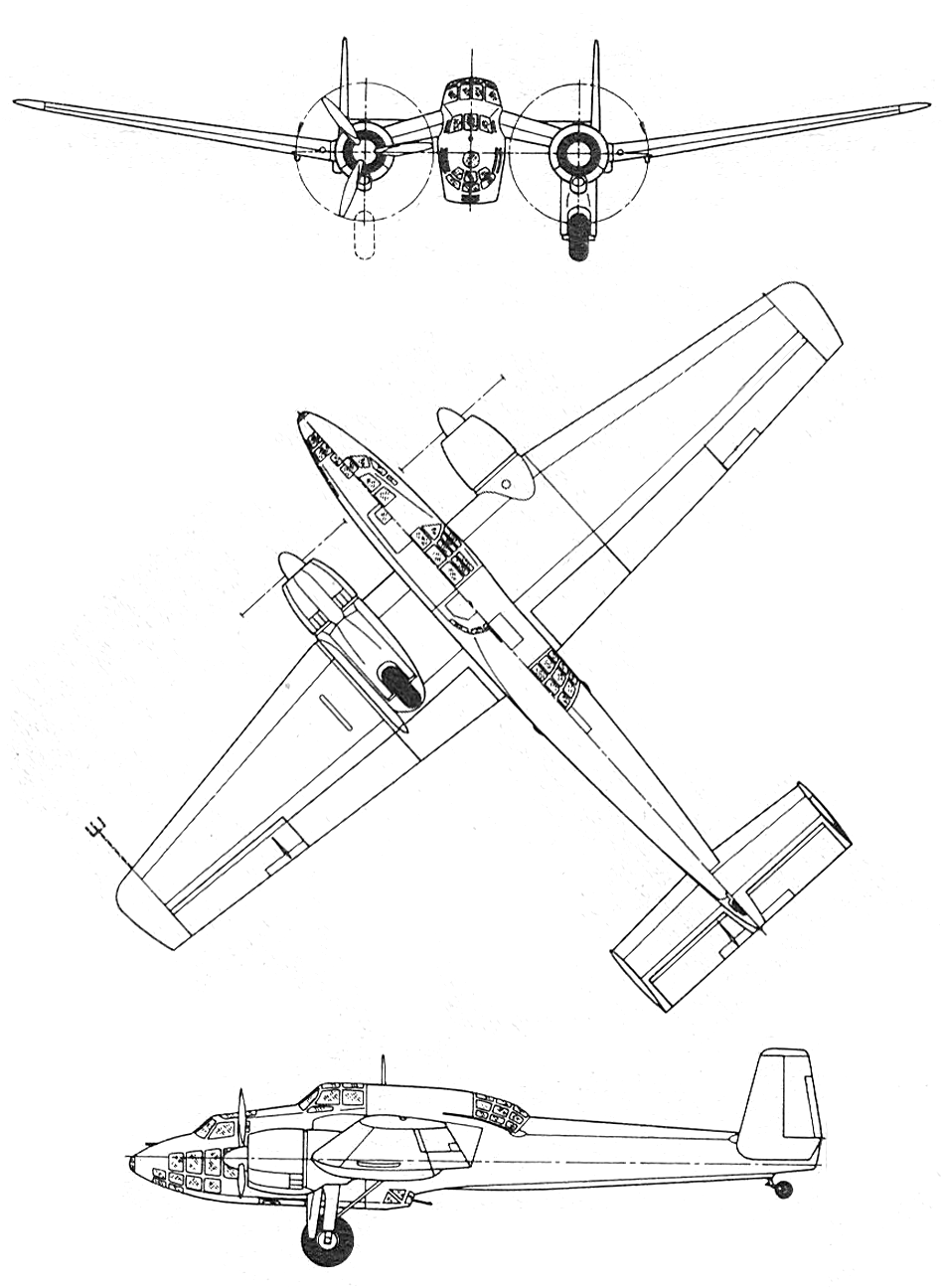
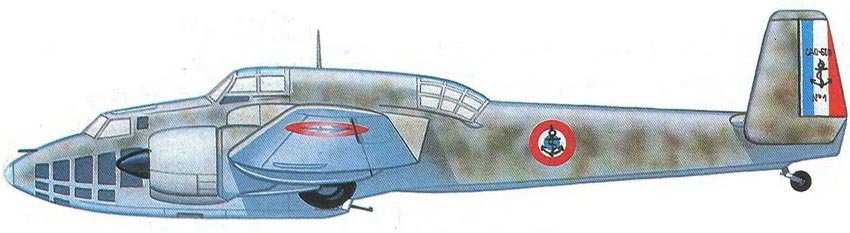
Engineer Pillon, head of the naval aviation department of the national association SNCAO, designed the new CAO-600 deck-based aircraft as an all-metal monoplane with a mid-mounted “inverted gull” wing. The machine’s power plant consisted of two 14-cylinder air-cooled Gnome-Rhone 14M radial engines, each developing 680 hp (500 kW) and driving variable-pitch, counter-rotating propellers.
The engine nacelles were located at the ends of the center wing section, which sloped downward at a steep angle. Behind the engine nacelles, at the wing break, was the folding line for the outer wing panels, which folded along the fuselage for convenient storage in the aircraft carriers’ below-deck hangars.
The crew was concentrated in the strangely shaped forward part of the fuselage, in the nose of which was the workstation for the observer, navigator, and gunner – all these tasks were to be performed by one crew member. The pilot sat in the upper cockpit, and behind his workstation was the radio operator-gunner’s cockpit, who, in addition to working with the radio, was also to fire the movable 7.5mm Darne machine guns.
The first of these was in the radio operator-gunner’s cockpit, and the second in a sub-fuselage firing position. A third machine gun of the same type was fixed in the front part of the fuselage and operated by the pilot. For striking enemy ships, the aircraft could carry one 650-kg torpedo. For bombing missions, the CAO-600 had four hardpoints carrying bombs ranging from 12 to 150 kg; the aircraft could also carry two 225-kg Type K bombs or one 450-kg Type P bomb. In the reconnaissance variant, the aircraft could carry four 75-kg Type G2 bombs.
Development and Truncated Fate
The French Ministry of Aviation, which managed the nationalized aircraft manufacturing industry, awarded SNCAO a contract on June 15, 1939, for the construction of two CAO-600 prototypes for the Admiralty. The first of these, CAO-600 No.1, made its maiden flight on March 21, 1940, in Villacoublay and was intended for testing flight and handling characteristics. This prototype did not have folding wings or armament; mock-ups were installed instead.
Ten days after its first flight, the prototype flew to the test base in Istres, where factory tests were to be completed, and tests with French Navy deck aviation pilots were to continue. However, the circumstances of early summer 1940 severely affected the test program’s progress. By June 25, when all work ceased, the first prototype had accumulated 35 hours of flight.
Shortly before the fall of France, the machine was dismantled and placed in hangar storage in Istres. In November 1942, when Germany occupied the still unoccupied part of France, the prototype was sent for scrap. The second prototype, CAO-600 No.2, was intended to be a full-fledged combat aircraft with all equipment, including folding wing panels and armament. When the Germans reached the Paris region, the machine’s construction was still far from complete. Work on the prototype was stopped, and after some time, the machine was also sent for scrap.
Technical Specifications
| Modification | CAO-600 |
| Wingspan, m | 16.50 |
| Length, m | 12.40 |
| Empty weight | 3148 |
| Normal takeoff weight | 4660 |
| Engine type | 2 Piston engines Gnome-Rhone 14M-3 |
| Power, hp | 2 x 670 |
| Maximum speed, km/h | 380 |
| Cruising speed, km/h | 306 |
| Practical range, km | 1200 |
| Practical ceiling, m | 7800 |
| Crew, crew members | 3 |
| Armament: | three 7.5 mm machine guns, up to 500 kg of bombs |
Image gallery of the CAO-600