Some designers, engrossed in obsessive ideas, failed to notice their inherent fundamental flaws. Buoyed by partial success, the inventor continued further work. Often, such a struggle to realize uncritically adopted ideas persisted for decades.
Among such stories is that of the unique channel wing, developed by American designer Willard R. Custer. The idea came to him when he saw a hangar roof torn off by the wind. From what he observed, he concluded that such an effect was due to the speed of the airflow around the object. Thus confusing cause with effect, he built a series of aircraft. Custer’s approach was to pass the maximum amount of air through the aircraft, rather than propel the machine through the air.
The Custer Channel Wing Concept
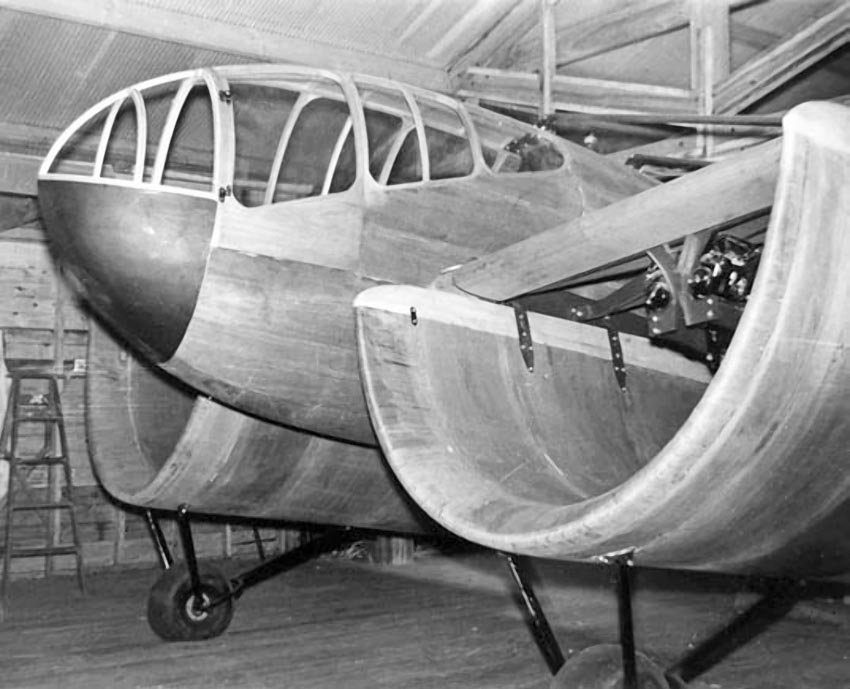
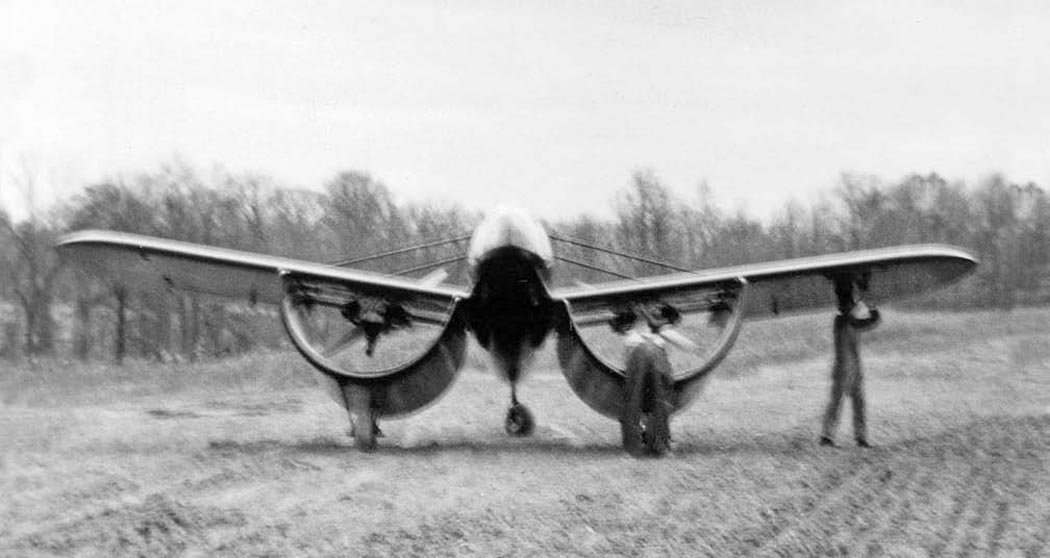
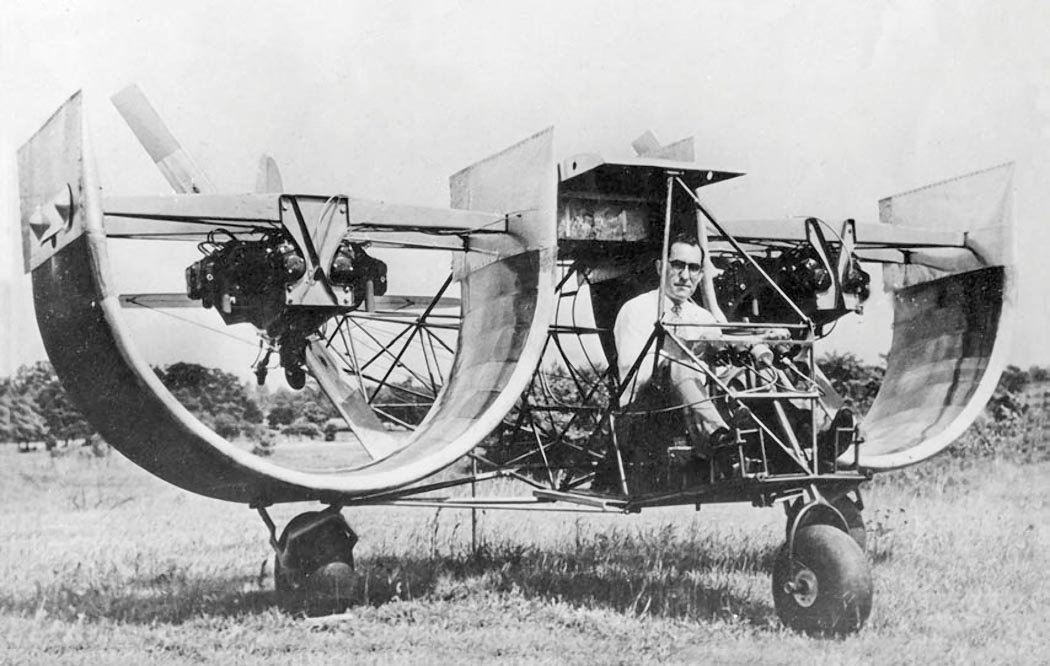
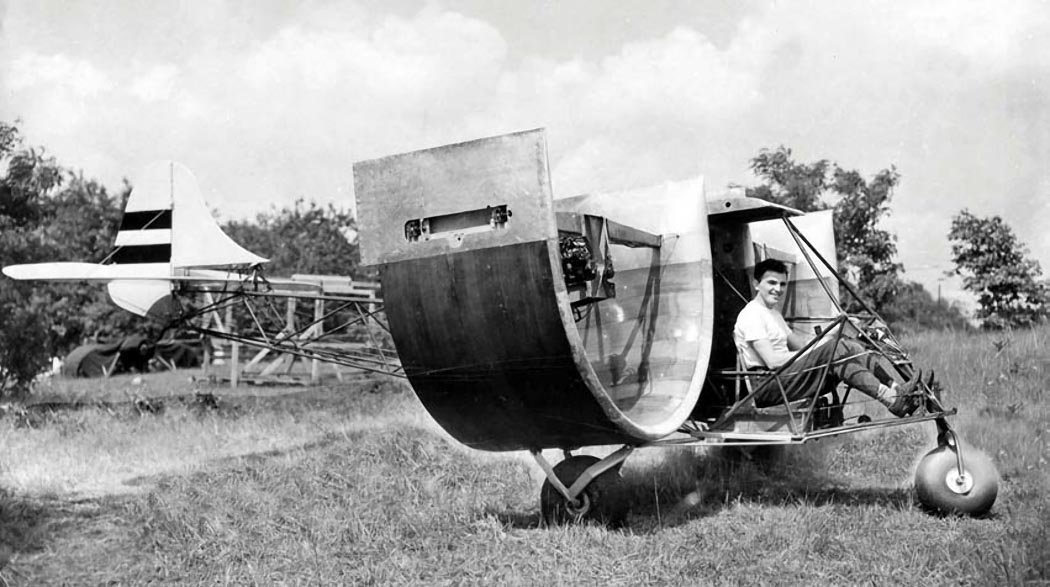
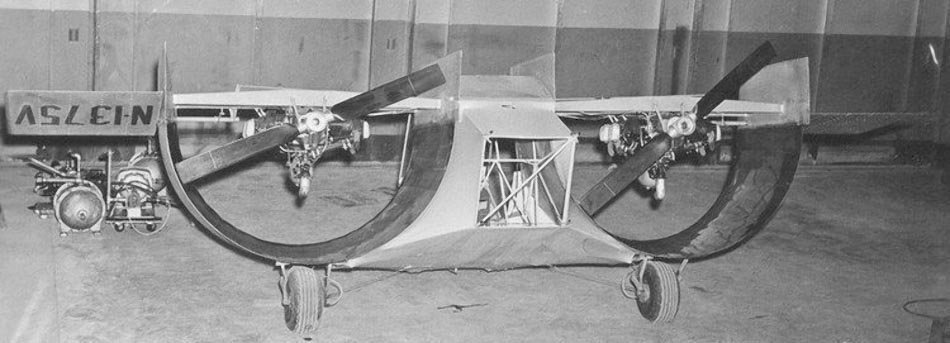
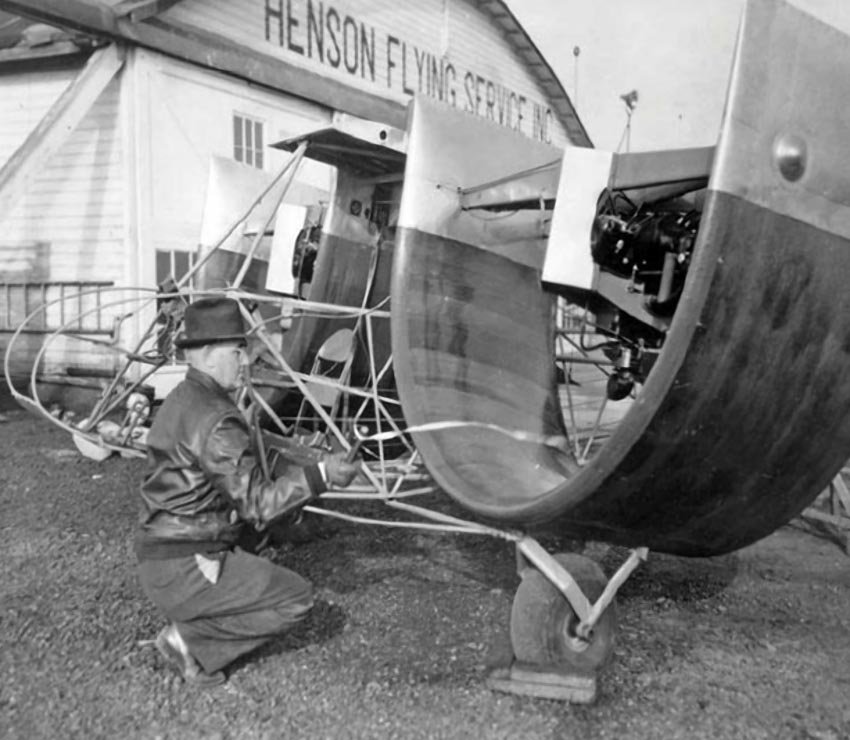
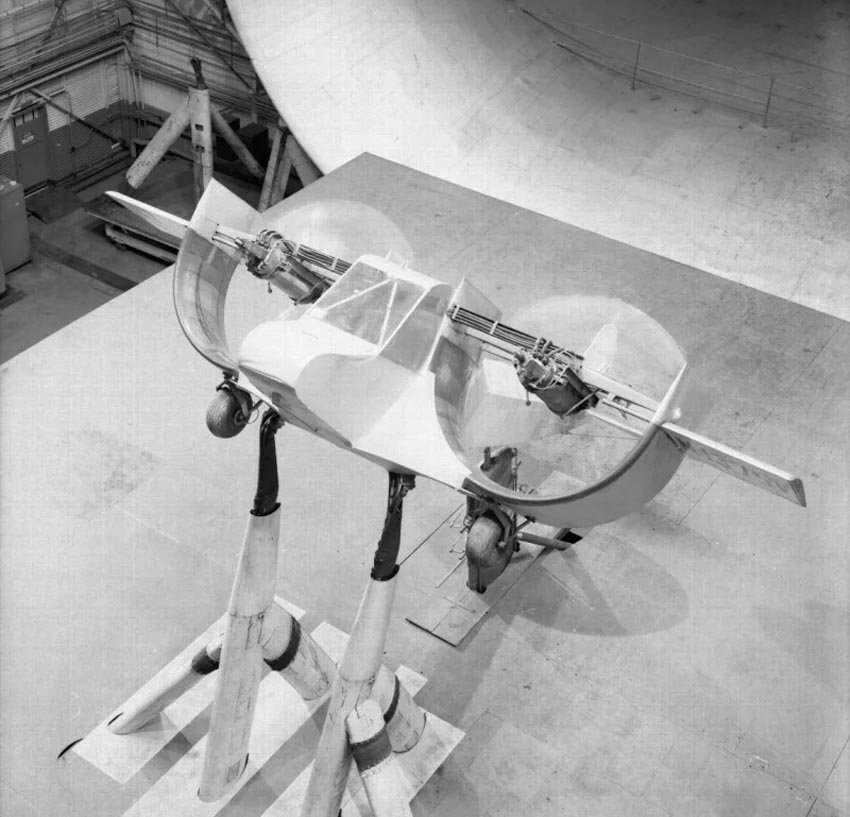
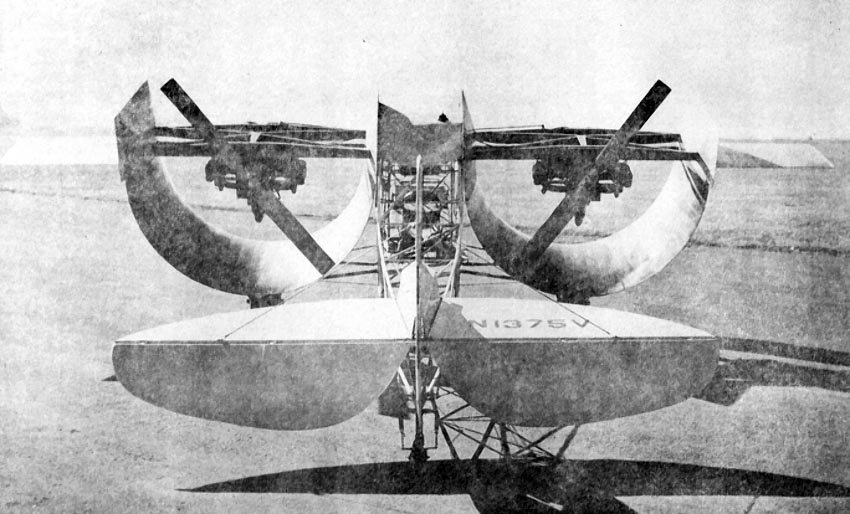
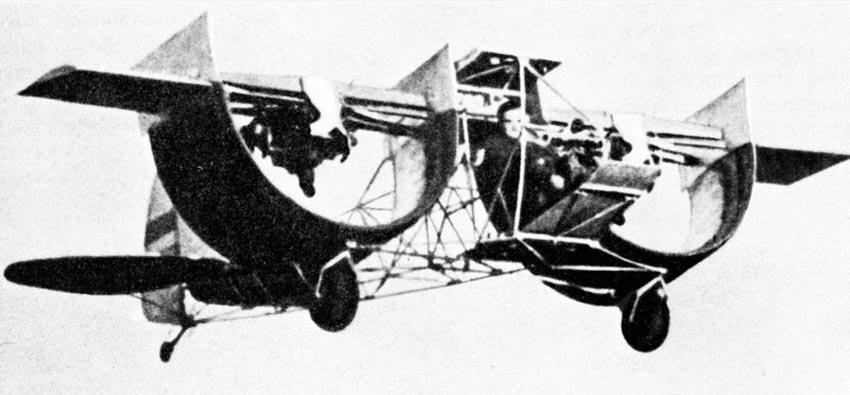
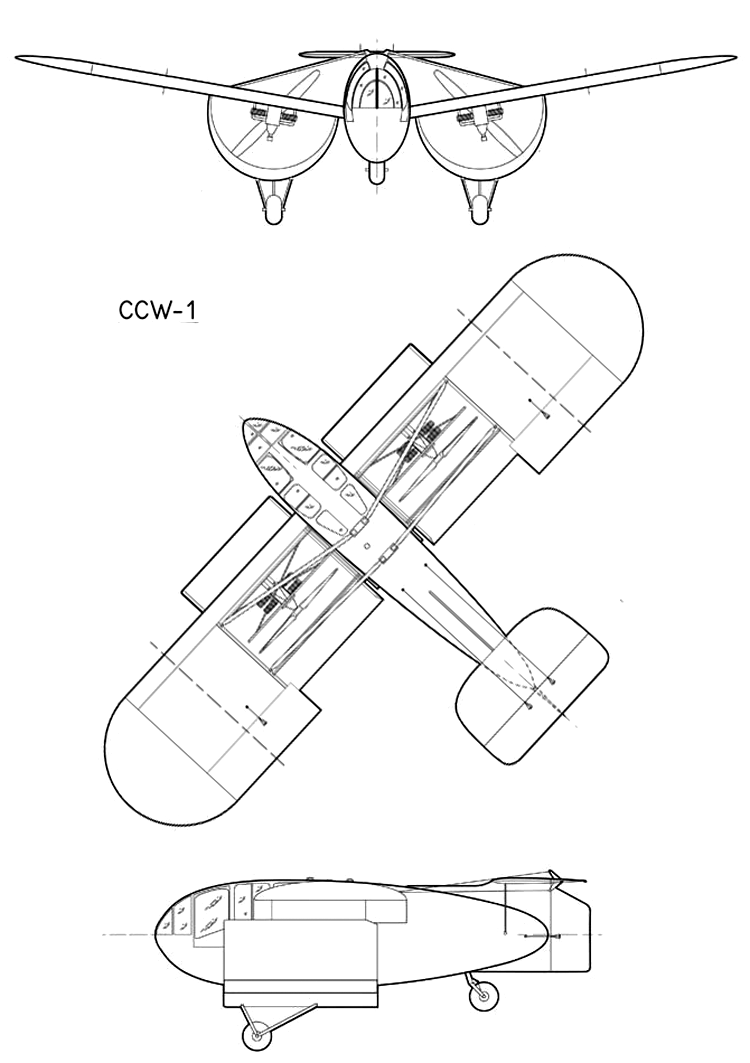
After testing several models, Custer built a full-scale prototype of his aircraft, the CCW-1 (Custer Channel Wing 1), in 1942. The key element of this aircraft was the semi-circular sections of each wing console, located near the fuselage.
The wall of each semi-circle had an airfoil shape. A pusher propeller, driven by a 75 hp Lycoming engine, sucked air into the semi-circle, imparting significant speed to it and thereby creating static lift. The CCW-1 performed several flights, admittedly not very well by standard aircraft criteria, but quite satisfactorily from Custer’s perspective.
CCW-1 Performance and Challenges
The wingtip sections had a traditional shape; ailerons were installed on them. It should be noted that these wingtip sections were large enough for the aircraft to fly using only the lift they created. At the same time, the additional lift generated by the channel wing sections (existing even at zero airspeed) allowed for very low stall speeds for the entire wing.
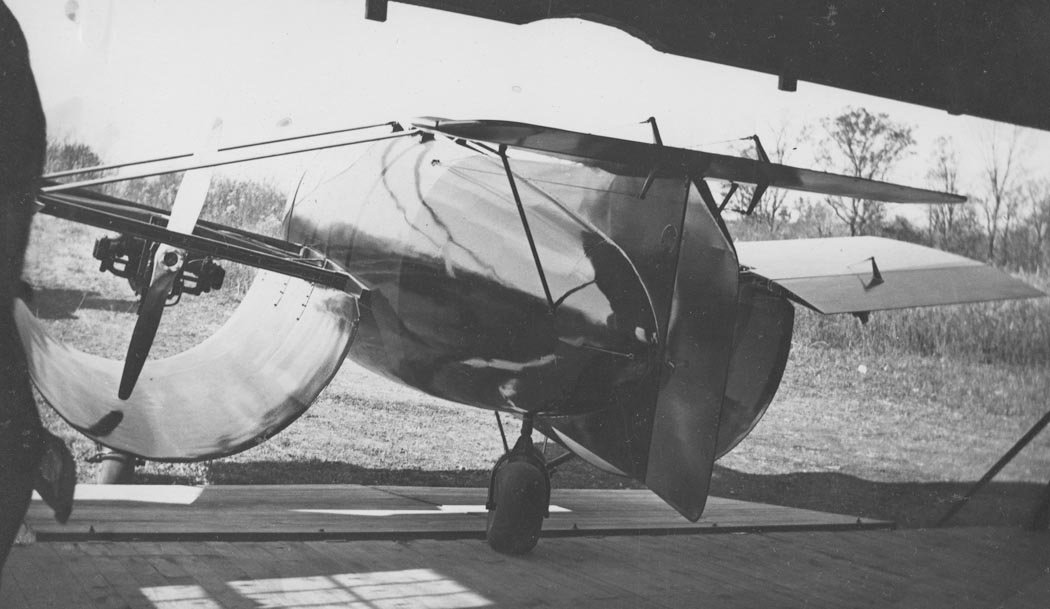
Low flight speeds led to other problems, mainly related to insufficient effectiveness of lateral control surfaces, as the tail surfaces were outside the high-speed flow from the channel sections. This drawback was remedied on the CCW-1 by installing small ailerons on the upper part of the channel wing sections. During World War II, the military conducted a small investigation into the possibilities of such a wing, but it never came to practical implementation.
Evolution to the CCW-2
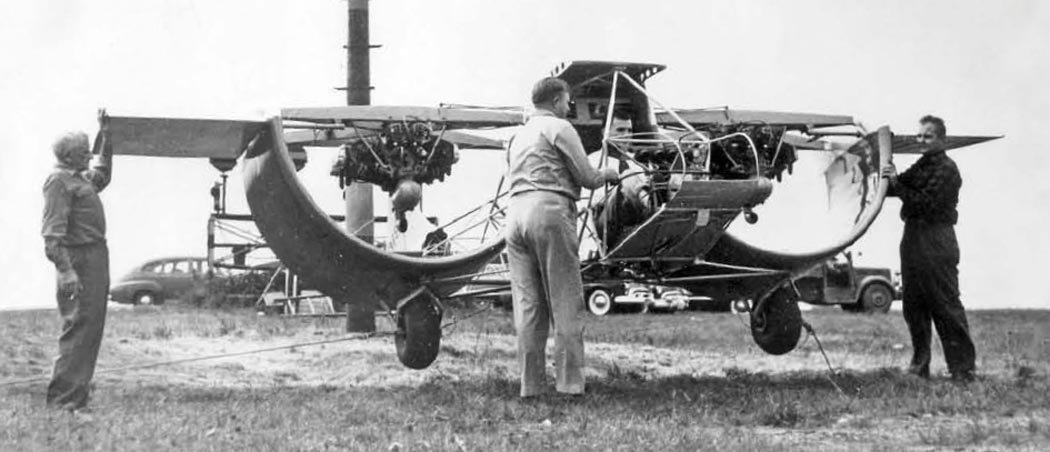
Subsequently, Custer built another variant of his aircraft, the CCW-2, based on the fuselage and tail of a pre-war Taylorcraft BC-12 light aircraft. If the aircraft took off into the wind, it genuinely lifted off the ground and remained airborne. This aircraft, without a doubt, flew using the lift created by the channel sections (although small winglets were installed at the insistence of the US Federal Aviation Administration).
Technical Specifications
| Modification | CСW-2 |
| Wingspan, m | 8.20 |
| Engine type | 2 Piston engine |
| Power, hp | 2 x |
| Crew | 1 |
Image gallery of the Custer Channel Wing (CCW-1 / CCW-2)