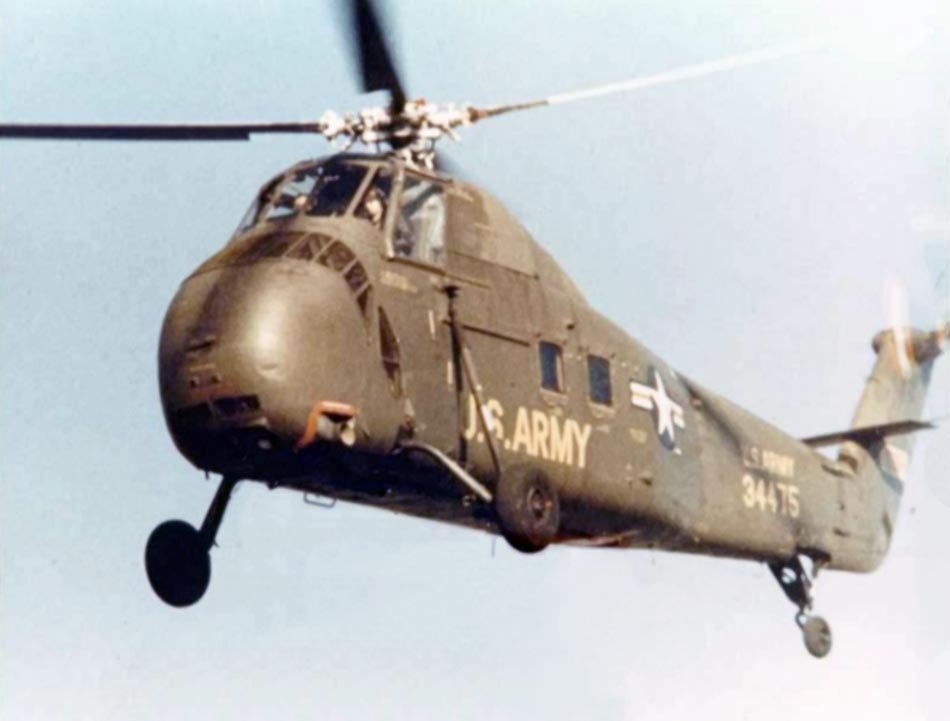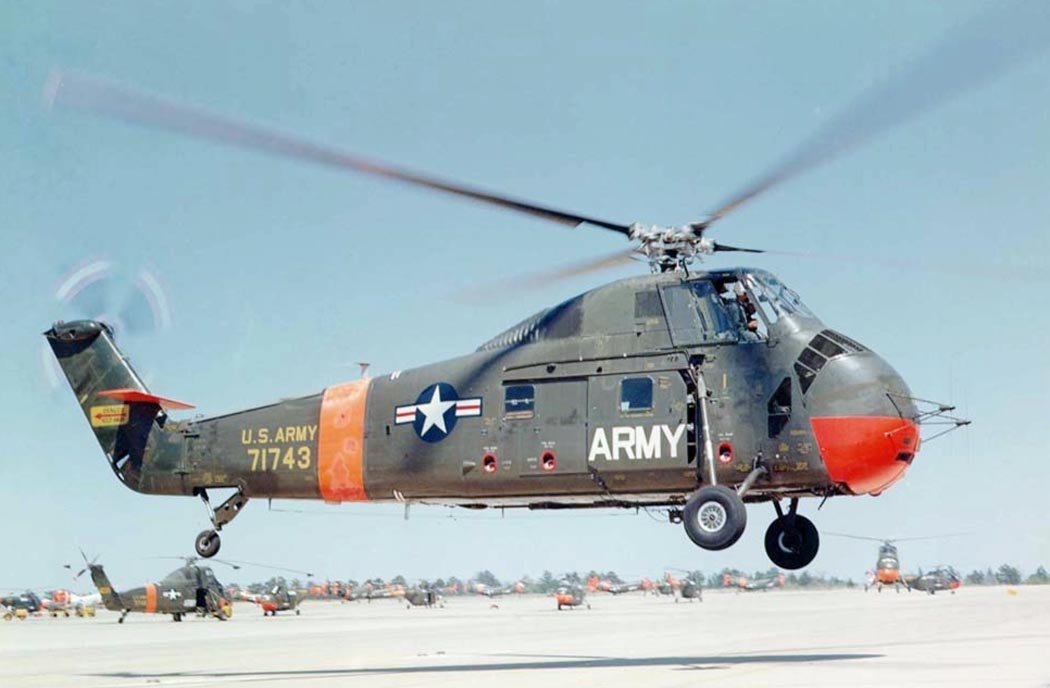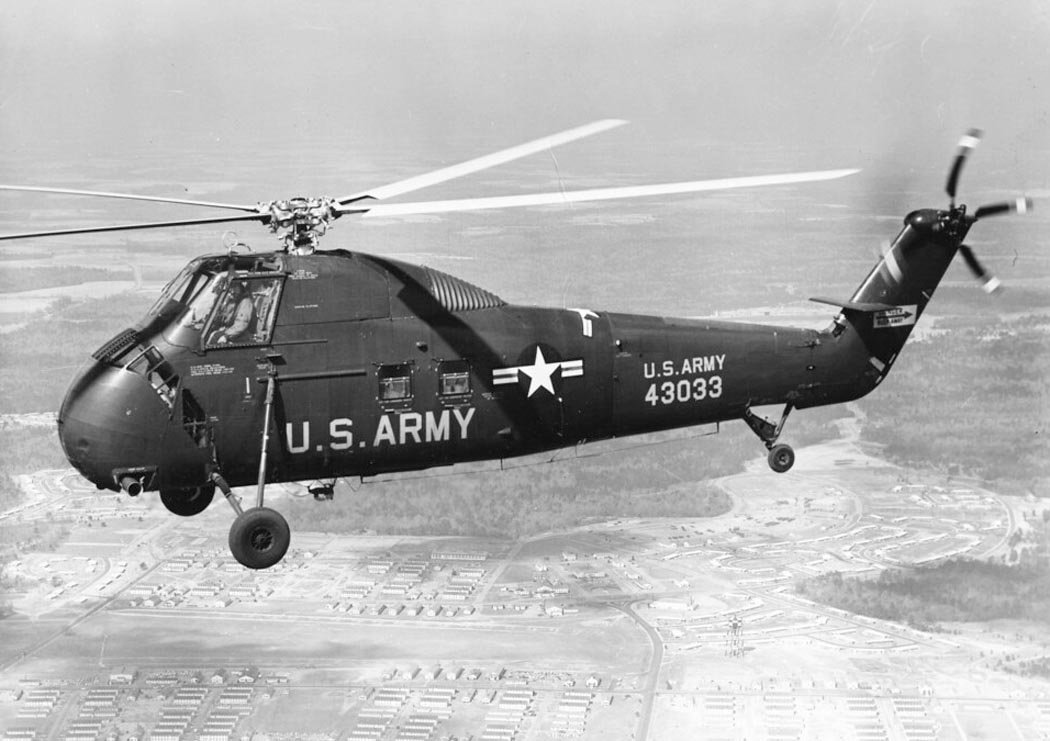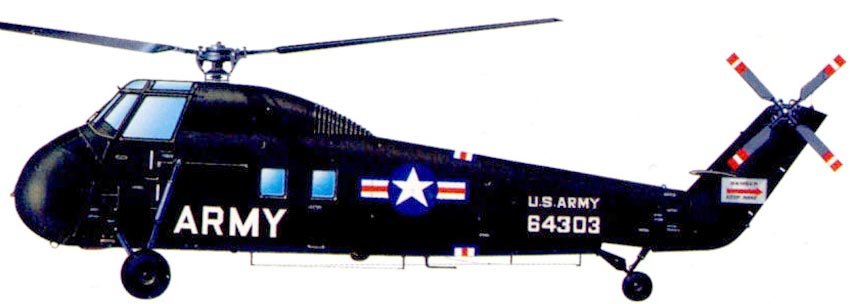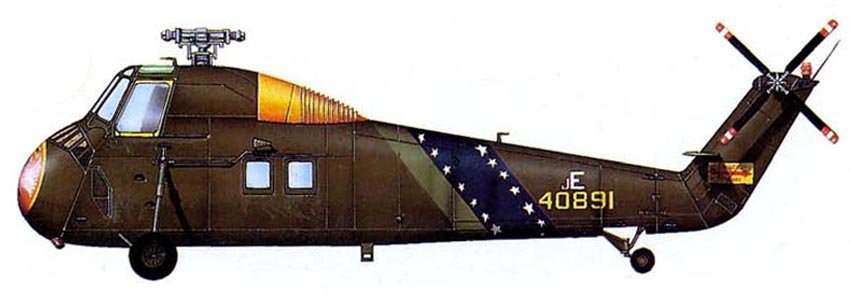
Following the Navy’s interest, the U.S. Army also became interested in the S-58, as its characteristics perfectly matched the military’s helicopter requirements. Army aviation initially favored the Piasecki PV-22 (H-21). However, after identifying inherent drawbacks of its longitudinal design, the military reduced PV-22 purchases. The “58” shared the same Wright R-1820 engine as the PV-22 but boasted superior flight performance.
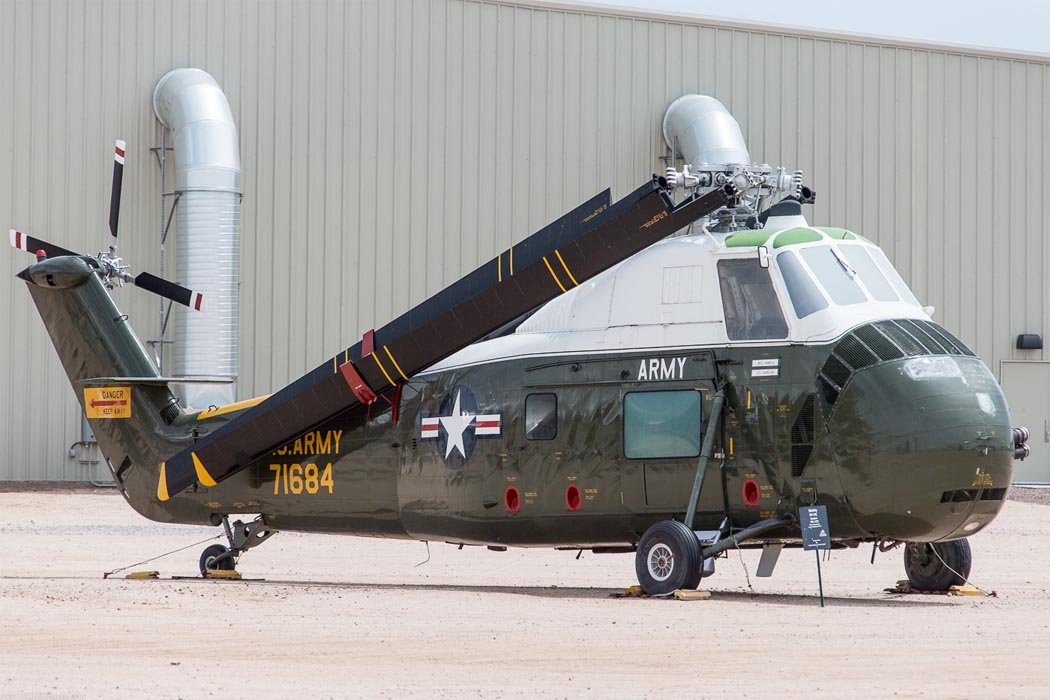
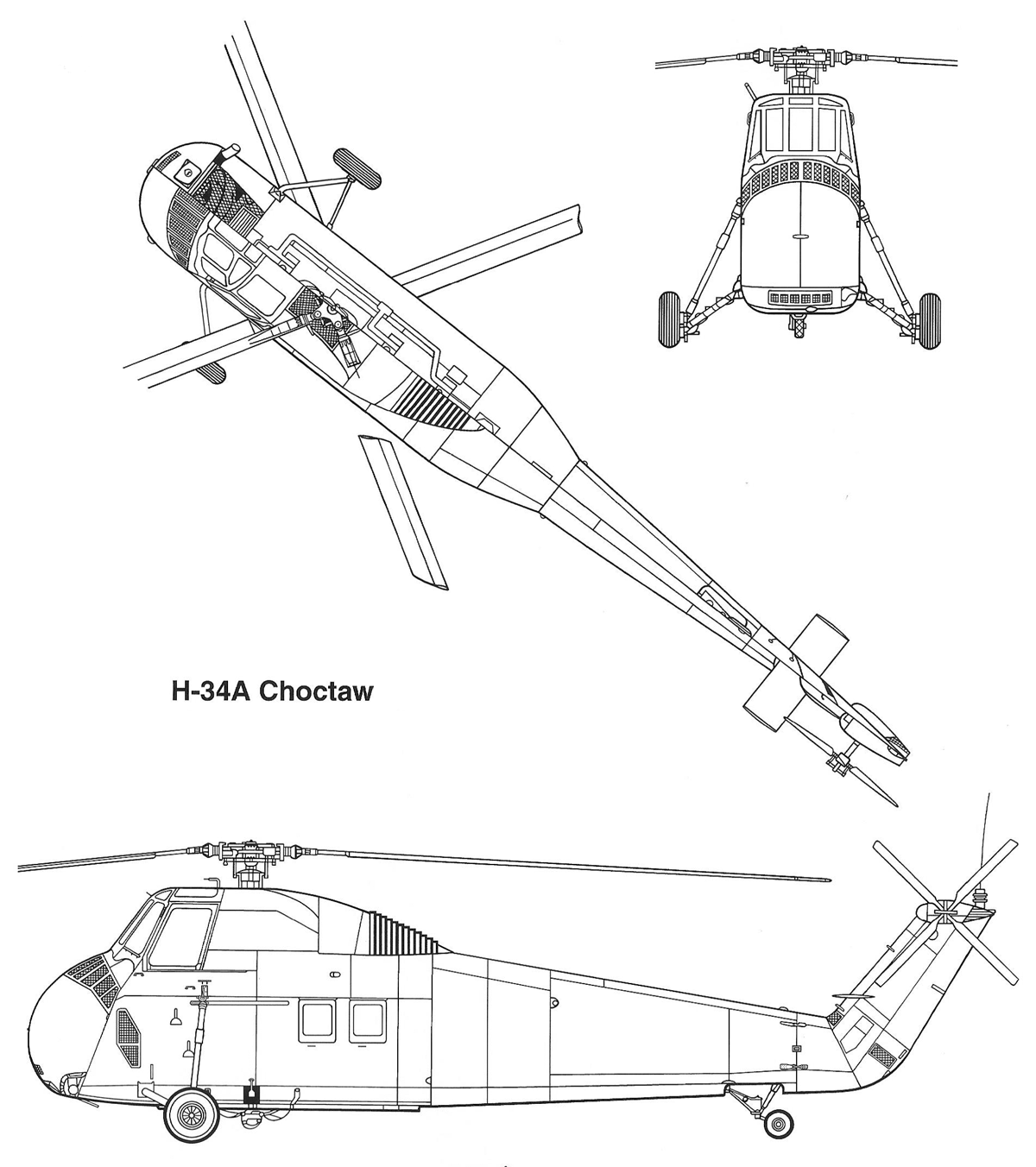
In 1956, the S-58 set three world speed records in a single flight: 228.36 km/h over a 100 km closed course, 218.87 km/h over a 500 km course, and 213.4 km/h over a 1000 km course. From 1954, 434 helicopters were supplied to army aviation under the designation H-34A Chocktaw (named after a Native American tribe). An additional 23 identical machines were converted from UH-34Ds transferred to the army by the Marine Corps.
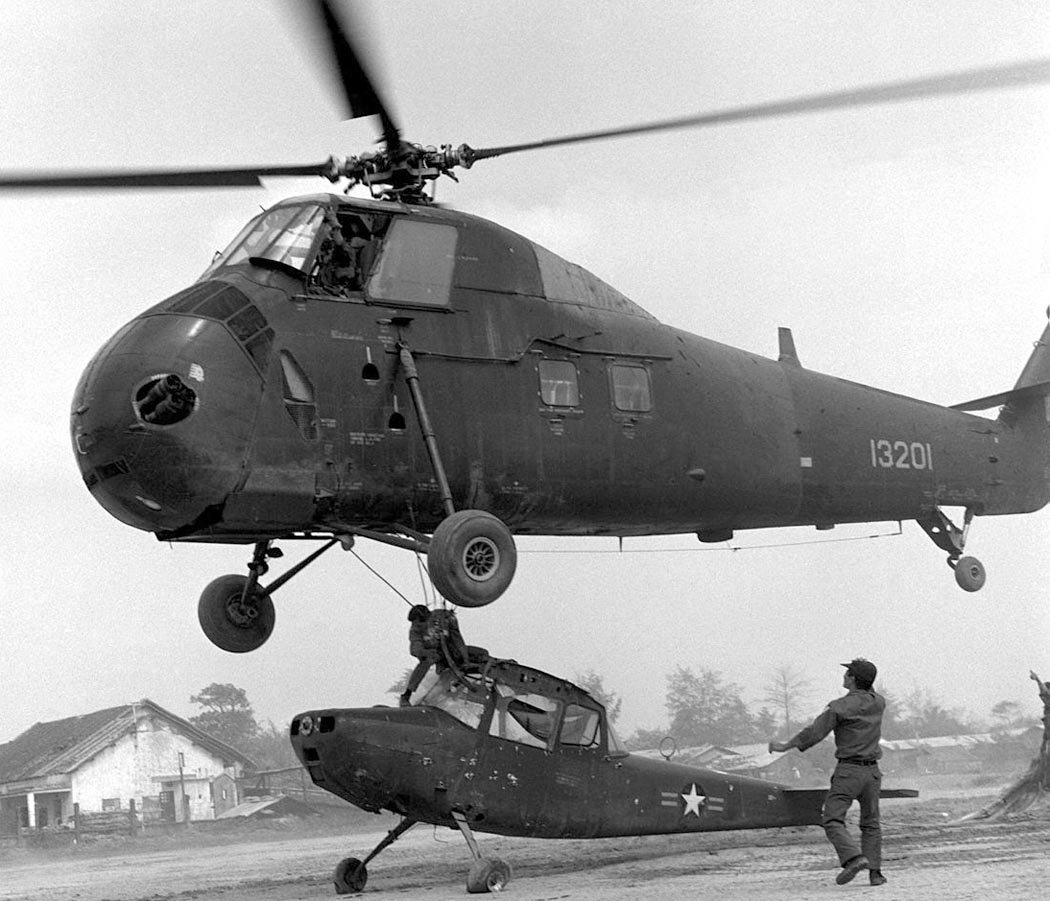
The cargo and passenger cabin could accommodate up to 18 equipped soldiers or 8 wounded on stretchers. In terms of weight characteristics, the H-34A was comparable to the Mi-4. However, unlike the Soviet machine, it lacked a cargo hatch and ramp, which limited the dimensions of transported goods. Bulky loads up to 2200 kg were transported on an external sling, with a glazed window in the floor for observation.
Operational Innovations and Capabilities
In 1956, an automatic stabilization system was tested on the S-58 to eliminate cargo sway. For lifting smaller loads and rescue operations, the “Chocktaw” retained the cargo winch from the “Seabat”. A retractable step was installed below the fuselage door for ease of use. As less range was required for an army helicopter, the volume of the H-34A’s front fuel tank was reduced, and its fuel tanks were self-sealing.
The H-34A “Chocktaw” was also used for reconnaissance, training, and aerial observation, becoming the primary helicopter of the ground forces. Although the only American deployment of the “Chocktaw” was a small amphibious operation in Lebanon in 1958, it was on this helicopter that army aviation tactics were “tested.” In September 1962, the H-34A was redesignated CH-34A.
International Service and Variants
Since all H-34As were supplied to American troops stationed in Europe (only Piasecki H-21 helicopters were sent to US Army garrisons in the Far East), army aviation did not use them in Vietnam. However, they long formed the backbone of South Vietnamese Air Force helicopter units. The first 30 units arrived in 1959. H-34As and H-34Cs (discussed later), transferred under the military aid program, equipped seven South Vietnamese helicopter squadrons.
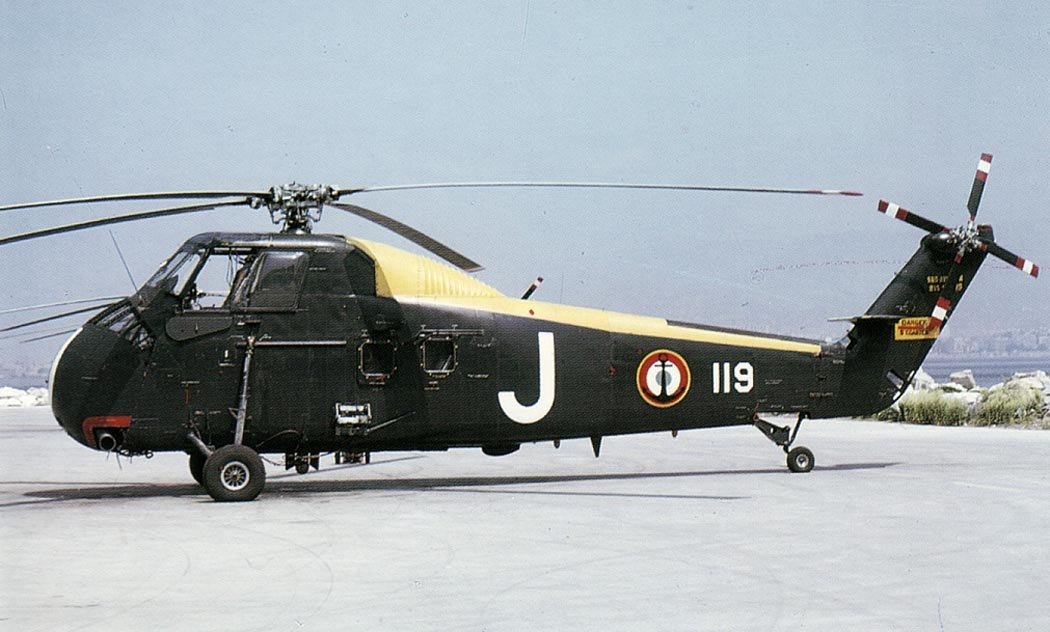
The Canadian Air Force extensively used its six “Chocktaw” helicopters for transport and search and rescue operations, including establishing an early warning and air defense surveillance system in the country’s north. Several H-34As were operated in Uruguay, Nicaragua, China, Haiti, and Israel. The French Air Force purchased 117 “Chocktaw” helicopters and used them effectively in combat operations in Algeria. Under license, the “Sud-Est” factory built another 98 machines, named “Mammouth.” On two of these, the French replaced the Wright piston engine with two Turbomeca Bastan gas turbine engines.
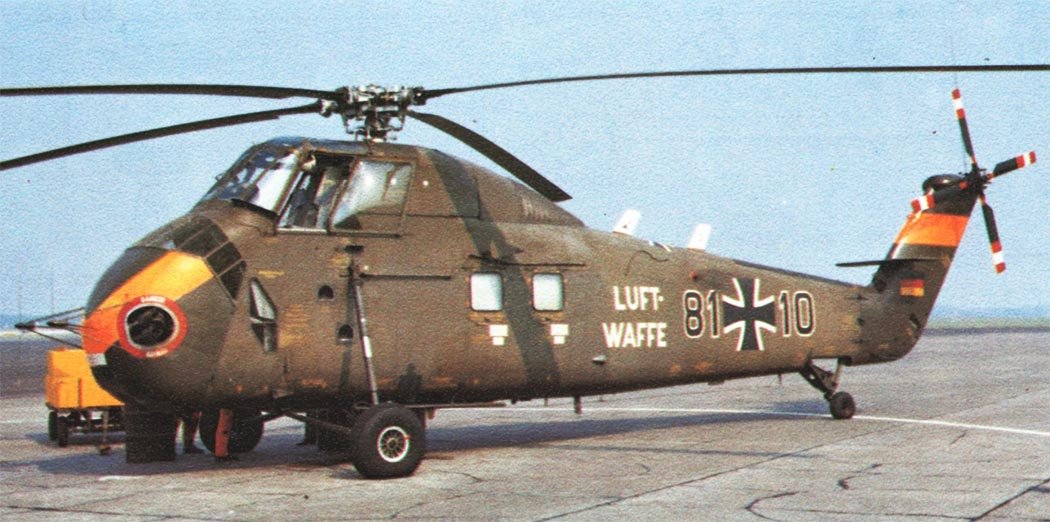
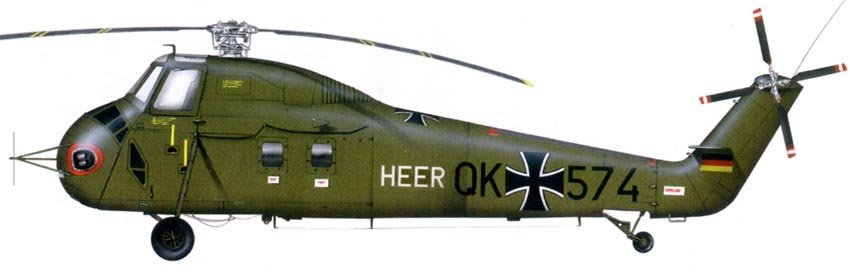
The Bundeswehr received 26 “Chocktaw” helicopters, with West Germans designating their aircraft H-34G.I. Another 25 H-34G.II “Chocktaw” variants arrived configured for search and rescue. In the U.S. Army, helicopters converted from H-34A by installing additional search and rescue equipment were designated H-34B, and from 1962, CH-34B.
Modernization and Legacy
In the late 1950s and early 1960s, U.S. Army aviation modernized its “Chocktaw” helicopters into the H-34C variant (CH-34C from 1962). This variant featured more advanced flight and navigation equipment, enabling 24-hour operation of the rotary-wing aircraft. At least 190 H-34s were converted, and some were supplied to the Air Forces of South Vietnam and Thailand.
Technical Specifications
| Modification | CH-34A |
| Main rotor diameter, m | 17.07 |
| Tail rotor diameter, m | 2.90 |
| Length, m | 14.25 |
| Height, m | 4.85 |
| Empty weight | 3513 |
| Normal takeoff weight | 5897 |
| Maximum takeoff weight | 6350 |
| Internal fuel, l | 1160 + optionally 568 |
| Engine type | 1 Piston engine Wright R-1820-84B/D |
| Power, kW | 1 x 1137 |
| Maximum speed, km/h | 196 |
| Cruising speed, km/h | 156 |
| Range, km | 397 |
| Rate of climb, m/min | 335 |
| Service ceiling, m | 2895 |
| Static ceiling, m | 1490 |
| Crew | 2 |
| Payload | 18 passengers or 8 stretchers |
Image gallery of the CH-34 Chocktaw