Initial Design and Specifications
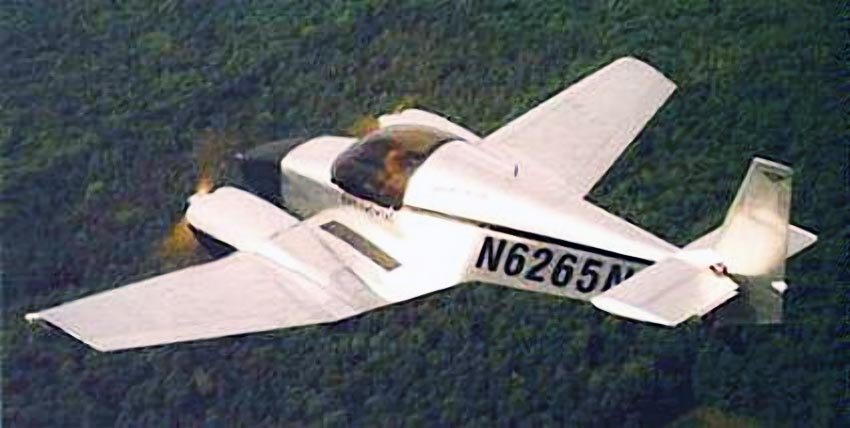
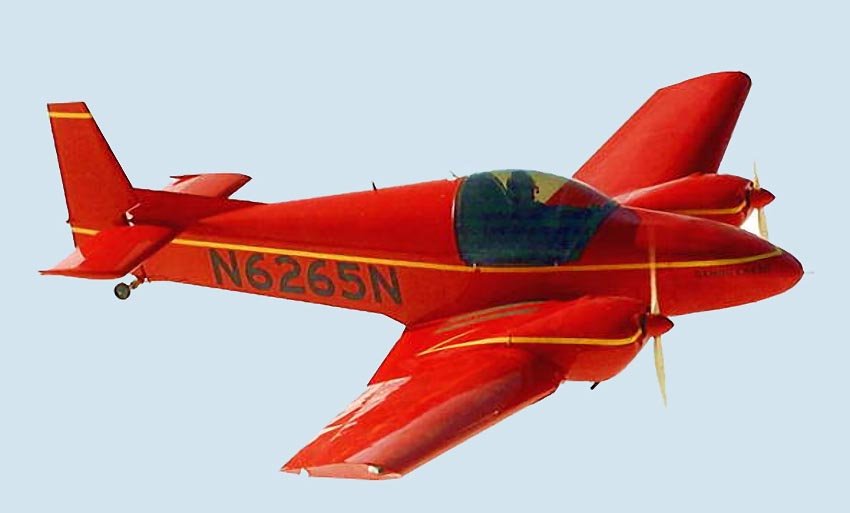
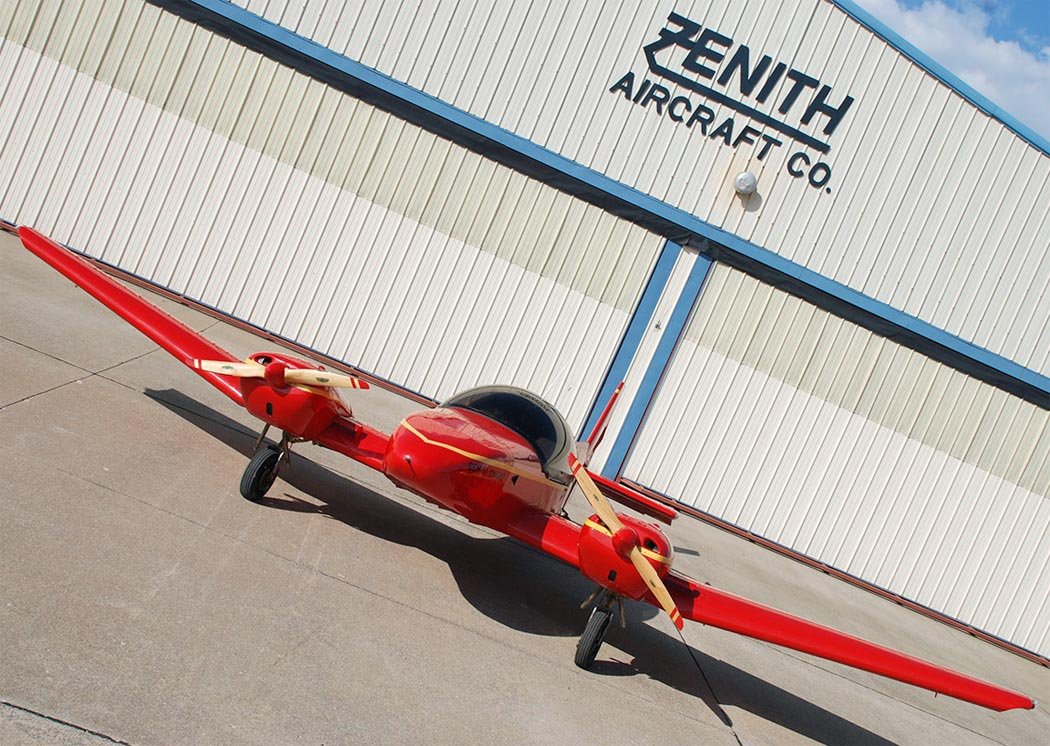
In the mid-1990s, German engineer and designer Chris Heintz began designing his first twin-engine aircraft, designated the CH-620 Gemini. The machine, based on the CH-601 Zodiac, was a two-seat, cantilever low-wing monoplane. It was equipped with two 80 hp (60 kW) four-cylinder, air-cooled Jabiru 2200 piston engines with two-bladed propellers measuring 1.4 meters in diameter.
Development and Maiden Flight
The first flight of the CH-620 prototype (N6265N) took place on July 23, 1996. After completing its test cycle, it was decided to refine the aircraft’s aerodynamics and the possibility of engine replacement. However, development work proceeded very slowly, as the company’s main focus was on the production of single-engine aircraft. As of 2020, serial production of the aircraft had not yet begun.
Acquisition and Subsequent Modifications
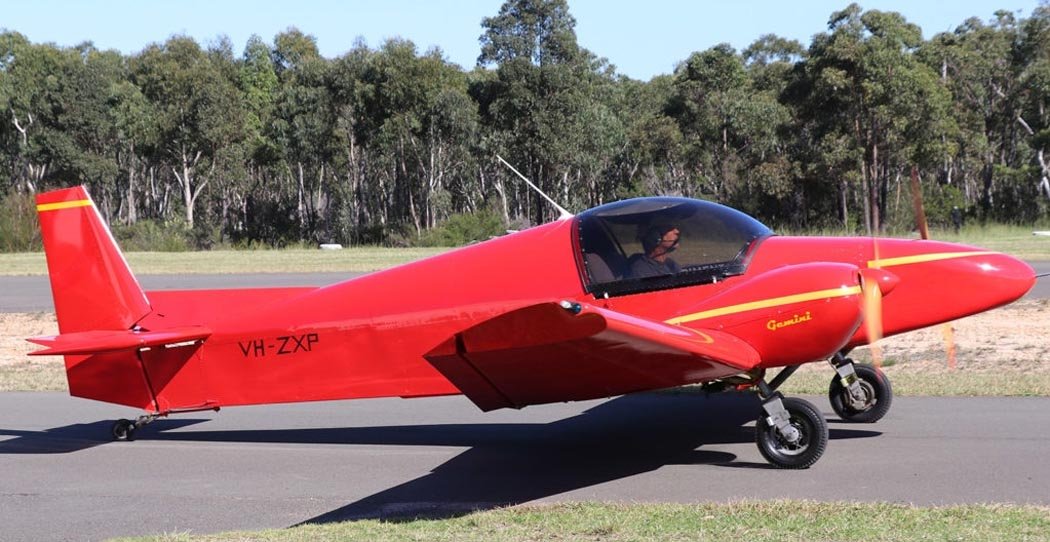
In 2015, the prototype was purchased by Armando Papallo from Sydney. After the acquisition, the pilot replaced one of the CH-620’s engines with a Cammit 2200 and changed the registration number to VH-ZXP.
Technical Specifications
| Modification | CH-620 |
| Wingspan, m | 8.31 |
| Length, m | 5.79 |
| Height, m | 1.78 |
| Wing area, m2 | 11.43 |
| Empty weight | 363 |
| Maximum takeoff weight | 658 |
| Engine type | 2 Piston engine Jabiru 2200 |
| Power, hp | 2 x 80 |
| Maximum speed, km/h | 249 |
| Cruising speed, km/h | 233 |
| Practical range, km | 1050 |
| Rate of climb, m/min | 390 |
| Service ceiling, m | 4900 |
| Crew | 2 |
Image gallery of the CH-620 Gemini