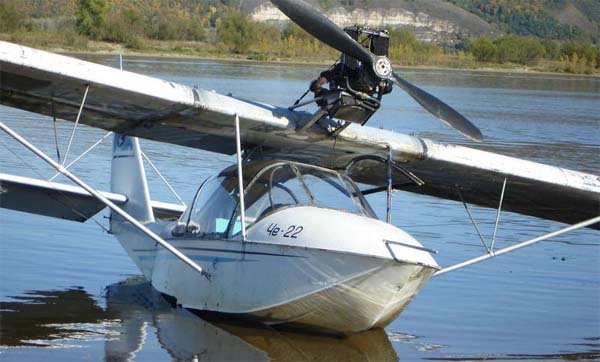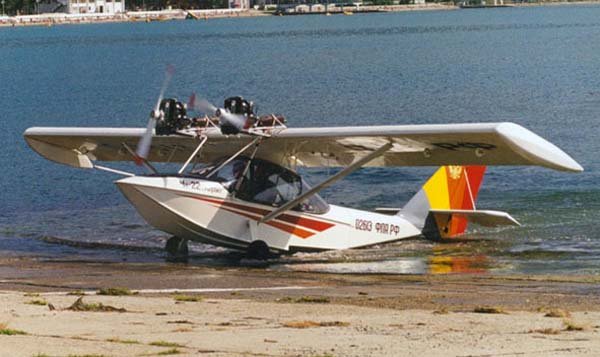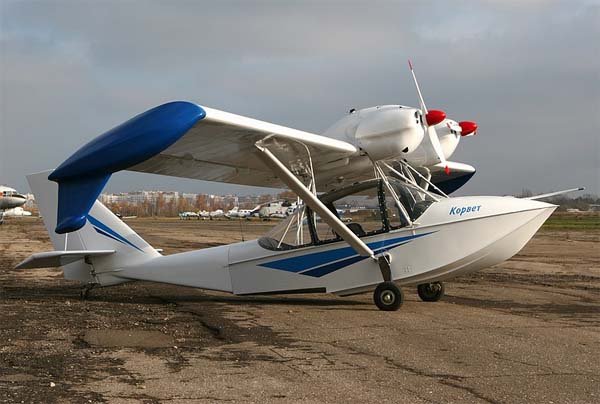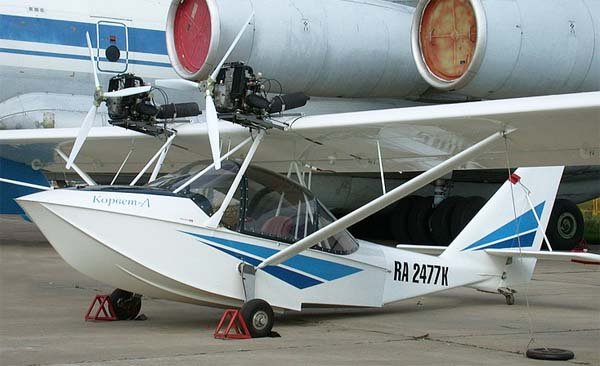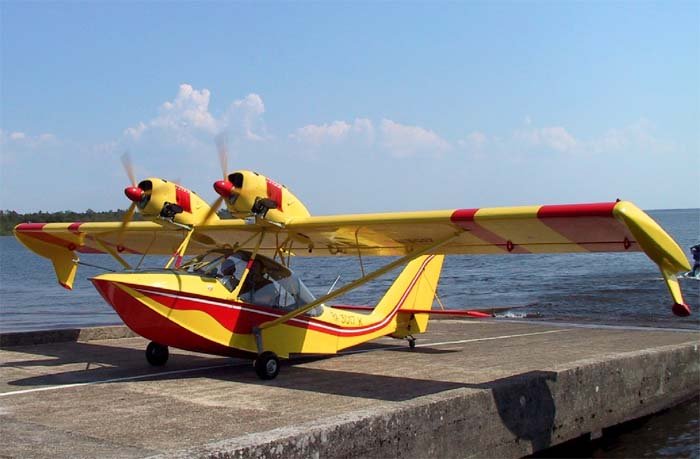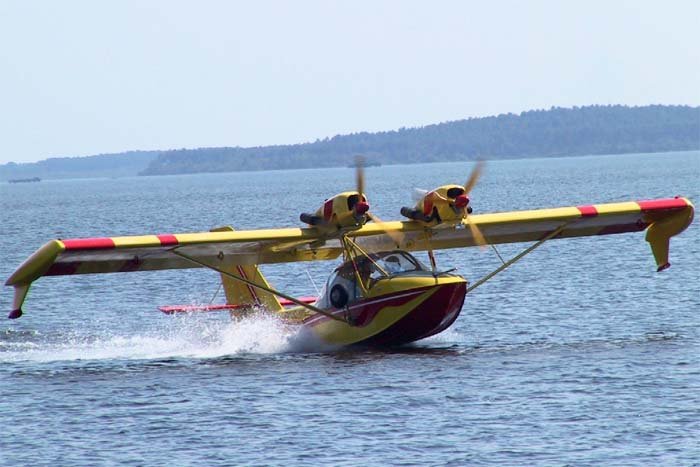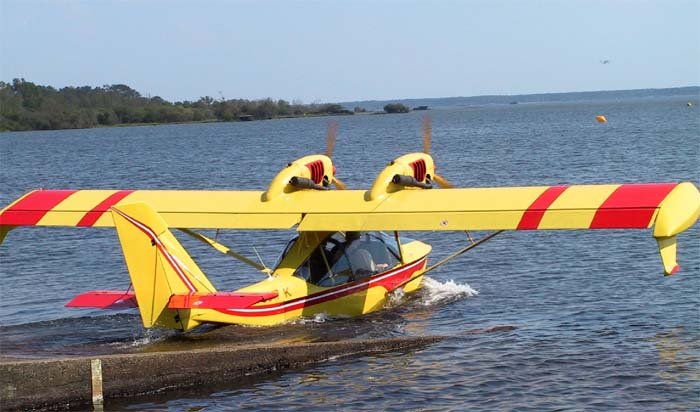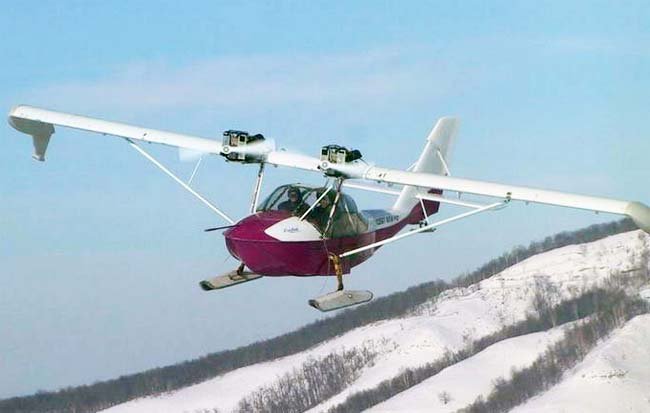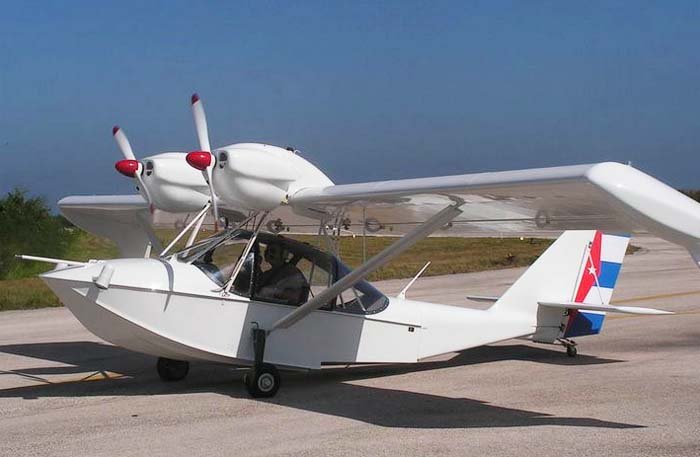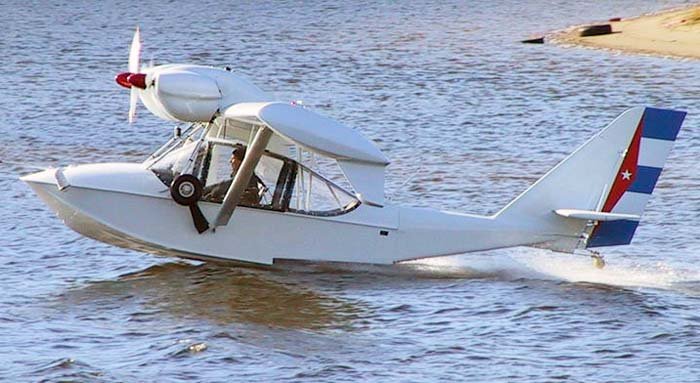
The “Korvet” seaplane was developed by the Hydroplan Design Bureau as a multi-purpose amphibious aircraft. It is designed to perform a wide range of tasks in commercial applications, as well as for use by private pilots, both professionals and amateurs.
The “Korvet” combined the best of the early design ideas of aviation engineers Yungerov and Chernov with the latest developments from Hydroplan’s designers. The aircraft obtained patents from the Russian Federation, with LLC “Hydroplan” as the patent holder and B. Chernov and E. Yungerov as authors (hence another designation for the aircraft, Che-22).
Its versatile design allows for various applications including patrol, postal services, rescue missions, pilot training, tourism, and sports activities. As a result of a series of significant improvements, carried out based on long-term flight operation experience, the aircraft’s design not only complied fully with Russian airworthiness norms but also surpassed all existing analogues in reliability, flight characteristics, and economic efficiency. With its highest flight performance characteristics and widest range of possible applications, the aircraft’s price will pleasantly surprise even amateur pilots.
Modifications and Certification
Currently, the company has developed various modifications of the aircraft. The twin-engine “Korvet L” variant, equipped with “Rotax-582” engines, has undergone state certification and received an AR MAK type certificate.
Furthermore, an option has been developed to install Jabiru 2200 four-stroke engines (85 hp), manufactured by the Australian company Jabiru. This, with a slight increase in construction cost, will lead to a reduction in hourly fuel consumption, an increase in flight range, and improved flight characteristics. This variant of the aircraft has been designated “Korvet LJ”.
The “Korvet” aircraft’s concept focuses on maximum flight safety and extremely short take-off and landing distances. In the twin-engine variant, should one engine fail, the aircraft can continue horizontal flight. If both engines fail, it can perform a gliding landing.
In such a case, from an high altitude of 1 km, it can fly 7-10 km in search of a suitable landing site or water area. Landing can be performed on any flat unpaved area longer than 250 m or on a lake, river, or bay deeper than 0.5 m and longer than 250 m.
Upon customer request, the “Korvet” can be equipped with a rescue parachute system, which allows the entire aircraft to descend to the ground. This rescue system operates from an altitude of 50 m or more. The cockpit glazing provides almost circular visibility and observation of ground areas practically directly beneath the aircraft.
Combined with a cruising speed of 120-140 km/h, this creates a unique opportunity to use the aircraft for patrolling and environmental/technical monitoring. Minimum flight speeds allow it to match the speed of fast marine vessels for inspection from minimal altitude. The aircraft’s fuselage is made of fiberglass using special technologies.
This achieves excellent structural weight efficiency, strength, reliability, and high corrosion resistance in seawater. The materials used in the airframe’s construction ensure the aircraft’s operation in tropical conditions. Each aircraft undergoes a series of factory tests during the manufacturing stage. The company provides a warranty for 100 flight hours or 6 months.
The aircraft is equipped with duplicated controls for pilot training and for alternating piloting by two pilots on long-distance flights. The aircraft is easy to master, with a full piloting training program lasting 42 hours.
Logistics and Ease of Use
Special attention has been paid to the quick assembly of the aircraft from its transport position with detached wings, which takes no more than 15 minutes. The aircraft can be transported short distances using a passenger car’s tow hitch.
The company can provide a special container that allows the aircraft to be transported long distances behind a car and stored. The container can also be used as field accommodation. The aircraft’s operating conditions are quite broad. Its operation does not require highly qualified specialists and is performed based on the instructions supplied with the aircraft. The “Korvet” has received good feedback from its owners.
Increased interest in the reliable, easy-to-operate, and inexpensive “Korvet” from a wide range of professional operators and aviation enthusiasts has, unfortunately, also led to repeated attempts at artisanal copying of our aircraft. We ask you to note that despite the seeming simplicity of its design, the “Korvet” is a serious aircraft, certified according to MAK rules. Its construction is impossible without specially created production facilities, highly qualified and experienced engineering and technical personnel, an established system for purchasing certified aviation materials, detailed production and technical documentation, and mastery of unique “know-how” and numerous secrets of manufacturing, tuning, assembly, and testing.
To all who wish to truly enjoy owning this excellent aircraft, the Hydroplan Design Bureau warns against purchasing fakes. Avoiding this is very simple: new “Korvet” aircraft are supplied only by Hydroplan. When purchasing a used aircraft, contact Hydroplan for confirmation of authenticity and the history of the aircraft offered to you.
The diverse applications of the “Korvet” and the individual needs of users often require special modifications and the installation of additional equipment. The configuration of the “Korvet” aircraft presented on this website is not final. Within existing operational limitations, Hydroplan always meets customer wishes for aircraft modernization and the supply/installation of additional equipment by special order.
A single set of spare parts and materials can be supplied with the aircraft. Upon customer request, the aircraft can be modernized and equipped with additional equipment. The basic airframe configuration of the “Korvet” seaplane includes a fully assembled airframe with two rigid seats and a rear bench, retractable landing gear with 300mm wheels and a steerable tail wheel.
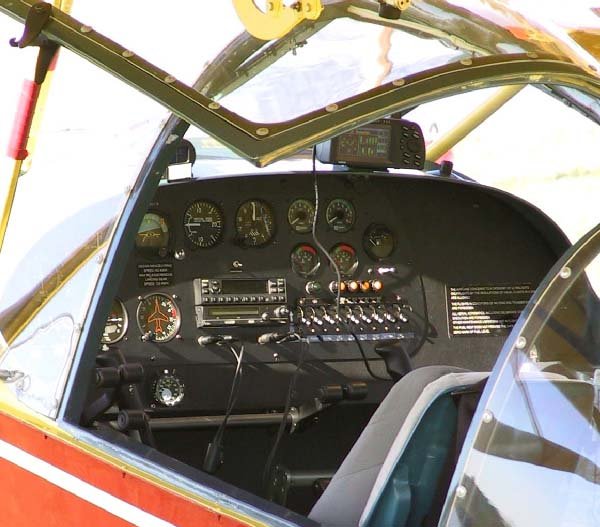
It includes two 55-liter fuel tanks in the Rotax-582 engine variant, or two 85-liter tanks with Jabiru 2200. The cabin interior is flocked, and side panels are made of artificial leather. Instrument equipment includes a speed indicator, altimeter, magnetic compass, slip indicator, engine monitoring instruments (tachometers and thermometers), and a tool kit for engine maintenance supplied by Rotax.
Notable Optional Equipment
Additional equipment that can be installed on “Korvet” aircraft includes:
- MVEN rescue system: a parachute on which the entire aircraft can descend to the ground in an emergency, for example, in case of control damage. Minimum activation height: 30 m.
- Satellite navigation system (GPS): designed for reliable orientation in flight. GPS receivers usually include a detailed aviation map with airports, major settlements, and other information necessary for the pilot.
- Attitude indicator.
- Autonomous cabin heating: can run on gasoline and diesel fuel, with a power of 1 kW or 3 kW.
- Cabin ventilation: can be naturally adjustable or forced.
- Instrument panel lighting.
- Navigation lights: wing lights and a strobe beacon.
- Cabin lighting.
- Siren: to warn on the water about engine startup and when moving on water.
- Enlarged fuel tanks: center section with two 65-liter tanks. If these tanks are installed, the rescue system is not installed.
Ground equipment: Container (7200x2500x2200 mm) for transport on a trailer or SUV, aircraft storage, and use as field accommodation. Clamps (4 pcs) for securing ailerons, rudder, and elevator during parking. Wing cradles (4 pcs) for storing detached wings indoors. Transport cradles (4 pcs) rigid cradles for separate horizontal transport of wings on a truck or car roof rack. Lifting traverse for crane: a rigid welded triangle with cables and hooks for attaching to the assembled aircraft and lifting it with a crane.
Aircraft covers: a set of covers made of lightweight modern materials for covering the aircraft when parked, including covers for the wing and center section, cabin, elevator, rudder, engines, and Pitot tube. Funnel with fine mesh for refueling the aircraft.
Spare parts: Spare propellers (2 pcs). Repair kit in a case: for the most common repairs of the aircraft permissible in operational conditions. In 2006, 2 aircraft were delivered to Cuba for the coast guard.
Technical Specifications
| Modification | Corvette LJ |
| Wingspan, m | 10.53 |
| Length, m | 7.25 |
| Height, m | 2.40 |
| Empty weight | 460 |
| Maximum takeoff weight | 6675 |
| Internal fuel, l | 102 |
| Engine type | 2 Piston engines Jabiru 2200 |
| Power, hp + kW | 2 x 85 |
| Maximum speed, km/h | 175 |
| Cruising speed, km/h | 140 |
| Practical range, km | 650 |
| Practical ceiling, m | 3000 |
| Crew | 1 crew member |
| Payload | up to 2 passengers and up to 150 kg of cargo |
Image gallery of the Che-22 Korvet