The Dawn of Supersonic Commercial Aviation
By the early 1960s, supersonic fighters and bombers were in service with many countries and actively sold for export. It was then that aircraft designers began to wonder if it was time to transition passenger aviation into this new realm of speeds. This promised considerable advantages.
Firstly, the creation of a supersonic airliner would elevate the prestige of the country that built it, literally to the heavens. Secondly, many believed that the mass introduction of such machines would lead to another qualitative leap in air travel standards.
The first attempt to create a supersonic airliner (SST) dated back to the late 1950s. The American firm Convair was exploring the possibility of creating an SST based on the Hustler bomber. Technically, the project looked very enticing: lengthen and widen the fuselage to accommodate a hundred passenger seats, add a horizontal tail for improved trim characteristics and subsonic handling. But when economists calculated the project’s cost, it had to be urgently shut down.
It turned out that a ticket on an SST from New York to San Francisco would cost at least eight times more than on a Boeing 707, a sum that the average American would not pay even for a high-speed flight. Furthermore, Convair’s SST did not have transatlantic range, which automatically knocked it out of competition on one of the most prestigious air routes.
Several serious technical and environmental problems stood in the way of creating a full-fledged SST. Although fighters like the Super Sabre or tactical bombers like the Mirage-IV are considered supersonic, they spend the lion’s share of their flight time at subsonic speeds, breaking the sound barrier only in specific situations, such as air defense penetration or target strikes. This means they are essentially subsonic aircraft capable of only BRIEFLY “popping” into supersonic flight, and only with afterburner, which is a very uneconomical mode.
Moreover, any body moving through the atmosphere at supersonic speeds creates a powerful front of shock waves, a whole wave that is perceived on the ground as thunderclaps. Imagine living in a house directly under an air corridor used by transcontinental SSTs. To solve the first problem, two things were necessary: optimize the SST’s aerodynamics for prolonged supersonic flights and create a sufficiently economical engine capable of generating enormous thrust with the lowest possible specific fuel consumption.
The second problem, the sonic boom, was not solved directly but simply circumvented: even before SST design began, the premise was put forward that the new aircraft’s primary goal was to provide transoceanic flights, and in the middle of the Atlantic, as is well known, there are no houses.
Innovative Design and Testing
Following a series of disasters involving the first British jet airliner, the Comet, the British aviation industry was decisively pushed aside by American firms from its leading position in the air transport market. Naturally, the British craved revenge, and this required creating something unprecedented, achieving a technological breakthrough in civil aircraft construction. As early as 1956, in England, under the Ministry of Supply, which at the time also dealt with aviation matters, the Supersonic Transport Aircraft Committee (STAC) was formed.
The Committee started work literally from a “clean slate,” and by early 1959, its members concluded that a supersonic passenger aircraft had a future. The project’s chief engineer was the renowned aerodynamicist and stress engineer Sir Archibald Russell. The Committee’s recommendations stated that it was advisable to begin developing an SST with a long (read: transatlantic) range and a cruising speed corresponding to Mach 2. An alternative and cheaper project considered a medium-range aircraft with a cruising Mach number only slightly exceeding one.
It should be noted that the preliminary design of this machine was quite exotic: four engines in two vertical “double barrels” were located at the semi-span of a thin wing, whose root sections had a very high negative sweep, and outer sections had an equally high positive sweep. Thus, the aircraft in plan would have resembled the letter “M.” By the autumn of the same year, it was decided to focus all efforts on the bolder, “two-Mach” project.
Orders were placed with firms within the BAC consortium: the airframe was to be developed by Bristol Aircraft, and the engines by Bristol Siddeley. To reduce technical risk and minimize costs, the new SST’s maximum speed was limited to Mach 2.2, and most of the structure was decided to be made of technologically well-proven and relatively inexpensive aluminum alloys. By late 1960, a preliminary design for a six-engine machine with a passenger capacity of 140 people emerged. However, it was clear that the British industry, weakened by the economic crisis, would not be able to bring such a “wonder of the century” into series production. The Ministry of Supply began searching for partners in Europe.
At the same time in France, at Sud Aviation under the leadership of the talented engineer Lucien Servanty, a largely similar SST was being designed—the same structural materials, the same cruising speeds. Only in terms of range and passenger capacity were the French much less “advanced” than the British. Negotiations proceeded surprisingly quickly and successfully, especially considering the traditional fierce competition between English and French aircraft designers. The agreement, reached in November 1962, resulted in the birth of the joint Anglo-French project for a 100-seat supersonic passenger aircraft with transatlantic range, named “Concorde,” meaning “Concord” or “Agreement” in English.
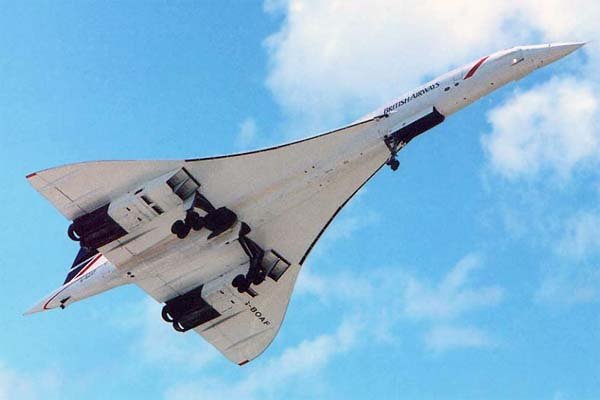
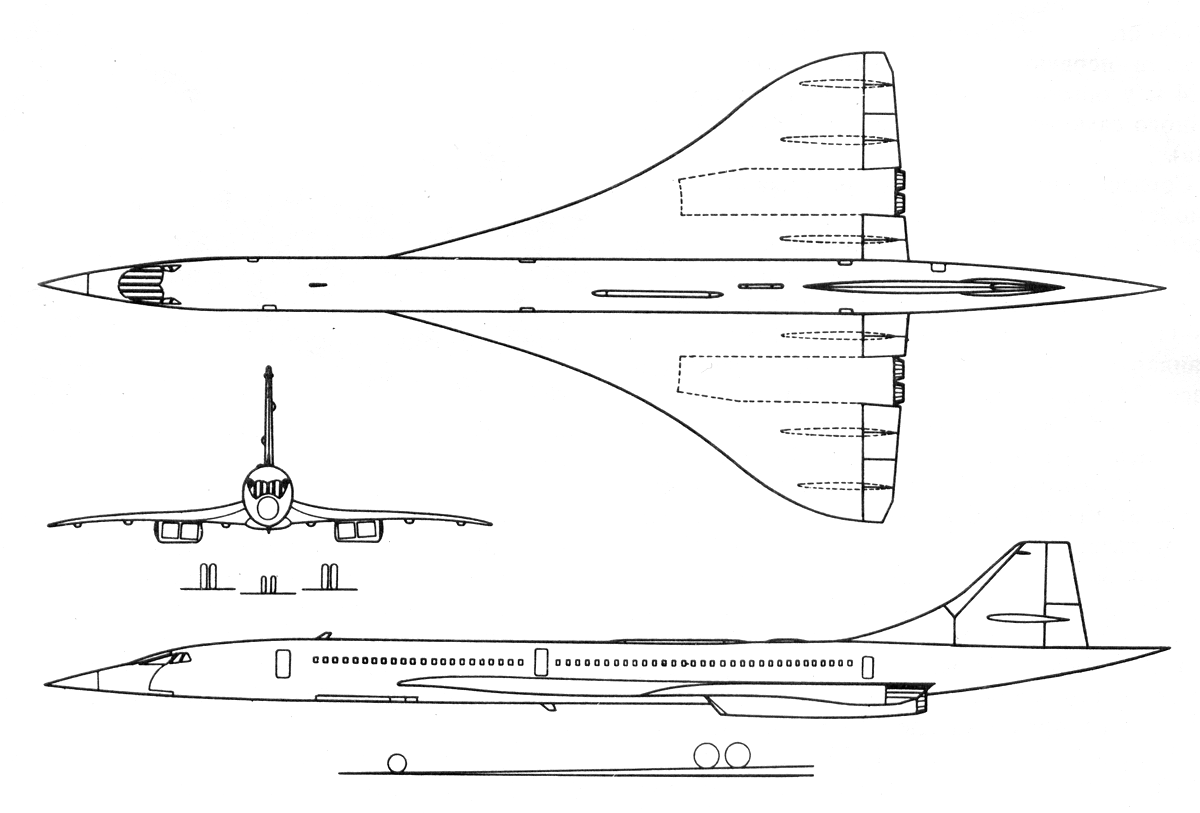
For high-altitude supersonic cruise flight, high aerodynamic efficiency with moderate lift is required. Such a combination is achieved by using a very low aspect ratio wing. The Anglo-French design team considered a range of aerodynamic schemes and wing shapes. Even a variable-sweep wing variant was explored. Ultimately, they settled on a “tailless” configuration with a very thin ogee-shaped wing and a root chord to span ratio of about 1.5. The wing profile at the root section had an inverse camber, and the wingtip leading edges had a pronounced twist, which improved lateral stability and takeoff/landing characteristics. (Interestingly, the developers of the Soviet SST Tu-144 settled on the exact same scheme and wing shape. This was not a matter of copying technical solutions, but rather accounting for objective laws of aerodynamics.)
The configuration was studied in detail, and Concorde models were tested in subsonic and supersonic wind tunnels. To “run-in” the wing on a full-scale aircraft, Handley Page built a “flying supersonic laboratory” (analog aircraft) with an ogee wing, which generally replicated the new airliner’s wing. After selecting the configuration, the problem of ensuring stability and trim arose. It was solved by incorporating trim tanks into the design, located in the front part of the wing and in the tail cone. In different flight regimes, a certain amount of fuel was transferred from one group of trim tanks to another, shifting the center of mass in accordance with the speed and position of the wing’s aerodynamic center.
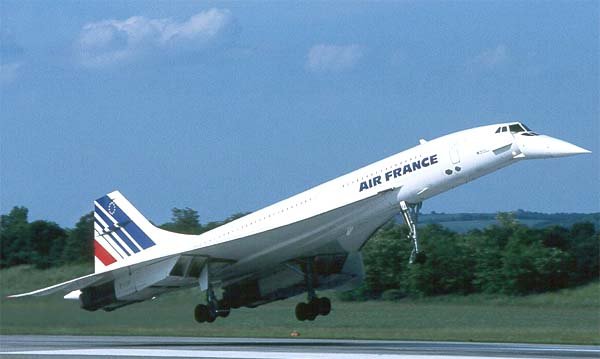
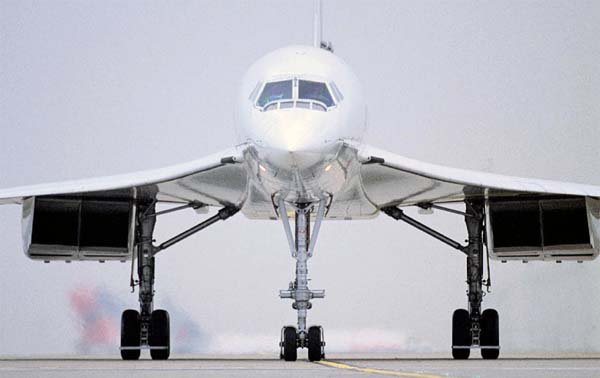
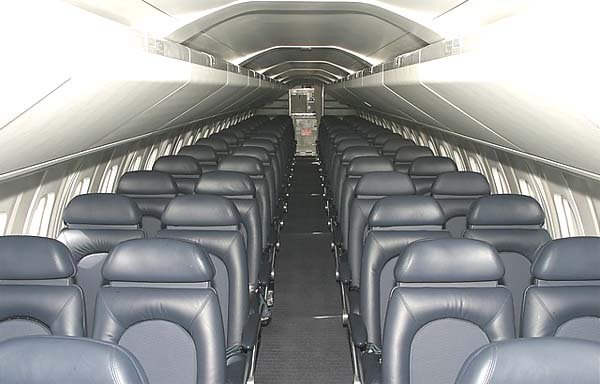
In 1966, the aircraft’s design was completed. The semi-monocoque fuselage consisted of eight sections and a droop nose, which deflected downwards during taxiing and takeoff/landing modes to improve visibility from the cockpit. Approximately 85% of the fuselage volume was occupied by the pressurized cabin. The passenger cabin accommodated 118 passenger seats in a 2+2 arrangement. The cabin dimensions were almost indistinguishable from the generally accepted standard for narrow-body aircraft like the Caravelle or Boeing 707. In cross-section, the fuselage had the shape of an irregular oval, elongated downwards, with a maximum width (at the passenger cabin) of 2.63 m.
The multi-spar box-section wing was joined to the fuselage in a highly original way: instead of manufacturing these components separately and then joining them, the wing structure was divided into span-wise sections, each consisting of a fuselage bay and the adjoining wing part. This eliminated the need for heavy connecting nodes for the wing spars and fuselage frames. Inside the wing were the main and forward trim fuel tanks, as well as the main landing gear bays. The wing’s high-lift devices consisted of six large elevons located on the trailing edge. The hydraulic actuators for elevon deflection were housed under the wing in massive fairings. The Concorde’s skin thickness was only 1.5 mm, despite the aerodynamic, thermal, and acoustic loads it experienced.
The Concorde’s landing gear, developed by the well-known firm Hispano Suiza, was very tall—about 3.5 m—due to the long tail section of the fuselage and the need for significant angles of attack during takeoff and landing. The landing gear struts, made of a new high-strength steel, turned out to be very light. The nose gear, with two wheels, retracted by rotating forward; the main gears, with four-wheel bogies, retracted by rotating towards the fuselage. To prevent damage to the tail cone during accidental runway contact, a protective skid with paired small-diameter tires was installed at the tail. During taxiing, the aircraft was steered by rotating the nose gear. The Concorde’s fin was structurally similar to the wing; the rudder consisted of two sections of laminated construction, each deflected by an individual hydraulic cylinder.
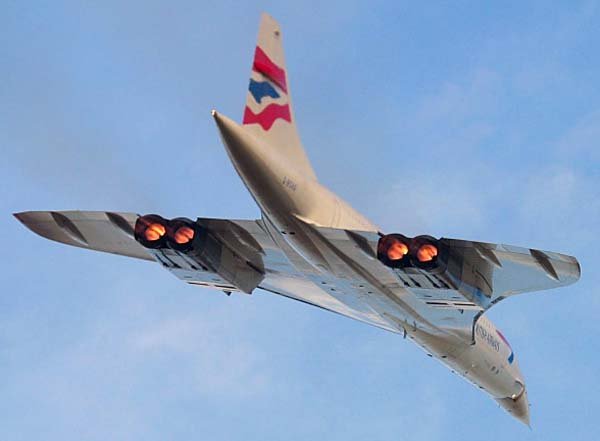
Thanks to the use of progressive layout solutions and high-strength materials, the projected empty weight of the aircraft was only 65 tons, or about 23% of the takeoff weight. However, during design refinements, this figure increased to 43%. The payload of the production aircraft was only 6% of the maximum takeoff weight. Four afterburning single-spool Bristol Olympus 593B turbojet engines were located approximately at the wing’s semi-span in two paired nacelles. Each nacelle consisted of three sections: the air intake system, the engine casing, and the afterburner casing. The air intakes had a series of controlled panels that maintained optimal flow characteristics at the engine inlet during any flight regime.
The Olympus 593B was a two-spool, single-flow afterburning turbojet engine. Its static thrust without afterburner was 16200 kgf. High efficiency in afterburner mode was due to relatively low fuel consumption for afterburning: thrust increase was only about 10%. Afterburner was used only during acceleration to cruise speed and then disengaged. The entire design of the afterburner chamber, nozzle, and bucket-type thrust reverser was developed by the French firm SNECMA. The development of a fundamentally new airliner took a relatively short period: the joint work of the Anglo-French design team lasted from 1962 to 1966. This was possible due to the almost complete absence of disagreements, as well as the immense technical groundwork both sides had in aerodynamics and supersonic aircraft design. In mid-1966, assembly of the Concorde prototype began. Production of major components and assemblies was divided roughly equally between England and France.
The forward fuselage, the front section of the pressurized cabin, the tail cone, the fin with rudder, as well as the engines and their nacelles, were manufactured at BAE factories in England. The mid-fuselage section, wing, and landing gear were produced at Sud Aviation and Dassault factories in France. Final assembly of the Concordes took place at the Sud Aviation factory in Toulouse and at the British firm BAC. In early 1969, the experimental Concorde with serial number 001 and registration code F-WTSS was built. However, the aircraft still lacked the so-called “barn doors”—flaps for additional engine air intake—and the aft trim tank in the tail cone was not ready either. Nevertheless, it was decided to start subsonic tests with these unfinished elements.
On March 2, 1969, the Concorde, with a four-person crew led by Aérospatiale’s chief test pilot André Turcat, taxied to the longest runway of the factory airfield in Toulouse and took off. After rolling exactly one and a half kilometers down the runway, the machine lifted off the concrete. Naturally, the goal of the first flight was not to achieve any records. The Concorde climbed to an altitude of 3050 m and a speed of 463 km/h. Landing gear retraction and extension went smoothly; the droop nose system was not engaged in flight. In the second flight, also on March 2, the droop nose actuator was tested: it was moved from the fully lowered position to an intermediate one and back.
In late May, the Concorde first “made its debut,” flying from Toulouse to the Paris Air Show at Le Bourget. As they say, public enthusiasm knew no bounds. In most test flights, the Concorde was accompanied by two aircraft: an Armstrong Whitworth Meteor NF.11 and a Morane-Saulnier 760 Paris, from which filming was carried out. During its analysis, a curious incident once occurred that would surely intrigue “flying saucer” hunters. The film clearly showed a metallic shining object the size of a tennis ball, which, defying all laws of aerodynamics, accompanied the Concorde, flying about two meters from its fuselage. Then the “ball” unexpectedly performed a “loop-the-loop” around the nose of the aircraft and flew away.
The Concorde pilots did not notice it, and those responsible for decoding the film information preferred to consider the mysterious ball simply a film defect. But how to explain the fact that the object sometimes hid behind the Concorde’s fuselage and sometimes appeared on the other side? Apparently, our “brothers in intelligence” found the unusual shapes of the new aircraft curious and decided to take a closer look. The flight test program proceeded without significant hitches: the aerodynamicists’ calculations of the Concorde’s good stability, controllability, and fuel efficiency at subsonic speeds were fully confirmed.
In June 1969, the second prototype (number 002), built in England, joined the program. The British part of the flight test program took place at Fairford airbase in Gloucestershire. In the same month, “Concorde double 2” also performed purely “representational” functions: it participated in the next Le Bourget show and was then shown to Londoners, flying over Buckingham Palace. From June to August, both machines underwent the most complex stage of the program: flutter tests. By this time, the Concordes were still not ready to break the sound barrier: they had not been fitted with the additional air intake doors. Only in August were the “barn doors” finally installed and tested on the ground.
These units performed a dual function: firstly, they acted as additional air intakes at low flight speeds, opening downwards and forwards; and secondly, more importantly, they ensured air diversion from the inlet of a failed engine at supersonic speeds, opening downwards and backwards. The “doors” had a very complex drive. By autumn 1969, it became clear that breaking the sound barrier was now possible. On October 1, aircraft 001 went supersonic. The Concorde reached Mach 1.05 and held this speed for 9 minutes. Subsequent tests proceeded surprisingly smoothly, except for a faulty flight recorder in one flight. On November 12, the Concorde made its first night landing, a unique acknowledgment of the new aircraft’s complete safety.
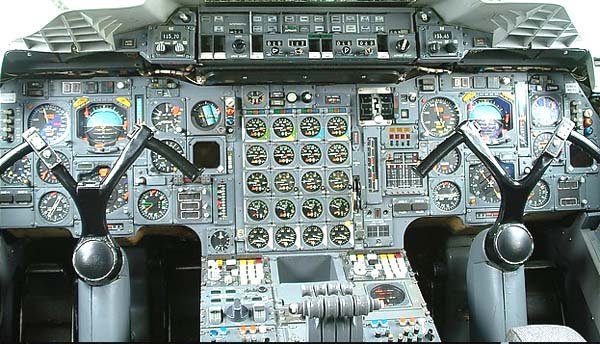
In December, pilots from several airlines—the most likely Concorde customers—were given the opportunity to take the controls of the new machine and make familiarization flights. They all unanimously noted that “the aircraft is very pleasant and simple to fly, without any excessive loads on the pilot even under simulated failure conditions, so no problems will arise in retraining civil pilots.” On December 17, aircraft number 001 completed its hundredth flight, concluding the first phase of the test program. By then, the Concorde had already carried its first civilian passenger—French Finance Minister Valéry Giscard d’Estaing, the future president of the republic.
In late January 1970, the aircraft were again put in for modifications. All air intake control units and a modernized control system allowing speeds up to Mach 2 were installed. The historic event took place on November 4, 1970: aircraft 001 climbed to an altitude of 15300 m and accelerated to Mach 2. The flight at this speed lasted 53 minutes. Going Mach 2 with aircraft 002 was also planned for the same day, but it had to be postponed: during acceleration, a fire warning light for an engine illuminated. This was a false alarm, but the flight was interrupted. The British Concorde reached the desired milestone only a week later. In subsequent flights, the French Concorde set several unofficial records: notably, the world record for time spent at supersonic speed—1 hour 29 minutes, a speed record with two engines shut down—Mach 2.0, and an altitude record with two engines shut down—15250 m.
By New Year, the total flight time of the Concordes exceeded 370 hours, 12 of which were at Mach 2. During this time, the vast majority of the aircraft’s onboard systems, including the complex air intake duct drive devices, were deemed fit for service. Fatigue tests also yielded positive results, but for safety, the maximum speed was decided to be reduced from Mach 2.2 to Mach 2.02. This caused the aircraft’s skin temperature from kinetic heating at critical points to drop by 26 degrees. By Christmas, the British Concorde set an unofficial altitude record for passenger aircraft: accelerating to two Mach, it “jumped” to a dynamic ceiling of 17600 meters.
The new year, 1971, began for the French Concorde with the most serious accident in the entire test program. On January 26, at Mach 1.98, engines three and four shut down due to a surge. Then the actuator for the front ramp of the fourth engine’s air intake failed, causing the ramp to detach and be sucked into the duct. The engine ingested metallic debris, and all attempts to restart it were futile. But the third engine eventually started, and the aircraft returned to Toulouse. Both machines were again put in for modifications to minimize the likelihood of surge. The structure and attachment points of the front air intake ramps were also reinforced. Work concluded on April 15, after which the aircraft resumed the test program. Test flights confirmed the effectiveness of the measures taken.
On May 7, aircraft 001 completed a flight with an honored passenger, French President Georges Pompidou, and on May 25, made its first international flight on the Paris-Dakar route. Upon return, it was presented to the public at the Le Bourget Air Show. Finally, in July 1971, the Concorde’s flight test and refinement program successfully concluded. It was time to begin its advertising campaign. On September 4, “001” departed on its first commercial tour along the route Toulouse-Rio de Janeiro-São Paulo-Buenos Aires. Over 15 days, 16 demonstration flights were performed, and 117 passengers were carried (for promotional purposes). All flights were conducted strictly on schedule, dispelling any remaining doubts about the Concorde’s ability to integrate into the global air transport network. Servicing the aircraft without special airport equipment, which remained in Toulouse, also posed no problems.
Upon returning from South America, the Concorde was fitted with a new wing leading edge, developed for the production aircraft. Flights resumed on November 29, followed by a series of familiarization flights with pilots from various airlines. By May 1972, the Concordes had already logged 1000 hours. The permitted cruising speed was decided to be increased to Mach 2.1. This Mach number was achieved on October 9, 1972, on aircraft 001. However, on October 12, during a climb at high subsonic speed on the same aircraft, an engine failure occurred due to the destruction of the high-pressure turbocompressor shaft. The engine shut down automatically. The return to the airfield went smoothly.
The French Concorde’s last mission was its use as a flying observatory for solar eclipse observations. A solar telescope and other astronomical equipment were installed on board. On June 30, 1973, seven English, French, and American scientists observed and filmed the eclipse from an altitude of 15 kilometers. After this, the active career of the first experimental Concorde came to an end: on October 19, the aircraft was transferred to Le Bourget and handed over to the National Air and Space Museum.
The career of aircraft 002 had a more eventful finale. On June 2, 1972, the British Concorde departed on a promotional foreign tour to countries in the Middle and Far East, including Australia. In total, the aircraft made 32 flights lasting over 70 hours, 23 of which were supersonic. “002” visited 12 countries, flew approximately 74000 kilometers, and carried over 200 passengers. The “cruise” concluded on July 1. Its commercial results were much more impressive than those of the French Concorde’s South American tour. Contracts for the supply of five and four aircraft were signed with British Airways (formerly BOAC) and Air France, respectively, and the Chinese airline CAAC signed a protocol of intent to purchase three machines. However, the Chinese later withdrew from the deal for some reason.
In early September, the Concorde daily showcased the achievements of the British aviation industry in flight at the Farnborough exhibition. There, a protocol of intent to purchase two Concordes was also signed with the Iranian airline Iran Air. In August 1975, “002” participated in the English aviation exhibition in Weston. During landing gear extension at the end of one of the demonstration flights, the left main landing gear failed to lock due to the breakage of the fastening bolt of the retraction-extension rod. As a result, the strut was not fixed in the transverse plane. The landing, nevertheless, was successful thanks to the skill of the pilot, the head of the British Concorde test team, John Cochrane. He managed to shift the aircraft’s weight to the emergency gear only at the end of the roll-out, when the wing had already ceased to generate lift.
During September, the landing gear structure was modified to prevent the recurrence of such accidents. Due to repairs, the aircraft could not participate in the Farnborough airshow. Upon completion of the work, the Concorde flew to Yeovilton, taking an honored place in the exhibition of the Fleet Air Arm Museum. By that time, a third Concorde, significantly different from the experimental ones, had been built in Filton. Its configuration was already pre-production, with an elongated fuselage, a modified wing leading edge, and engines with increased thrust. The maximum takeoff weight increased from 148 to 162.5 tons. The machine received the alphanumeric index G-AXDN and number 01. Its first flight took place on December 17, 1971. Already on February 12, 1972, “01” broke the sound barrier. Until mid-August, the aircraft underwent flutter tests, then returned to Filton for the installation of a new air intake control system and a wing leading edge with aerodynamic twist, as well as for the replacement of engines with more advanced Olympus 602s with 16707 kgf of thrust. Flight tests continued on March 15, 1973. Work on optimizing the air intakes continued until June. Thanks to it, the allowed Mach number for the Concorde was raised to 2.23.
After participating in another Farnborough exhibition, “01” joined the program to determine the effectiveness of the onboard anti-icing system (AIS). On November 7, finding no natural ice formation conditions in its native England, the Concorde was ferried to the USA, to Moses Lake airbase, Washington state. During this flight, a new achievement was noted – the distance from Fairford to Maine was covered in 2 hours and 56 minutes of flight time. In less than three hours, the Atlantic was conquered! Upon completion of the tests, the aircraft stood at Fairford for some time—it was planned to be used for crew retraining. But plans changed, and in June 1975, “01” joined the exhibition of the Duxford aviation museum, where it is still kept. The final configuration of the Concorde was only achieved on the next machine, the French pre-production sample number 02. An extended tail cone was installed on this aircraft. There were other minor differences from previous copies.
“02” first took to the sky on January 10, 1973, and by March 3, it had covered a distance of 6300 km without landing. In June, the aircraft flew daily at the Le Bourget Air Show. Various tests were conducted on this machine until September. Then came a promotional tour, this time to the USA. On September 26, the aircraft graced the opening of Dallas-Fort Worth International Airport in Texas with its arrival, then visited Venezuela and returned to Toulouse, crossing the Atlantic with passengers for the first time. Upon its return, the Concorde was flown by inspectors from French and English certification agencies. Then “02” underwent another modernization, during which the nozzles were modified and production-type bucket reversers were installed (at the very edge of the nozzles). On January 31, 1974, the Concorde flew to Alaska, where it honorably passed tests in conditions of extremely low temperatures. From May 27 to June 18, aircraft 02 made 29 “pre-operational” flights to Rio, Boston, and Miami. The average cruising speed, even including subsonic flight, was 1610 km/h. Approximately 500 passengers were carried during these flights.
The “pre-operational” program concluded with a gigantic tour along the route London-Gander-Mexico City-San Francisco-Anchorage-Los Angeles-Acapulco-Bogota-Lima-Caracas-Las Palmas-Paris. The last leg of the journey, from the capital of Peru to Paris, a distance of 11600 km, the aircraft covered in 9 hours of flight time with two intermediate landings. Meanwhile, by the end of 1973, serial production Concordes began to enter service: on December 6, the first French serial production unit, number 201, took to the air. This Concorde finally received full certification, including fulfilling the conditions of the American Federal Aviation Administration for mandatory fuel reserve in tanks before landing after a transatlantic flight.
The End of a Supersonic Era
In February 1974, the British production Concorde (202, G-BBDG) made its first flight. The following year, it was joined by aircraft 203 (F-BTSC) and 204 (G-BOAC), as well as the first two units intended for delivery to airlines: 205 (F-BVFA) for Air France and 206 (G-BOAA) for British Airways. After some time, aircraft 203 and 204 were also transferred to commercial operation. Concorde production ceased in 1977 after 14 aircraft were built. British Airways acquired five of them, and Air France, four. The remaining airliners, by mutual agreement, were decided to be used as reserves, or to be leased or sold if any airline showed interest in them. Upon cessation of Concorde production and spare parts kits, the English assembly line in Filton was dismantled, and the aircraft factory itself was closed.
In total, during the lengthy flight test program preceding the issuance of the airworthiness certificate, eight Concordes flew over 5000 hours. For comparison, the entire flight test program for a subsonic passenger aircraft in the 1970s took no more than 1200 flight hours. This difference provides an idea of the novelty and technical risk embodied in the design of the first and, so far, only Western supersonic passenger aircraft. It is also worth noting that the flight test program for such a technologically new and structurally complex aircraft proceeded almost without incident.
On January 21, 1976, the commercial operation of Concordes began. British airliners pioneered the London-Bahrain route, while French ones covered Paris-Dakar-Rio. However, the most promising New York route was closed to Concorde due to a ban imposed by American air transport services on SST flights to US airports. This does not mean that Americans were concerned about the environment; they simply could not come to terms with the fact that European designers, who seemed to have lagged behind “Uncle Sam” forever, had suddenly surpassed them by creating an SST. The main formal argument against Concorde was that an SST produced more than twice as much noise on takeoff as a Boeing 707 or DC-8. Incidentally, this argument was unsubstantiated, as no noise level measurements were taken even during repeated visits of Concordes to the USA. There was also talk of the increased smokiness of the Olympus engines, which supposedly would inevitably lead to an increase in oncological diseases. But this argument was also entirely contrived. In terms of stoichiometry (i.e., the degree of fuel combustion), the Olympus engine surpassed any American analogue, as it was initially designed for supersonic cruise mode. One only needs to recall archival footage of early series Boeing 707s or DC-8s taking off, leaving entire plumes of thick black smoke behind them. Meanwhile, nothing of the sort was noticed behind Concorde.
Upon learning of the American decision not to allow Concorde into the USA, French aviation trade unions decided, as a retaliatory measure, to ban American airline planes from landing at French airports. There was even a hearing on this issue in the French parliament. The trade unions were defeated: such radical actions could have led to unpredictable consequences and undermined the entire air transport system. In February 1976, literally a month after the start of commercial operations, storm clouds began to gather over Concorde: reports appeared in the press that aircraft operating on the Bahrain route were flying half-empty and incurring weekly losses of 50,000 pounds sterling. British Airways chief executive Henry Marking stated in response that the Bahrain route had always been unprofitable, but in the event of opening a US route, some Concordes would be withdrawn from Middle Eastern routes.
Soon, good news came from America: the Federal Aviation Administration permitted Concorde flights to Washington Dulles International Airport. When this decision became known, the phones at the British and French airline offices literally rang off the hook: American businesspeople rushed to book seats. Politics is politics, but business is business: getting to Europe not in nine, but in just three and a half hours – that’s great! Meanwhile, New York Mayor Abraham Beame and New York State Governor Hugh Carey joined the fight against Concorde. The commercial success of the program, into which enormous funds and the labor of thousands of people had been invested, was once again in jeopardy. Several public organizations and environmental funds in New York and other US cities joined the militant officials. Despite local authorities’ bans, Air France and British Airways began planning Concorde flight schedules from London and Paris to the USA. Since New York airport was still closed to Concorde, Washington became the destination. Initially, they decided to limit themselves to six flights per week.
The start of flights was scheduled for April 11, 1976. But it was not to be! The American Environmental Defense Fund filed a lawsuit, demanding a ban on Concorde flights over the USA. This action thwarted the planned start date for regular supersonic transatlantic service. On May 19, the court denied the fund’s claim on the condition that airlines limit the number of passengers carried by Concorde “to increase the emergency fuel reserve.” The French were instructed to carry no more than 80 passengers per flight, and the British—71. Nevertheless, on May 24, 1976, Concordes began regular flights to Washington Dulles Airport. Several hundred people gathered there to welcome the new technical marvel of the 20th century. During the second half of the year, repeated attempts were made to ban these flights through the courts, but American authorities, for some reason, suddenly changed their minds, and all lawsuits were dismissed.
By the end of the year, the first results of Concorde’s regular operation were summarized. The aircraft gained popularity, not only among wealthy businessmen but also among people of average income. In a year, the airliners made about 1000 flights and carried over 45,000 passengers. One of them was a respected 93-year-old lady, the oldest resident of Earth to break the sound barrier. Passengers had no complaints about the aircraft or its onboard service. The most serious remark once heard was… “Too much food”! Some complaints from the “stronger half of humanity” were caused by the absence of female flight attendants in Concorde crews. Passengers were served only by male stewards. Transatlantic routes proved most profitable for Concorde, where the aircraft almost always had a full load. Air France benefited from this, as their aircraft flew to Rio. Things were worse for the British, as the Bahrain route, as already noted, brought only losses, and flights to the US with reduced loads, naturally, could not be highly profitable either. Gordon Davidson, British Airways Concorde manager, stated directly: “We will never make a big profit from SST operations, but how can we measure our national pride?! Concorde proved itself much better than we could have imagined. It is capable of absolutely everything it was created for, and moreover, it upholds the prestige of England and France.”
In general, profitable operation of Concorde was not yet a reality. Each aircraft required a ten-year depreciation period with extensive flight geography and a high utilization rate. British Airways held high hopes for future routes to Tokyo, Melbourne, and Johannesburg. The flight to the Japanese capital was planned to be organized over the Soviet Union with an intermediate landing in one of Siberia’s cities. As compensation for using the Trans-Siberian route, the Soviet SST Tu-144 was planned to be granted permission to fly to London and Paris. However, these plans were not destined to come true, although the Concorde did visit Moscow once. On October 17, 1977, the eighteen-month legal battle between the New York City Hall and Concorde owners concluded. The US Supreme Court issued an “acquittal verdict” for the airliner and finally declared the ban on SST flights invalid. Problems with flights to the USA were finally resolved. Two days later, the French Concorde made an “inaugural” flight from Toulouse to New York. And on November 22, the British and French SSTs made a joint landing at Kennedy Airport, solemnly opening a new route.
Meanwhile, political and administrative barriers continued to impede the airliner. Regular supersonic service with South Africa never began. Here, the disagreement of several African countries to permit intermediate landings for aircraft bound for the apartheid state played a key role. The Carter administration did not allow Concordes to serve the prestigious Dallas-London route, handing it over to the American airline Braniff. Incidentally, this company expressed a desire in 1978 to lease a Concorde to organize supersonic service between New York and Panama City. But these plans were quietly buried with the silent approval of the US authorities. In 1979, European Aeronautic Defence and Space Co. (EADS) and BAC—the legal successors to the firms that created Concorde—concluded an agreement on technical support for the SST for its entire service life. It should be noted here that the carefree French repeatedly reproached the British for “excessive caution” in using Concordes. Yet, they themselves were negligent in planning the loading of their SSTs and their operation. In particular, French Concordes were allowed to fly with landing gear tires worn down to the cord.
The high intensity of flights of the French SSTs led to them needing additional spare parts, which could no longer be manufactured. As a result, one of the Air France Concordes had to be disassembled for parts. In the 1980s, regular SST flights became a thing of the past—the aircraft switched to charter service for passengers. Long-haul routes with numerous intermediate stops also gradually disappeared from Concorde’s flight geography. Ticket prices became astronomical, and load factors on the London-Singapore route did not exceed 35-40%. Incidentally, this route was maintained until 1983, and one of the British Concordes operating on it was chartered to Singapore Airlines. In 1989, Pope John Paul II used Air France’s Concorde services for a flight from Reunion Island in the Indian Ocean to Lusaka, the capital of Zambia. It is said that during this flight, the Pope declined a glass of red wine offered by the steward, explaining with a smile: “I can’t, the boss is too close.”
Transatlantic flights from London and Paris to New York and Washington had an average load factor of 75-80%. This was the only route where the aging supersonic veteran could still turn a profit. In the late 90s, a Concorde ticket from Paris to New York cost over $4000. By then, the SST’s capacity was limited to 100 passengers. Concorde’s virtually accident-free service continued almost until the turn of the 21st century. It seemed that Concorde had proven itself to be an expensive but practically safe machine. However, everything eventually comes to an end…
On July 25, 2000, an Air France Concorde, serial number 203 and registration code F-BTSC, built in 1975, was preparing for takeoff from Charles de Gaulle Airport. As usual, there were 100 passengers on board. 96 of them were German tourists flying to New York to board a cruise ship there and embark on a fabulous round-the-world trip. The aircraft had accumulated 11,989 hours of flight in its long life, equivalent to approximately four thousand transatlantic flights. 95 tons of fuel had been loaded into its tanks. The New York flight departure was delayed by one hour and six minutes. One of the reasons for the delay was that the Concorde’s captain demanded the replacement of a faulty bucket thrust reverser actuator on engine number two. At this time, a Boeing 747 carrying French President Jacques Chirac, who had arrived from Tokyo, landed nearby. While the Boeing taxied to its parking spot, a DC-10 airliner from the American company Continental Airlines was taking off on runway 26R. During its takeoff roll, a forty-centimeter metal strip—a sacrificial part designed to protect the reverser flap from wear—broke off from one of its engines’ thrust reversers. The damage, absolutely harmless to the DC-10, proved fatal for the next aircraft taking off on the same runway 26R. That aircraft was the Concorde.
The SST’s engines went into afterburner, and speed began to increase rapidly. The Concorde had already covered about 1200 meters down the runway, gaining a speed of 280 km/h. Soon the pilots were to begin liftoff. At that moment, the left landing gear bogie ran over a piece of metal lying on the concrete. The wheel tires and water deflectors immediately “went wild.” A large piece of tire weighing about three kilograms flew upwards and forcefully struck the Concorde’s wing, knocking out a piece of duralumin skin roughly 30×30 cm from the fuel tank, later found on the runway. Fuel gushed into the breach. The pilots apparently heard something but initially did not understand what was happening. Moreover, liftoff speed was almost reached, and they could no longer abort the takeoff. The aircraft sped down the runway for another 450 meters and began to lift off. At this time, kerosene leaking from the tank ignited from the engine’s afterburner jet. In the control tower, this was immediately noticed, with controllers shouting to the pilots over the radio: “You are on fire!” The Concorde began to veer left: engine number two, closest to the fire, overheated and failed. Just before liftoff, the damaged landing gear bogie knocked down a marker light on the left edge of the runway.
By this point, the experienced captain, Christian Marty, had already made a decision: to accelerate the aircraft on three engines and turn towards the runway of the nearest airport, Le Bourget. Even with a multi-meter plume of fire, the Concorde could in principle have landed—in which case passengers would have had a chance of rescue. To gain the maximum possible speed with incomplete thrust, the captain slightly lowered the Concorde’s nose. Speed began to gradually increase. And then the irreparable happened: the second engine on the damaged wing failed. Pieces of skin began to fall off the doomed aircraft. Theoretically, the Concorde could fly on two engines, but to be controllable, it needed speed, and with two engines, it was impossible to accelerate. Moreover, the aluminum honeycomb filler of the elevons began to melt from the fire. The controls lost effectiveness, and this caused the aircraft to overturn. What happened next, you have already read in the introductory paragraph. The fire was only brought under control after an hour and a half. Almost nothing remained of the aircraft. The restaurant on which the Concorde crashed also burned completely. The relatively small number of casualties on the ground is explained by the fact that at the time of the disaster, there were not many visitors in the restaurant. By a bitter irony of fate, the Concorde crashed just a few kilometers from the town of Goussainville, where on June 3, 1973, the Soviet SST Tu-144 crashed during a demonstration flight at the Le Bourget Air Show. Thirteen people died then.
The day after the catastrophe, all French SSTs were grounded at parking stands in Paris, New York, and Gander. Their airworthiness certificates were revoked. The situation was further exacerbated by the fact that just two days before the tragedy, an inspection of a British SST revealed severely developed fatigue cracks in the wing. British Airways nevertheless risked continuing the operation of its Concordes. On July 26, one of them completed a flight to New York. But on the weekend of July 29 and 30, three dangerous incidents related to the fuel system occurred on British Concordes. In the last episode, the details of which are not disclosed, a serious fuel leak was noted, and a sharp smell of kerosene was even felt in the cabin! The aircraft interrupted the flight and made an emergency landing in Gander. It was impossible to brush aside such a dire warning. The British decided not to tempt fate and also grounded their Concordes. By that time, supersonic airliners had successfully transported over 3 million passengers.
After the Paris disaster, many decided that Concorde’s career was over. Aviation specialists, aviation officials, and company representatives all declared that aircraft built more than 20 years ago could not be absolutely reliable in principle. However, the English and French pilots who participated in Concorde’s testing and first commercial flights, particularly the Englishman Brian Trubshaw, held a different opinion. A detailed investigation into the causes of the disaster showed that Concorde’s design and its engines had no relation to the tragedy (There is another point of view on this matter, expressed by one of the Soviet pilots who participated in the testing and operational flights of the Tu-144. According to him, in the mid-1970s, during a takeoff from Berlin airport, his aircraft experienced exactly the same incident as the crashed Concorde: a sharp metal object that flew out from under a wheel pierced the wing skin and the kerosene tank. The aircraft began to lose fuel. But, because the Tu-144’s engines are not spaced along the wing like on the Concorde, but are concentrated near the fuselage, the leaking kerosene did not enter the stream of hot gases, and no fire occurred. The airliner flew for more than an hour and safely landed in the Soviet Union. Thus, the Tu-144’s design proved to be better protected against such incidents than the Concorde’s).
As a result of the investigation conducted by the French Bureau of Enquiry and Analysis for Civil Aviation Safety (BEA), it was decided to undertake a detailed study of the technical condition of the remaining in-service aircraft, determine their remaining lifespan, and conduct various expensive expert analyses and checks that could definitively “condemn” Concorde. A Franco-British technical team was also recently formed to develop measures to protect Concorde’s tires from ruptures. This condition is crucial for the return of Concorde’s airworthiness certificate. If successful, SSTs might operate until 2007-2010. However, it remains unclear whether the July catastrophe has undermined Concorde’s reputation among passengers. Meanwhile, the Paris prosecutor already on July 27 initiated a criminal case against Air France under the article “involuntary manslaughter.”
Lawyers representing the interests of the families of those killed in the disaster insist that Concorde should never fly again. And it seems that their persistence is bearing fruit. The crews of the French Concordes have already been disbanded, and pilots, after retraining, have been transferred to other aircraft. On transatlantic routes, SSTs have been replaced by Airbus A340s. Air France is currently in a very difficult financial position. The court ruled that each victim’s family from the July disaster must be paid enormous monetary compensation. In addition, the costs of maintaining the Concordes in preservation parking are also very high. Each day of downtime increases losses. How long this state of uncertainty will last and whether Concorde will return to the routes, only time will tell.
Technical Specifications
| Modification | Concorde |
| Wingspan, m | 25.56 |
| Aircraft length, m | 62.10 |
| Aircraft height, m | 12. 19 |
| Wing area, m2 | 358.25 |
| Empty equipped weight | 7 9300 |
| Maximum takeoff weight | 18 7700 |
| Engine type | 4 Turbofan Rolls-Royce/ SNECMA Olympus 593 Mk.621 |
| Afterburner thrust | 4 х 1 72600 |
| Normal thrust | 4 х 14750 |
| Maximum speed, km/h | 2180 (М=2.02) |
| Supersonic | 1780 |
| Subsonic | 970 |
| Ferry range, km | 7500 |
| At supersonic speed | 6470 |
| At subsonic speed | 4900 |
| Service ceiling, m | 18300 |
| Crew | 4 |
| Payload | 144 passengers or 12700 kg of cargo |
Image gallery of the Concorde