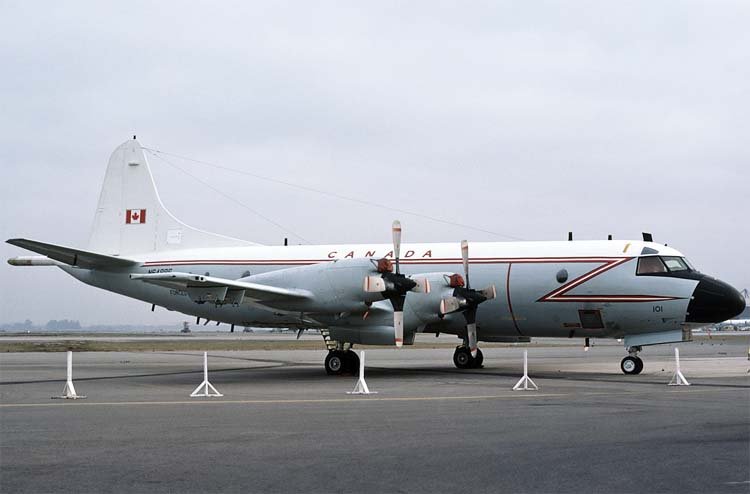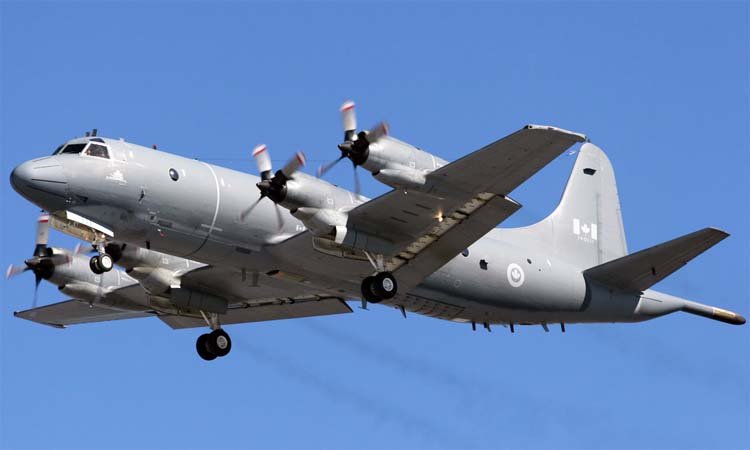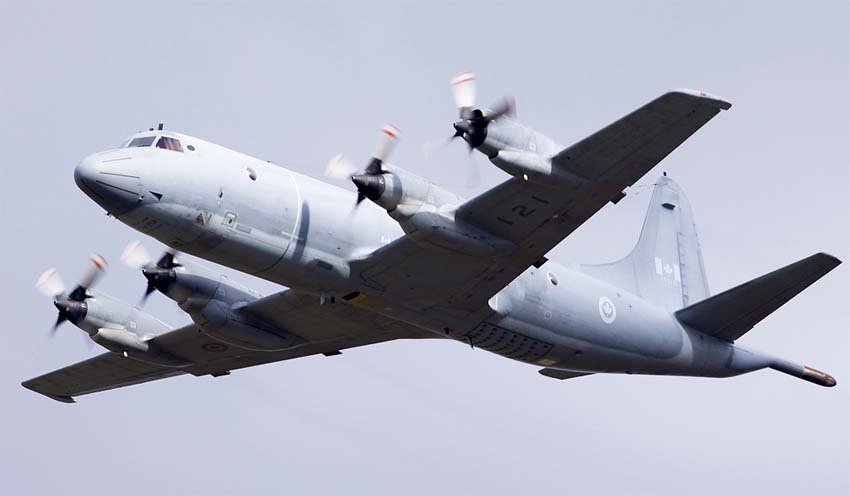
Canada’s order for a new long-range maritime aircraft for Coast Patrol Aviation led to the creation of a unique variant of the Orion aircraft. It is based on the P-3 airframe but incorporates surveillance systems from the S-3 Viking aircraft. In 1969, the Canadian Armed Forces began searching for a replacement for their Canadair CP-107 Argus maritime patrol aircraft.
Canada needed a new aircraft for anti-submarine warfare (ASW), as well as for tasks such as ice reconnaissance, fisheries patrol, and flag display over vast Arctic and sub-Arctic territories. In August 1971, the Armed Forces formulated the requirements for a Long Range Patrol Aircraft (LRPA). In response, proposals included the Nimrod, Atlantic, an updated Argus, and maritime patrol versions of the Boeing 707 and Douglas DC-10 airliners.
The Genesis of the CP-140 Aurora
Lockheed presented several options based on the Orion project, from standard U.S. Navy P-3C Update I or II versions to a special Canadian version. Ultimately, only two projects remained: the Boeing 707 and the P-3C. The outcome largely depended on the volume of subcontracts that could be awarded to Canadian industry. Lockheed emerged as the winner.
On November 27, 1975, Lockheed received an order for 18 aircraft. A group of Canadian developers arrived at the Burbank factory for detailed work on the future CP-140 Aurora project. On March 22, 1979, this aircraft made its first flight. Lockheed conducted initial crew training in California.
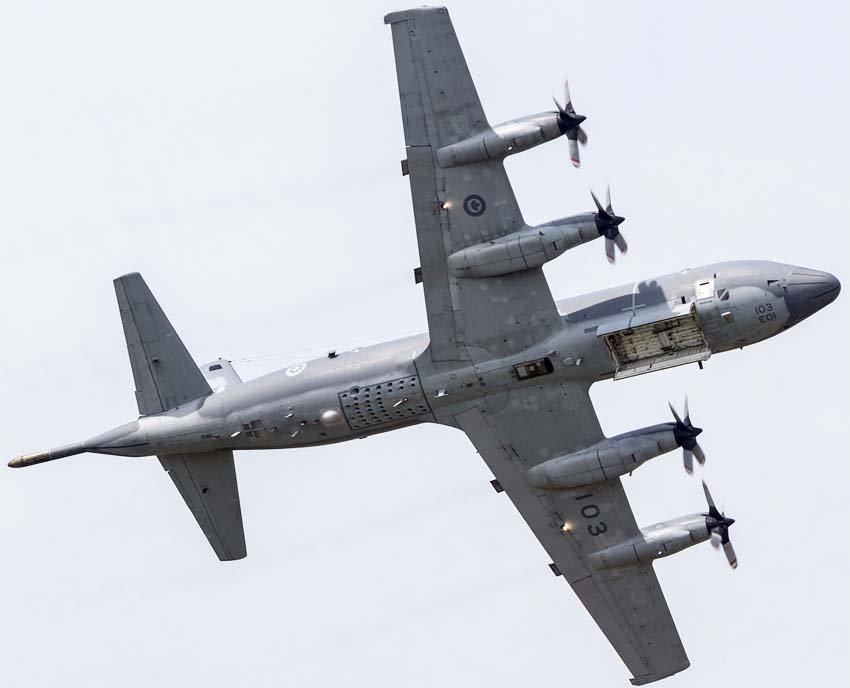
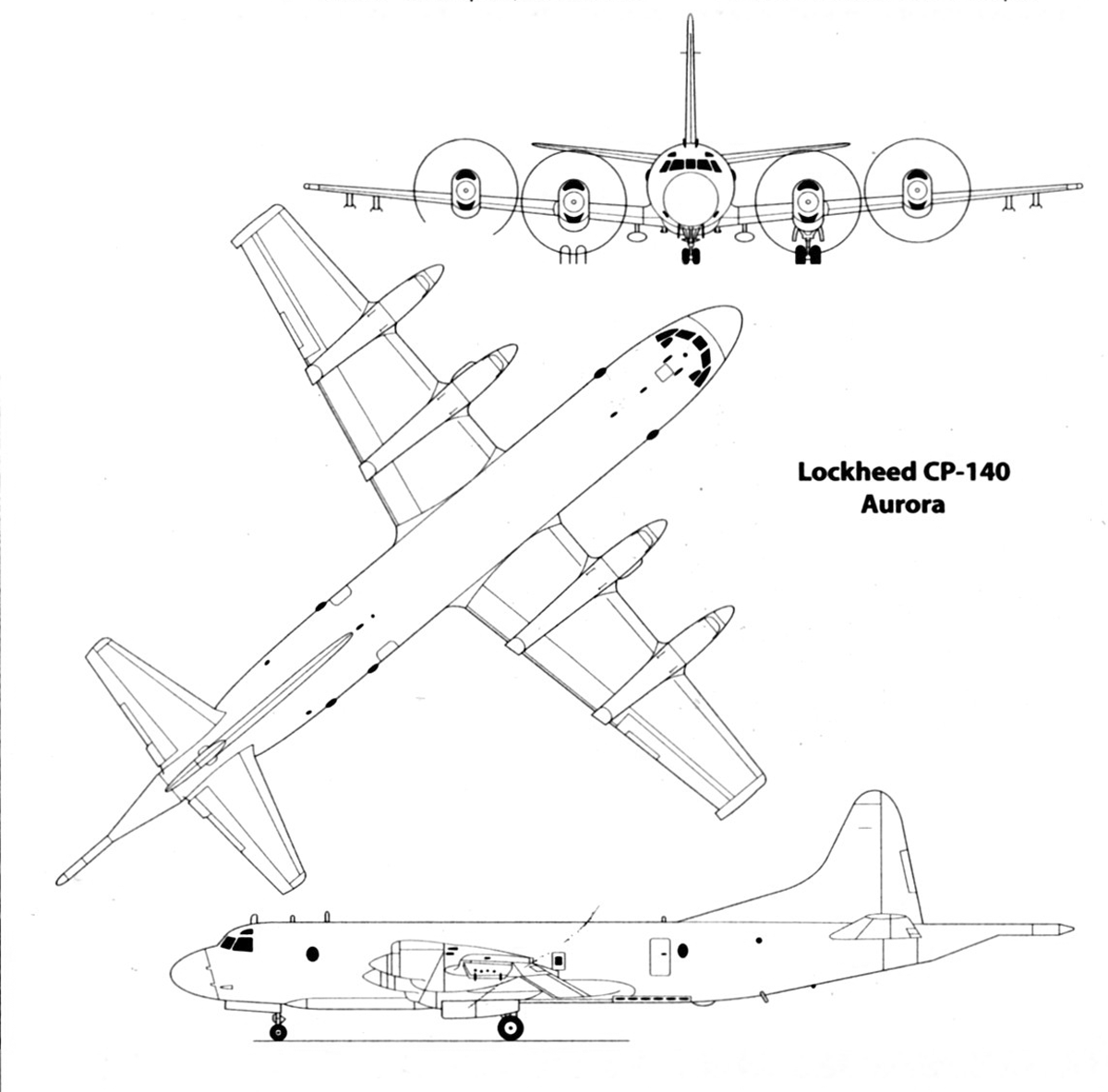
The Canadian Orion variant was based on the P-3C airframe and also featured guide tubes for dropping sonobuoys in the lower rear fuselage. However, their number was reduced to 36 instead of 48, as on the P-3. The space saved allowed for the installation of a vertical panoramic Zeiss KS-501A camera, capable of taking photographs with daylight or IR film, the latter through an IR window.
Advanced Systems and Multi-Mission Roles
The CP-140 features a new avionics suite based on the S-3A Viking’s systems. Its core is a digital AYK-10 computer (Canadian designation AYK-502), an OL-82 (OL-5004) acoustic data processor, an ARR-76 sonobuoy data receiver, and an ARS-501 sonobuoy position determination system. The AYK-502 system integrates all onboard operational functions, such as buoy deployment and weapon system control.
This system can guide the aircraft on autopilot to specific points designated by the Tactical Coordinator (TACCO) and automatically deploy sonobuoys. The aircraft also has an APS-116 (APS-506) radar. Much of the Aurora’s new equipment is unique, particularly the CAE Electronics ASQ-502 Magnetic Anomaly Detector (MAD) and the wingtip-mounted Electronic Intelligence (ELINT) equipment.
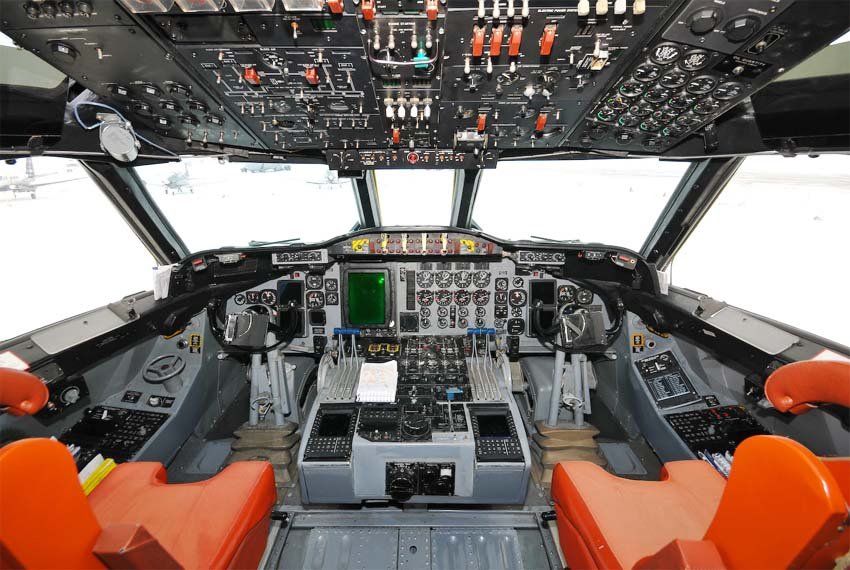
From the crew’s perspective, the most significant difference was the aircraft’s internal layout. Unlike the P-3C, where the TACCO operator, navigator, and sensor operators are dispersed throughout the cabin, in the CP-140, the operational compartment is U-shaped. Two workstations face forward, two are on the sides, and two face the rear. This compact arrangement improves operator interaction, a concept recognized by Lockheed and Raytheon in their proposals for P-3 modifications.
The CP-140 is equipped with a retractable OR-5008 forward-looking infrared (FLIR) system and an improved environmental control system. Both systems were also adopted for the U.S. Navy’s P-3C aircraft. The Aurora aircraft had the unique capability of installing palletized sensors with corresponding wiring in the weapons bay. A number of systems were tested on it, such as the APD-10 side-looking radar with radar image formation.
Many of the sensors installed in the bay are used by various agencies, such as Environmental Canada, which employs Aurora aircraft for environmental pollution control and animal population monitoring. The Department of Fisheries and Oceans contracts Aurora aircraft for tracking poachers, while Canadian police and customs use them for monitoring drug trafficking. Ice reconnaissance is conducted at the request of the transportation department. CP-140 aircraft are also used in search and rescue operations, employing air-droppable SKAD rescue kits. In the mid-1990s, CP-140s were equipped with the WX-1000 Stormscope weather radar.
In 1992, the Canadian Department of National Defence launched an Aurora service life extension program, during which these aircraft were updated to modern standards. Following radar modifications under the “Spotlight” program, a radar imaging mode for search and rescue was added. New navigation, communication, avionics support systems, and a sonobuoy direction finder were also introduced. A forward-looking infrared system, a laser, and a low-light-level television (LLLTV) system were housed in a blister under the nose.
The first aircraft was delivered to CFB Greenwood on May 29, 1980. In November of the same year, 405 Squadron (VP 405 by US Navy code) was the first to receive this type of aircraft. In March 1981, it made its first operational flight. 404 Squadron became the training unit. 415 Squadron joined the 28th Air Group in Greenwood. By the end of 1981, 407 Squadron at CFB Comox was also equipped with these machines.
In addition to performing routine duties for its country and NATO, CP-140 aircraft participated in peacekeeping operations in the former Yugoslavia. CP-140s from the U.S. Navy base in Sigonella, Italy, took part in Operation “Sharp Guard” to control the Adriatic and enforce the UN embargo on illicit goods entering Yugoslavia. This work began in September 1993.
Modernization and the CP-140A Arcturus Variant
With improved cockpit displays and further structural enhancements, Aurora aircraft could remain in service until 2020. They will then be modified to the Block III standard with a complete replacement of sensors and operational avionics systems.
In 1989, the Canadian Department of Defence ordered three Orions from Lockheed, the last three aircraft built at the Burbank factory. These aircraft were intended for pilot training, fisheries patrol, and ice reconnaissance. Under the AMSA (Arctic Maritime Surveillance) project, three aircraft (numbers 140119-140121) with minimal equipment were delivered to the Aerospace airbase in Halifax to be fitted to the CP-140A Arcturus standard.
The CP-140A variant, a simplified version of the Aurora, lacked the CP-140’s ASW equipment but retained the APS-507 radar and long-range radio navigation system equipment. It was equipped with a MAD boom and 48 sonobuoy launch tubes in the lower fuselage, although these were not used. These aircraft retained the Aurora’s U-shaped cabin with operator workstations, although they were only equipped with radar and navigation/communication stations.
On November 30, 1992, the first CP-140A was delivered to the BAMEO organization in Greenwood; the other two machines followed in April 1993. With their delivery, one CP-140 was able to be sent to Comox to reinforce the 407th Anti-Submarine Squadron. In addition to pilot training and fisheries patrol, Arcturus aircraft are engaged in ice reconnaissance and coastal protection, and are also used for intercepting drug transports. These aircraft were planned for retirement in the early 2000s, but as of 2011, two of them remain in operation.
Technical Specifications
| Modification | CP-140 |
| Wingspan, m | 30.38 |
| Aircraft length, m | 35.61 |
| Aircraft height, m | 10.49 |
| Wing area, m2 | 120.77 |
| Empty weight | 27 982 |
| Maximum takeoff weight | 64400 |
| Engine type | 4 Turboprop engines Allison T56-A-14-LFE |
| Power, shp | 4 x 4 600 |
| Maximum speed, km/h | 750 |
| Cruising speed, km/h | 610 |
| Patrol speed, km/h | 385 |
| Practical range, km | 9300 |
| Combat radius, km | 4000 |
| Practical ceiling, m | 10700 |
| Crew, crew members | 8 (maximum – 15) |
| Armament: | Combat load – 2180 kg in the weapons bay and on 10 hardpoints: Mk 46 Mod V torpedoes, AGM-84 Harpoon anti-ship missiles, depth charges |
Image gallery of the CP-140 Aurora