In the early 1930s, the Brazilian company Empresa Aeronáutica Ypiranga (EAY) developed a project for a light multi-purpose aircraft based on the Taylor Cub, powered by the French Salmson 9Ad engine. Five aircraft were built in 1935. In 1942, the company was acquired by Companhia Aeronáutica Paulista (CAP), where the aircraft received its CAP-4 Paulistinha designation and entered production, following the CAP-1.
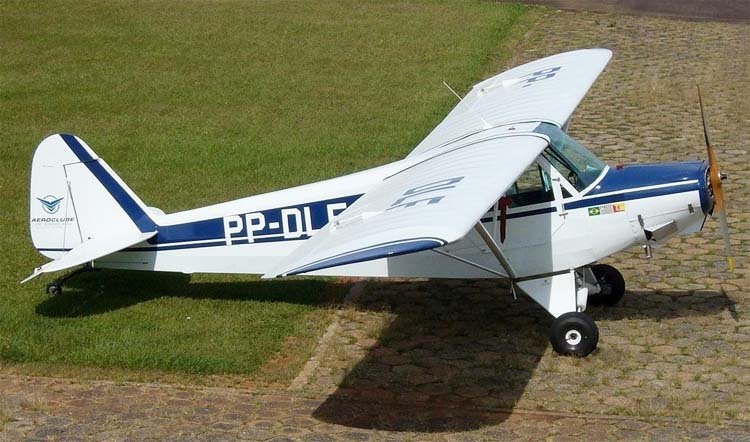
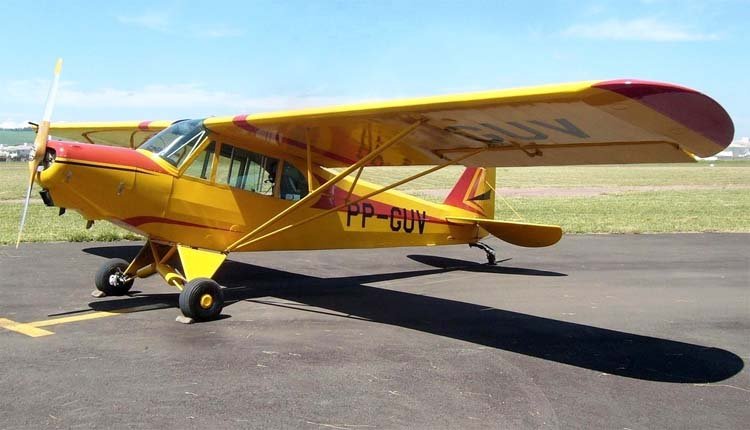
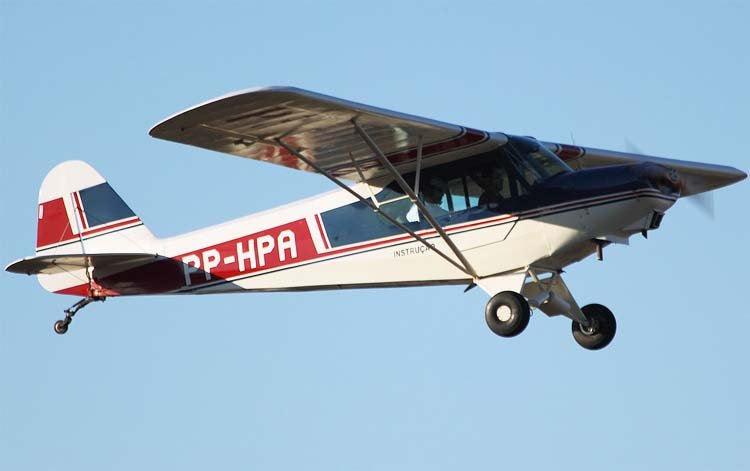
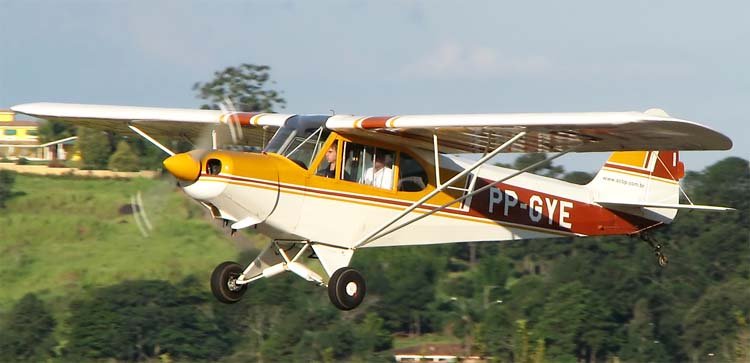
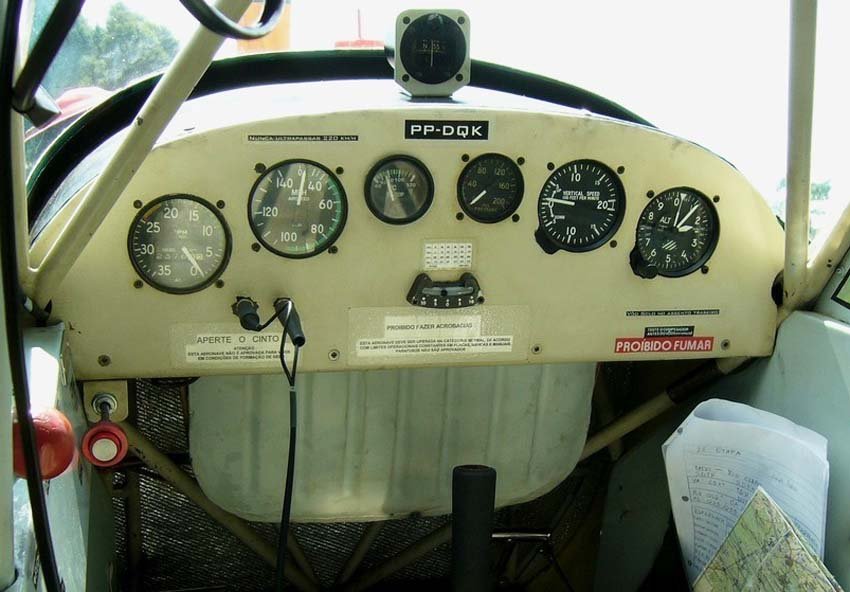
The CAP-4 Paulistinha was a two-seater training and touring monoplane with a strut-braced high wing and an enclosed cabin, accommodating two people in tandem seats. The aircraft featured mixed construction, a strut-braced stabilizer, and non-retractable landing gear with a tail skid. It was equipped with a Franklin 4AC engine.
Variants and Initial Roles
The desire to increase demand led to the development of a generally similar variant, the CAP.4B Ambulancia. This version was distinguished by the removal of the rear seat to accommodate a stretcher, which was loaded through a hinged fuselage section.
The last was the military variant, the CAP.4C Paulistinha Radio, used for observation and communication. This aircraft featured a modified cabin and aft fuselage section, providing the observer, seated with their back to the pilot, a very good rearward and sideways view. A radio station was also at their disposal.
Neiva Production and Later Developments
In 1958, Sociedade Aeronáutica Neiva (Neiva) acquired the rights to the CAP-4 and began construction of a two-seater light aircraft with an enclosed cabin. Designated P-56 Paulistinha 56, it featured a strut-braced high wing, non-retractable landing gear with a tailwheel, and a Continental C90 engine.
The aircraft was produced until November 1964, with a total of 240 machines built. These were primarily in touring, training, and agricultural variants.
The Paulistinha 56-Q became the last production model. Although the Paulistinha 56-D prototype (PP-ZTG), equipped with an Avco Lycoming O-320-A1A engine, performed several flights and was later acquired by the Brazilian Air Force (FAB), it was not mass-produced. The FAB used it as a general-purpose aircraft under the designation L-6A.
Based on the Paulistinha 56-D, the Campeiro variant was created, featuring a somewhat modified design. In 1962, the Brazilian Air Force placed a contract for 20 aircraft of this latter variant, designated L-7, which were used as liaison, search and rescue, and training aircraft.
Aviation Legacy
In total, approximately 840 units of the CAP-4 and its modifications were produced.
Technical Specifications
| Modification | CAP-4 |
| Wingspan, m | 10.1 0 |
| Aircraft length, m | 6.65 |
| Aircraft height, m | 1.95 |
| Wing area, m2 | 17.00 |
| Empty weight | 320 |
| Maximum takeoff weight | 540 |
| Engine type | 1 Piston engine Franklin 4AC |
| Power, hp | 1 х 65 |
| Maximum speed, km/h | 155 |
| Cruising speed, km/h | 140 |
| Practical range, km | 500 |
| Rate of climb, m/min | 186 |
| Service ceiling, m | 4000 |
| Crew, crew members | 2 |
Image gallery of the CAP-4 Paulistinha