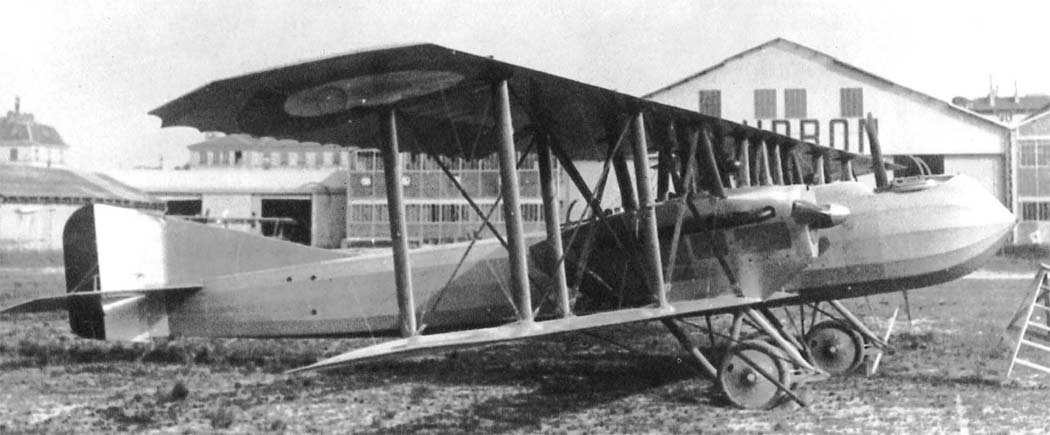
Combat experience with Caudron R.4 bombers revealed that their flight characteristics did not allow for effective bombing strikes against enemy positions. Their primary use was limited to reconnaissance flights, carrying only a minimal bomb load.
Development of the Caudron R.5
To address this issue, the Caudron company manufactured a modification of the bomber, designated as the Caudron R.5. This version differed from its predecessor due to its power plant, consisting of two Renault 12A engines, each producing 230 hp. It also featured new wings with an increased area.
Despite reducing the crew to just two individuals, the R.5’s mass increased by 300 kilograms compared to the R.4. These changes aimed to significantly improve its operational capabilities.
Trials and Legacy
The first flight of the Caudron R.5 took place in September 1915, just three months after the R.4’s inaugural flight. In early 1916, the aircraft was handed over to the military for competitive trials.
Although the competition was won by the Morane-Saulnier Type S, the R.5 played an important role. Its design and the data gathered were used in the development of the subsequent R.10 and R.11 models.
Technical Specifications
| Modification | R.5 |
| Wingspan, m | 24.00 |
| Length, m | 11.85 |
| Wing area, m2 | 85.00 |
| Empty weight | 2000 |
| Normal takeoff weight | 2700 |
| Engine type | 2 Piston engines Renault 12A |
| Power, hp | 2 x 230 |
| Practical range, km | 300 |
| Practical ceiling, m | 4500 |
| Crew, crew members | 2 |
| Armament | two machine gun turrets with 7.7-mm Lewis machine guns, up to 100 kg of bombs |
Image gallery of the Caudron R.5