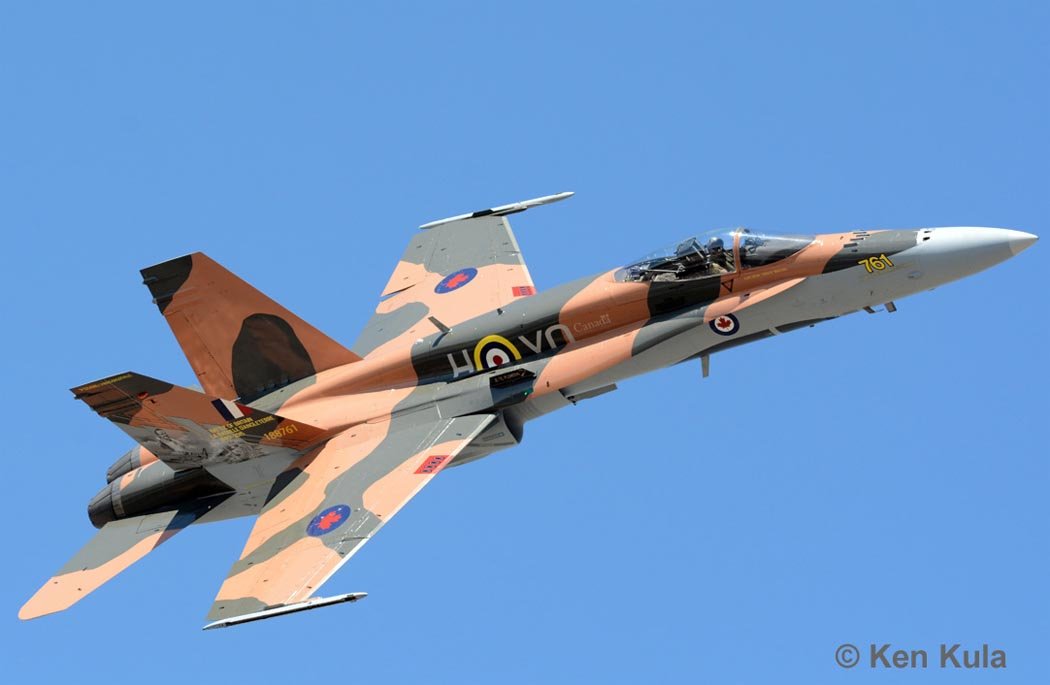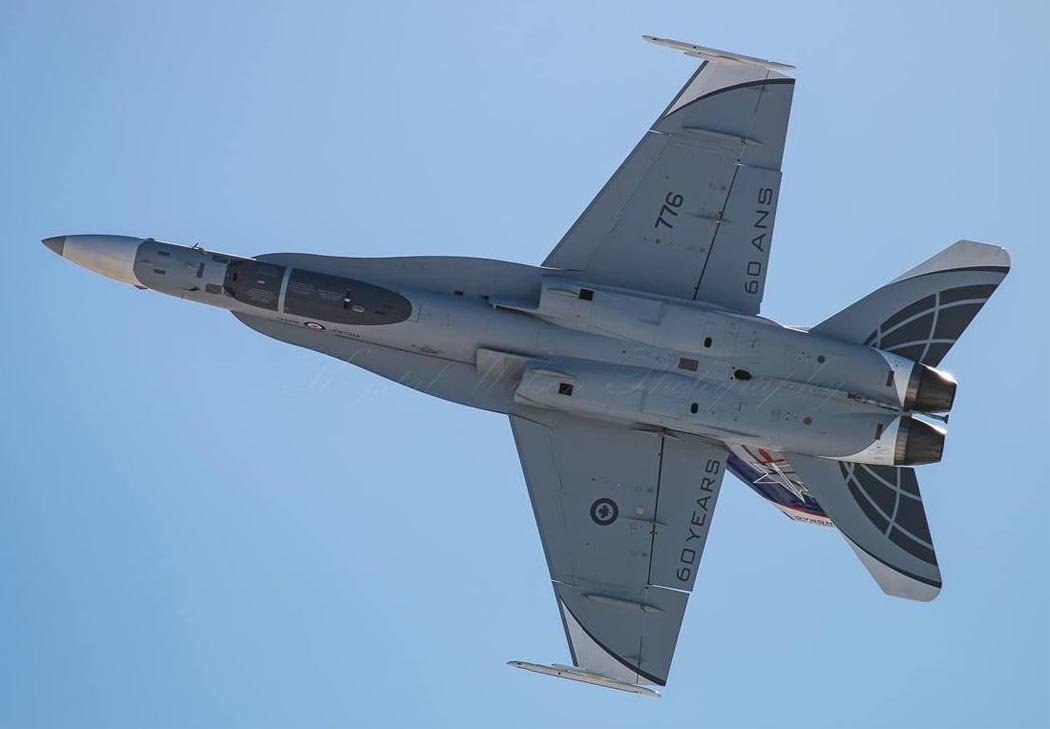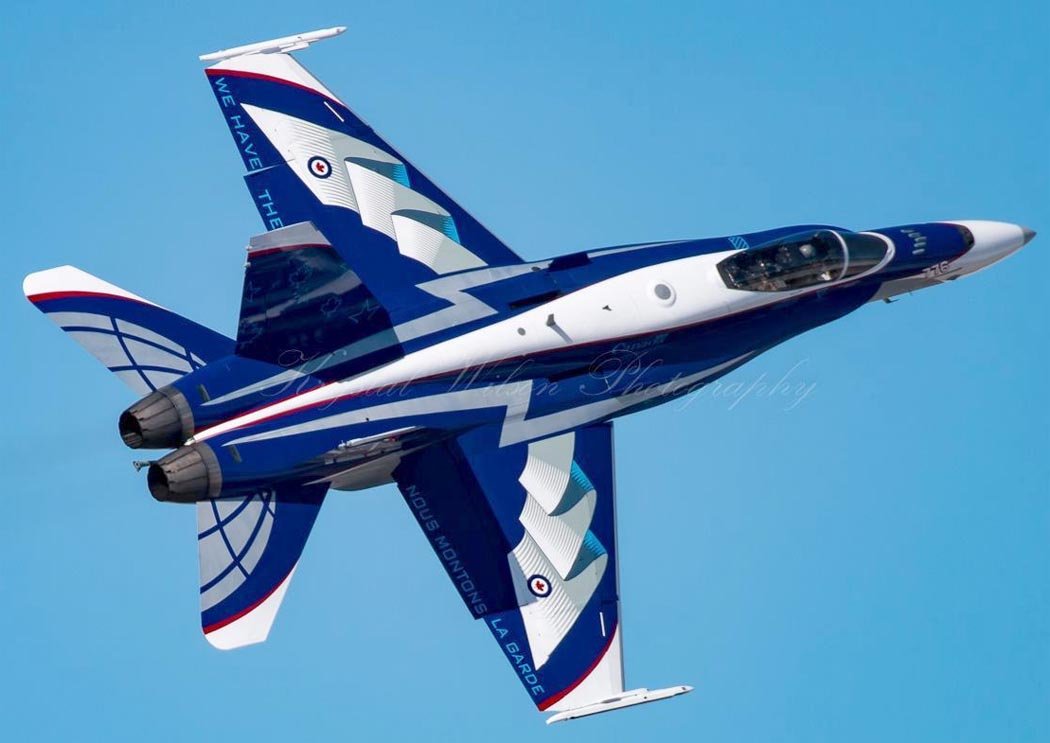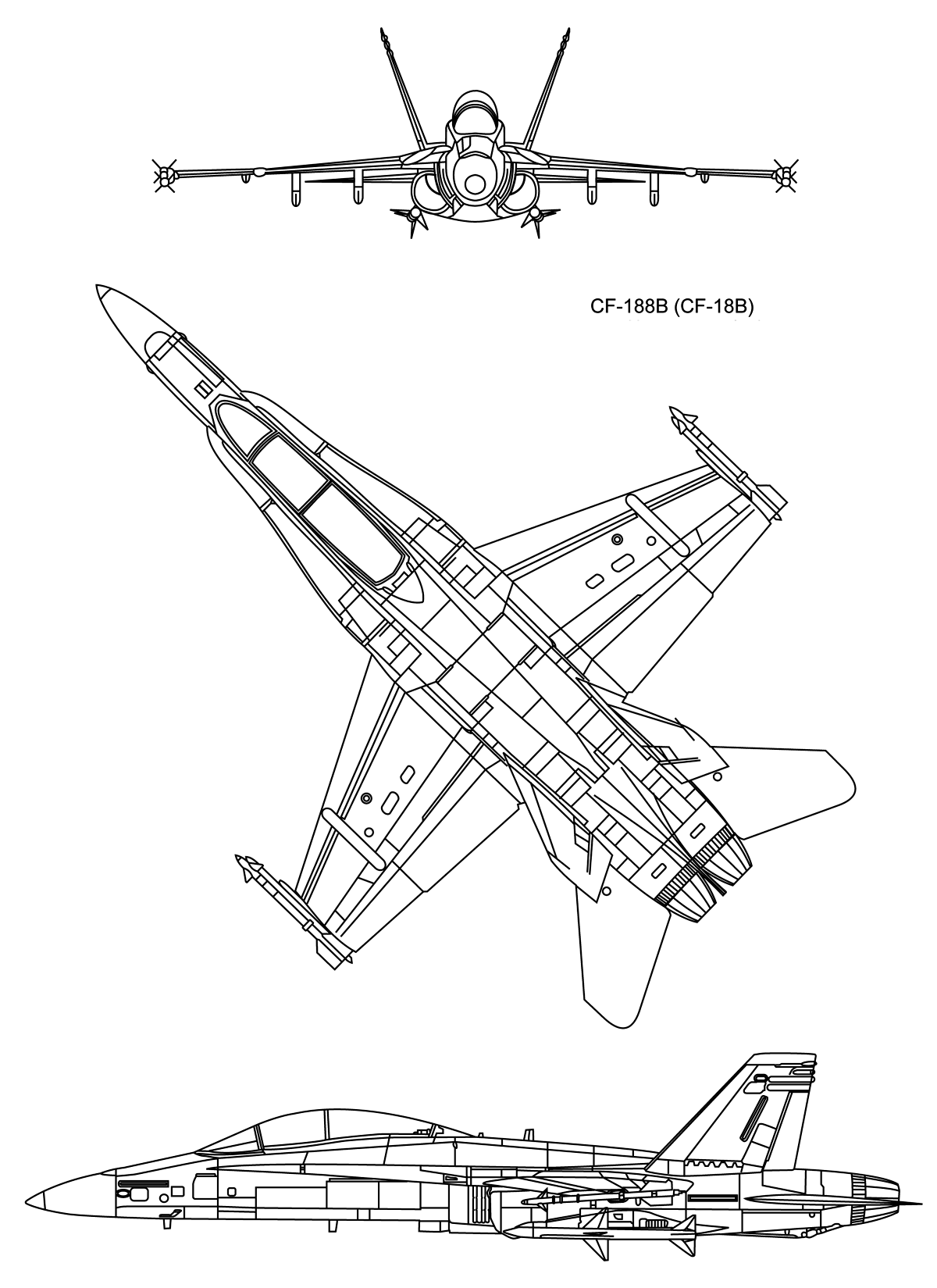
On April 10, 1980, the Canadian Department of National Defence announced its intention to acquire 138 single-seat F/A-18A and 40 two-seat F/A-18B aircraft. This decision aimed to replace the aging Canadian CF-104 Starfighter fleet, marking a significant step in modernizing the country’s air force.
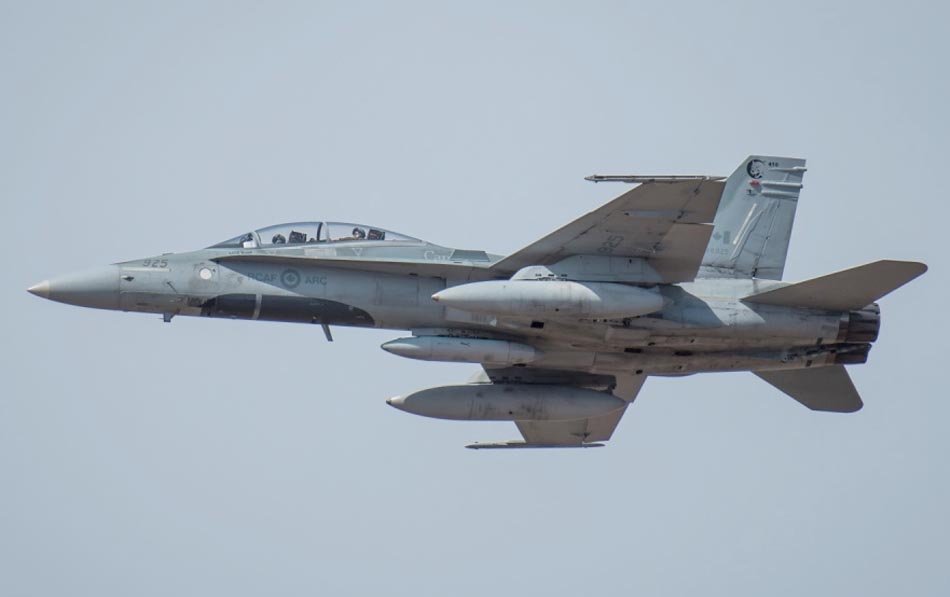
The order for single-seat aircraft was subsequently reduced to 98 units. Deliveries of the two-seat CF-18B trainer/combat variants began in October 1982, with each Royal Canadian Air Force (RCAF) squadron operating both types of aircraft.
Unique Canadian CF-18 Adaptations
Unlike their American counterparts, Canadian CF-18 Hornet fighters featured their own inertial landing system and onboard identification lights for night flights, enhancing their operational versatility. They also had the additional capability to carry pods with unguided rockets, expanding their weapon options.
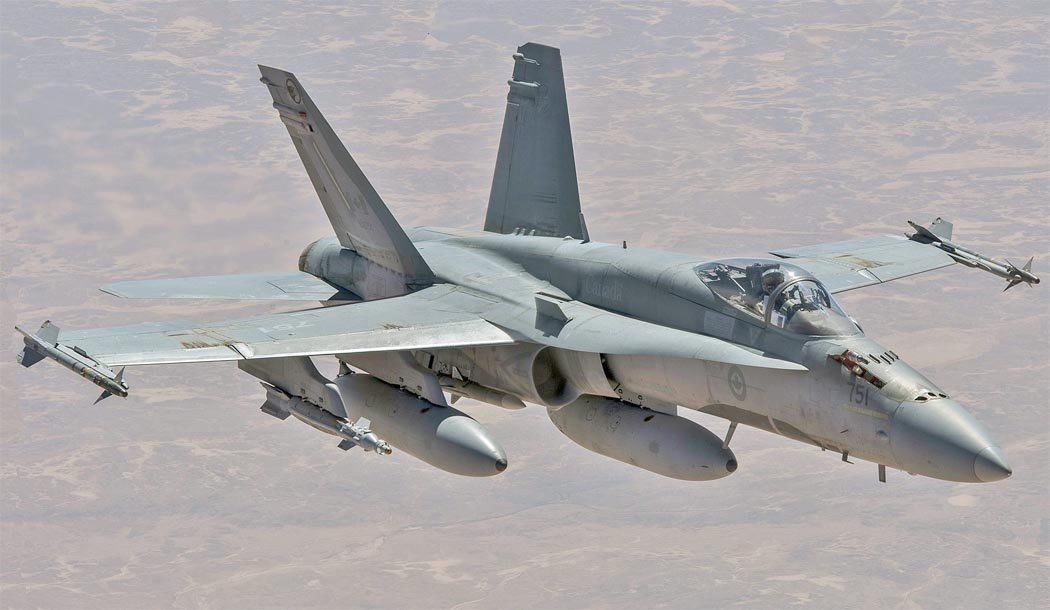
Each aircraft was equipped with a comprehensive pilot life support system, ensuring safety during missions. The CF-18 was armed with AIM-9 Sidewinder air-to-air missiles, strategically mounted on the wingtips for rapid response in aerial combat.
CF-18 Armament and Strike Capabilities
The CF-18 Hornet was fitted with a six-barrel 20mm General Electric M61A1 Vulcan cannon, boasting a capacity of 570 rounds, providing substantial firepower. Its normal combat load amounted to 7031 kg, distributed across nine external hardpoints.
These hardpoints allowed for carrying two AIM-9L/M/P Sidewinder air-to-air missiles on the wingtips and two AIM-7 missiles on the sides of the air intakes. For strike operations, the aircraft could be equipped with GBU-10 laser-guided bombs, conventional Mk.82 (up to 27 units) and Mk.84 bombs, as well as cluster bombs.
Additionally, the CF-18 could carry four AGM-65F Maverick missiles, AGM-64 Harpoon anti-ship missiles, AGM-88 HARM anti-radiation missiles, and pods with 70mm unguided rockets, offering a wide array of options for air-to-ground and naval warfare missions.
Technical Specifications
| Modification | CF-18A |
| Wingspan, m | 11.43 |
| Aircraft length, m | 17.07 |
| Aircraft height, m | 4.66 |
| Wing area, m2 | 37.16 |
| Empty weight | 10900 |
| Maximum takeoff weight | 25400 |
| Engine type | 2 General Electric F404-GE-400 afterburning turbofans. |
| Afterburning thrust | 2 x 71,2 |
| Non-afterburning thrust | 2 x 48,0 |
| Speed with afterburner, km/h | 1950 |
| Speed without afterburner, km/h | 1090 |
| Service ceiling, m | 15240 |
| Practical range, km | 3330 |
| Combat radius, km | 1065 |
| Max. operational G-load | 7.5 |
| Crew, crew members | 1 |
| Armament: | One six-barrel 20-mm General Electric M61A1 Vulcan cannon (570 rounds). Normal combat load – 7031 kg on 9 external hardpoints: 2 AIM-9L/M/P Sidewinder missiles on wingtips and 2 AIM-7 missiles on the sides of the air intakes. For strike operations, the aircraft is equipped with GBU-10 laser-guided bombs, conventional Mk.82 (up to 27) and Mk.84 bombs, cluster bombs, 4 AGM-65F Maverick missiles, AGM-64 Harpoon anti-ship missiles, AGM-88 HARM anti-radiation missiles, and pods with 70-mm unguided rockets. |
Image gallery of the CF-18 Hornet