Development and Initial Flights
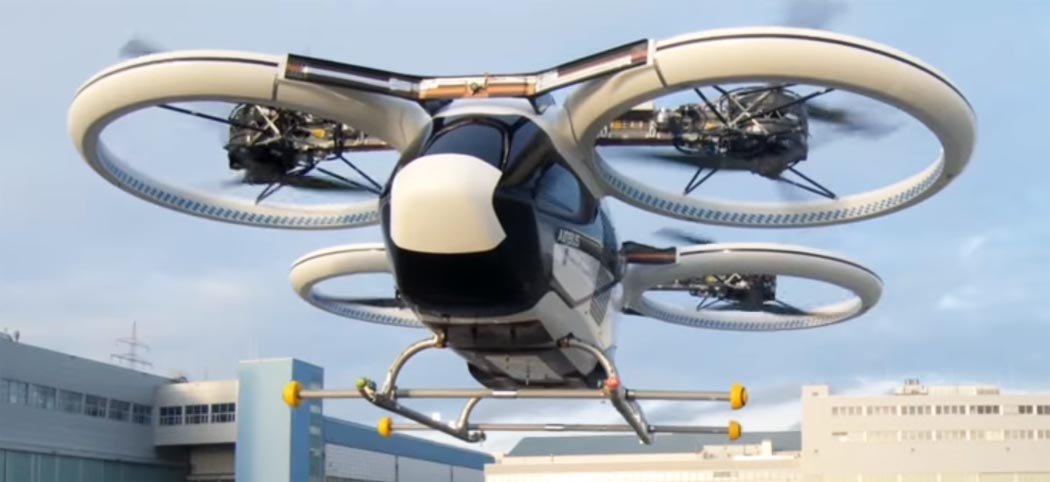
In 2019, Airbus Helicopters neared completion of the CityAirbus air taxi project, featuring an unmanned control system. On January 10th, Airbus Helicopters’ official account released a video showcasing the air taxi’s first free flight. Initial tests for this type of air transport were conducted as early as May 2019 (the first flight took place on May 3rd), though these involved safety tethers. Last summer, Airbus tested the nearly complete CityAirbus in collaboration with the Autonomous Paris Transport Authority.
Technical and Operational Features
What is known about this new form of air transport? The CityAirbus aircraft, capable of speeds up to 120 km/h and a range of up to 30 km, is expected to appear in major cities worldwide by 2025. Weighing over 2.2 tons, the CityAirbus is equipped with three passenger seats and one pilot seat. Initially, after deployment, the air taxi will operate with a pilot on board to “facilitate public acceptance,” anticipated as early as 2023. Later, it is expected to fly along fixed routes without a pilot. The cost of the CityAirbus will start from 1 million euros.
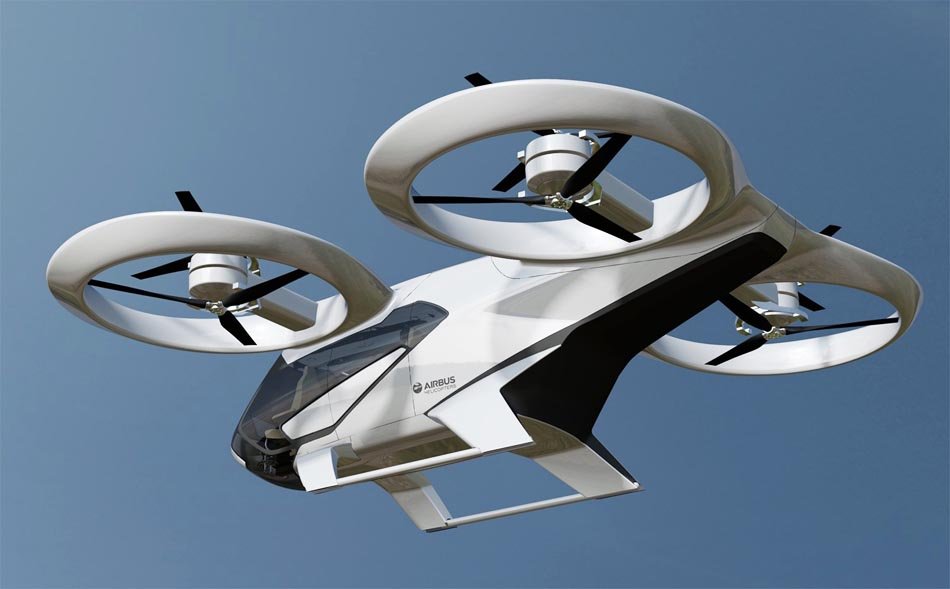
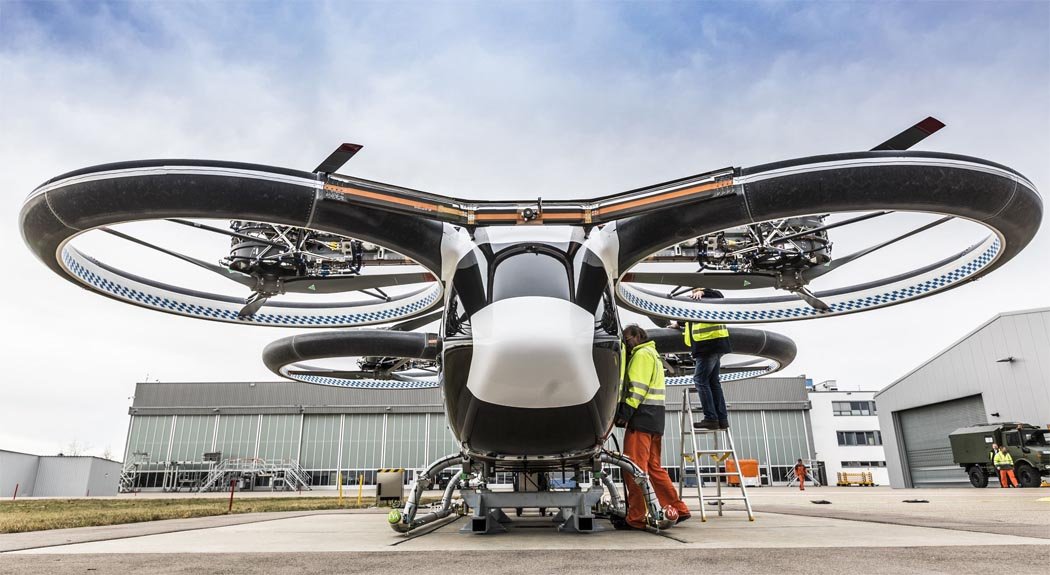
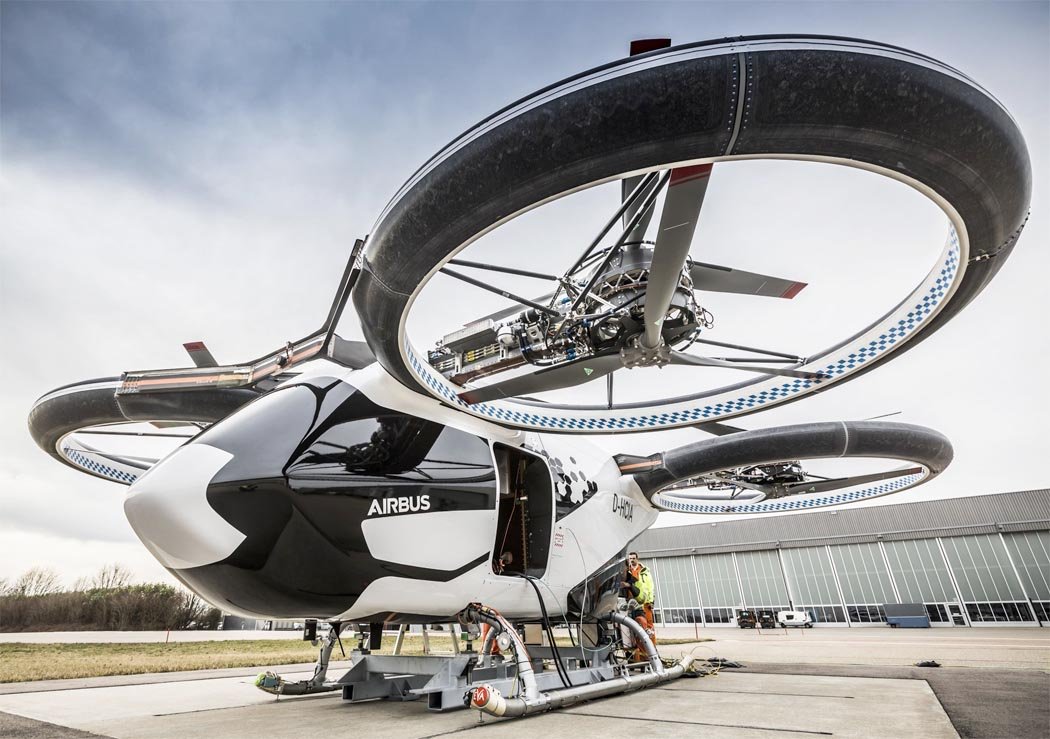
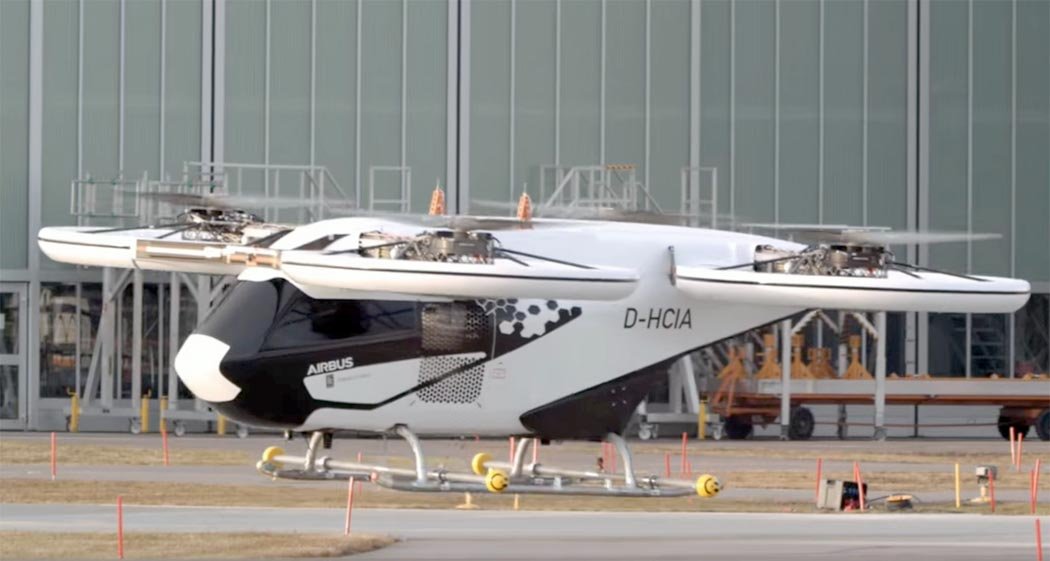
This aircraft features vertical take-off and landing (VTOL) capabilities. The fully electric vehicle is powered by four 800-volt batteries, which supply power to four sets of counter-rotating propellers housed within aerodynamic ducts attached to the fuselage. The aircraft is equipped with four two-bladed propellers. Each of the eight propellers is driven by a 100 kW electric motor.
Urban Mobility Impact and Future
Thanks to its vertical take-off and landing system, CityAirbus does not require extensive open spaces for operation. The German government is soon to begin developing legislation that will permit the use of such aircraft in urban environments for both taxi services and personal transport. CityAirbus enables rapid travel to airports or railway stations, even amidst congested urban roads, offering affordable prices and minimal environmental impact.
Its innovative configuration, utilizing four propellers within ducted shrouds, enhances flight safety and reduces noise levels significantly. Experts from the Autonomous Paris Transport Authority estimate the cost per kilometer of a CityAirbus flight to be approximately 1-2 euros, making the service accessible to everyone. Parisian authorities are likely to launch the first CityAirbus air taxi service between Paris and Disneyland in the Île-de-France region, with plans for the company to introduce the project by the 2024 Olympic Games.
Technical Specifications
| Modification | CityAirbus |
| Main rotor diameter, m | 12.60 |
| Length, m | 8.00 |
| Width, m | 8.00 |
| Maximum takeoff weight | 2200 |
| Engine type | 8 electric motors |
| Power, kW | 8 x 100 |
| Cruising speed, km/h | 120 |
| Practical range, km | 30 |
| Flight duration, min | 15 |
| Crew | 1 |
| Payload | maximum – 4 passengers in unmanned mode |
Image gallery of the CityAirbus