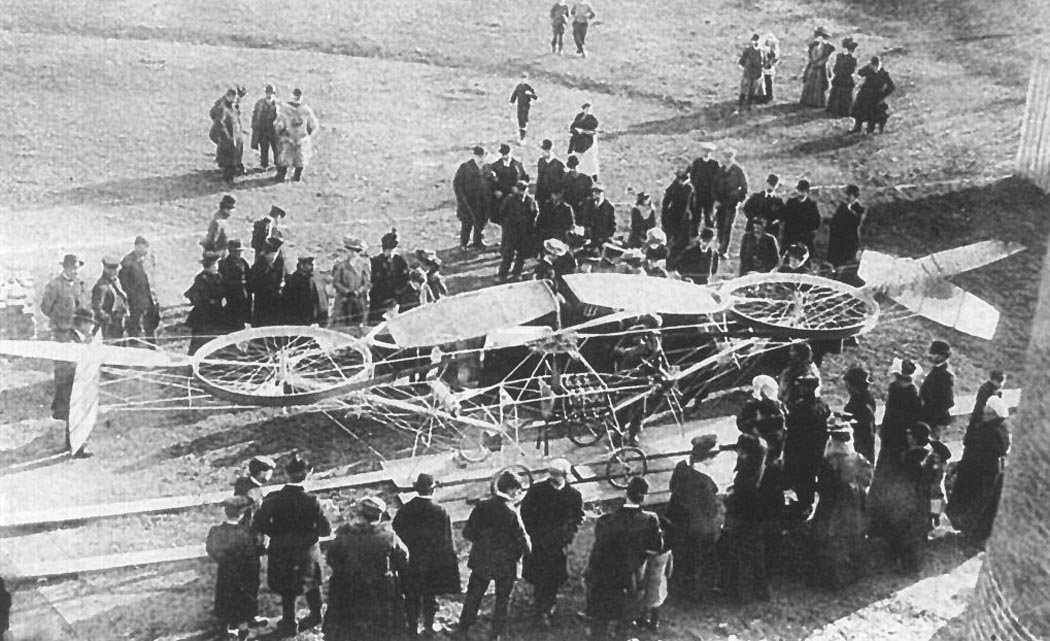
On November 13, 1907, French inventor Paul Cornu successfully performed the first vertical flight in a heavier-than-air machine, known today as a helicopter.
The Genesis of an Inventor
Cornu was born on June 15, 1881, the eldest of 15 children to Jules and Louise Cornu. Paul was 9 years old when his family moved to Lisieux in Normandy. From childhood, Paul worked with his father in their family’s Automobile, Cycles, and Motorcycles shop, designing and repairing bicycles and motorcycles. Paul exhibited an inventive flair from a young age, which his father noticed; by 14, he had already created his first invention: a temperature regulator for incubators.
By 1907, Cornu already had several inventions to his credit: a motorized bicycle, a rotary engine, and a steam motorcycle. Additionally, he had designed a small car with two internal combustion engines but no gearbox.
At the turn of the century, the younger Cornu, like many other inventors, was captivated by the idea of aeronautics. In particular, he dreamed of inventing a vertical take-off and landing aircraft which, in his opinion, would find “quicker application than an airplane.” Despite Leonardo da Vinci having drawn several flying machines with spiral screws, no one had yet managed to lift any helicopter model into the air.
From Model to Manned Flight
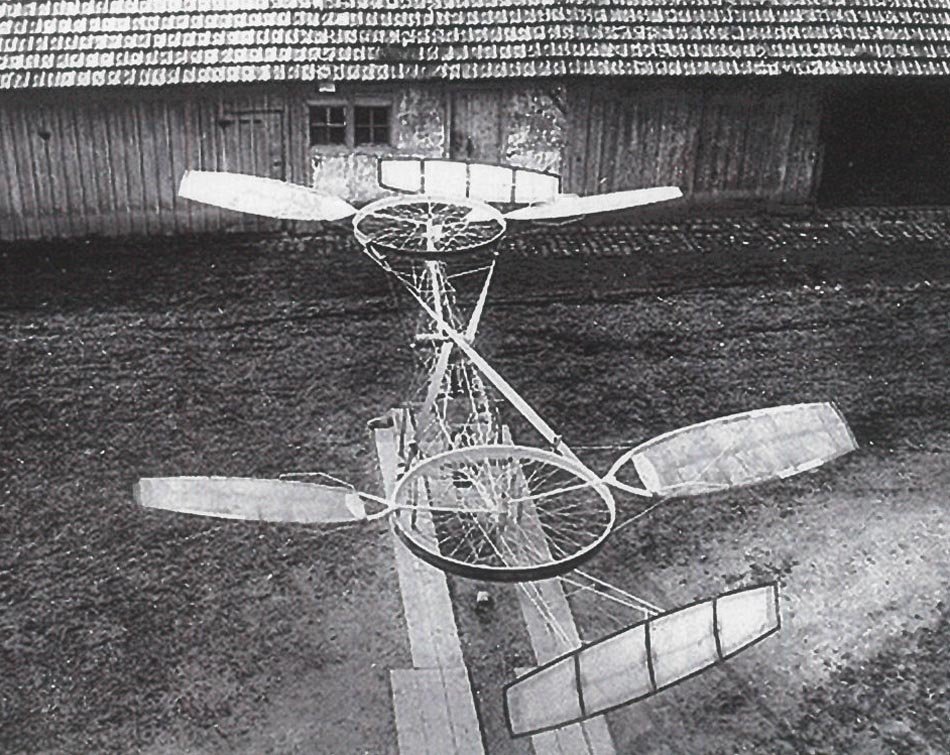
Cornu first created a longitudinal helicopter model with two propellers, driven by a small engine producing only two horsepower. The “toy” weighed 13 kilograms, and it worked.
Cornu demonstrated the helicopter’s operation in the courtyard of a local college on October 4, 1906. The small helicopter rose into the air before an astonished public. After this, the inventor became a topic of discussion. The town, with the help of donors, financially assisted the engineer, who then set about building a more powerful prototype capable of lifting a single person into the air.
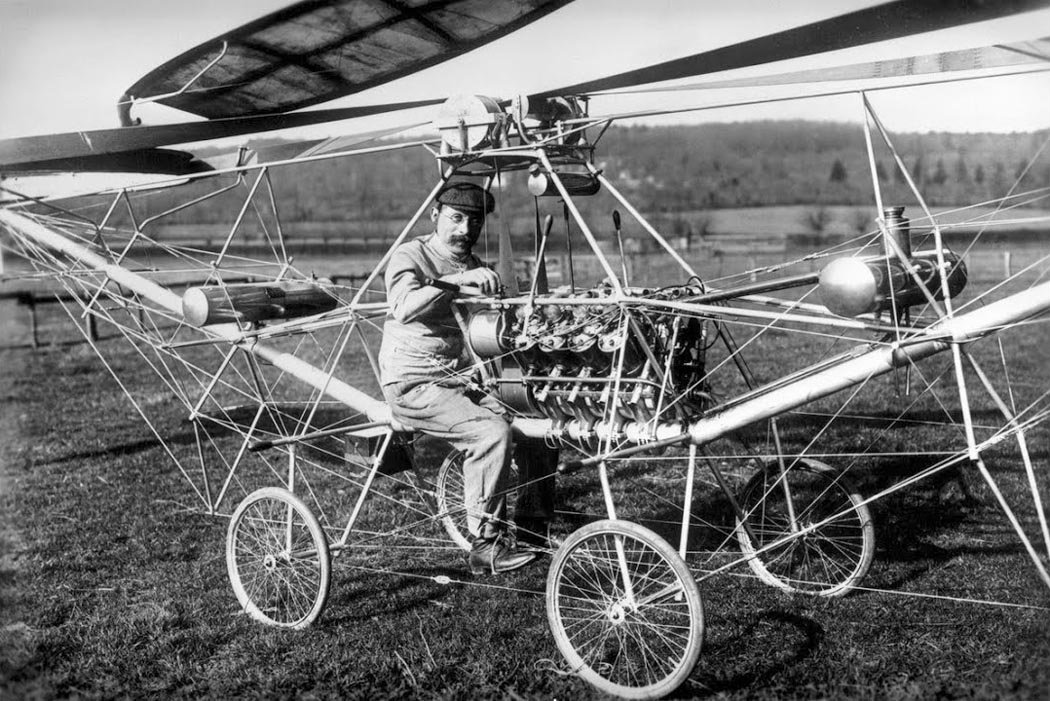
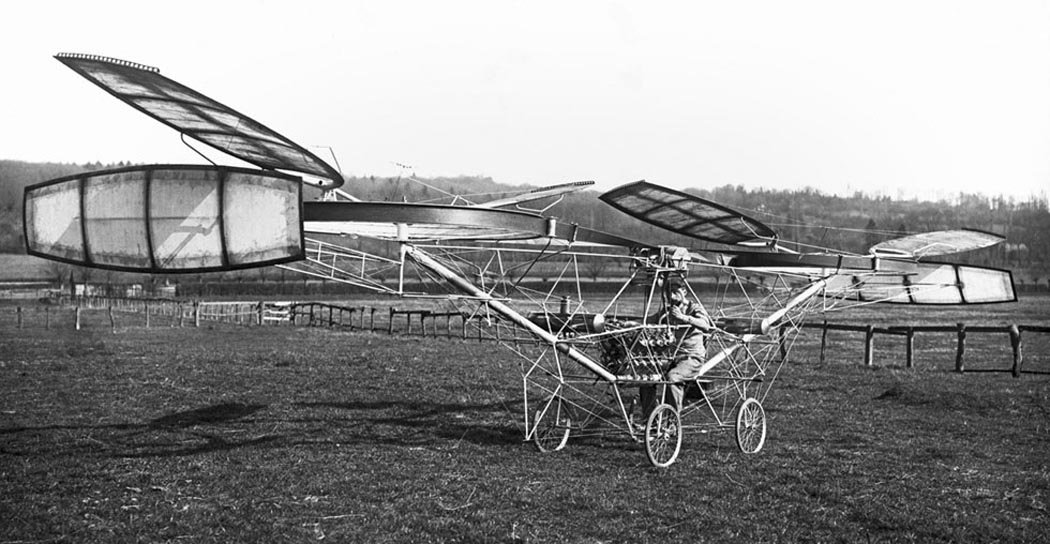
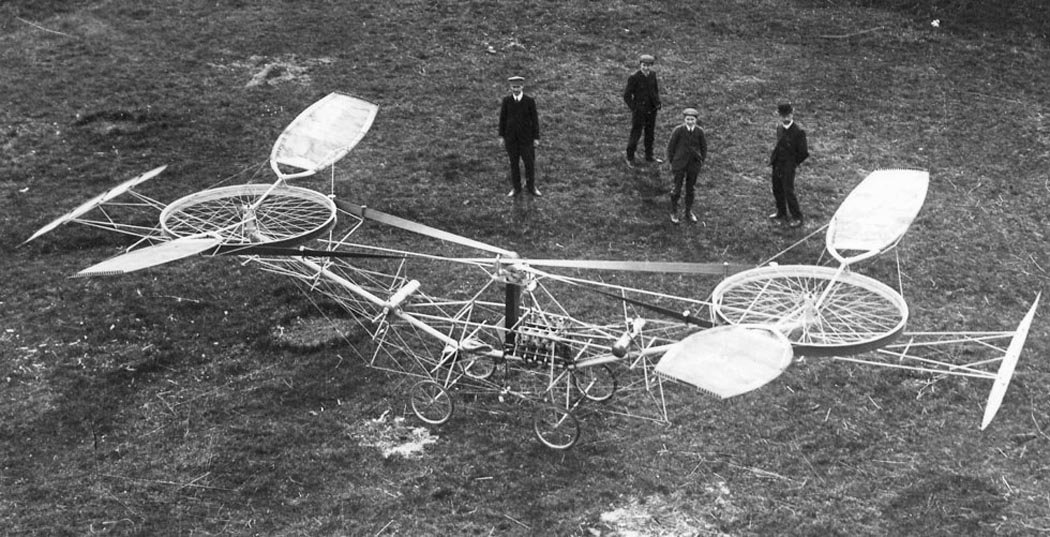
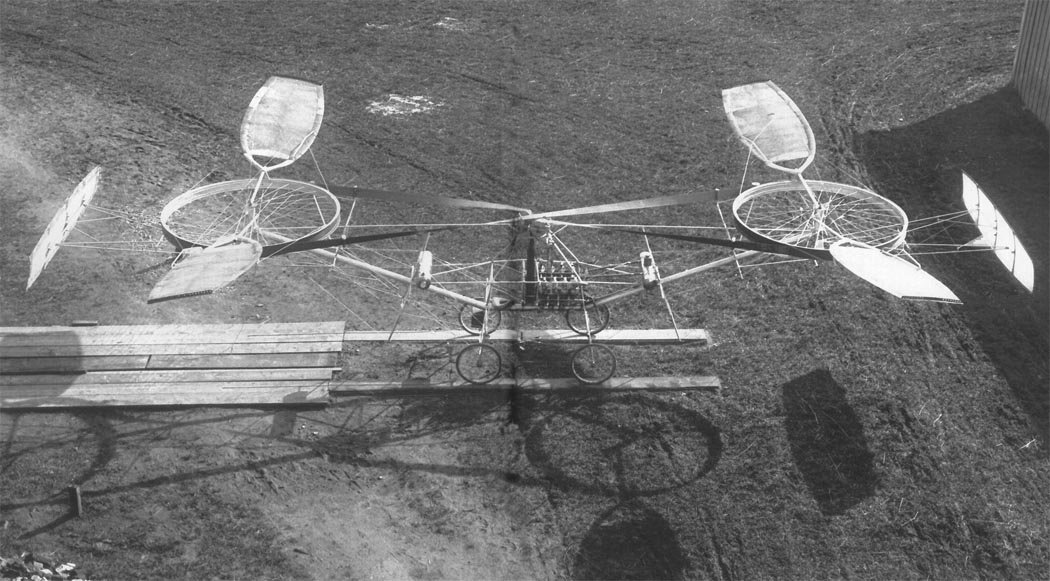
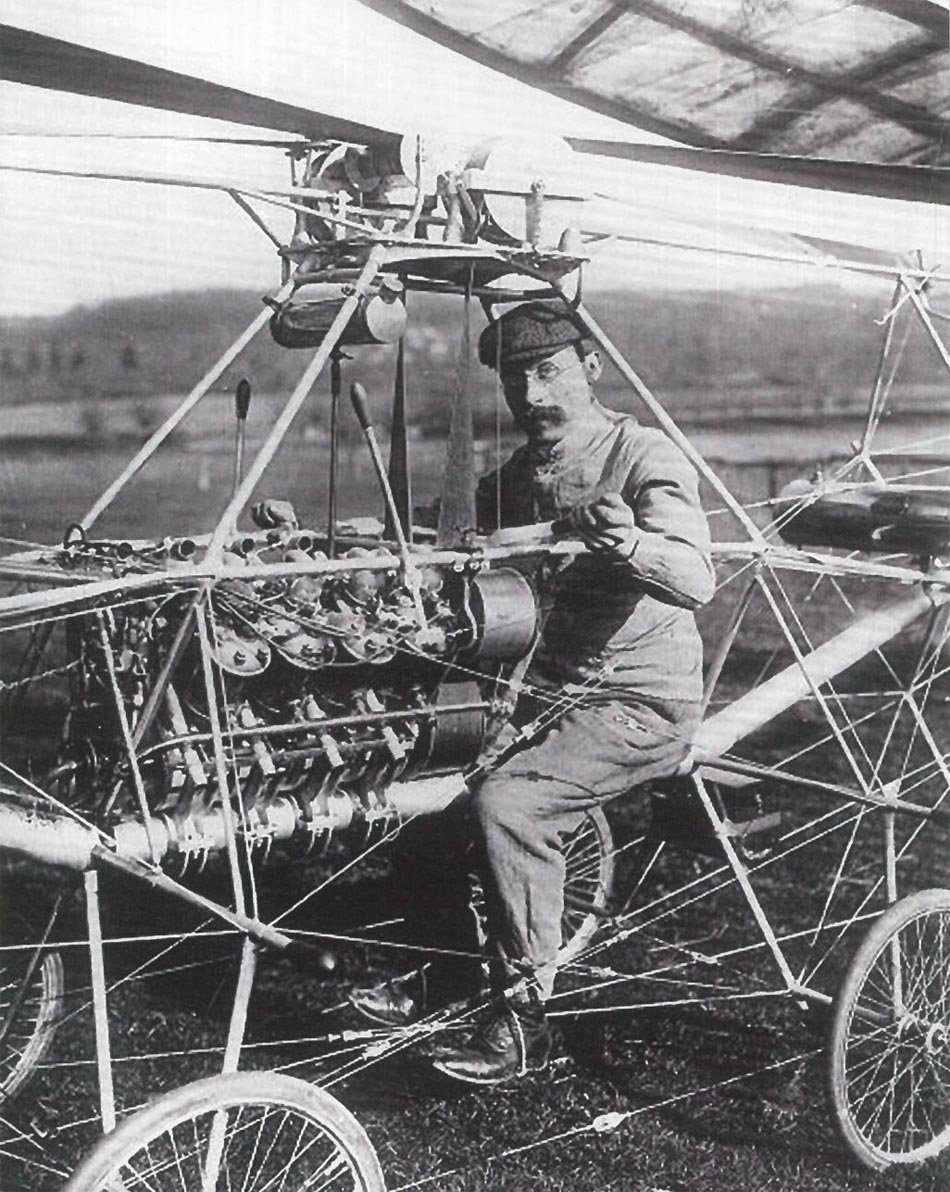
Work on the helicopter was lengthy, taking a full year. Cornu’s helicopter featured two two-bladed propellers, each 6 meters in diameter, a configuration chosen to compensate for reactive torque. The frame was constructed from thin-walled tubes. It was powered by an “Antoinette” eight-cylinder, water-cooled engine, delivering 24 horsepower, and the machine’s total mass was approximately 260 kg. To ensure mutual compensation of each propeller’s reactive torque, their blades rotated in opposite directions.
Achieving Vertical Flight
On November 13, 1907, Cornu successfully lifted the helicopter off the ground. In the first test, the apparatus initially lifted 0.3m (total mass 260 kg) and stayed airborne for about 20 seconds, and then 1.5m (total mass 328 kg). Subsequent tests were conducted while tethered.
Cornu’s main achievement was his attempt to make the helicopter controllable. For this purpose, the inventor installed special surfaces beneath the propellers which, by reflecting the airflow from the propellers, gave the apparatus a certain degree of maneuverability. Although Cornu’s helicopter was still poorly controllable, he correctly defined the direction for solving the problem.
Technical Specifications
| Modification | Cornu Hélicoptère |
| Main rotor diameter, m | 6.00 |
| Maximum takeoff weight, kg | 260 |
| Engine type | 1 Piston engine Antoinette |
| Power, hp | 1 x 24 |
| Crew | 1 crew |
Image gallery of the Paul Cornu’s Helicopter