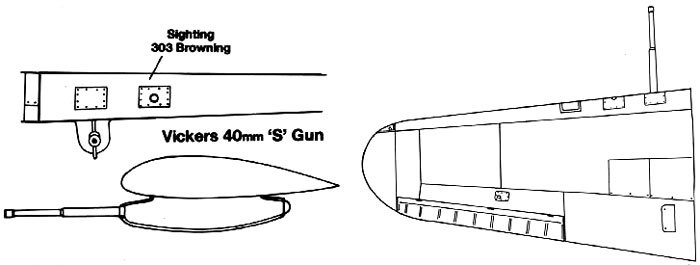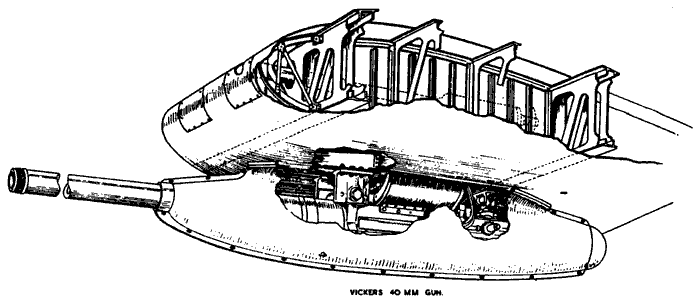
In 1936, the UK Air Command decided to conduct trials to determine the minimum projectile caliber required to destroy an aircraft with a single hit. After various experiments, it was found that any aircraft struck by a projectile of 40 millimeters or more would likely be destroyed. This prompted specialists from the Air Command, who lobbied for “big guns,” to propose such weapons for fighter aircraft armament. By then, the COW gun was obsolete and being phased out of service.
Therefore, in 1938, tactical and technical requirements for a 40mm aircraft cannon were formulated. Contracts for the development of such a gun were concluded with Rolls-Royce and Vickers Armstrongs. Chief designer Percy Haigson anticipated the results of the ammunition trials conducted by the Air Command, as Vickers received information on the progress of the trials and also monitored similar work by foreign firms.
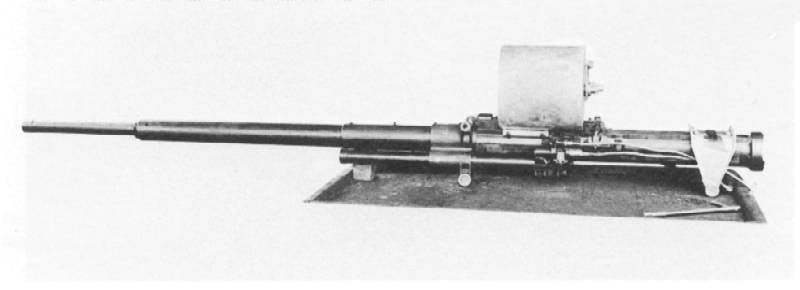
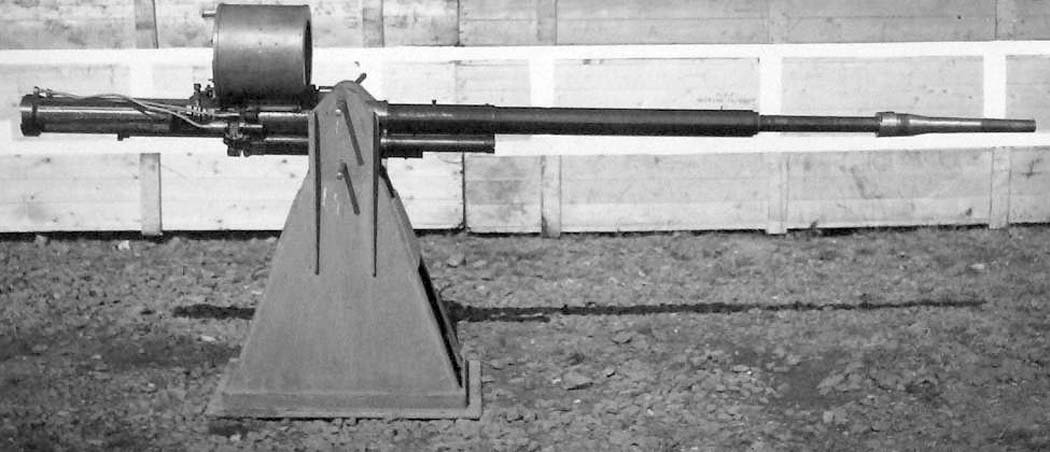
This allowed him to complete the work by the end of 1938, just one month after receiving the contract, and provide a prototype for testing. The new gun’s automatic system operated by recoil with a long barrel stroke. Ammunition was fed from a 15-round magazine.
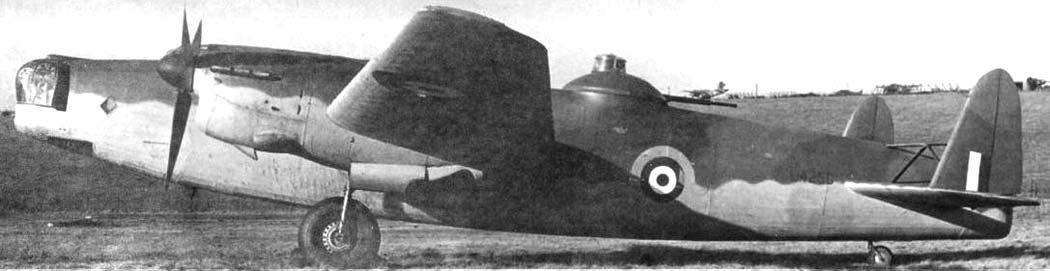
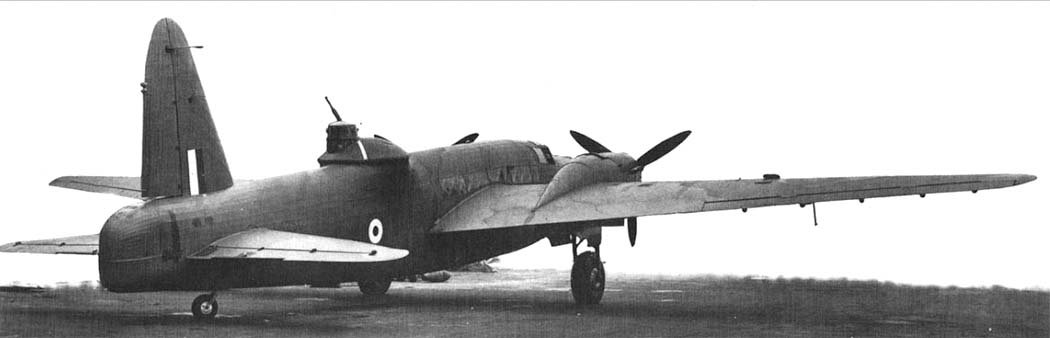
In 1939, Vickers proposed a scheme for mounting the gun in a dorsal turret of a heavy fighter based on the Wellington bomber, equipped with a rangefinder and a lead-computing aiming system. It was assumed that this aircraft would attack bomber formations at a range inaccessible to escort fighter fire.
Early Development and Trials
Trials of the gun’s prototype began in 1939 and were accompanied by a number of “teething problems.” In early 1940, the gun was sent to Woolwich for certification by the Artillery Board, where it performed flawlessly during extensive testing. Soon, an order was received for a small batch of guns, named Vickers Class S.
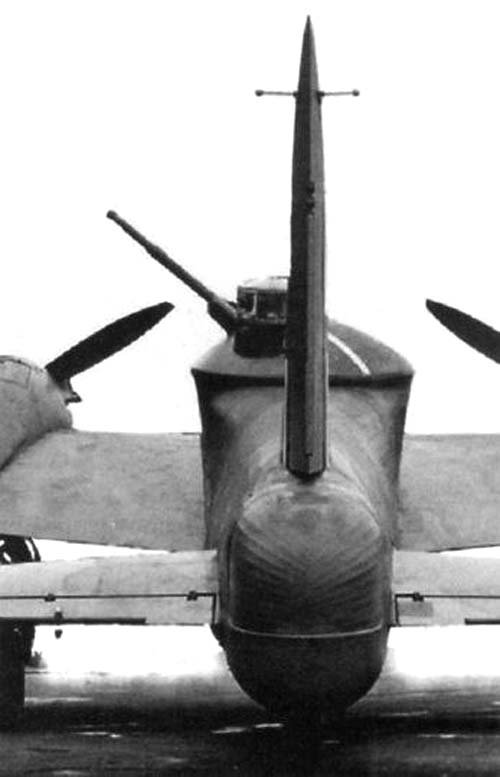
Subsequently, work was moved to Brooklands, where the new gun was installed on a prototype Wellington II aircraft (serial L4250). The Class S was mounted in a large mushroom-shaped turret. Vickers also began work on a fighter to specification F.22/39, which was to be equipped with a limited-traverse nose-mounted S gun.
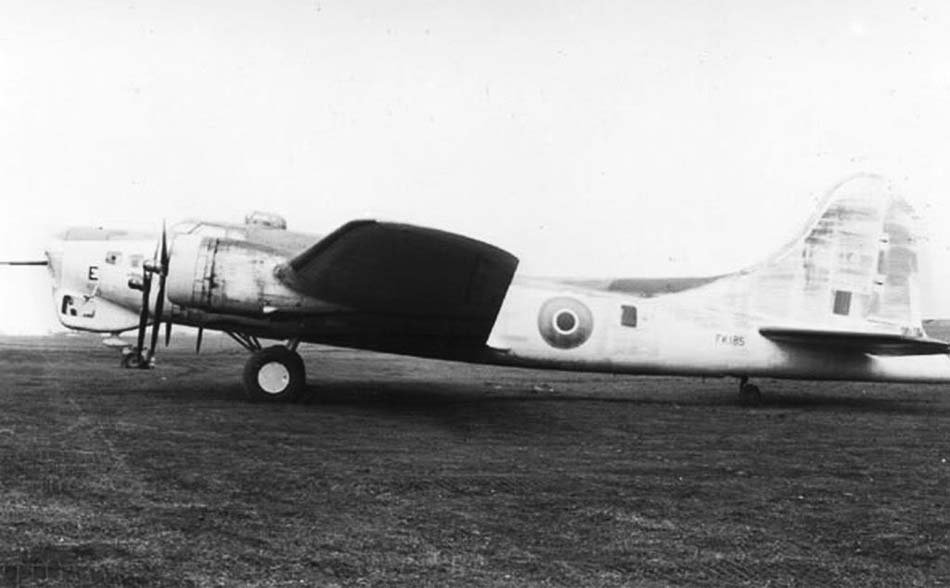
Another Wellington (Type 439) was also fitted with the new mount. One B-17 Fortress IIA (serial FK 185), instead of its standard transparent fairing, was equipped with an experimental Bristol B.16 nose turret with the Vickers S gun. The gun had horizontal traverse angles of 30° and vertical of 40°. The mount was used for combating surfaced submarines.
After the fall of France in June 1940, there arose an urgent need for means to destroy Wehrmacht armored vehicles. Specialists from the Artillery Board issued a conclusion that, if a suitable 40mm armor-piercing shell were developed, the Vickers S could be used to combat tanks and armored vehicles. An armor-piercing shell capable of penetrating the frontal armor of a PzKw tank was developed.
Anti-Tank Role with the Hurricane
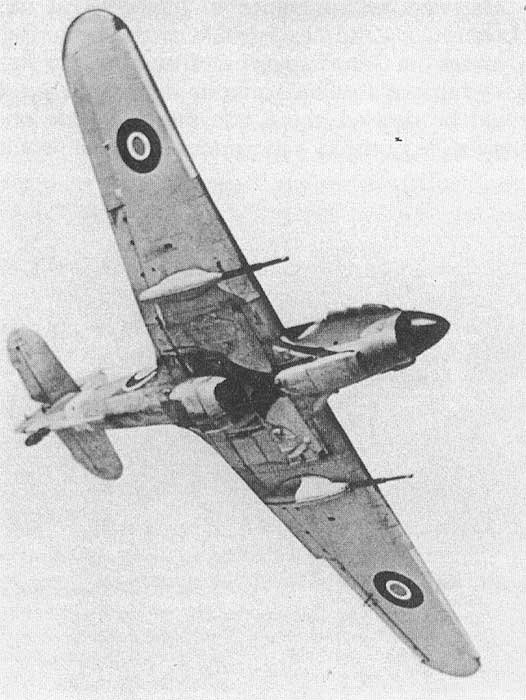
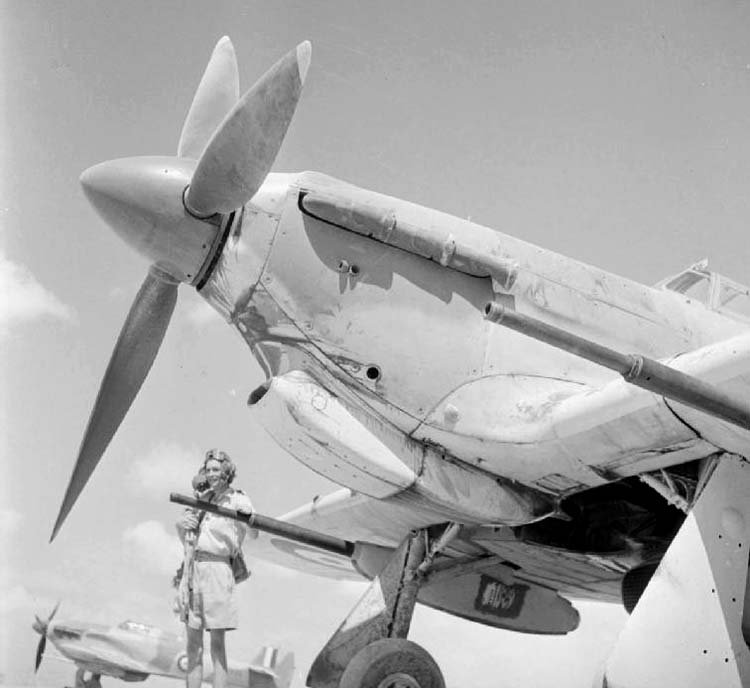
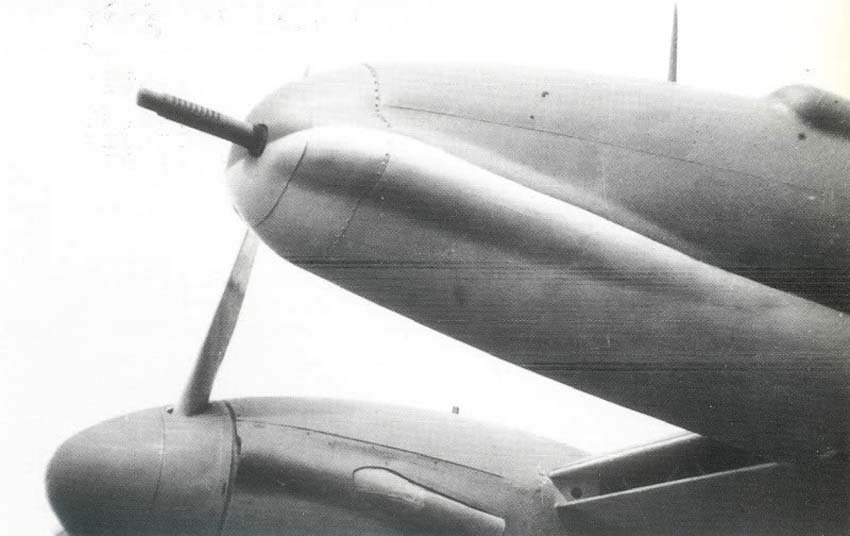
Armor penetration tests were successfully carried out on a Beaufighter aircraft, after which Vickers immediately received an order for over 100 S guns. Hawker Aircraft requested data to modify the Hurricane fighter’s design to accommodate an S gun under each wing. The underwing mount was designed by P. Haigson, facing difficulties with the compact placement of the large magazine.
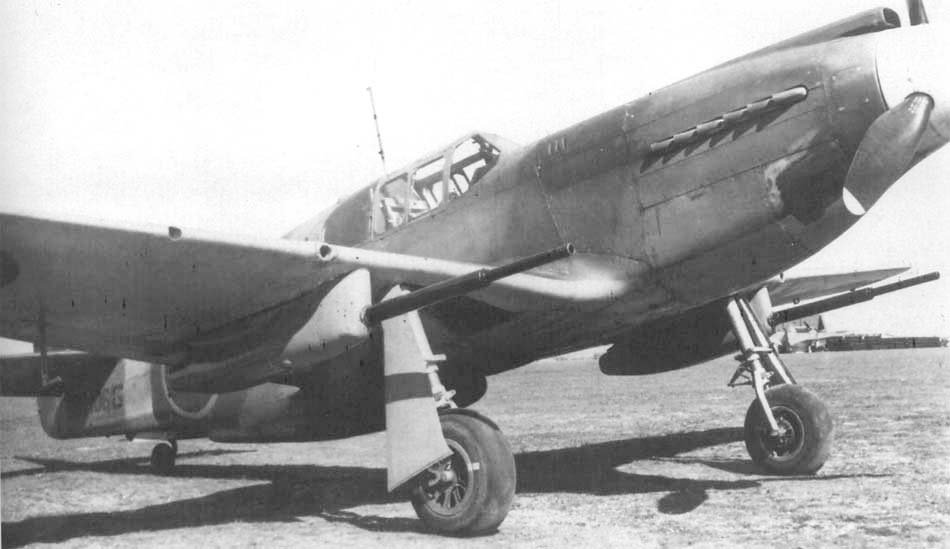
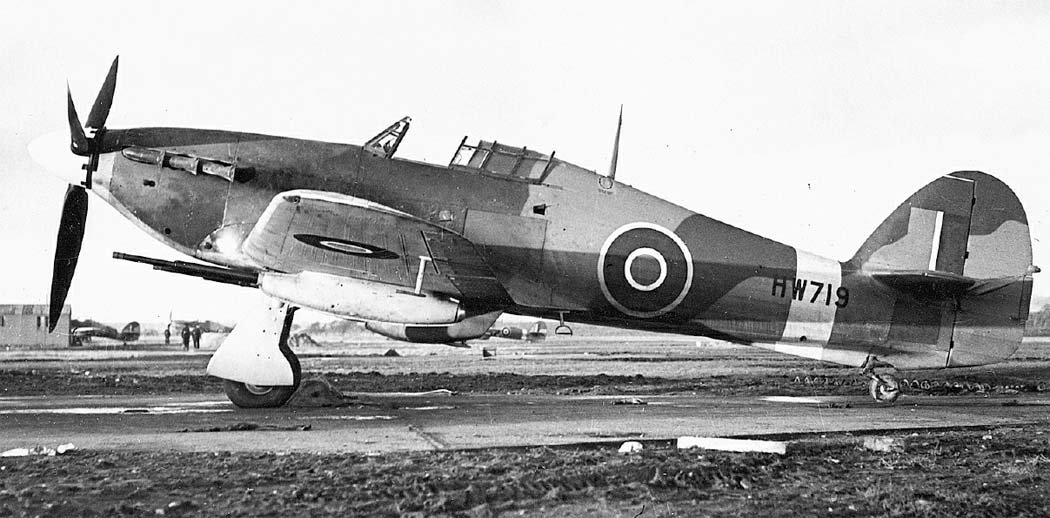
For testing the mount and developing combat application methods, a P-51 Mustang fighter (serial AM106) was also used, being more suitable than the aging Hurricane. After successful trials, the first two production S guns were installed on a modified Hurricane fighter. The aircraft, designated Hurricane Mk.IID, was flown to Boscombe Down in September 1941 for evaluation tests at the Lulworth range. Valentine tanks were used as targets. Armor-piercing shells penetrated the frontal armor of the hull and turret. Based on the test results, it was decided to send a squadron of Hurricane Mk.IID to North Africa.
The S guns were virtually hand-built and underwent air checks before installation on Hurricanes. Initially, problems arose with jams and spent casing extraction. The cause of these problems remained a mystery until someone realized that Kynoch-manufactured shells, which had softer metal, were being used for checks. When heated during firing, they expanded slightly more than Vickers-manufactured shells, leading to jamming. As a temporary measure, the shells began to be oiled.
Wing Commander ‘Dru’ Drury was responsible for the Hurricane trials. At the very beginning of the trials, he nearly crashed. During the first firing of both guns, the recoil force was so great that the aircraft was thrown into a dive. The pilot managed to pull the aircraft out of the dive in time. To solve this problem, a recommendation was made for pilots to slightly pull the control stick back when opening fire.
The first unit to receive the Hurricane Mk.IID was the 6th Squadron, which began training flights on April 20, 1941, at the Egyptian airbase Shandur. During the period of mastering the new equipment, Commander Drury assumed command of the squadron. The S guns were aimed through a standard Mk.II reflector sight, but in addition, the aircraft had two Browning 0.5 spotting machine guns, loaded with tracers.
Combat Effectiveness and Evolution
The Hurricane Mk.IID first participated in combat on June 7, resulting in the destruction of two tanks and several trucks. From then on, the 6th Squadron took a very active part in hostilities. In early August, two pilots of the 6th Squadron were awarded the Distinguished Flying Crosses. Lieutenant Hillier, during an attack, descended so low that he hit the tank he was attacking with his tail.
A captured German tank commander vividly described how his unit of 21 PzKw IV tanks was attacked by aircraft of the 6th Squadron. Six tanks were knocked out, and one had its turret penetrated clean through. Despite successful actions, the 6th Squadron suffered heavy losses. The heavy gun installations reduced the maximum speed by 64 km/h, making the anti-tank Hurricanes easy prey for Bf-109F.
In total, during operations in Africa, 6th Squadron pilots, using the fire of 40mm guns, disabled 144 tanks, of which 47 were completely destroyed, as well as over 200 units of light armored vehicles. With the adoption of rockets, Hurricane Mk.IID began to be phased out of unit armament. Despite this, in 1944, Hurricanes participated in “suicidal attacks” on V1 missile launch sites. Some aircraft were transferred to the Far East in Burma, where they were used very effectively by the 20th Squadron.
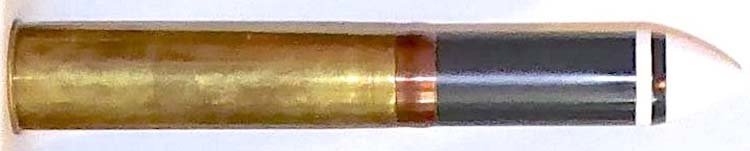
The Vickers S gun was created as an air combat weapon, and initially, high-explosive shells were used for firing. In September 1941, Vickers developed the Mk.I armor-piercing shell, which had a pointed nose and was capable of penetrating up to 50 mm of armor. The Mk.I became the main type of ammunition used in North Africa. Later, the Mk.V armor-piercing shell was created with a 9% increased armor penetration. The Mk.V was used in Burma, where most targets were lightly armored.
During combat operations in the Far East, the average firing accuracy was 25% (for comparison, the accuracy of a salvo of 60 unguided rockets when attacking a tank-type target was 5%). The accuracy when firing high-explosive shells was twice as high as when firing armor-piercing ones. This was because high-explosive shells had ballistics more similar to the Browning .303 machine guns used for sighting.
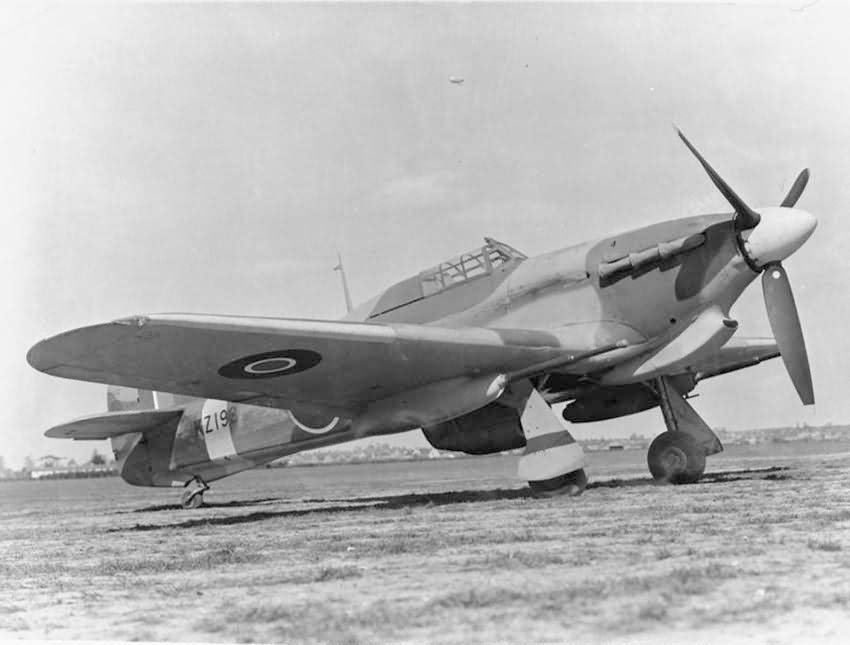
In 1943, a pair of Hurricane Mk.IV (serials KZ193 and NL255) with supercharged Merlin 32 engines (1700 hp, four-bladed propeller) were fitted with S guns. The aircraft were also equipped with tropical equipment. Tests were conducted to investigate the feasibility of serial production of this variant. The first flight took place on April 3, 1943, at Boscombe Down. During the tests, a speed of 603 km/h was achieved. Due to supercharging, the engines constantly overheated. After the completion of the tests, both aircraft were re-converted to the Mk.IV variant and returned to operational units. The Mk.V program did not receive further continuation.
Technical Specifications
| Modification | Class S |
| Caliber, mm | 40 |
| Type of action | Long recoil |
| Gun body mass, kg | 134 |
| Length, mm | 2970 |
| Barrel length, mm | 1700 |
| Rate of fire, rounds/min | 100 |
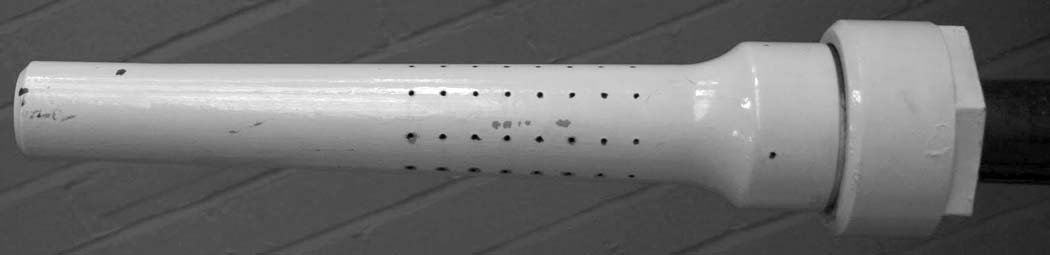
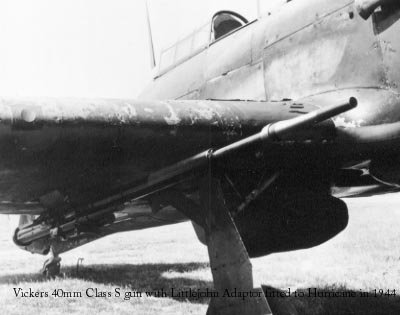
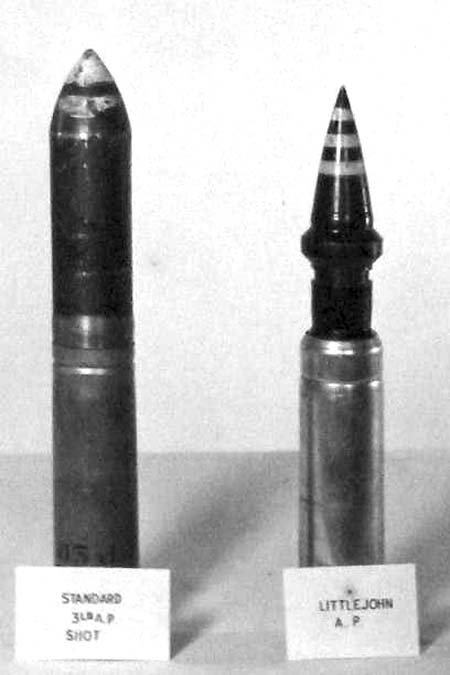
| Muzzle velocity, m/s | 615 (armor-piercing Mk.I) 570 (armor-piercing Mk.II) 875 (sub-caliber for Little John tapered adapter) |
| Magazine capacity | 12 or 15 |
| Projectile mass, g | 1130 (armor-piercing Mk.I) 1360 (armor-piercing Mk.II) 567 (sub-caliber for Little John tapered adapter) |
| Cartridge type | 40x158R |
Image gallery of the Vickers Class S Cannon