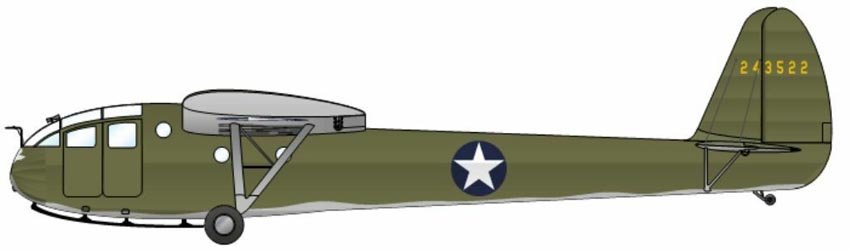
In February 1941, the U.S. Army Air Corps (predecessor to the U.S. Army Air Forces) became interested in the potential use of gliders for airborne and transport operations. By March 1941, preliminary requirements were established for two types of gliders: one designed to carry eight people and another for fifteen.
These requirements were sent to eleven firms, but only four responded with readiness to begin work: “Frankfort Sailplane Company,” “Waco Aircraft Company of Troy,” “Bowlus Sailplane Incorporated,” and “St. Louis Aircraft Corporation.” The others declined participation, citing prior military commitments, lack of necessary capacity, or insufficient experience. Ultimately, only two companies progressed to the prototype construction phase.
U.S. Army glider designations consisted of two letters – ‘C’ (for Cargo) and ‘G’ (for Glider) – followed by a hyphen and a sequential model number. Prototypes were prefixed with an ‘X’, such as the XCG-4. Small-batch aircraft produced for troop trials used a ‘Y’ instead.
The first production modification was distinguished by an ‘A’ after the designation (e.g., CG-3A), the second by a ‘B’, and so on. This clear designation system helped categorize different development and production stages.
The initial contract for the two aforementioned transport gliders, the eight-seater XCG-1 and the fifteen-seater XCG-2, was awarded to the “Frankfort” company in May 1941. However, the project encountered difficulties; the company was dissatisfied with the contract terms, and its gliders were destroyed during static tests.
Consequently, the Air Corps canceled the order, and Frankfort shifted its focus to producing two-seater training gliders. This opened the door for other manufacturers to contribute to the emerging military glider program.
Waco CG-3 Development
A second contract was signed in June 1941 with the “Waco” company. This agreement again stipulated the development and construction of prototypes for two types of gliders: an eight-seater, designated XCG-3, and a fifteen-seater, XCG-4.
Two XCG-3 prototypes were ordered (one for static tests, one for flight tests), and three XCG-4 prototypes (one for static tests and two for flight tests). This marked a significant step in Waco’s contribution to the U.S. military glider effort.
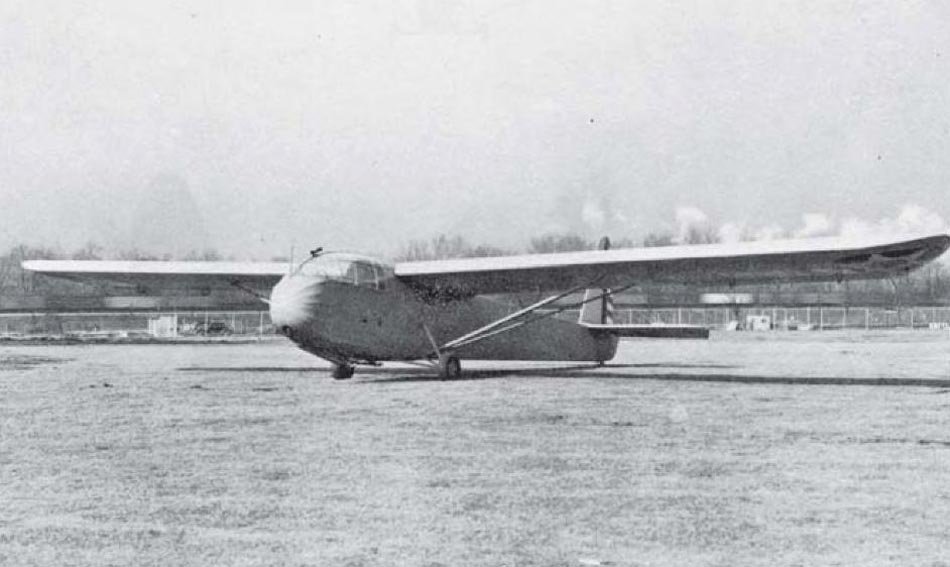
The XCG-3 prototype was completed in December 1941, with its flight-test counterpart ready in January 1942. Static tests were conducted at a laboratory on Wright Field and yielded satisfactory results. The flight-test example first took to the air on January 26, 1942, even before the completion of static tests, whose report was only signed in April.
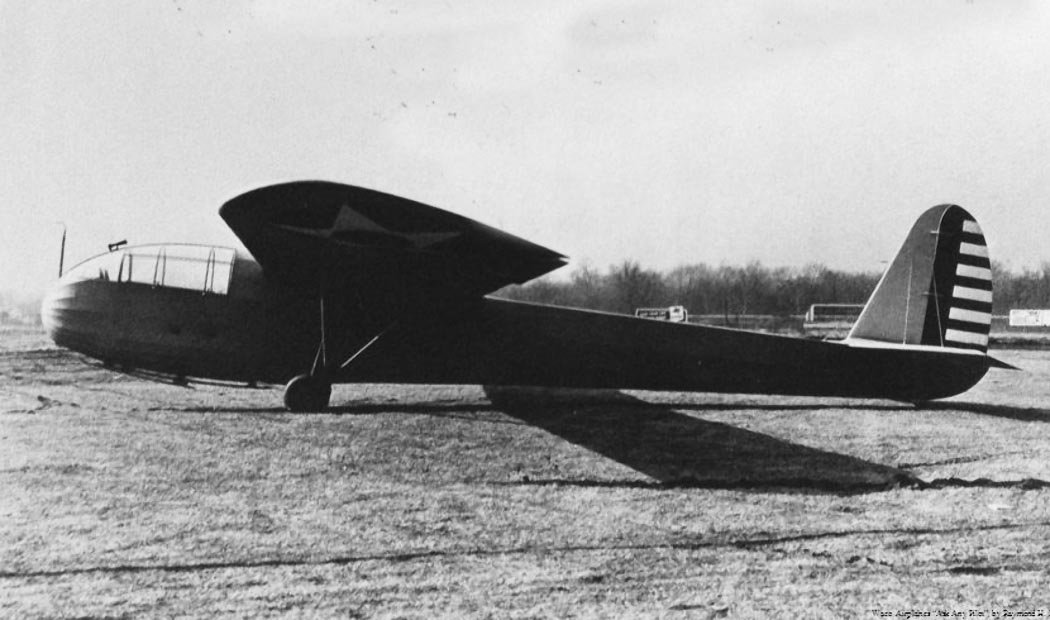
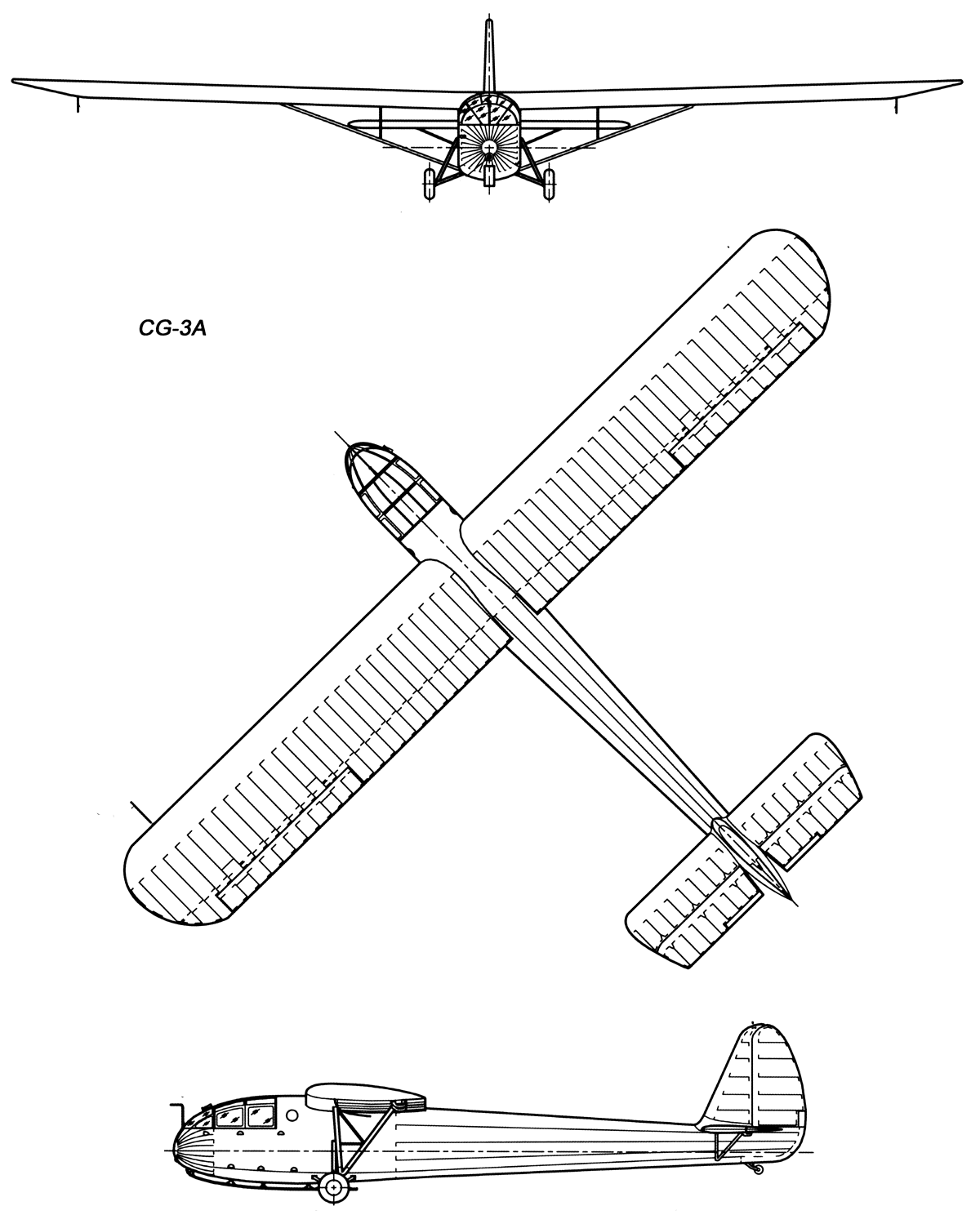
The XCG-3 featured a mixed construction, traditional for American transport gliders of the era. Structurally, it was a braced high-wing monoplane with a single fin tail.
The wing had a constant chord throughout its span and rounded tips. This two-spar wing was constructed entirely of wood. From the leading edge to the front (main) spar, it was covered with plywood, and the remainder was fabric-covered. Ailerons were attached to the trailing edge, with no other high-lift devices.
These ailerons, featuring aerodynamic and mass balancing, had a wooden frame and fabric covering. Wire springs were installed under the wingtips to prevent the wing from touching the ground during ground operations.
The wing was braced from below with V-shaped struts and N-shaped counter-struts. These struts were welded from steel tubes and enclosed in fabric-covered fairings with plywood ribs.
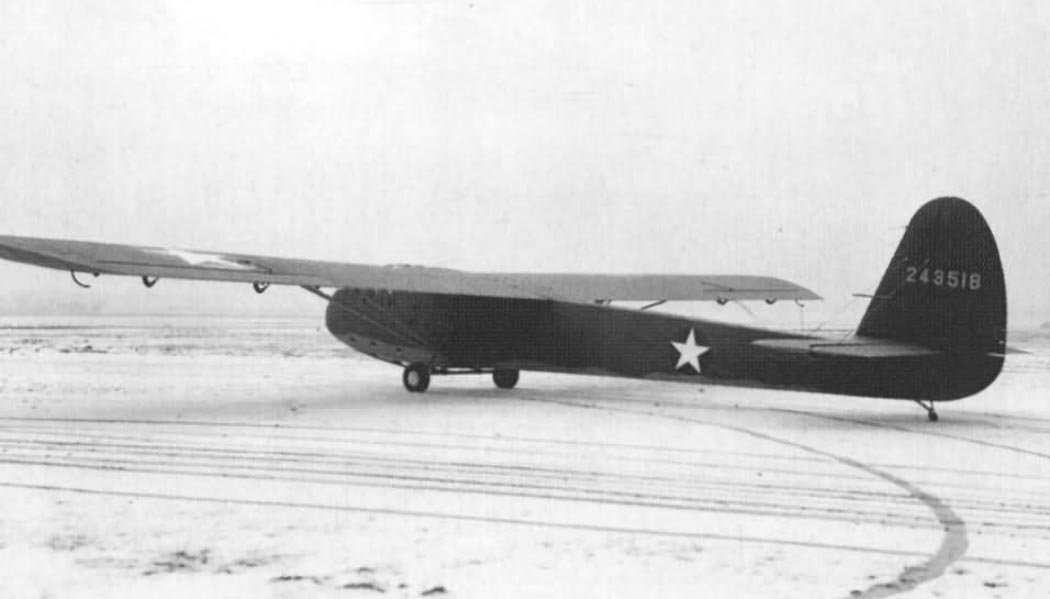
The tail unit followed a classic design. The stabilizer was reinforced from below by V-shaped struts and from above by bracing wires. Its construction mirrored that of the wing: plywood skinning from the leading edge to the spar, and then fabric. The control surfaces shared a design similar to the ailerons, and all were equipped with trim tabs.
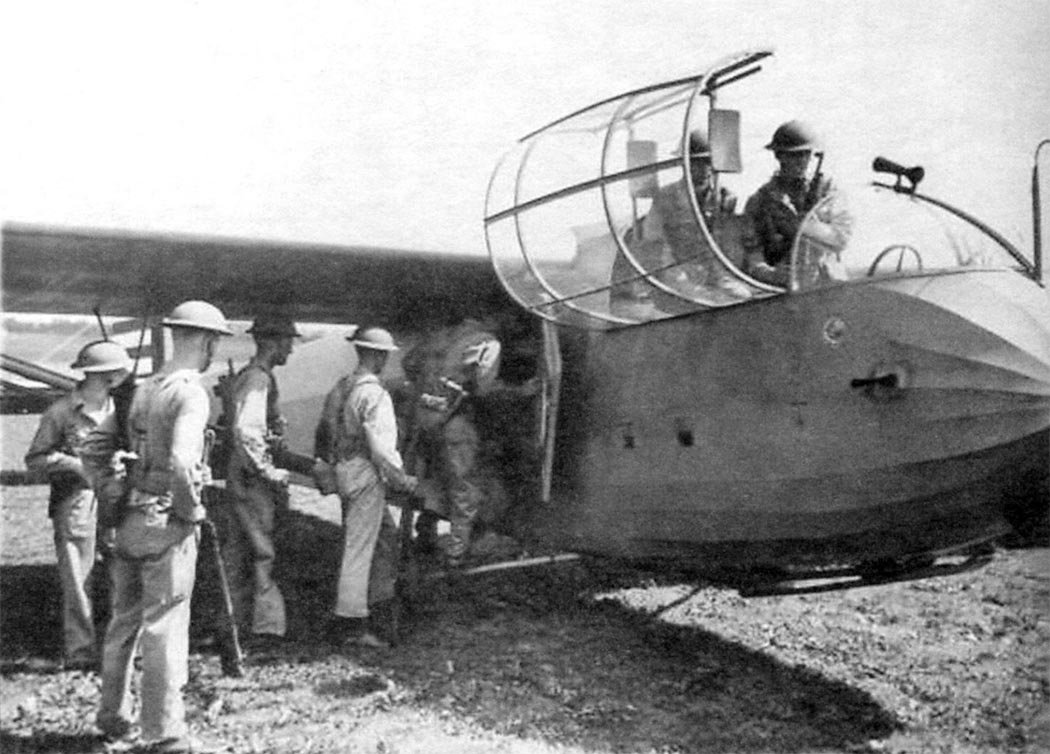
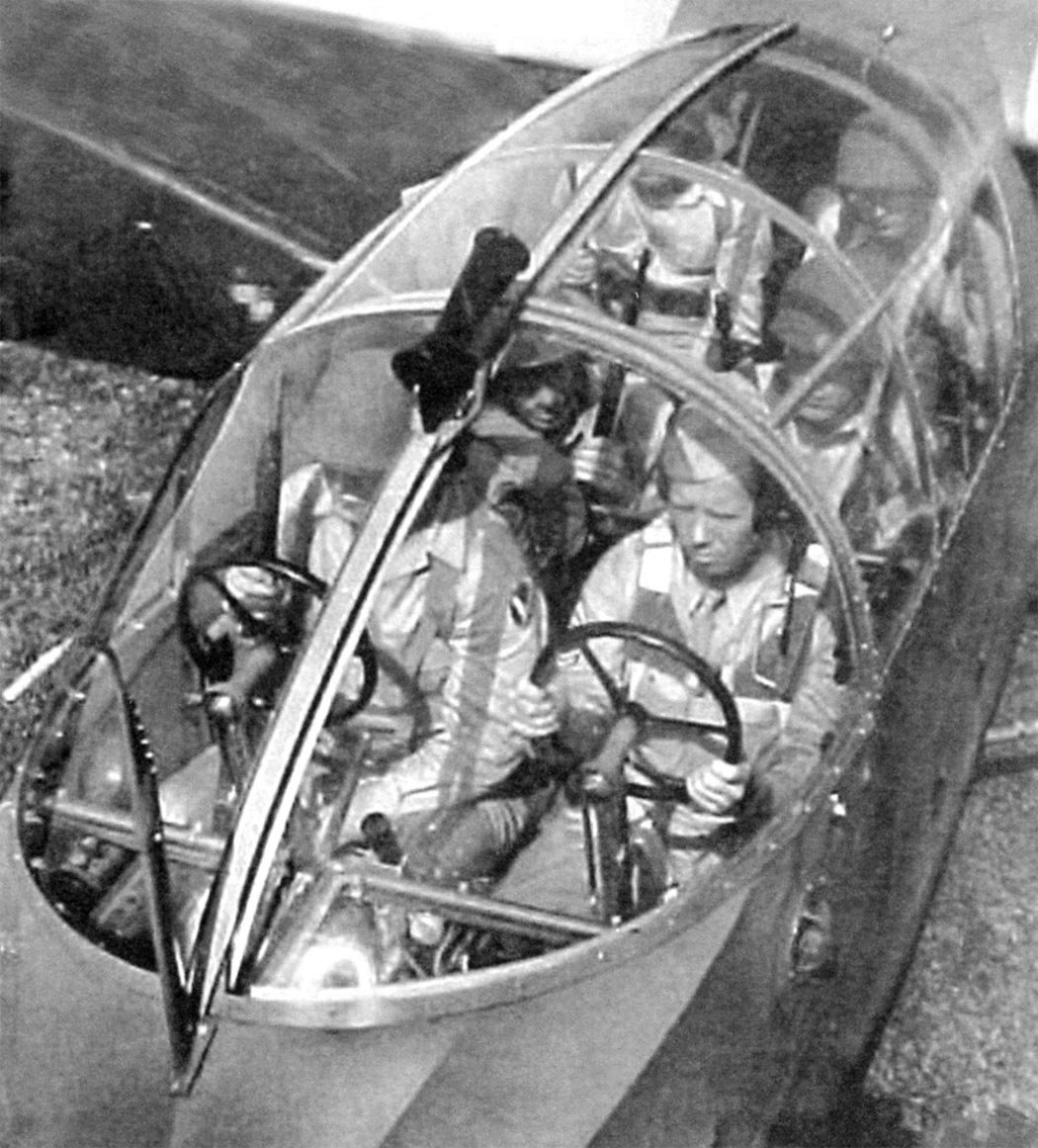
The fuselage was built around a truss framework welded from steel tubes. In the area of the pilot and cargo cabins, the skinning was plywood. Further along the fuselage, wooden stringers supported the fabric covering. The forward section featured a transparent canopy that hinged open to the right.
This opening allowed for the boarding and disembarking of troops. A small door on the starboard side also enabled cargo loading. When empty, the aircraft had a significantly aft center of gravity, necessitating the placement of ballast in the nose for ferry flights.
The forward section housed two pilot seats with a complete set of flight and navigation instruments (identical to those on the CG-4 glider), along with controls such as yokes and pedals. The glider was equipped with a radio. Although the design originally intended for two pilots and six paratroopers, the right-hand seat was often occupied by an additional soldier.
Troops sat on two benches facing the direction of flight. The cargo compartment was cramped, making it difficult to accommodate soldiers in full gear, with weapons, and a small supply of ammunition and field rations. Transporting any bulky cargo was out of the question for this design.
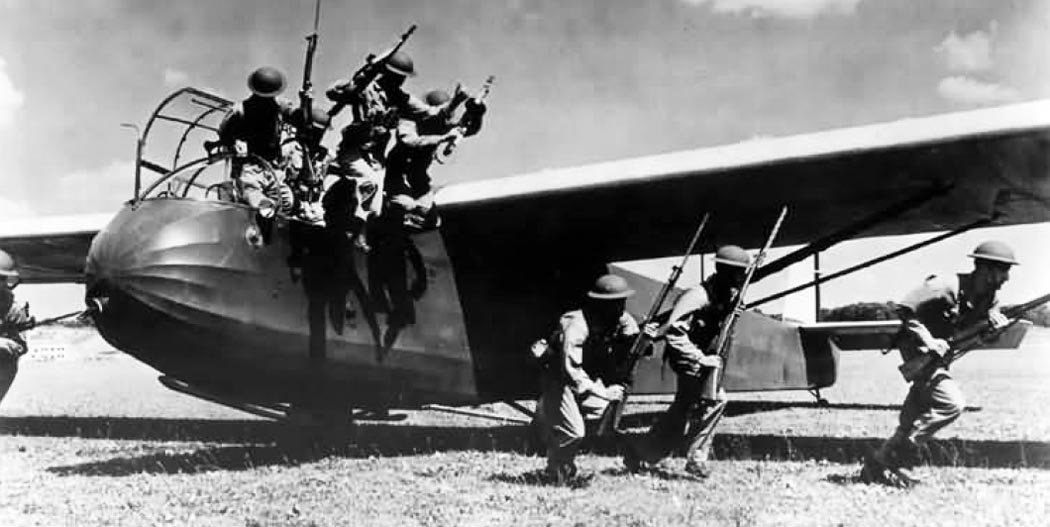
To exit the glider, the canopy was opened, and troops would jump to the ground over the side, much like disembarking from a boat. Notably, the jump was made from a considerable height, approximately 180 cm (about 6 feet).
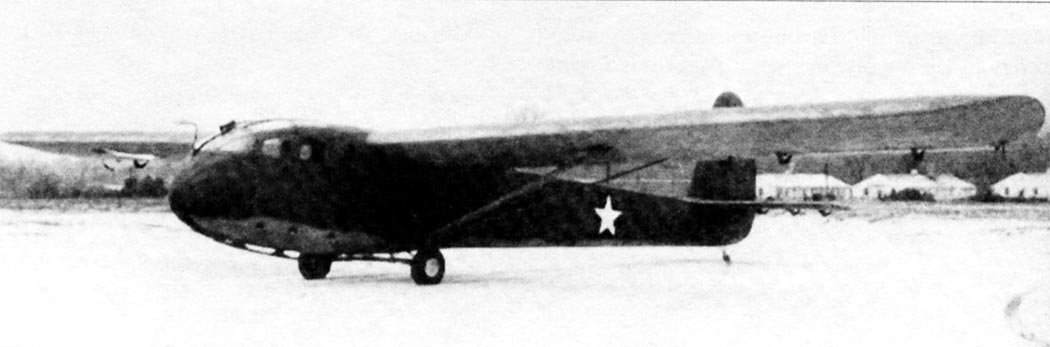
The landing gear consisted of a three-wheeled chassis with a tailwheel and a landing skid. The main wheels were attached to struts with rubber shock absorption. In combat situations, the main wheels could be raised before landing, allowing the glider to land on the skid located under the nose section of the fuselage.
The skid was laminated from veneer, and the tailwheel was steerable, offering some flexibility for varying landing conditions.
CG-3A Production and Limitations
After several modifications, the glider was transferred to serial production. The main change involved the cabin canopy structure, which was deemed insufficiently rigid. This was because soldiers often pushed off the canopy when exiting the fuselage, leading to deformations.
On the production CG-3A modification, the canopy size was reduced, and its framework was reinforced. Round portholes appeared on the sides, and a scoop-type air intake with a slide valve for cabin ventilation was added to the starboard side.
Initially, 300 units of the CG-3A were ordered, but only 100 were produced. The order was curtailed in late 1942 in favor of the more capacious CG-4A. Serial production was handled by “Commonwealth Aircraft” of Kansas City, Missouri, as the “Waco” plant was occupied with manufacturing the CG-4A.
The low payload capacity, cramped cabin, and inability to transport bulky cargo meant that the CG-3A was never used in combat operations. Instead, it found application exclusively in training units. Both C-47 tug aircraft pilots and glider pilots trained there.
Soldiers of airborne divisions used the CG-3A to learn proper conduct during takeoff, flight, and landing, as well as practicing rapid disembarkation from the glider. Subsequently, personnel transitioned to the heavier CG-4A.
U.S. Airborne Doctrine
It’s worth noting a few words about the organization of U.S. airborne troops during that period. Theoretical research on this topic began in America in 1939. It quickly became apparent that there were differing views on the organization and deployment of airborne units.
Infantrymen believed airborne units should be an integral part of the infantry, conducting joint combat operations after deployment. Engineers argued that airborne units should primarily destroy key targets, carry out sabotage, and thus be subordinate to them.
The Air Force sought to incorporate paratroopers as “air grenadiers,” akin to the Marine Corps within the Navy. After brief deliberation, airborne units were ultimately subordinated to the infantry.
In May 1942, plans were developed to organize five airborne divisions. Initially, the idea was to form them as regular infantry divisions, but with airborne delivery training. However, this was soon reconsidered, and a new structure was created.
An American airborne division comprised one parachute regiment and two glider regiments, along with supporting units. Initially, the ratio was different: two parachute regiments and one glider regiment. The increased proportion of gliders was due to the need to transport heavy weaponry by air.
An airborne division was smaller than an infantry division, with a staff of 504 officers and 8,321 soldiers. In addition to the three regiments mentioned, it included a light artillery battalion (howitzers and anti-tank guns), an engineer battalion, a medical platoon, a quartermaster detachment, and other units.
The first parachute battalion (501st) was established in the U.S. in late 1940, followed by the 550th in July 1941 in the Panama Canal Zone. The first unit to be deployed by gliders, rather than parachutes, was the separate 88th Airborne Battalion.
This was essentially an experimental unit, where methods of transportation, deployment, support, and training were developed. Soon after, the 502nd and 504th battalions were formed, becoming the basis for the organization of the first parachute infantry regiment.
In August 1942, two airborne divisions, the 82nd and 101st, were formed from the 82nd Infantry Division. This expansion process continued throughout the war.
According to the prevailing concepts of the time, paratroopers would deploy as the vanguard to seize and prepare landing zones suitable for gliders. Subsequently, glider-borne units would land, utilizing heavy weaponry to accomplish the main combat objective.
Soldiers for parachute regiments were largely recruited from volunteers. However, when it came to gliders, there was noticeably less enthusiasm. Service in them was dangerous, and training injuries were common. Between May 1943 and February 1944, 17 people died and 162 were injured in glider crashes.
During this period, a poster appeared in the U.S. depicting five crashed gliders with the inscription: “Join the glider troop. No flight pay. No jump pay. But – never a dull moment.” Later, a bonus was introduced for glider pilots: $100 for officers and $50 for soldiers, but this did not significantly increase the number of volunteers for glider units.
General M. Ridgway, commander of the 82nd Division (General W. Lee commanded the 101st), sought to reverse this trend. He gathered the entire division at an airfield, boarded a CG-4A glider with renowned glider pilot M. Murph. They performed various complex aerobatic maneuvers, including loops and turns, and landed the glider at the designated spot. This demonstration significantly changed attitudes towards gliders within the division.
When the U.S. began mass production of transport gliders, it became clear that a large number of pilots would be needed. By the end of the year, there were plans to train 12,000 glider pilots, which proved unrealistic. The first 12 officers began their training in June 1941 in Elmira.
The program resembled that for sport glider pilots, but with a greater emphasis on towed flight. These trained officers were intended to become instructors and leaders for military training courses.
Initially, a glider pilot’s training was set for four weeks and 25-30 flight hours. This included 1 hour of introductory flights, 9 hours of training flights using car and winch launches, 2 hours of single-tow flights, 5 hours of double-tow flights, a two-hour cross-country flight, and 5.5 to 15 hours of unpowered flight (gliding).
The ground course covered aerodynamics, glider construction, mechanics, and the techniques of towed and gliding flight. Flights were conducted in 2-4-seat gliders, of which there was a wide variety, with most being variants of civilian aircraft.
On August 21, 1941, the Chief of Staff of the Army ordered the commencement of training for 150 officer-pilots. The Twenty-Nine Palms School in California became the main training center. Preparation began in March 1942. Among other things, training there included flights using updrafts, which, as it turned out later, was not mandatory for assault glider pilots.
Candidates for training were light aircraft pilots, with preference given to those who had completed military or civilian flight schools or courses. Upon graduation, glider pilots had 50 hours of glider flight time, a norm later reduced to 30 hours. As the need for glider pilots grew, the requirements for candidates were gradually lowered.
By May 1942, 6,000 pilots had been graduated. By this time, the program included 30 hours of flight time in training aircraft, 8 hours in two-seater gliders, and an additional 8 hours in eight- or fifteen-seater gliders.
Eighteen glider schools were established, each with 80 to 212 cadets. The most challenging aspect proved to be organizing the final stage of training on large gliders. By the end of 1942, 2,754 cadets were awaiting flights on these aircraft, while the total capacity of the four units equipped with them was only 600 cadets.
American glider pilots were not trained for ground combat. They were intended to assist in preparing landing zones, organizing the landing of other gliders, and, if possible, being evacuated. This approach resulted in lower casualties among American pilots compared to their British counterparts, who participated in combat alongside other paratroopers after landing.
Although the CG-3A glider was never used in combat operations, it made a significant contribution to the training of U.S. airborne forces and left a lasting positive memory in the hearts of World War II veterans.
Technical Specifications
| Modification | CG-3A |
| Wingspan, m | 22.28 |
| Length, m | 13.21 |
| Wing area, m2 | 39.00 |
| Empty weight | 927 |
| Maximum takeoff weight | 1996 |
| Maximum speed, km/h | 193 |
| Crew | 2 |
| Payload | up to 7 paratroopers |
Image gallery of the Waco CG-3A