Engineer René Couzinet, who entered the National Higher School of Arts and Crafts in Angers at seventeen and the National Higher Aeronautical School at twenty, was full of ideas, many of which he later patented. His military service in Bourges, a sacred place for French aviation, was closely linked to the start and end of several air races and the great history of Atlantic crossings in 1926-27. During his service, Couzinet developed his ideas related to aviation flights.
In July 1927, despite lacking his own funds, René Couzinet founded an aircraft manufacturing company. His goal was to create a perfect land-based aircraft with a three-engine power plant of sufficient power to cross the Atlantic Ocean at high speed. Seduced by Couzinet’s idea, hotel owner Malet gave him 50,000 francs, and Jacques Lacoste, acting general director of Hispano-Suiza, also inspired by the idea, provided René Couzinet with three 180 hp engines, of which significant stocks existed at the time.
The Birth of the “Arc-en-Ciel”
In the winter of 1927-28, the Couzinet Type 10, better known as “Arc-en-Ciel” no.1 (Rainbow No.1), was built at Letord’s production facilities in Meudon. This aircraft, funded by the designer himself (it was manufactured without a contract), had an extremely unusual appearance. The Type 10’s low-mounted wing had a span of 27 meters and an aerodynamic quality almost like a glider (16.7), containing seven tanks with 6300 liters of fuel; according to the designer, this fuel supply theoretically allowed the aircraft to fly 10,000 kilometers.
The aircraft’s fuselage was highly curious: its tail section curved upwards, forming a single unit with the fin. Since René Couzinet did not believe in single-engine ocean crossings, rightly considering it extremely dangerous, his designed machine was fitted with three powerful engines. Hispano-Suiza later offered him three 12-cylinder V-type 12 Lb engines, each with 600 hp, as the power of three 180 hp engines was insufficient for an aircraft with a takeoff weight exceeding 10 tons.
On May 7, 1928, the Service Technique de l’Aéronautique (STAé) refused to issue an airworthiness certificate for the aircraft, citing extraordinary wing load. According to a representative, René Couzinet was furious, stating, “My friend, you are very dear to me, but if you do not step away within five minutes and remain in front of the aircraft, I will pass through you!”
Without an airworthiness certificate, the aircraft made its first flight in Orly, piloted by Maurice Drouhin, who reported that the machine handled perfectly in the air. As the world press wrote, and René Couzinet also believed, this moment marked the beginning of a long period of tension or even contempt for official services.
After finally receiving the airworthiness certificate for “Arc-en-Ciel” no.1, René Couzinet began preparing the aircraft for its first long-range flight from Paris to Algiers. The Type 10 crew was to consist of two people: Maurice Drouhin and Le Brix. On August 8, 1928, “Arc-en-Ciel” no.1, which had already completed a twelve-hour flight, was presented to the public with a crew comprising pilot Drouhin, navigator Gianoli, radio operator Manuel, and mechanic Lanet. This time, René Couzinet stood aside with Le Brix.
After 45 minutes of a demonstration flight, Drouhin, thrilled with the machine, gained altitude and dived at full throttle. The wing consoles began to maneuver dangerously. Maurice Drouhin was an excellent pilot and managed to pull out of the dive and transition to horizontal flight. Unfortunately, the machine crashed into a hangar, and tragedy struck. Lanet was decapitated, Drouhin suffered a torn left thigh and died the next day, while Gianoli and Manuel were left in a coma.
On August 15, Minister of Trade and Industry Maurice Bokanovsky called René Couzinet and, during the telephone conversation, placed an order for three three-engined “Arc-en-Ciel” postal aircraft. However, on September 2, when André Laurent-Eynac took office, Maurice Bokanovsky died in an aviation accident. STAé representative Suffrin-Hébert warned René Couzinet: “Did you sign a contract? No, I remember Bokanovsky’s words perfectly, but understand, Couzinet, ministers come and go, but officials remain…”
But Couzinet did not give up. Gianoli and Manuel recovered, and the city authorities of Biarritz allocated 100,000 francs for the repair of the “Arc-en-Ciel.” The administrations of Angers, Cannes, Pau, Nantes, and the western aeroclub organized events and financial support for the aircraft designer. Laurent-Eynac issued René Couzinet a contract for the construction of two three-engined postal aircraft, intended for flights on the Bordeaux-Geneva line, and Hispano-Suiza provided three 12 N engines for the future “Arc-en-Ciel.” It is quite likely that René Couzinet’s “Arc-en-Ciel” inspired Albert Caquot to create a program of record prototypes. On February 17, 1930, fate dealt another blow: a fire destroyed the Letord company’s factory in Meudon and several aircraft under construction.
The Couzinet 33 “Demi Arc-en-Ciel”
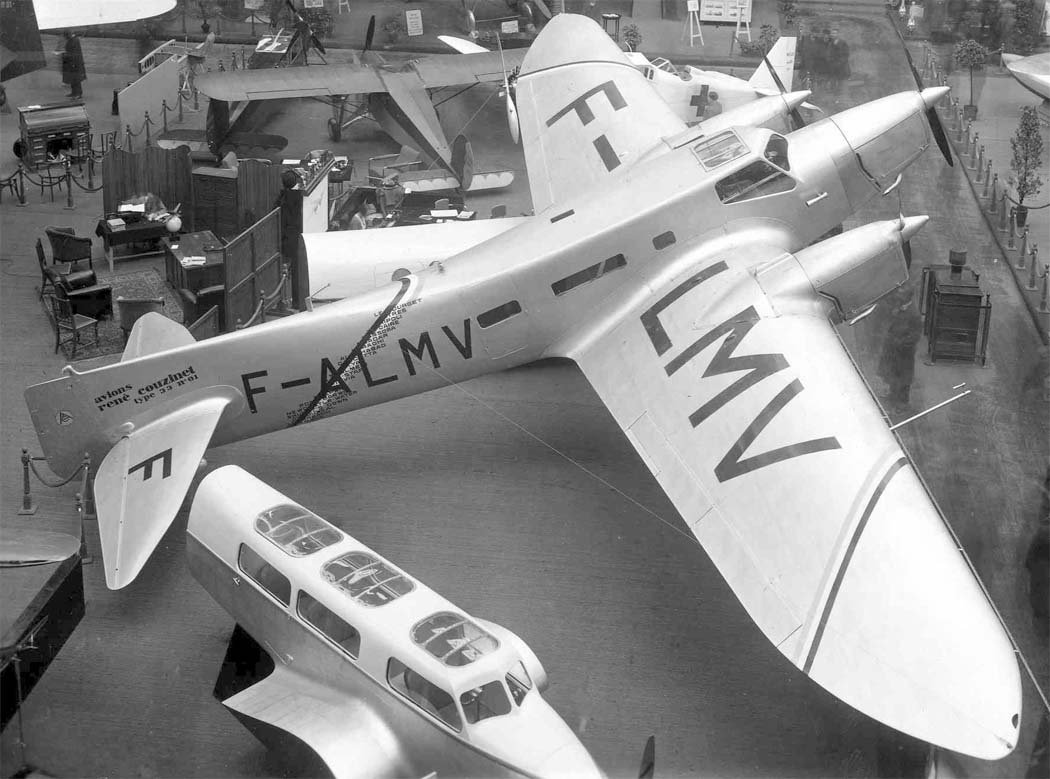
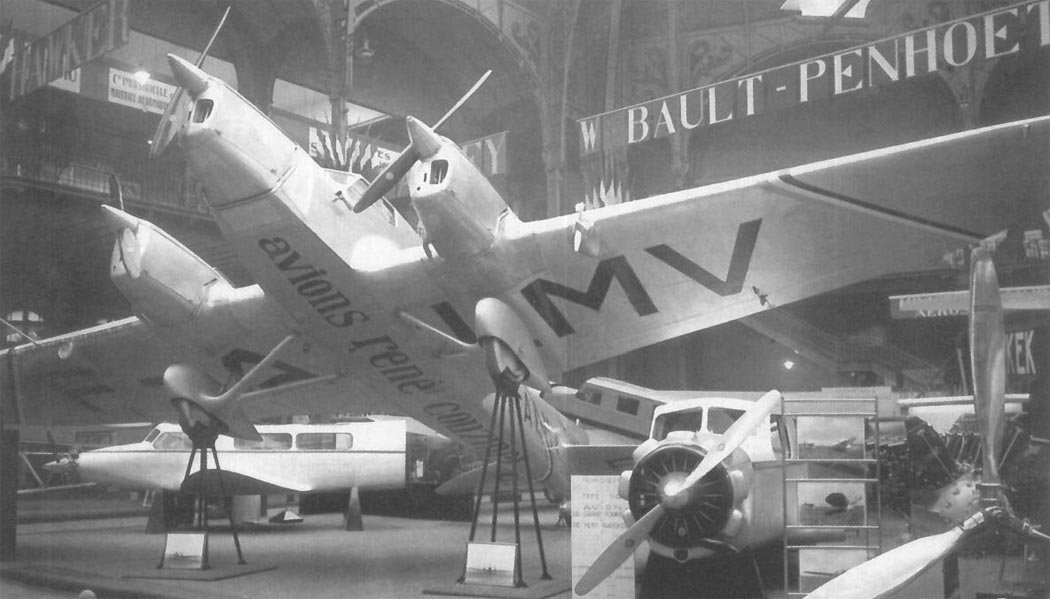
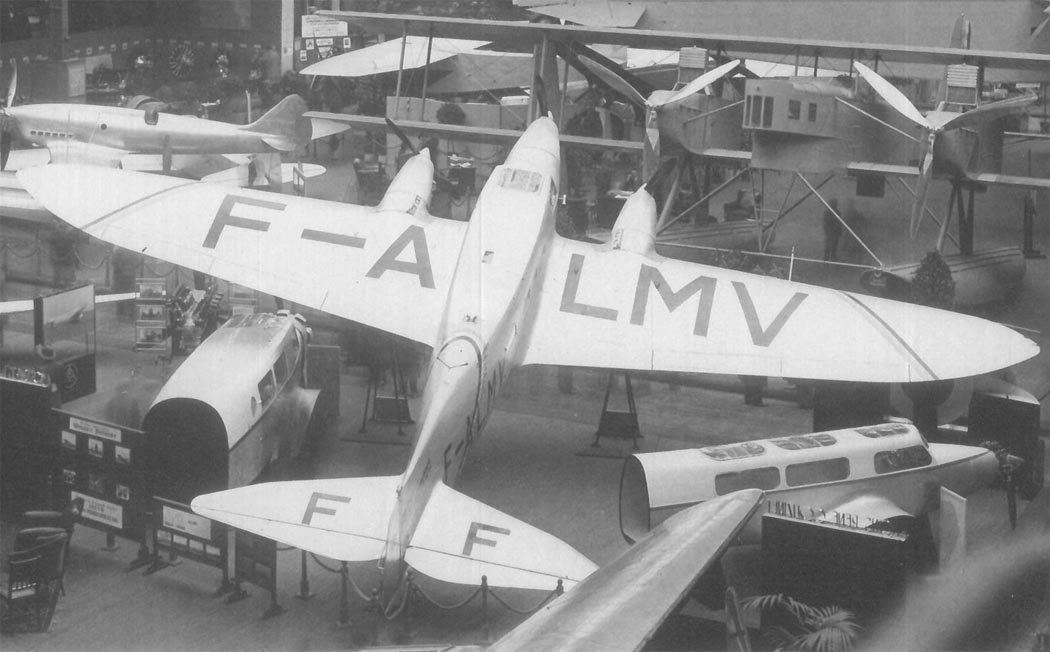
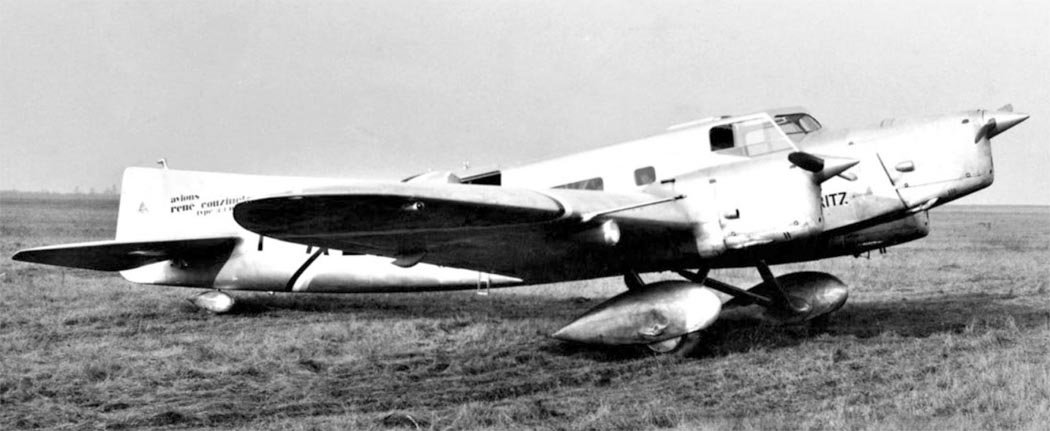
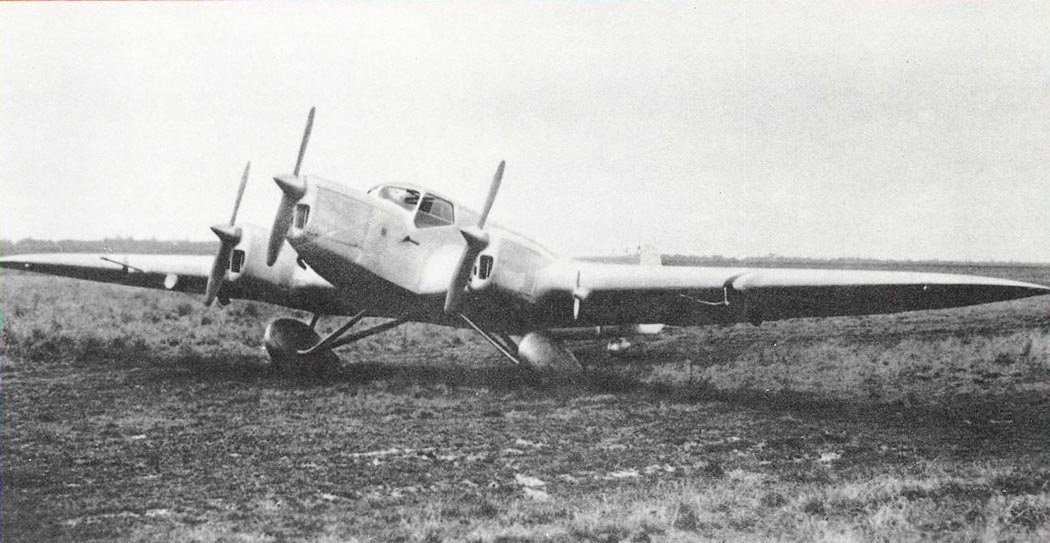
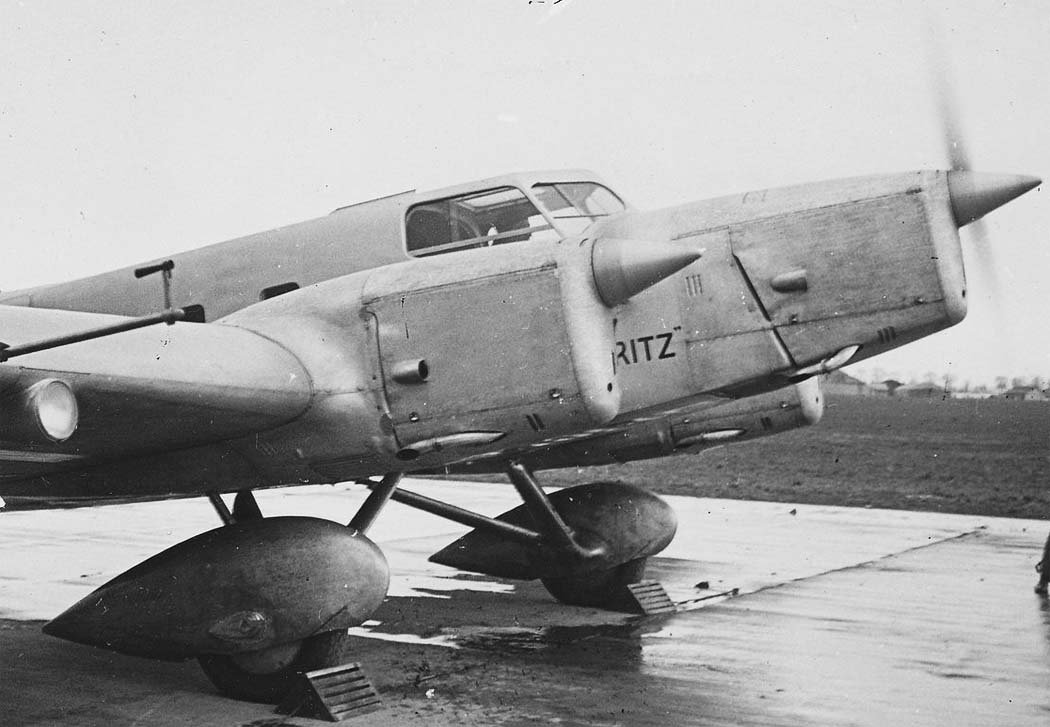
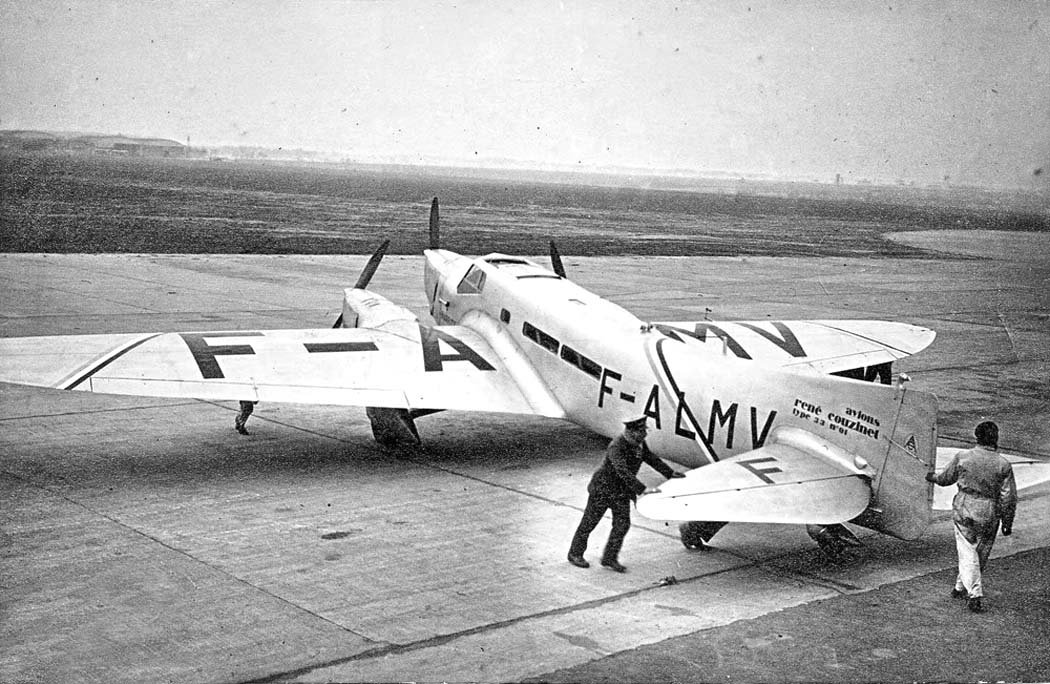
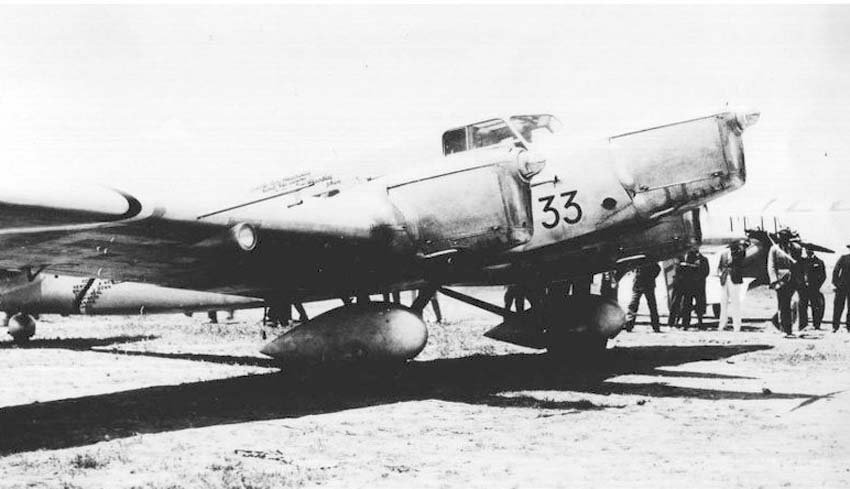
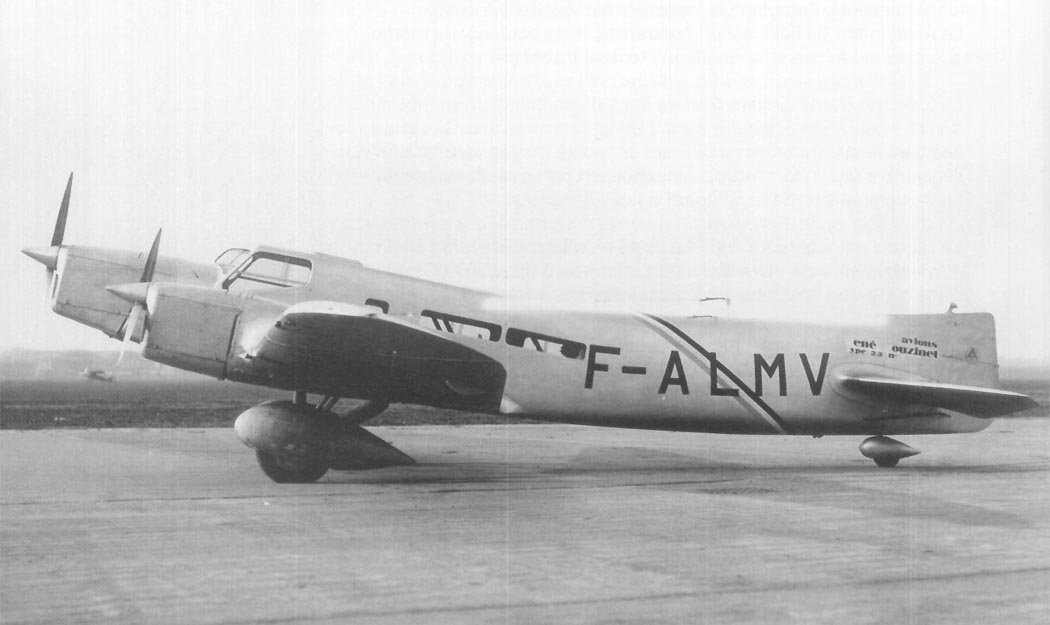
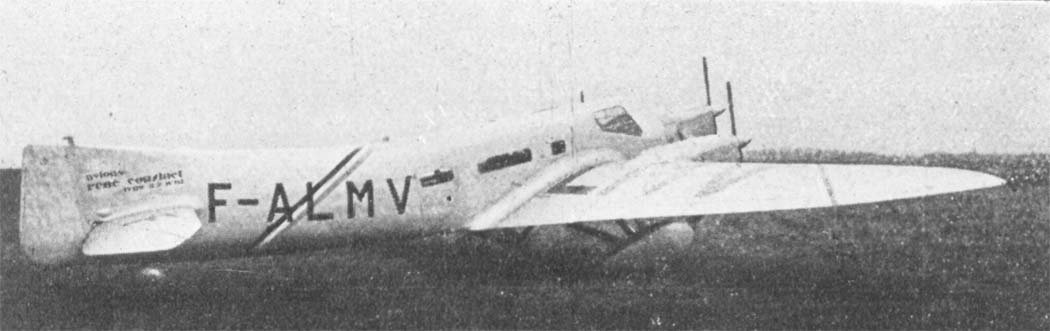
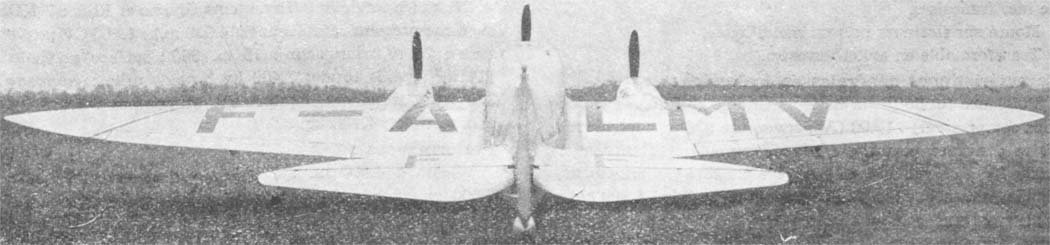
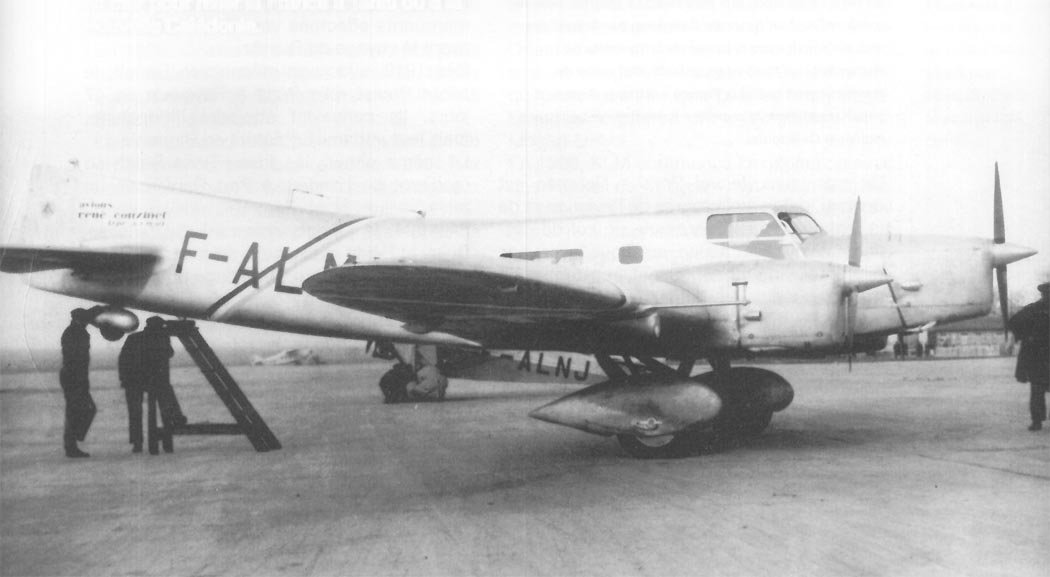
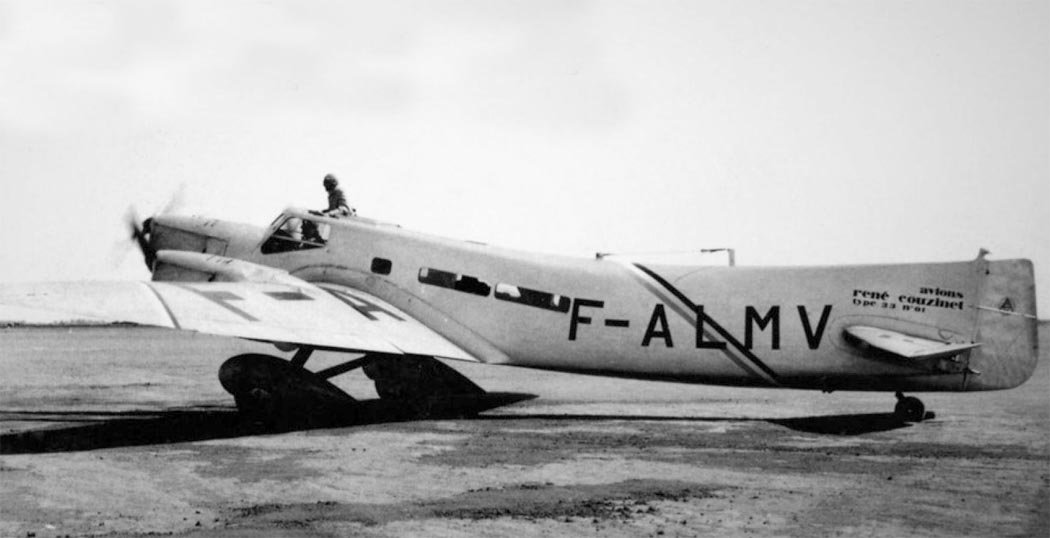
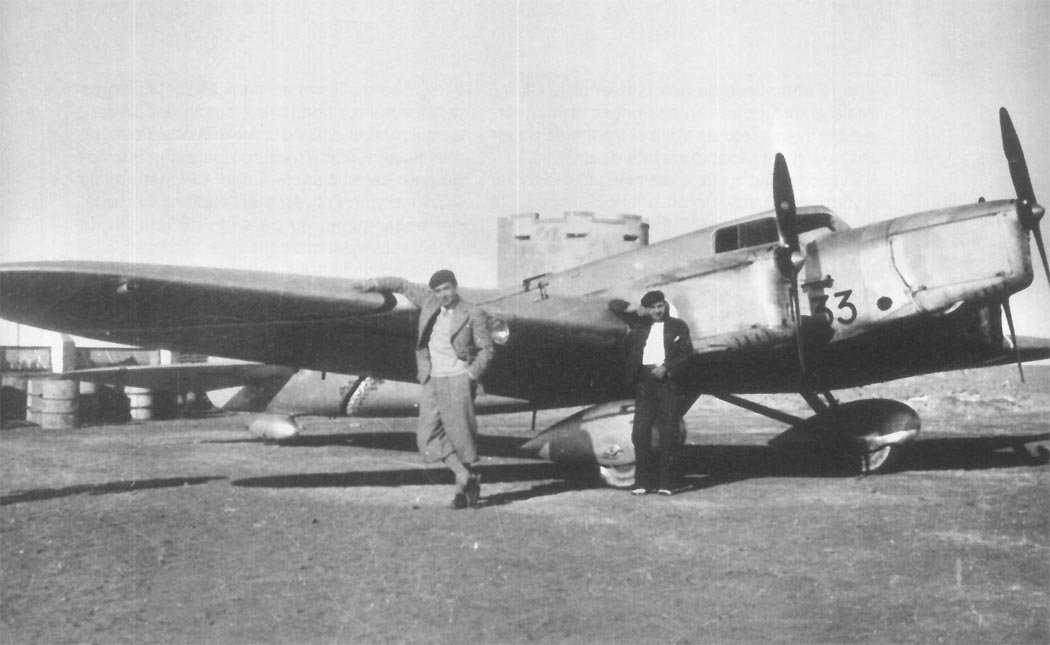
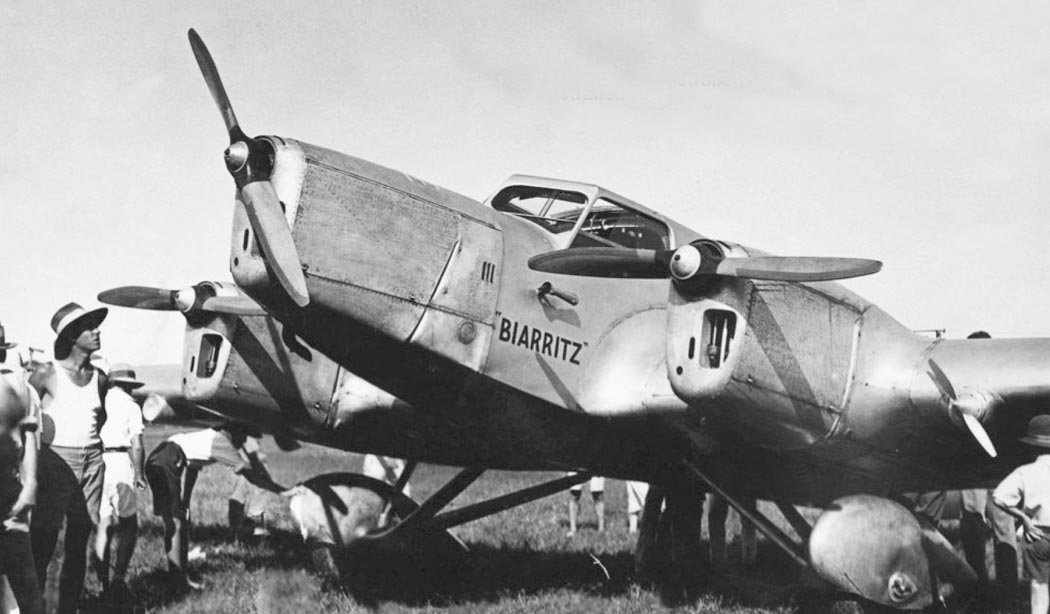
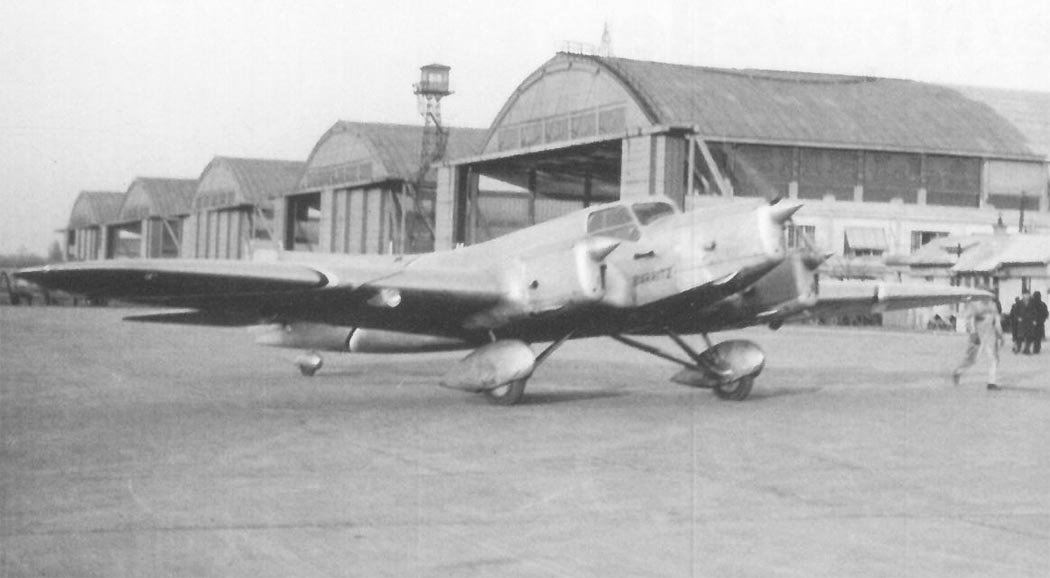
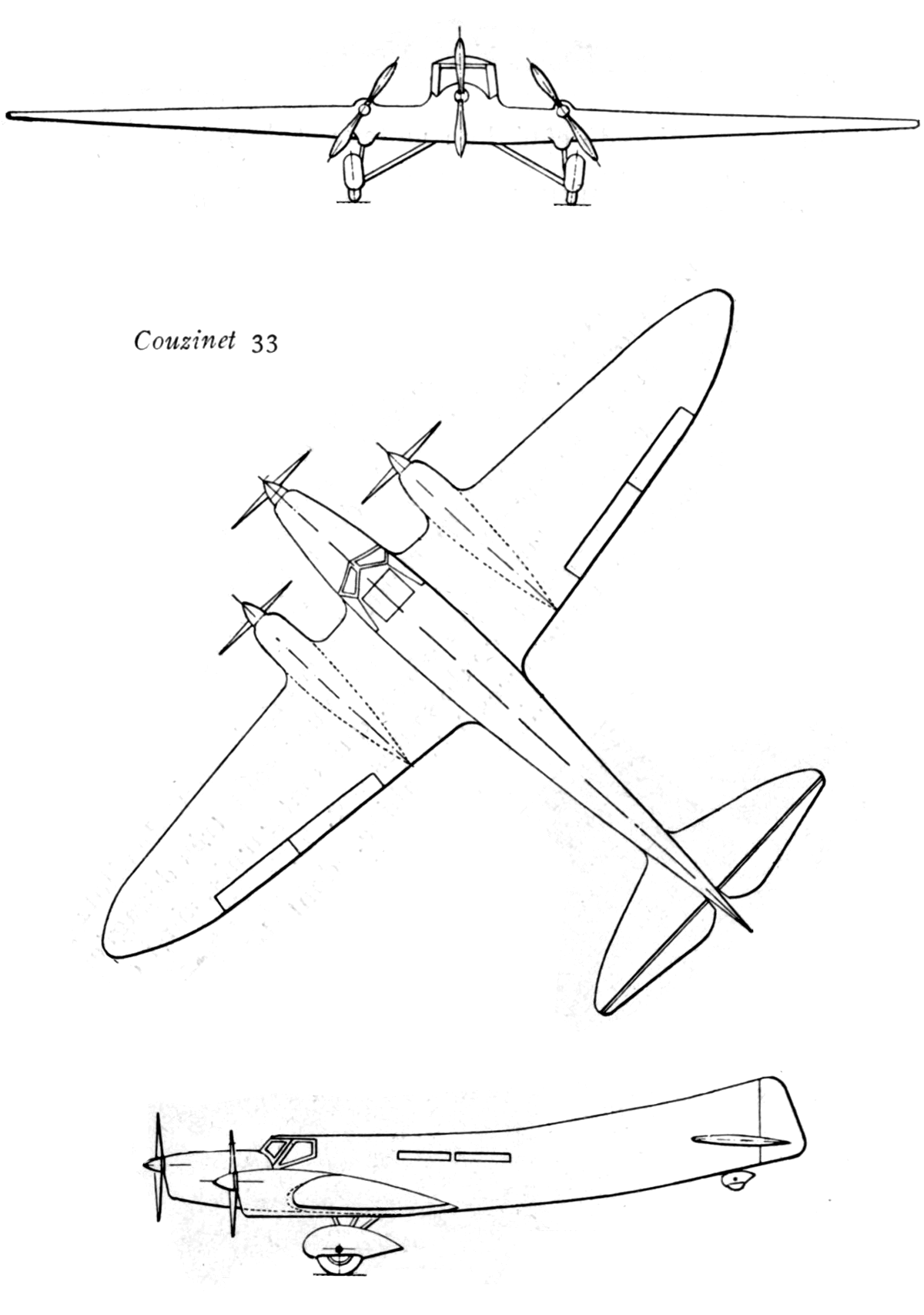
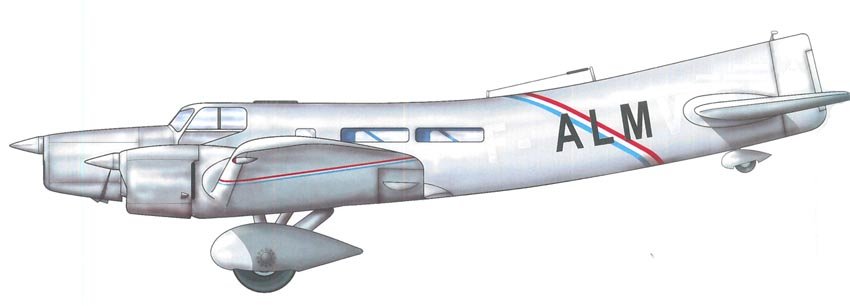
René Couzinet found available facilities at Donnet’s workshop, located on Île de la Jatte. The Couzinet 33, a three-engined postal aircraft built entirely of wood, was also known as “demi Arc-en-Ciel” (half Rainbow) as it was built at half scale. This four-seater aircraft had a wing with an aerodynamic quality of 17. This wing, whose structural framework consisted of two spruce spars, housed ten fuel tanks.
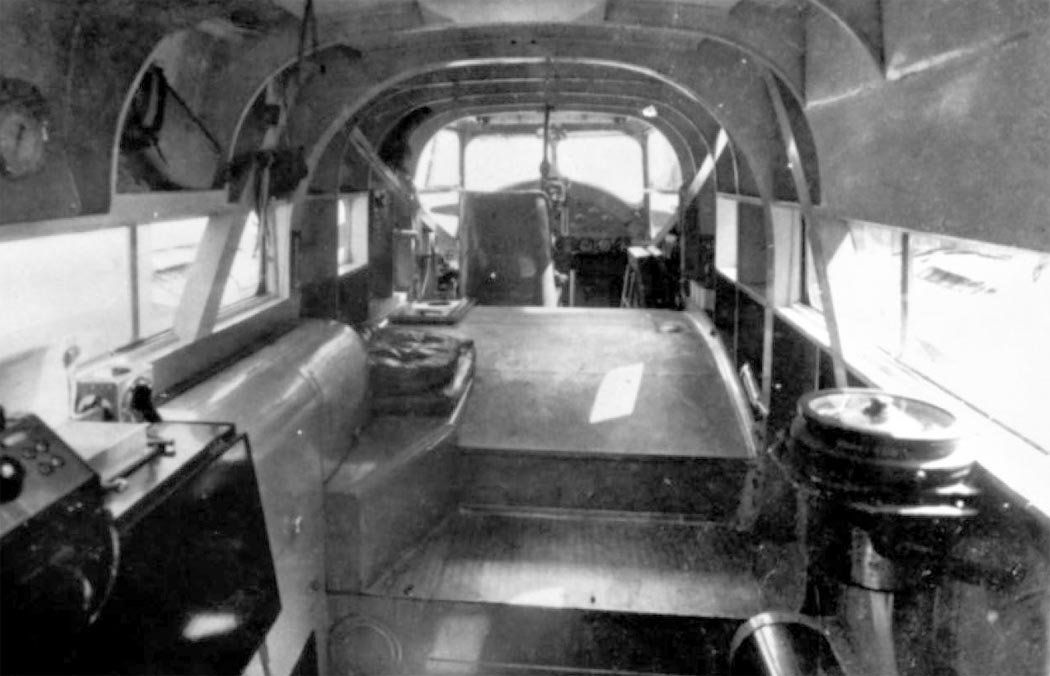
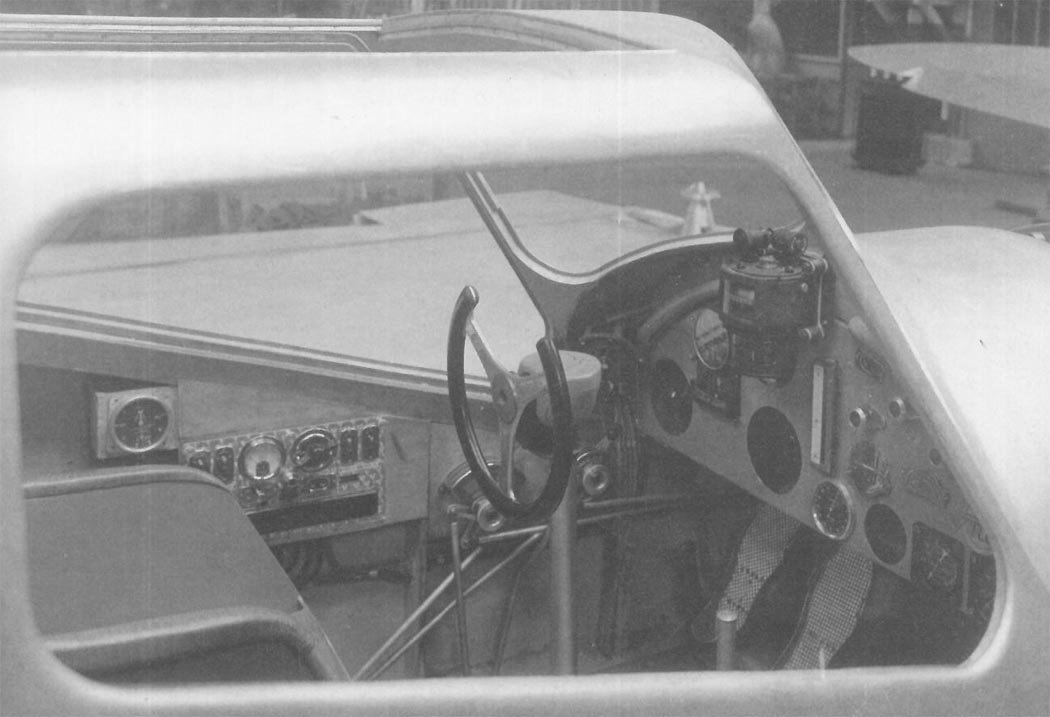
The fuselage was made of wood; its shape was formed by frames, stringers, and a smooth plywood skin. The engine mounts were fabricated from steel tubes welded with an oxy-acetylene torch, and the Charles wheels were equipped with brakes. On October 6, 1931, the aircraft left the Donnet workshop.
The “Ville de Biarritz” Adventure
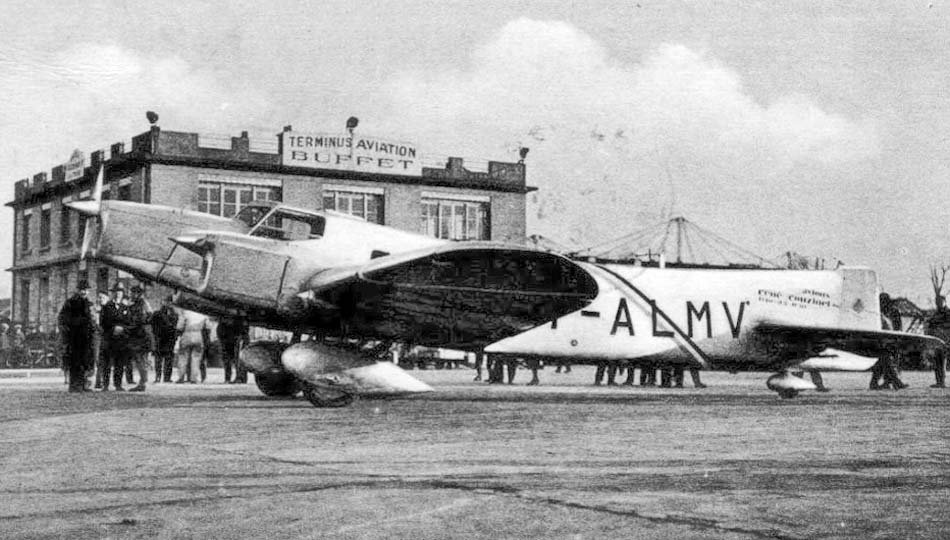
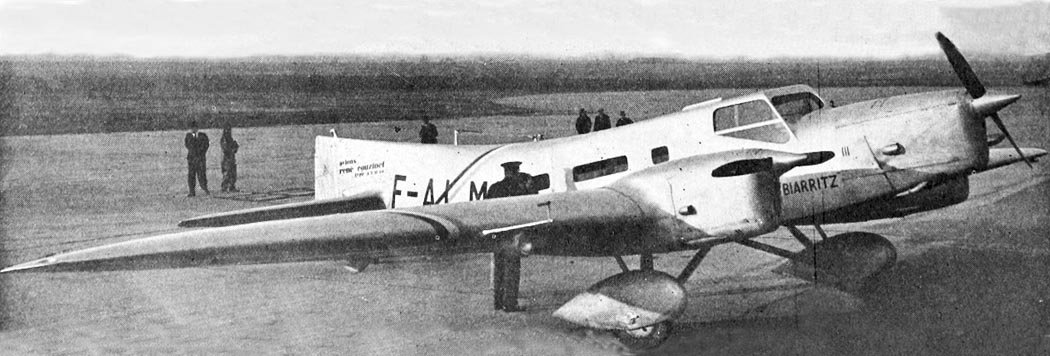
Baron Charles de Verneuilh-Puyrazeau, who wanted to undertake an aviation journey, purchased the Couzinet 33 at the end of 1931 and named it “Ville de Biarritz.” With a three-person crew (pilot de Verneuilh-Puyrazeau, navigator Max Dévé, and mechanic Emile Munch), the aircraft made its first flight from France to New Caledonia between March 6 and April 5, 1932, covering numerous flight segments like Le Bourget to Istres (680 km) and Brisbane to Nouméa (1520 km).
When the “Ville de Biarritz” was landing at Tontouta airfield, New Caledonia, its wingtip struck a tree, and the aircraft hit the ground. The crew was unharmed, but the aircraft was rendered unflyable. The plane was returned to France by ship and fitted with more powerful engines at the Donnet workshop.
In December 1932, the Couzinet 33-02 aircraft was presented at the air show held in Paris’s Grand Palais. In 1933, Baron de Verneuilh-Puyrazeau, who still owned the aircraft, made several flights to North Africa. Tragically, on October 10, 1933, while returning from one such trip, the Couzinet 33-02 encountered dense fog and crashed into a hill near Blaisy-Bas, killing the entire crew.
In 1933, Maurice Rossi, wishing to make a round-the-world flight by plane, asked René Couzinet to create an aircraft with a cruising speed of 300 km/h and a range of 6000 kilometers. Couzinet proposed the Couzinet 150 to Maurice Rossi—a high-speed monoplane with a low-mounted wing and non-retractable landing gear, capable of a maximum theoretical speed of 417 km/h, equipped with a nine-cylinder 575 hp Hispano-Suiza 9V radial engine.
This project was accepted without objection by the STAé, but its financing presented a serious problem. René Couzinet offered an option price that covered only part of the project, while the STAé proposed 200,000 francs with the state retaining the right to acquire the aircraft. Negotiations with Rossi continued for some time, and finally, René Couzinet accepted the terms. However, the matter was closed on August 4, 1933, due to a lack of bank credit. The Société des avions René Couzinet received an order to deliver the Couzinet 150 by the end of 1933. Annoyed by these delays, Rossi turned to the Caudron-Renault aircraft manufacturing company. Then came 1934, and the new Minister of Aviation, General Victor Denain, ended the policy of prototypes.
Technical Specifications
| Modification | Couzinet 33 |
| Wingspan, m | 16.16 |
| Length, m | 11.73 |
| Height, m | 2.75 |
| Wing area, m2 | 34.40 |
| Empty weight | 1600 |
| Maximum takeoff weight | 3500 |
| Engine type | 3 de Havilland Gipsy III Piston engines |
| Power, hp | 3 x 120 |
| Maximum speed, km/h | 260 |
| Cruising speed, km/h | 220 |
| Practical range, km | 4500 |
| Practical ceiling, m | 5500 |
| Crew | 4 |
Image gallery of the Couzinet 33 Biarritz