Nathaniel Puffer’s Vision: From BD-5 to EZ
In 1973, Nathaniel “Nat” Puffer, by then a seasoned individual with a Master’s degree in engineering and specialized aeronautical skills acquired after the war from the University of Minnesota, decided to become a homebuilder. Like many contemporaries and enthusiasts of that era, he purchased a kit for Jim Bede’s BD-5 aircraft and enthusiastically began its construction. However, this initial venture would not end as he hoped.
The fate of the BD-5 saga is well-known, with very few ever getting the chance to fly that super-creation. In 1978, after reading a popular science magazine, Puffer became interested in and built his first Very EZ—a version of Burt Rutan’s aircraft. Everything was good about it, except that his wife had to sit in the back.
He then sought out a started Long EZ project and decided to reconfigure it with two side-by-side front seats. This desire for a more comfortable and social seating arrangement was a critical turning point for Puffer’s future design philosophy.
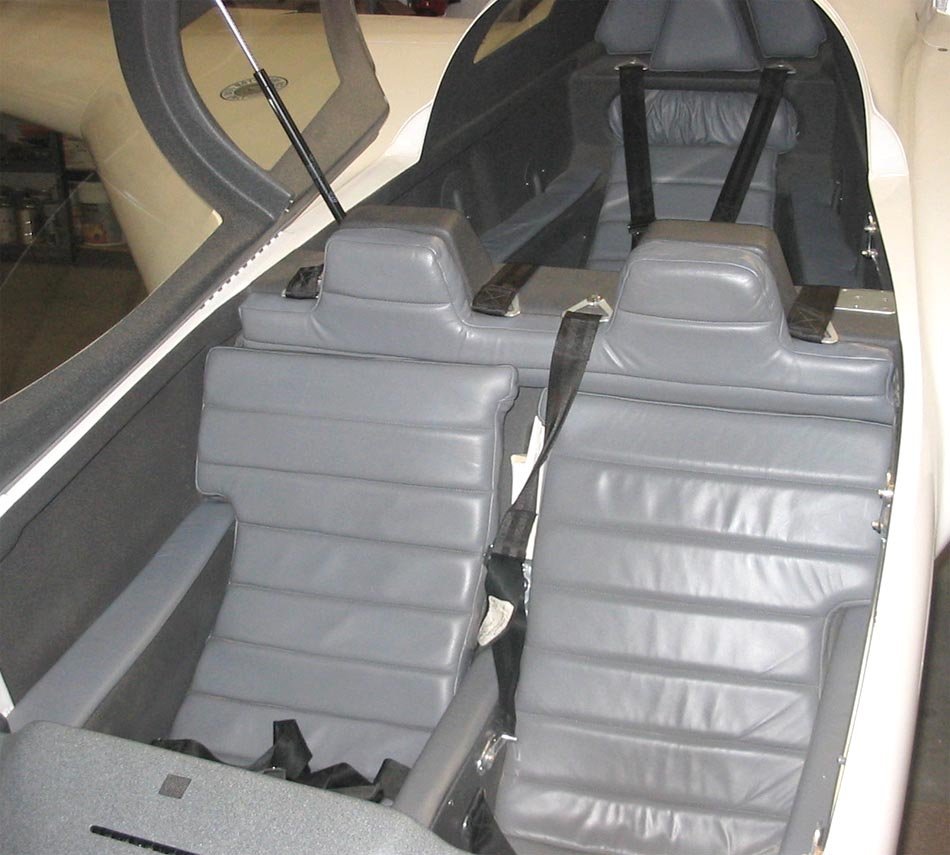
Nat specifically approached Burt Rutan to ask if he had a version with such a seating arrangement, but Burt had not made such attempts. Despite Burt’s skepticism about any modifications to his aircraft, Nat persisted and completed his own version. This prototype featured a wide cabin with two side-by-side front seats and an additional rear seat.
The aircraft was powered by a 120-hp Lycoming O-235-L2C engine. Its fuselage was innovatively constructed by cutting foam with a hot wire, then cladding it with fiberglass and epoxy—a method that remains, arguably, the cheapest and simplest way to create a fuselage even today.
The Birth of the Cozy Aircraft Series
The aircraft’s modification and the fuselage’s expansion by 97 cm (38 inches) necessitated a very meticulous overhaul of virtually everything. This included wall thickness, strengthening the load-bearing internal surface with a longitudinal keel—where control cables and cabin ventilation lines were concealed “from within.” All control systems were duplicated for both sides.
Nat and his wife Shirley debuted their prototype at Oshkosh in 1982. Eventually, word reached Burt Rutan, who reviewed Nat’s development and proposed innovations. To the surprise of many, Rutan ultimately approved them.
An official document exists stating that Burt Rutan did not object to the changes Nathaniel Puffer made to the design of his Long EZ, and authorized the sale of this aircraft and its plans under Burt Rutan’s own license. Thus, the Co-Z company was born (the word “cozy” in English means “comfort” or “snug,” precisely reflecting the goal of creating a side-by-side fuselage variant with an additional seat in the back).
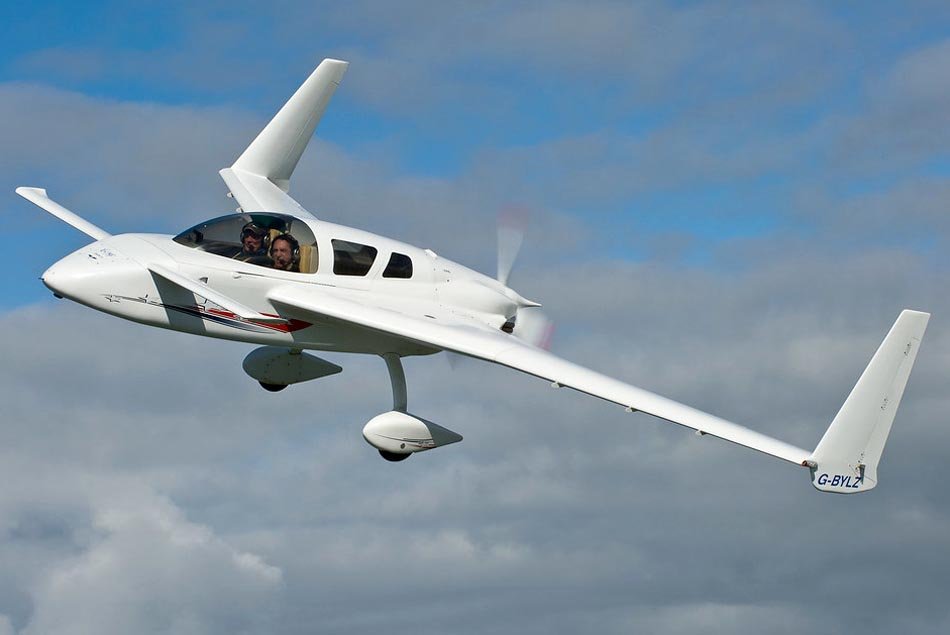
This led to the creation of the first aircraft named Cozy III. Its emergence and significance in the world of canards were further cemented by a philanthropic act in 1992 when Nathaniel donated his No.1 aircraft to the experimental aviation museum in Oshkosh.
Evolution and Enduring Legacy of the Cozy IV
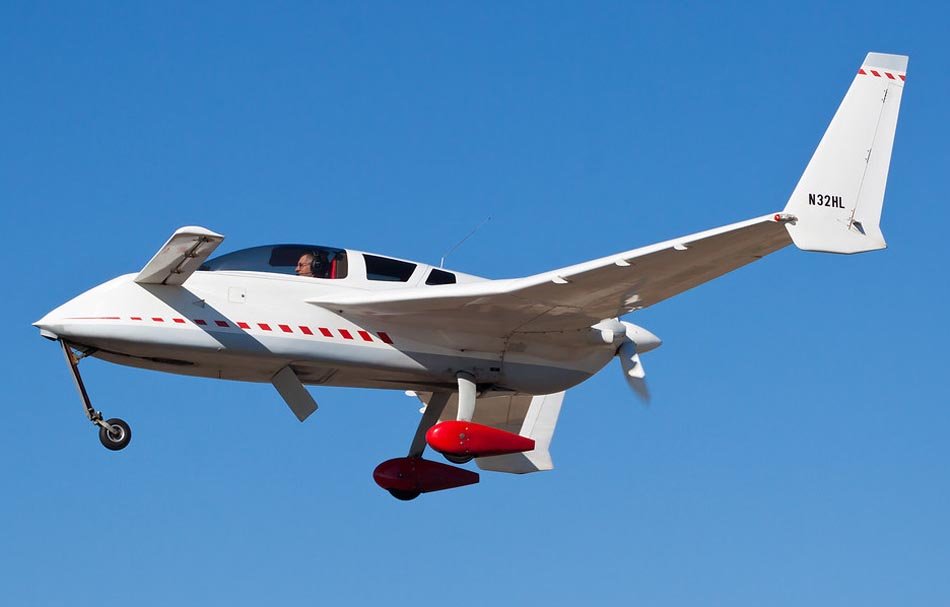
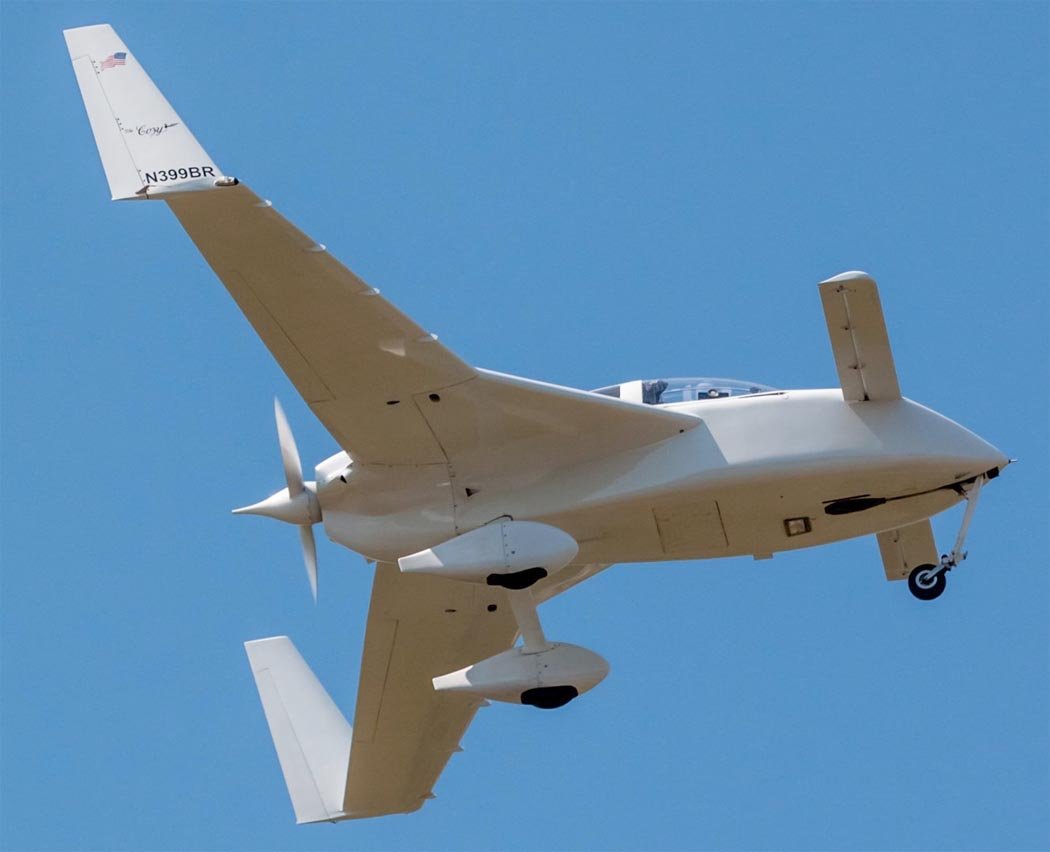
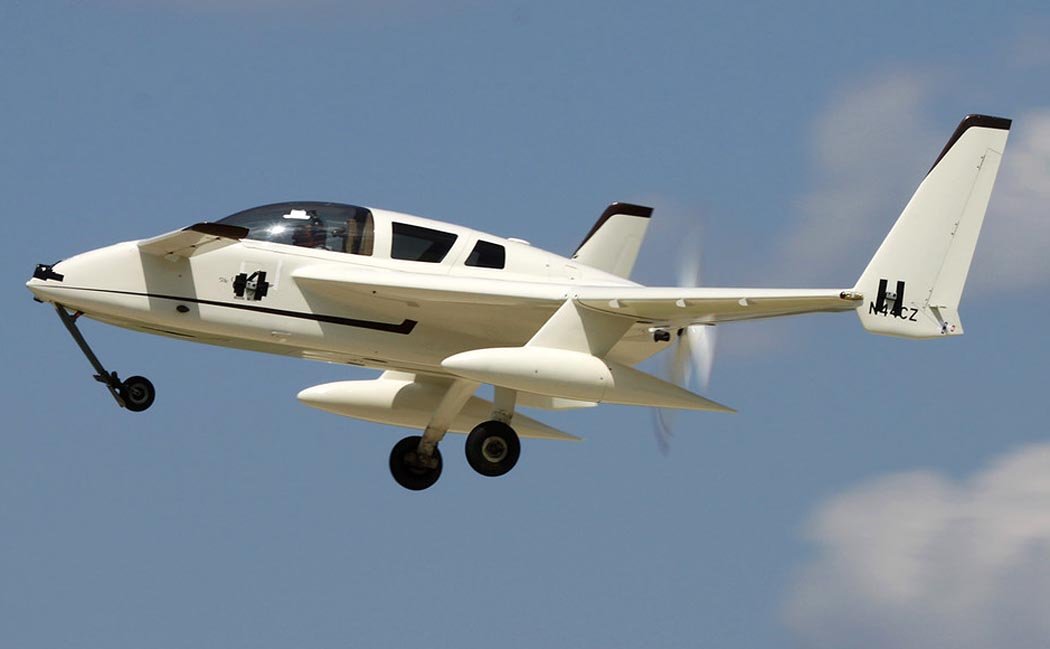
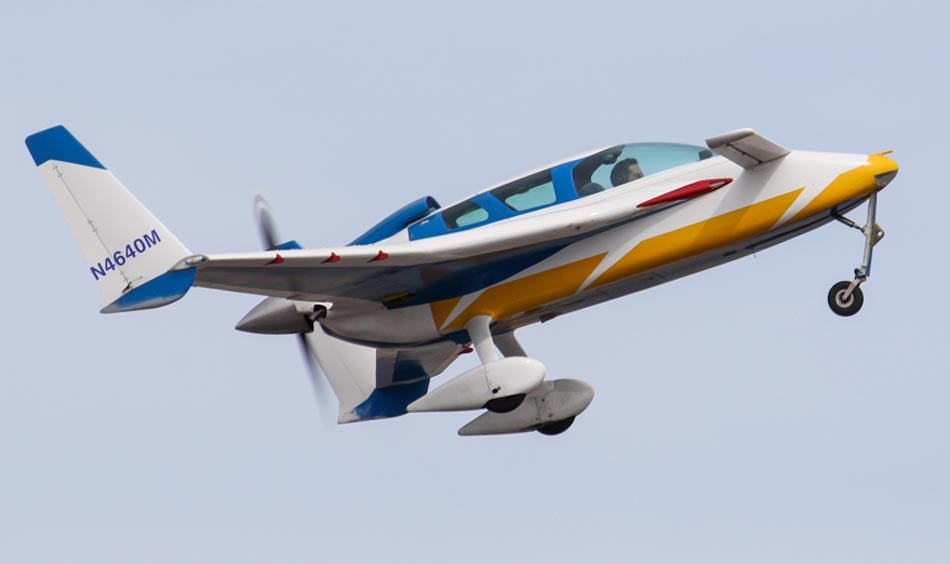
Initially, Cozy aircraft were produced as three-seaters, but from 1988 onwards, the four-seater Cozy IV, powered by a Lycoming O-360 engine, rapidly gained popularity. Notably, even after creating the Mark III, Nat had planned to retire, but the Mark IV’s success changed everything.
The Mark IV became so popular that he had to rewrite all the documentation and put his plans for a peaceful retirement on hold. By 2015, a total of 350 Cozy IV aircraft had been built, a true testament to its innovative design and enduring appeal.
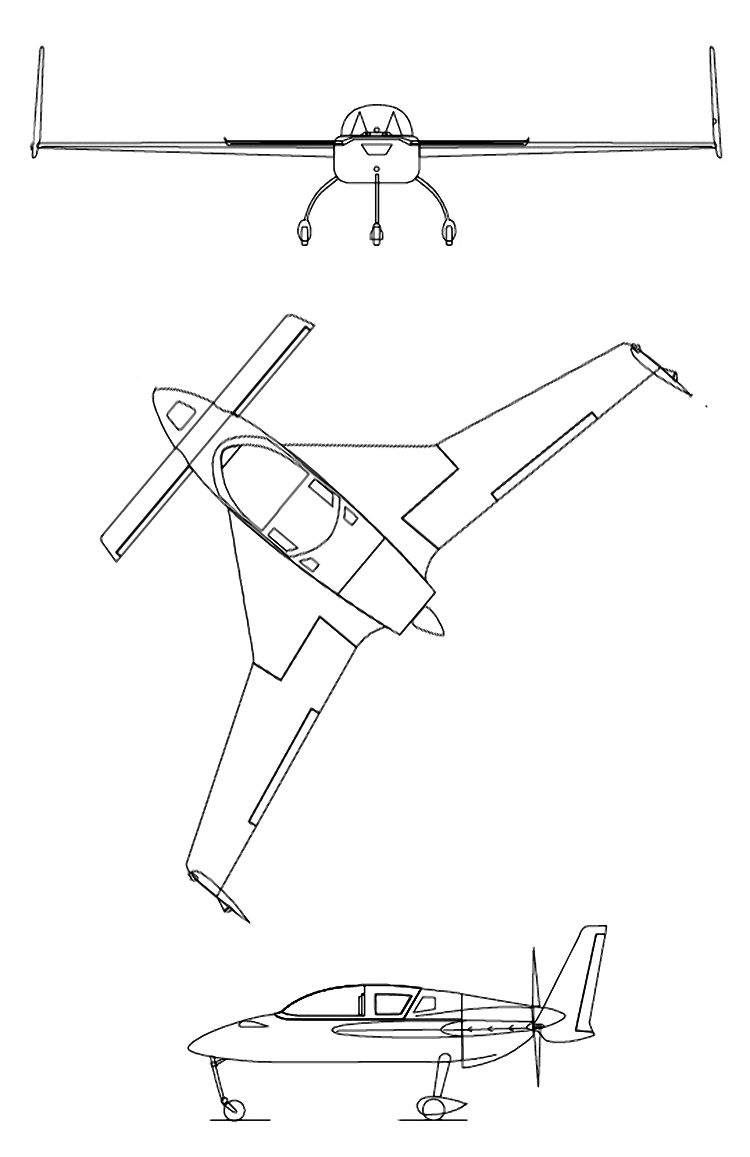
What was the intriguing turn that led Nat to once again become a leader of Co-Z Development Company? Firstly, the compact design of the entire aircraft, despite its relatively small engine, was a significant draw. A major factor was also that the aircraft was sold as “plan-building”—not as a kit, but as a simply documented, step-by-step process.
Although kit-builders often enjoy the construction more than the flying, in this case, the Cozy was an exception, truly standing out for its excellent flight characteristics. This accessibility and performance propelled its popularity among aviation enthusiasts.
As of today, all rights to the Cozy III and IV aircraft are held by the well-known online company Aircraft Spruce & Specialty Co. This company purchased all rights to the design in 2005 from Ken Brock Manufacturing Co. of Stanton, CA. In 2015, the cost of a set of blueprints was only 500 US dollars.
Subsequently, several more modifications were created based on the Cozy aircraft. These included the Cozy IV-RG with retractable landing gear, the Twin Cozy with two 100-hp Suzuki Swift motorcycle engines, and the Kinda Cozy RG, a Cozy variant with a Subaru EG33 (230 hp) automotive engine. Other notable versions were the Cozyjet, initially with a Mazda 13B engine and later changed to a GE T58-8F turbofan, and the Fish Eagle, a South African adaptation of the Cozy IV using a V8 automotive engine.
The innovation continued, culminating in the AURA (Autonomous Unmanned Reconnaissance Aircraft) UAV powered by a Lycoming O-235 engine. This drone was a modification of the Cozy IV carried out by Aeromet, further showcasing the enduring versatility and potential of Puffer’s original design.
Image and diagram gallery of the Cozy III(IV)