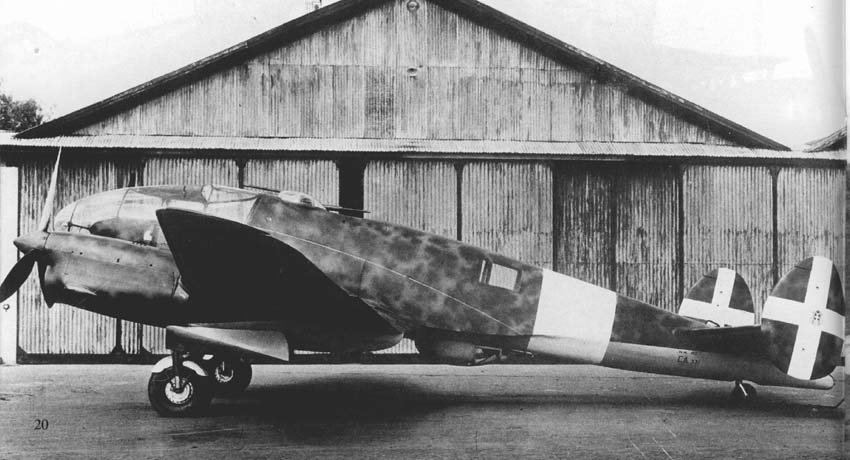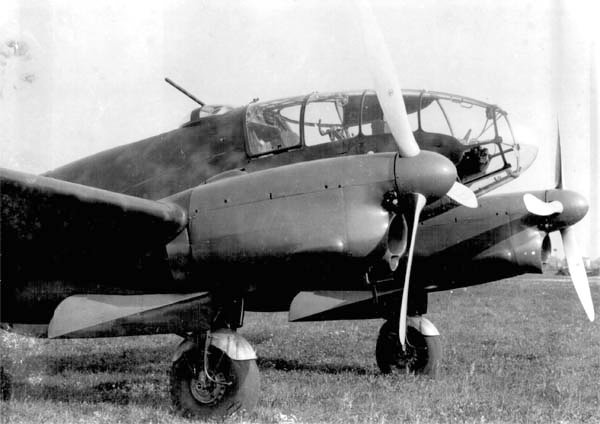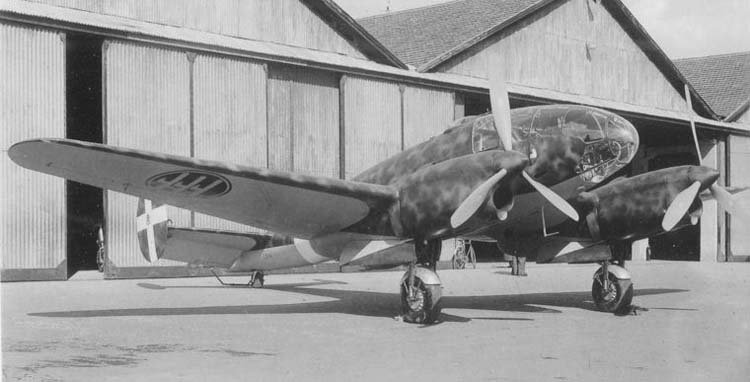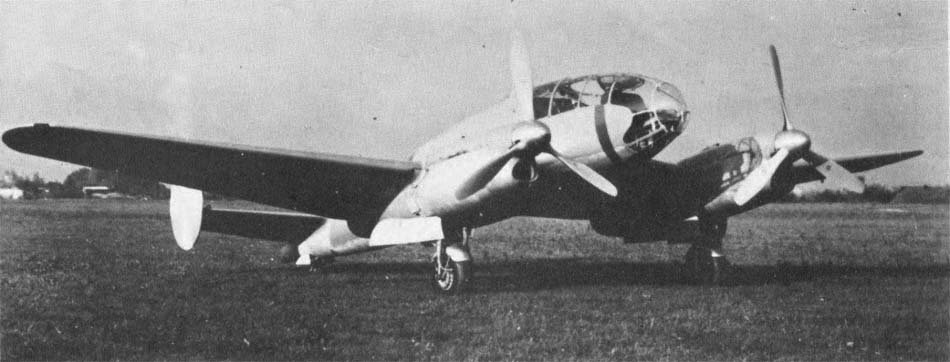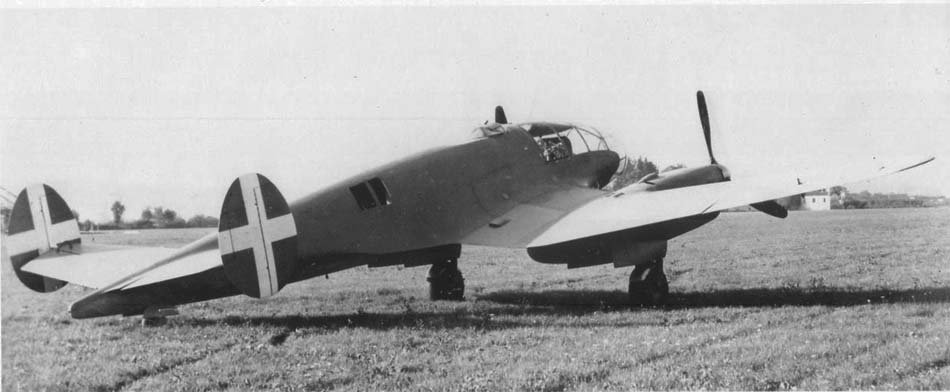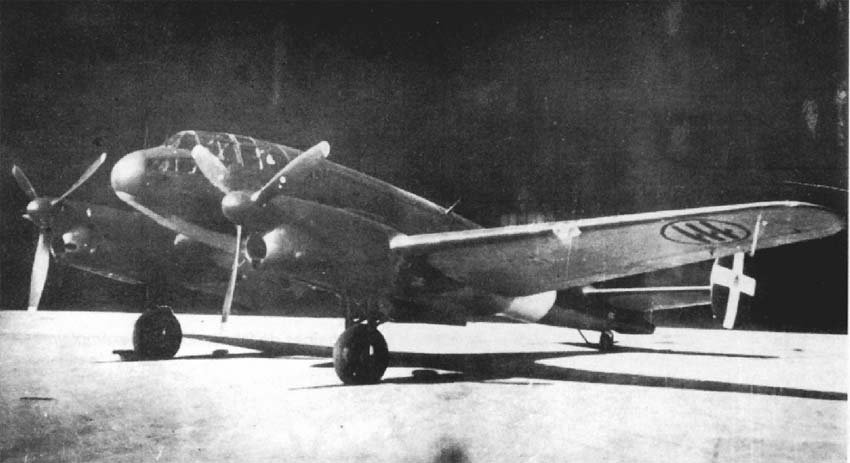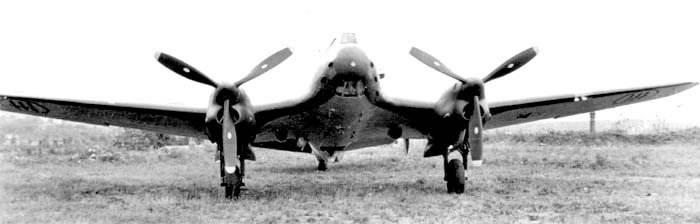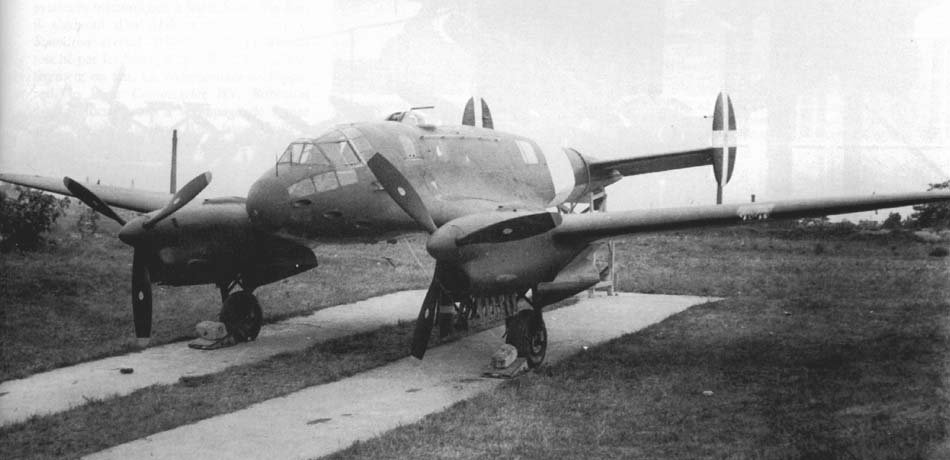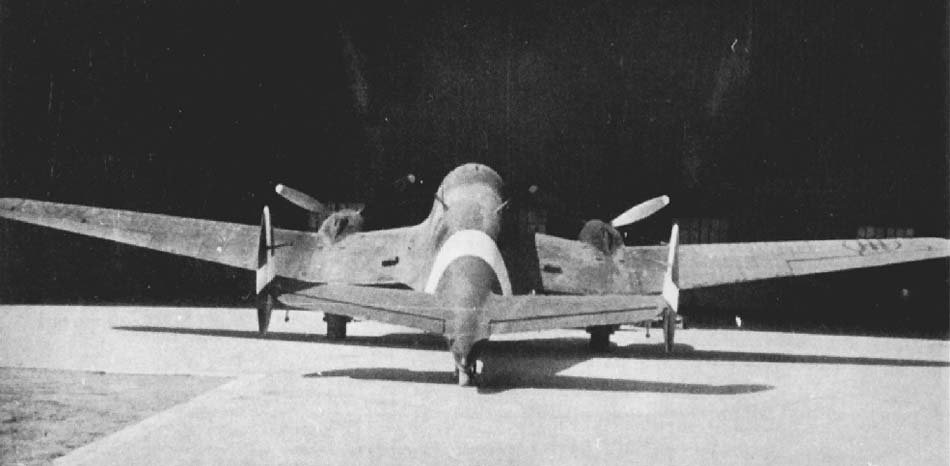
The Ca.331 Raffica was a multi-role fighter developed by the Italian firm Caproni Aeronautica Bergamasca. Work on the aircraft began in 1939 under designer Cesare Pallavicino. The first prototype (MM.427) was ready by the summer of 1940, making its maiden flight on August 31st of that same year.
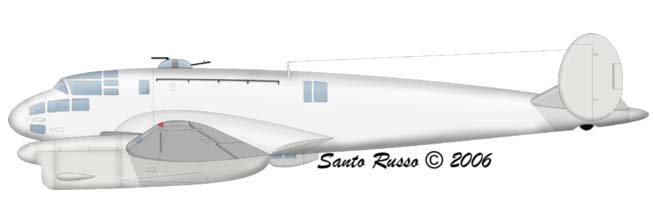
This initial aircraft was produced as a four-seat light reconnaissance bomber, designated Ca.331A. It featured a streamlined, transparent nose similar to the Heinkel He 111. Its armament included three heavy SAFAT machine guns (two in the wing roots, one in an upper turret) and a 7.7 mm machine gun in a retractable lower mount. It was capable of carrying up to 1000 kg of bombs.
Development and Initial Trials
In the spring of 1941, the aircraft was submitted for operational trials, where it demonstrated high flight and combat characteristics. However, the Regia Aeronautica rejected its serial production, citing its “too unusual design.” Another significant drawback for Italian command was its extensive use of duralumin, a material primarily supplied by Germany.
The aircraft was subsequently returned to the Caproni factory and then transferred to the Luftwaffe’s test center in Rechlin. The Luftwaffe highly valued the aircraft’s flight qualities and planned to order 1,000 units in a combat-trainer variant with dual controls, designated Ca.331G.
Regia Aeronautica, Luftwaffe, and the Ca.331B
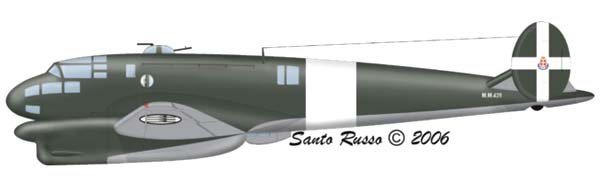
Following the first prototype, a second (MM.428) was built at the request of the Regia Aeronautica. This version, designated Ca.331B, was a night fighter featuring 825 hp Delta RC.40 engines, a stepped cockpit, a nose-mounted battery of six SAFAT guns, and defensive armament of two similar guns in upper and lower mounts.
After the start of Allied air raids in 1942, the Regia Aeronautica planned to order 1,000 production Ca.331B aircraft. However, this order remained on paper, and in practice, only one additional prototype was built. The first Ca.331B prototype, fully armed, was tested in August 1943.
The Ca.331B was also intended for use as a fighter-bomber. For this role, a bomb bay was integrated, capable of holding bombs totaling up to 1000 kg. Alternatively, with an empty bomb bay, it could carry a single 500 kg bomb and a 616-liter drop tank.
Only two prototypes were physically realized, falling into German hands after the occupation of northern Italy. These twin-engine fighters were tested with various offensive armament configurations. The Ca.331B flew with a pair of 12.7 mm machine guns and four 20 mm Mauser cannons, or with six Ikaria cannons of the same caliber in a special ventral container.
Plans also included an assault version with a 37 mm cannon and FIAT RA-1050 RC.58 “Tifone” engines (a licensed version of the German Daimler-Benz DB 605A-1), and a bomber variant capable of carrying a one-ton high-explosive bomb. An additional 516-liter fuel tank could replace ammunition in the internal bay, and two 100 kg bombs or fuel tanks could be attached under the wings.
The planned maximum speed for this aircraft was 644 km/h. At the time of Italy’s surrender, production work at the Caproni Bergamaschi factories in Ponte San Pietro was in full swing, with an entire stadium even rented for storing finished parts. The completed prototypes were transported to Germany, where their trace was lost.
Technical Specifications and Armament
Technical Description (Ca.331B Night Fighter):
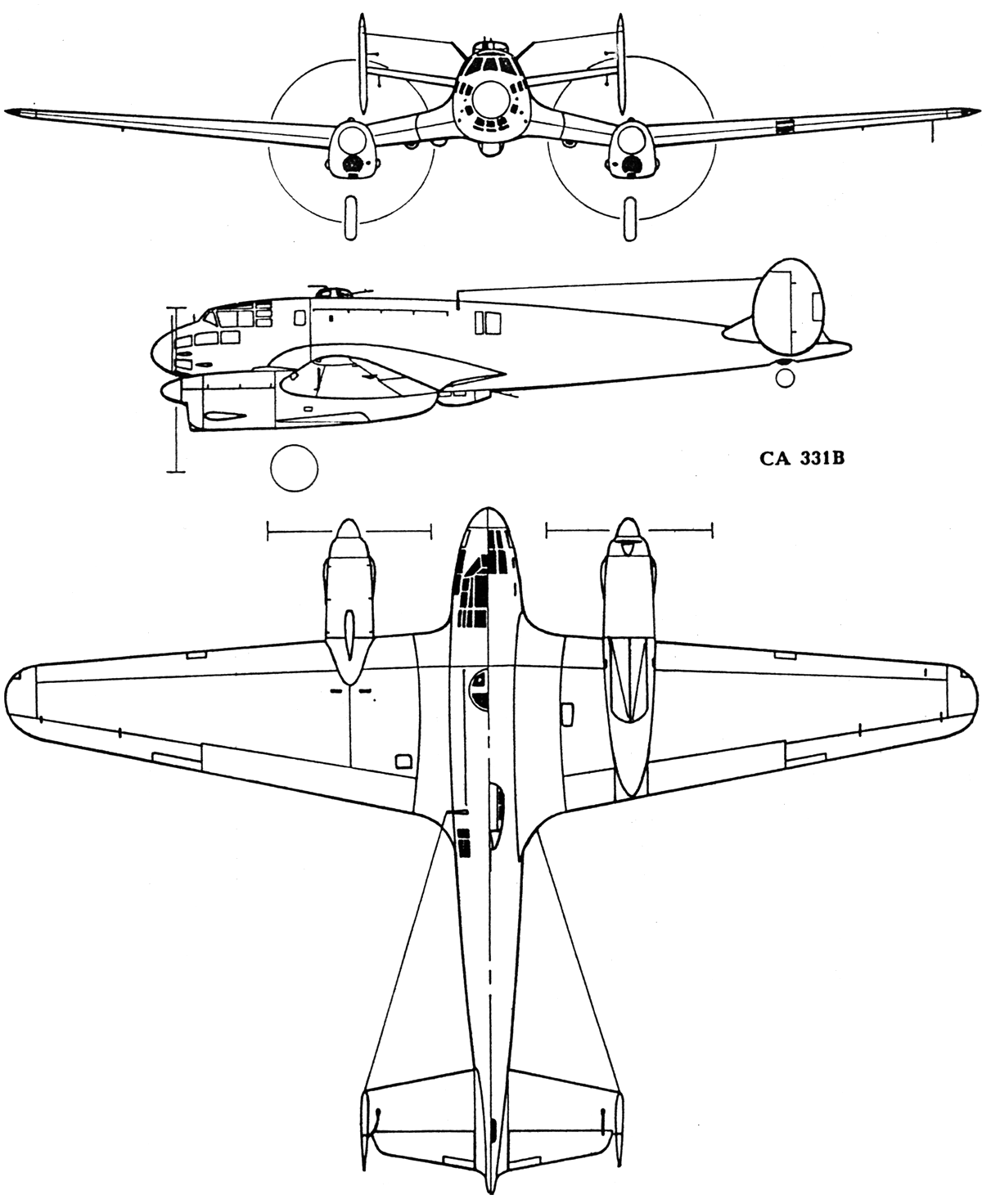
The Ca.331B was an all-metal, twin-engine, three-seat low-wing monoplane with an “inverted gull” wing. The fuselage was a monocoque structure with a stressed skin. Its metallic box-spar wing had a variable profile and a stressed skin.
The landing gear retracted backward into the engine nacelles, with manual control for electrical or mechanical emergency systems. The tail wheel was steerable and retractable. The empennage was twin-tailed and all-metal.
The pilot’s and radio operator/gunner’s cockpits were armored, and the aircraft was equipped with transceiving radio equipment. Standard instrumentation was provided for flight parameters and engine control. Fuel tanks included two main tanks in the wings and two auxiliary tanks in the fuselage.
Engines were fitted with metal three-bladed Piaggio propellers with in-flight variable pitch. Armament consisted of six 12.7 mm Breda-SAFAT machine guns: four in the nose and one in each wing root, with 350 rounds per gun. A defensive 12.7 mm Breda-SAFAT machine gun for tail protection was mounted in a Caproni-Lanciani Delta turret with 500 rounds. A fuselage compartment was included for an auxiliary tank or bombs, along with four pylons for external loads.
Technical Specifications
| Modification | Ca.331B |
| Wingspan, m | 16.40 |
| Length, m | 11.74 |
| Height, m | 3.18 |
| Wing area, m2 | 38.50 |
| Empty weight | 4790 |
| Normal takeoff weight | 6850 |
| Engine type | 2 Piston engine Isotta-Fraschini Delta RC.40 |
| Power, hp | 2 x 825 |
| Max speed at altitude, km/h | 560 |
| Max speed at sea level, km/h | 410 |
| Cruising speed, km/h | 450 |
| Ferry range, km | 1810 |
| Practical range, km | 1580 |
| Rate of climb, m/min | 420 |
| Service ceiling, m | 8100 |
| Crew, crew members | 3 |
| Armament | First variant: eight 12.7-mm Breda-SAFAT machine guns. Second variant: four 20-mm MG 151/20 or Ikaria cannons and two 12.7-mm Breda-SAFAT machine guns. Bomb load: up to 1000 kg in the bomb bay or up to 500 kg under the fuselage. |
Image gallery of the Ca.331 Raffica