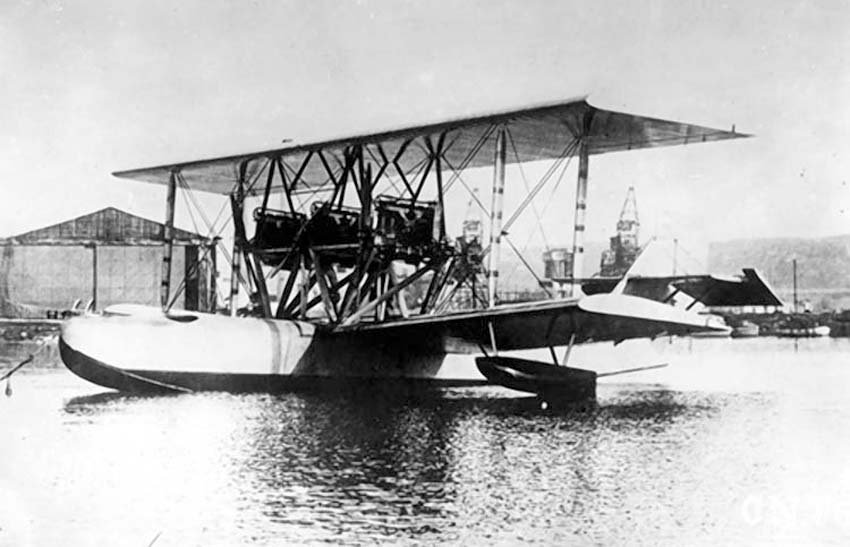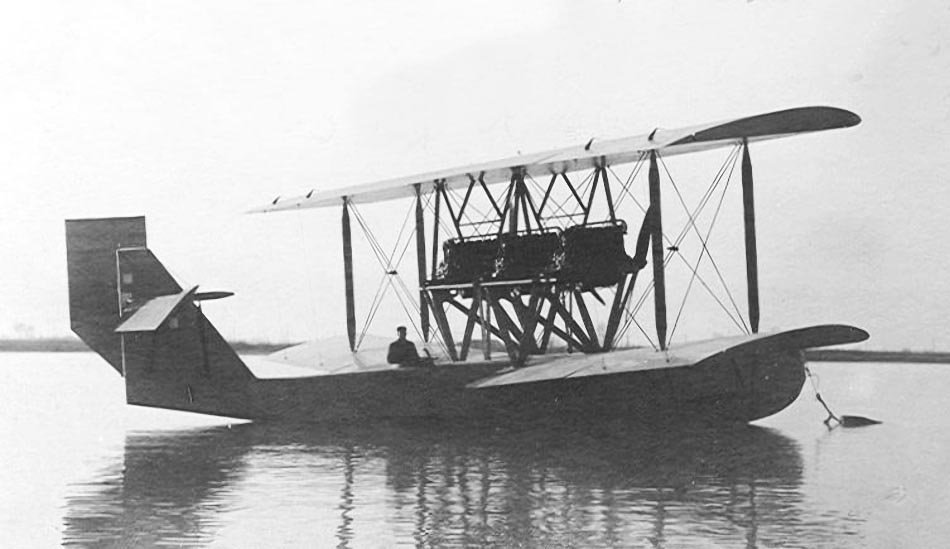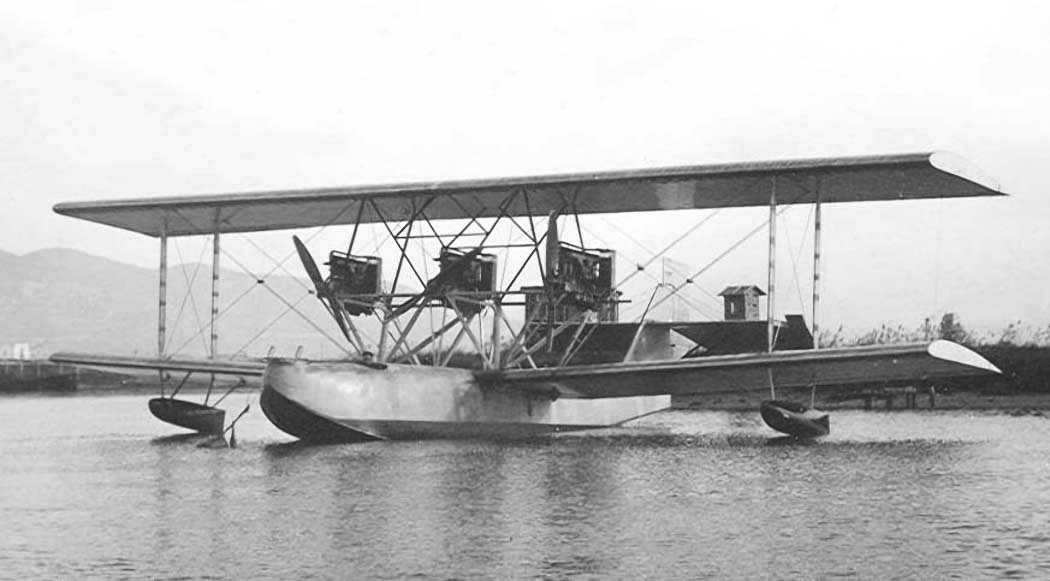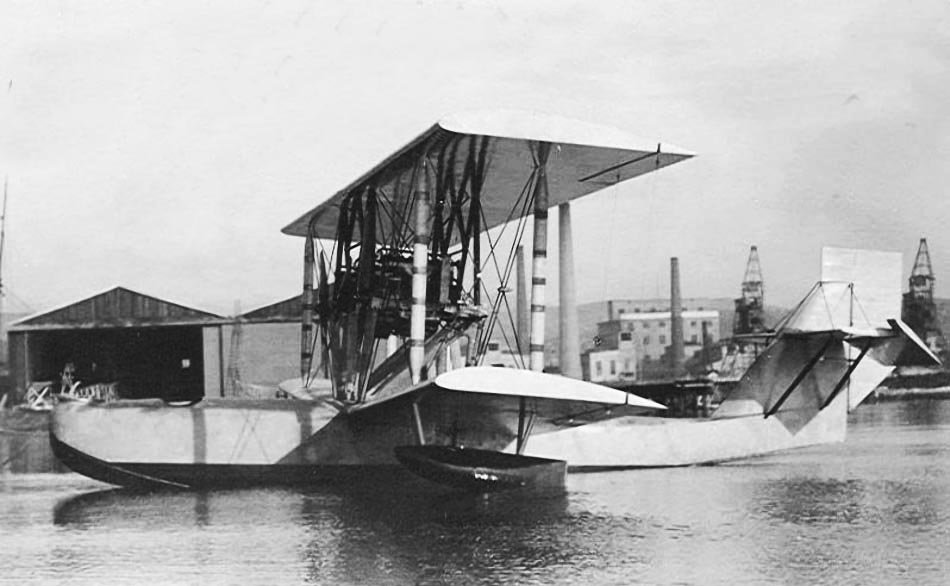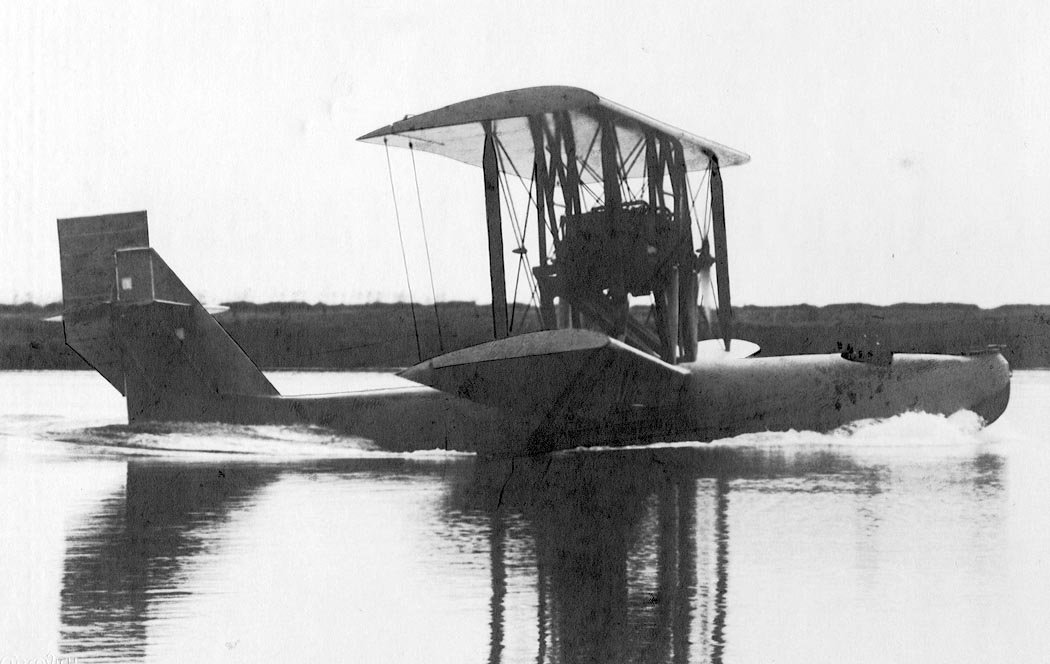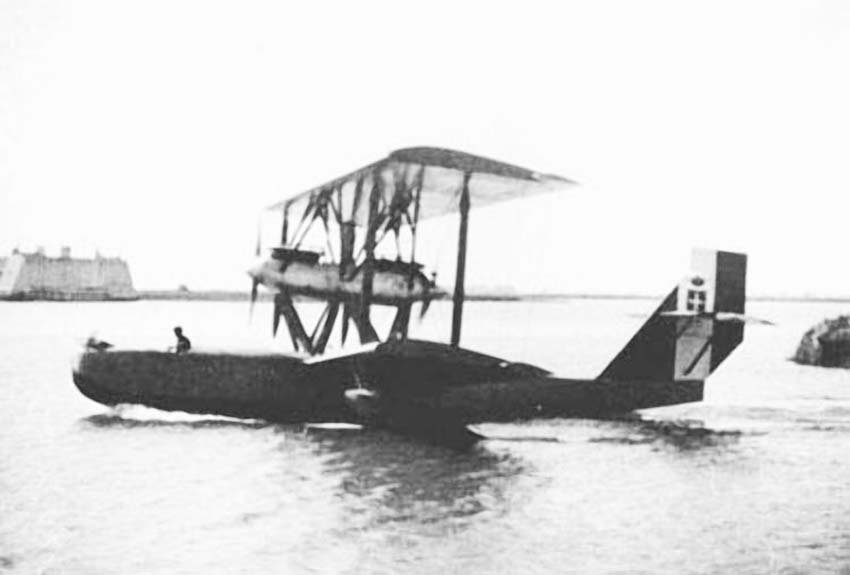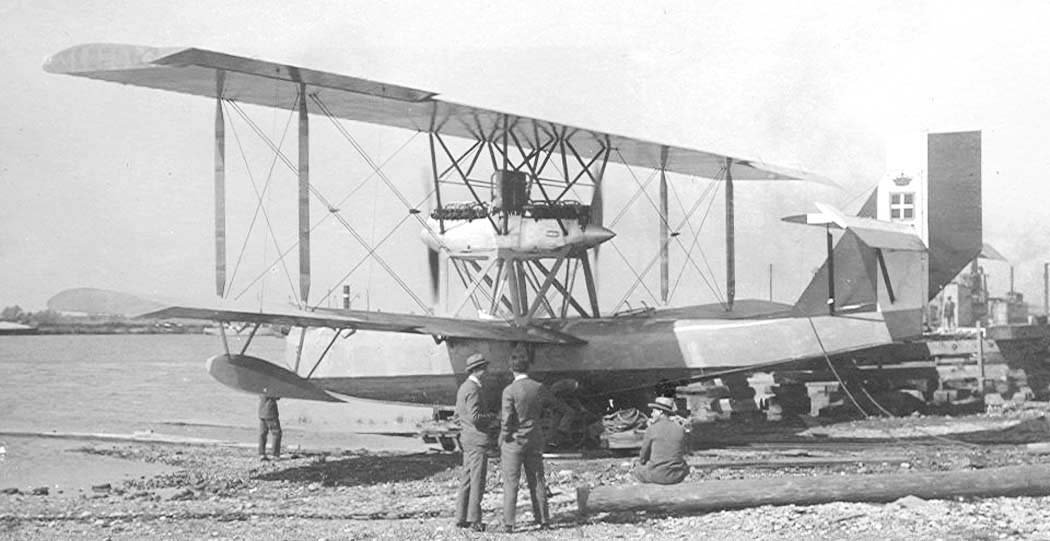
In 1923, the Italian Ministry of Aeronautics announced a competition for the creation of a multi-engine patrol flying boat. A similar project began to be developed by Giovanni Pegna for the Piaggio company. However, the Piaggio P.4 flying boat was never built, as the company’s management considered the financial costs of its construction too high.
The unrealized project was acquired by the newly formed Cantieri Navali Triestini (CNT). Engineer Raffaele Conflenti partially refined the boat’s design, slightly reducing its size and mass by eliminating the internal bomb bay. As a result, in November 1924, the prototype of the CNT 6 (CNT CS.6) flying boat took to the skies.
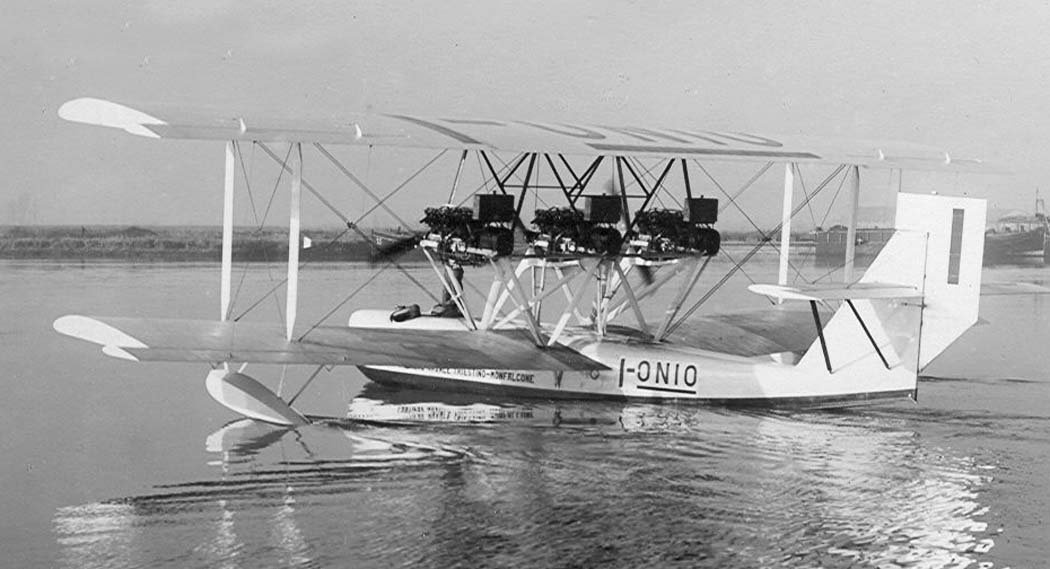
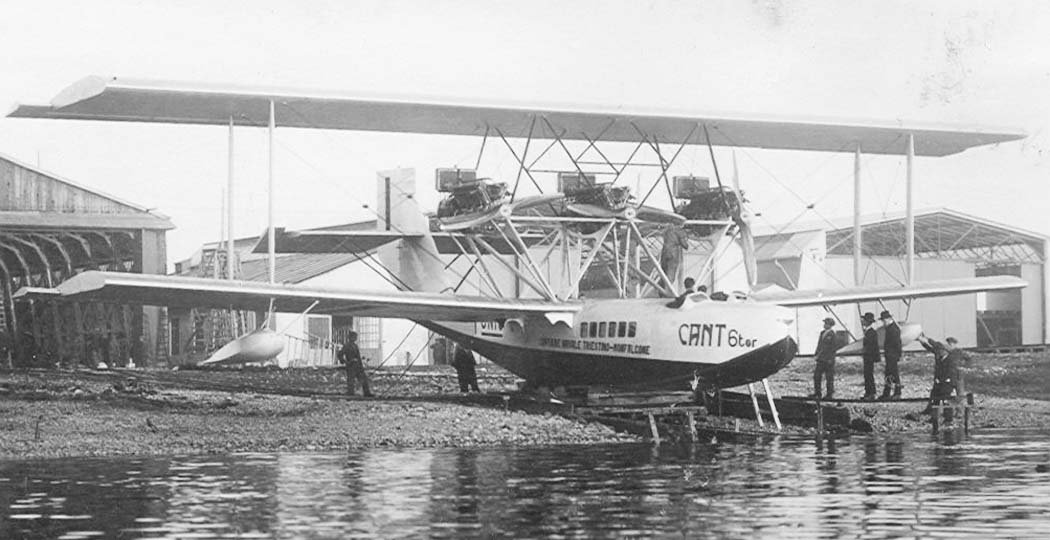
This was a three-seater single-strut biplane, equipped with three twelve-cylinder Lorraine-Dietrich 12Db engines, each with a power of 400 hp (294 kW). Its armament consisted of two 7.7-mm Lewis machine guns, and either one torpedo or light bombs on a hardpoint under the right wing.
Development and Military Service
The CNT 6 participated in comparative trials with the Macchi M.24, during which both aircraft were deemed suitable for operation. A contract was signed for the production of 9 examples of the flying boat, three of which were for reserve.
The CNT 6 patrol flying boats were delivered in 1926 to the 191 Squadriglia of the 86 Gruppo in Brindisi. All of them were used until 1929. Although there were plans to convert the boats into search and rescue aircraft after decommissioning, these plans were later abandoned.
Variants and Civilian Use
In 1925, a single example (MM.45035) of the CNT 6bis modification was built, featuring two engines. Despite improved aerodynamics and reduced takeoff weight, the powerplant’s output was clearly insufficient for normal operation. An attempt to install two 500-hp Isotta-Fraschini Asso 500 engines also did not help, and eventually, the 6bis was converted back to a three-engine configuration.
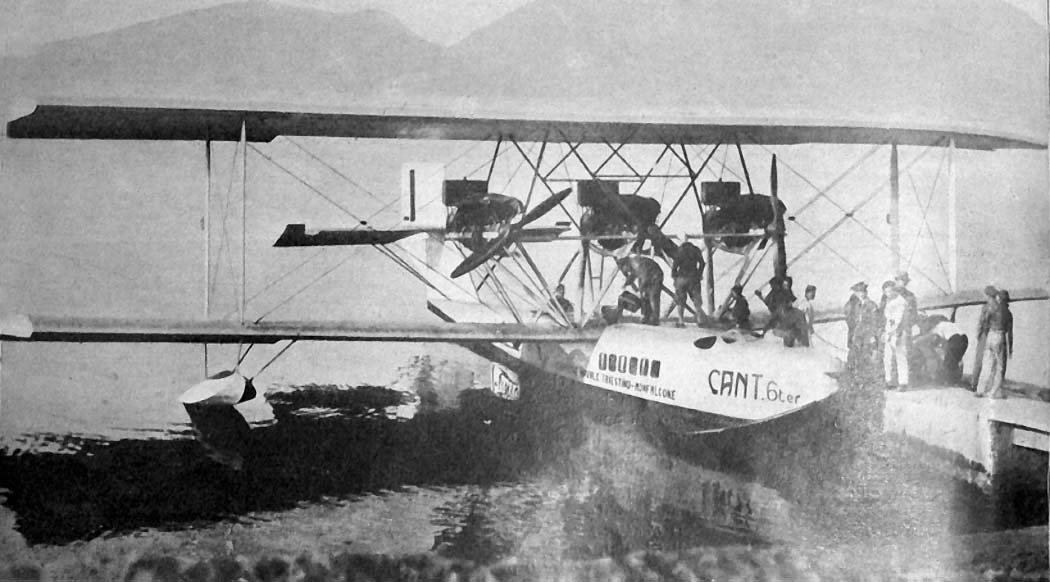
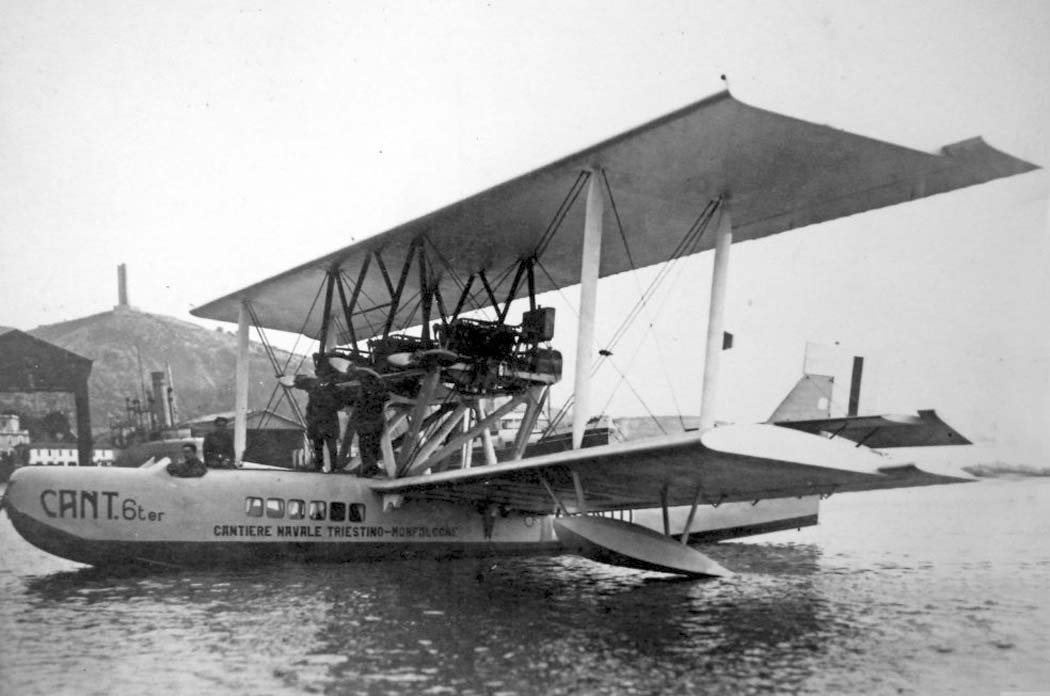
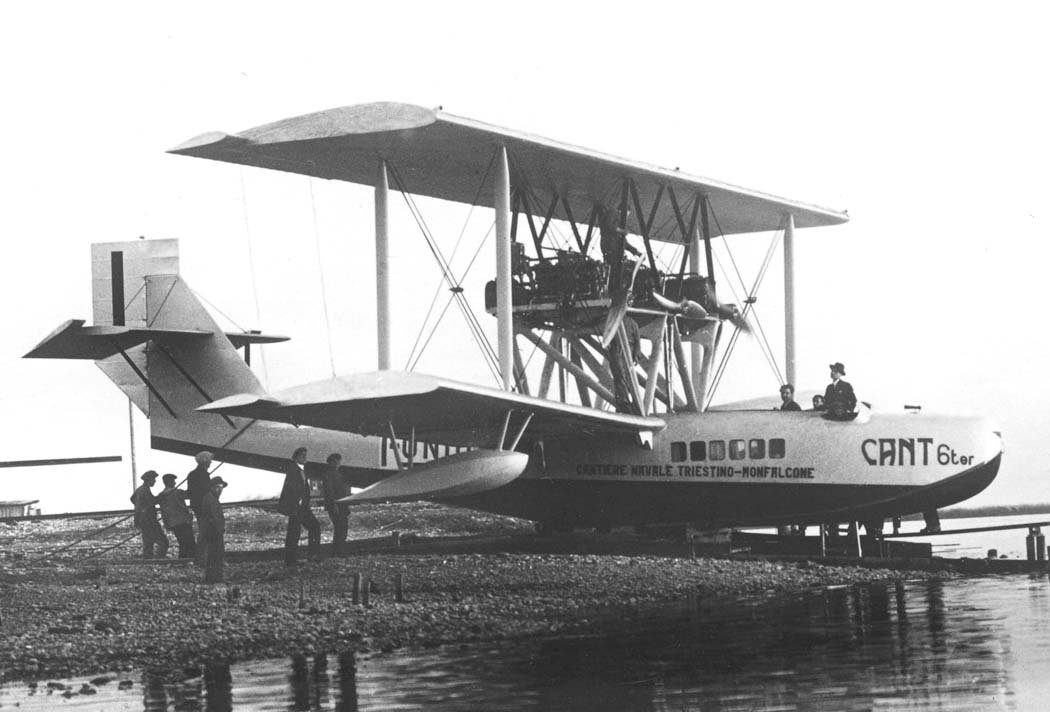
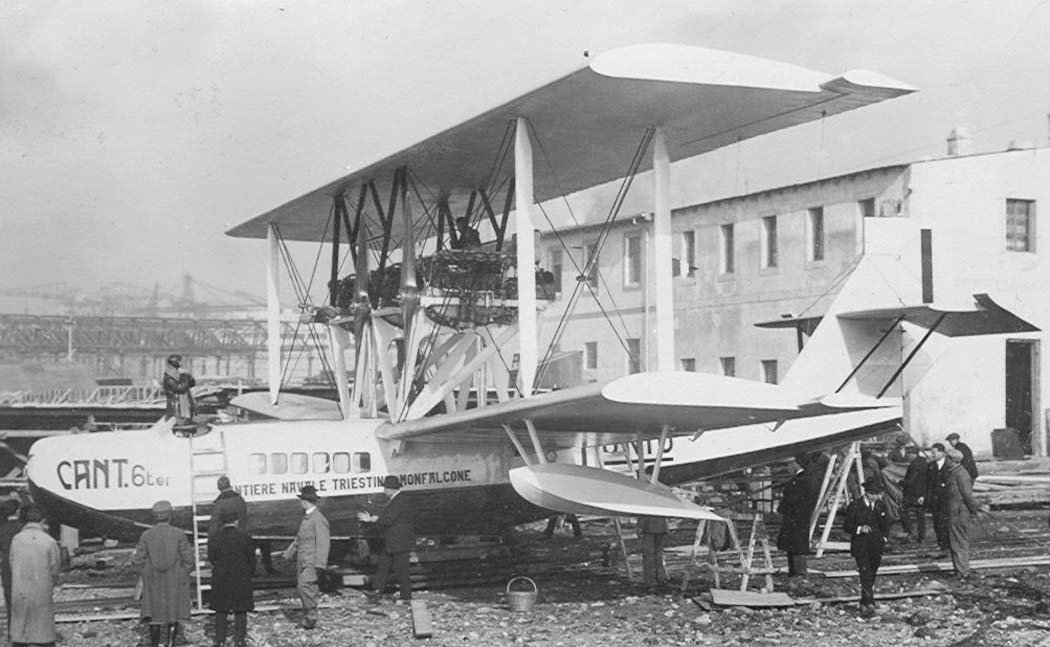
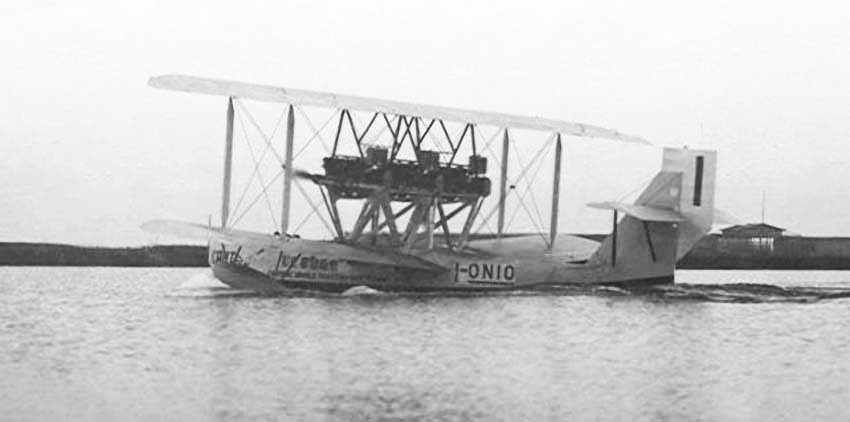
Another version of the aircraft was the CNT 6ter transport flying boat, built for the airline Società Italiana Servizi Aerei (SISA). Unlike the patrol version, the civilian variant featured an enclosed passenger cabin for 11 passengers.
Construction of the 6ter was completed in late 1925, and on January 24 of the following year, it entered service with the registration number I-ONIO. However, the aircraft was practically not used for its primary role of passenger transport.
Initially, it was used by SISA as a trainer, and from March 1926, for mail transport on the Geneva – Ostia – Palermo route. In the summer of the same year, the CNT 6ter was used for aerial photography for the National Institute of Aerophotogrammetry.
On August 10, 1926, during a routine flight, the flying boat made an emergency landing, which caused its complete destruction. In 1930, after the company changed its name to Cantieri Aeronautici e Navali Triestini (CANT), the designation CNT 6 was changed to CANT 6.
Technical Specifications
| Engine type | 3 Piston engine Lorraine-Dietrich 12Db |
| Power, hp | 3 x 400 |
Image gallery of the CANT 6