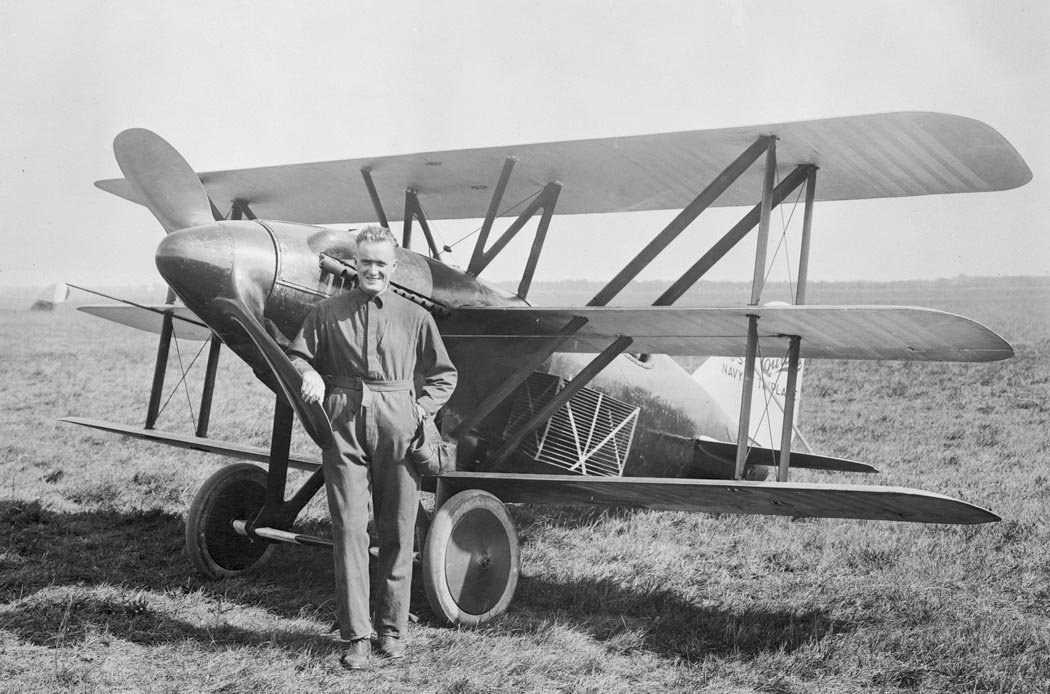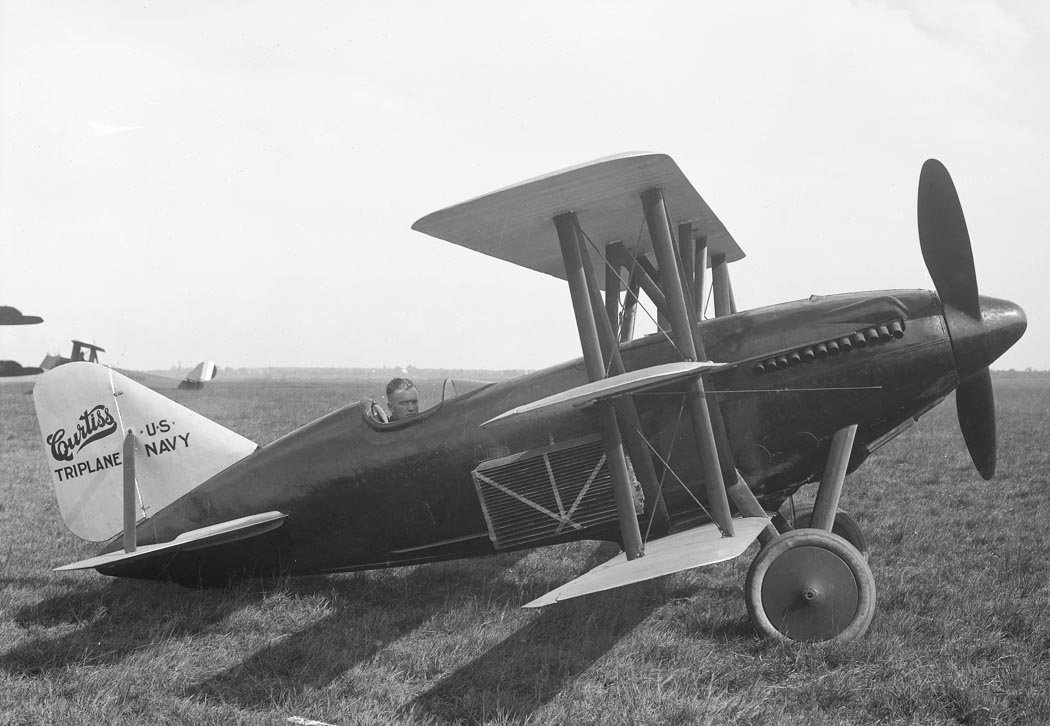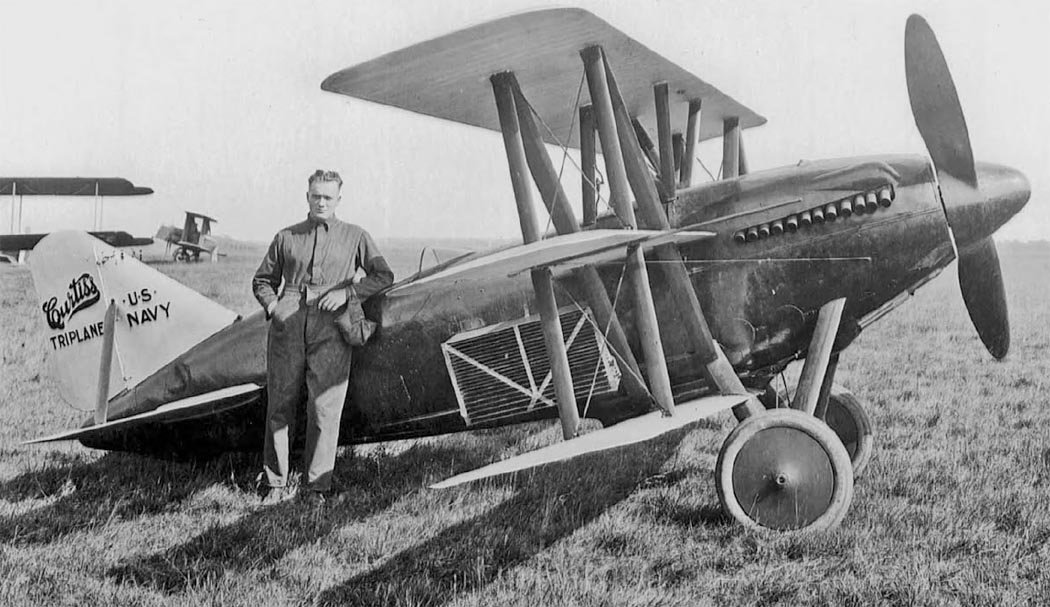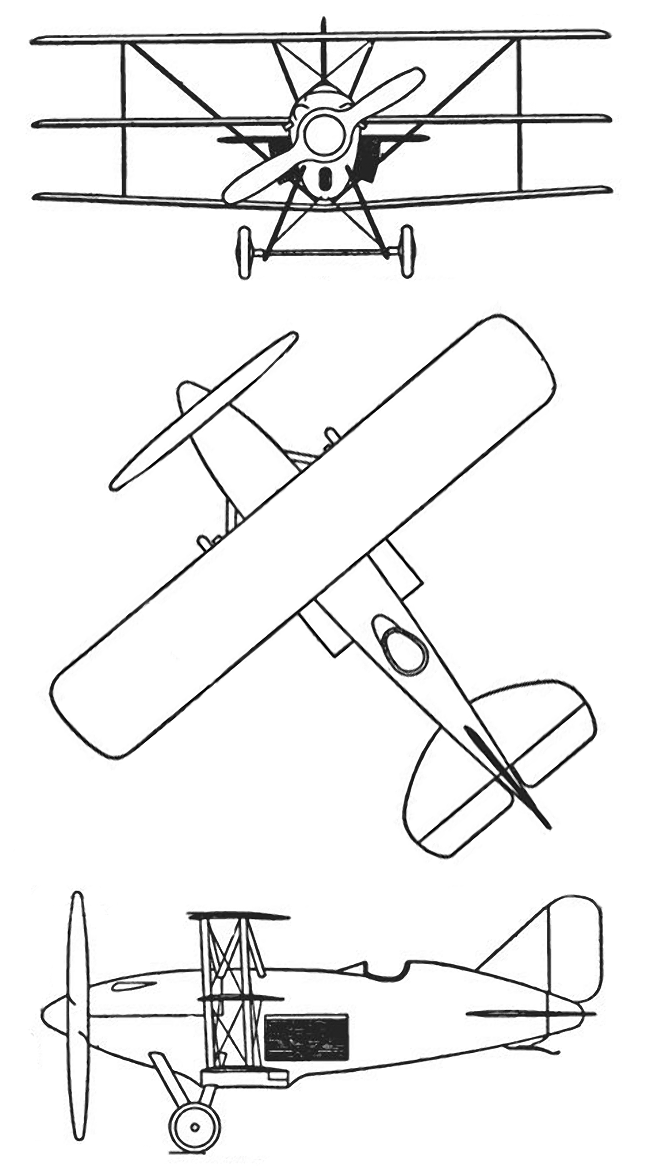
In early 1920, after reaching an agreement with millionaire S.J. Cox for the production of two competition aircraft, the Curtiss company ventured for the first time into the design and construction of racing planes. Named Texas Wildcat and Cactus Kitten, the Curtiss Model 22 Cox Racer aircraft were initially strut-braced high-wing monoplanes.
They were powered by a Curtiss C-12 inline piston engine, boasting 318 kW (427 hp). These aircraft were intended to represent the United States in the 1920 Gordon Bennett Cup races, held in France.
The Pulitzer Trophy Challenge
However, the Cactus Kitten did not participate in the races in France, as lack of time prevented the completion of an additional lower wing for it. This aircraft was subsequently prepared to compete in the Pulitzer Trophy races, held in the USA in 1921.
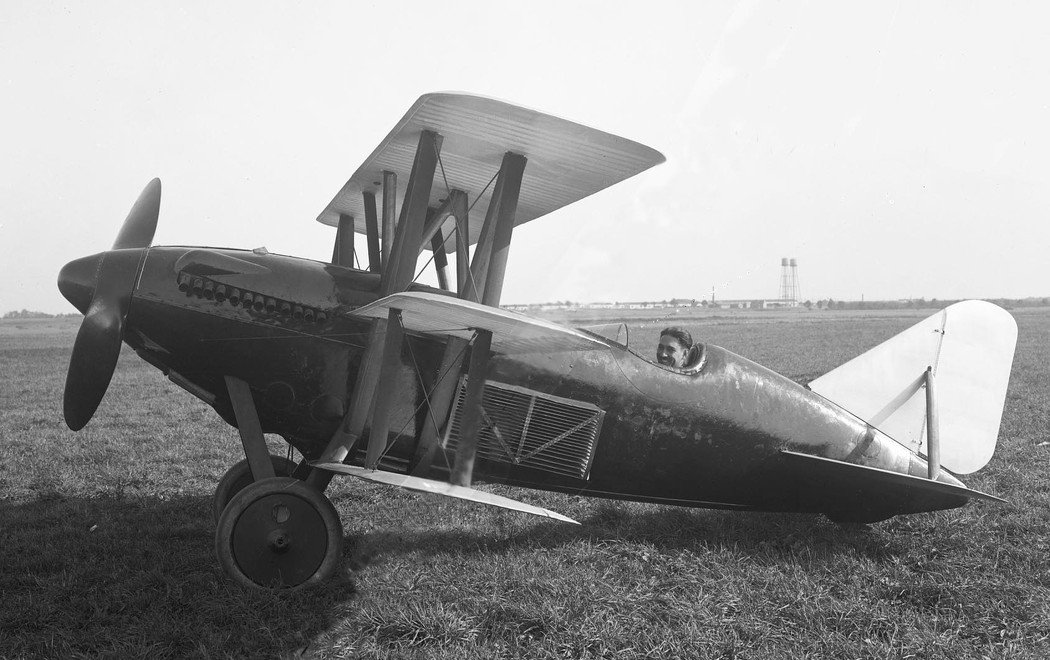
For this competition, the aircraft was fitted with three short-span wings, transforming it into a triplane. Its maximum flight speed reached 274 km/h, which allowed the aircraft to secure second place in the races and become recognized as the world’s fastest triplane. The race itself was won by another Curtiss racing aircraft—one of two Model 23 biplanes built for the US Navy under the designation CR-1.
Post-Race Service and Legacy
After the races concluded, Cox sold the aircraft to the U.S. Navy for one dollar. The Cactus Kitten was subsequently utilized as a trainer aircraft.
It served with a special team preparing for the 1922 Pulitzer Trophy, extending its usefulness beyond its initial competition role.
Technical Specifications
| Modification | Cactus Kitten |
| Wingspan, m | 6.10 |
| Aircraft length, m | 5.87 |
| Aircraft height, m | 2.59 |
| Wing area, m2 | 19.50 |
| Empty weight | 878 |
| Maximum takeoff weight | 1091 |
| Engine type | 1 Piston engine Curtiss С-12 |
| Power, hp | 1 x 435 |
| Maximum speed, km/h | 274 |
| Cruising speed, km/h | 255 |
| Flight duration, h.min | 1.10 |
| Service ceiling, m | 7600 |
| Crew | 1 |
Image gallery of the Cactus Kitten