In the late 1930s, the Italian Royal Air Force still struggled to decide on its primary fighter type. While high-speed monoplanes were gaining preference, biplanes had performed well in the Spanish Civil War, offering superior maneuverability and handling. Therefore, in 1936, the Ministry of Aviation issued a specification for a new generation of fighters as part of the Regia Aeronautica’s re-equipment program.
The competition for a land-based interceptor fighter (Caccia Intercettore Terrestre) was divided into two groups under the “R” program. The first group comprised biplanes, including the Fiat CR.42 and Caproni Ca.165, intended to replace older models like the Fiat CR.20 and CR.32 from the previous decade. The second group featured monoplane projects such as the AUSA AUT 18, IMAM Ro.51, Fiat G.50, Macchi M.C.200, Caproni Vizzola F.5, and Reggiane Re.2000.
Early Development & Competition
Two distinct configurations were evaluated in these homogeneous groups, with comparative trials conducted by multiple test pilots on various models. This process aimed to verify characteristics and establish performance relationships. The competition within the first group was particularly fierce, seeking the fastest biplane fighter with high acrobatic capabilities.
Although Caproni is primarily known for its three-engined heavy bombers, the company had a long history in fighter aircraft, starting with the Caproni Ca.20 in 1914. This groundbreaking monoplane interceptor, armed with a single machine gun, was innovative for its time but, like many Caproni fighter proposals in subsequent decades, did not see further development or mass production.
For the competition, Caproni submitted a biplane designed in Taliedo and monoplanes from Vizzola Ticino (Caproni Vizzola F.5) and Reggio Emilia (Reggiane Re.2000). The biplane project, the Ca.165, was entrusted to Raffaele Conflenti, who joined Caproni after leaving Cantieri Riuniti dell’Adriatico (CRDA). This design utilized key components from the Ca.134 reconnaissance biplane, featuring a mixed construction and an experimental Isotta Fraschini engine, a company acquired by Caproni in 1932.
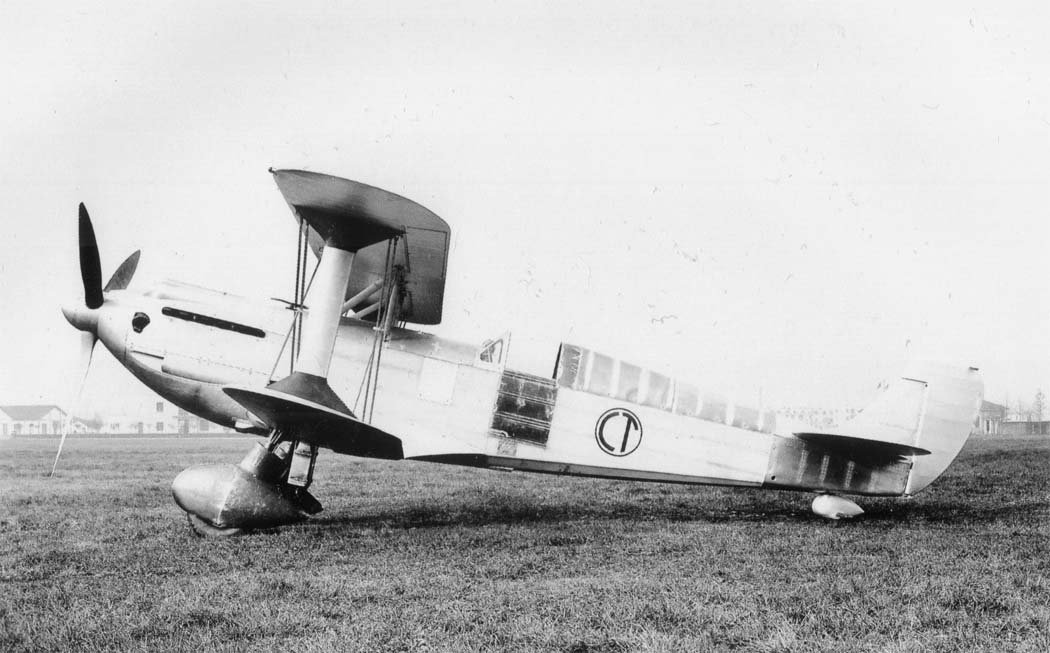
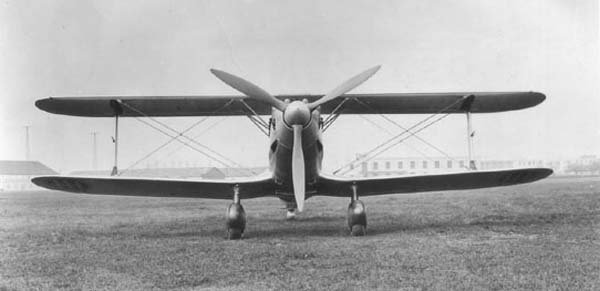
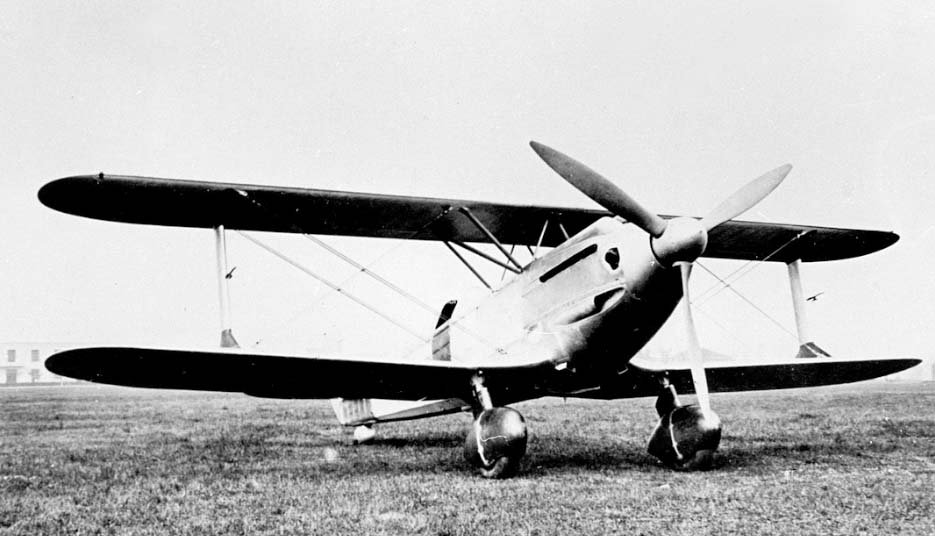
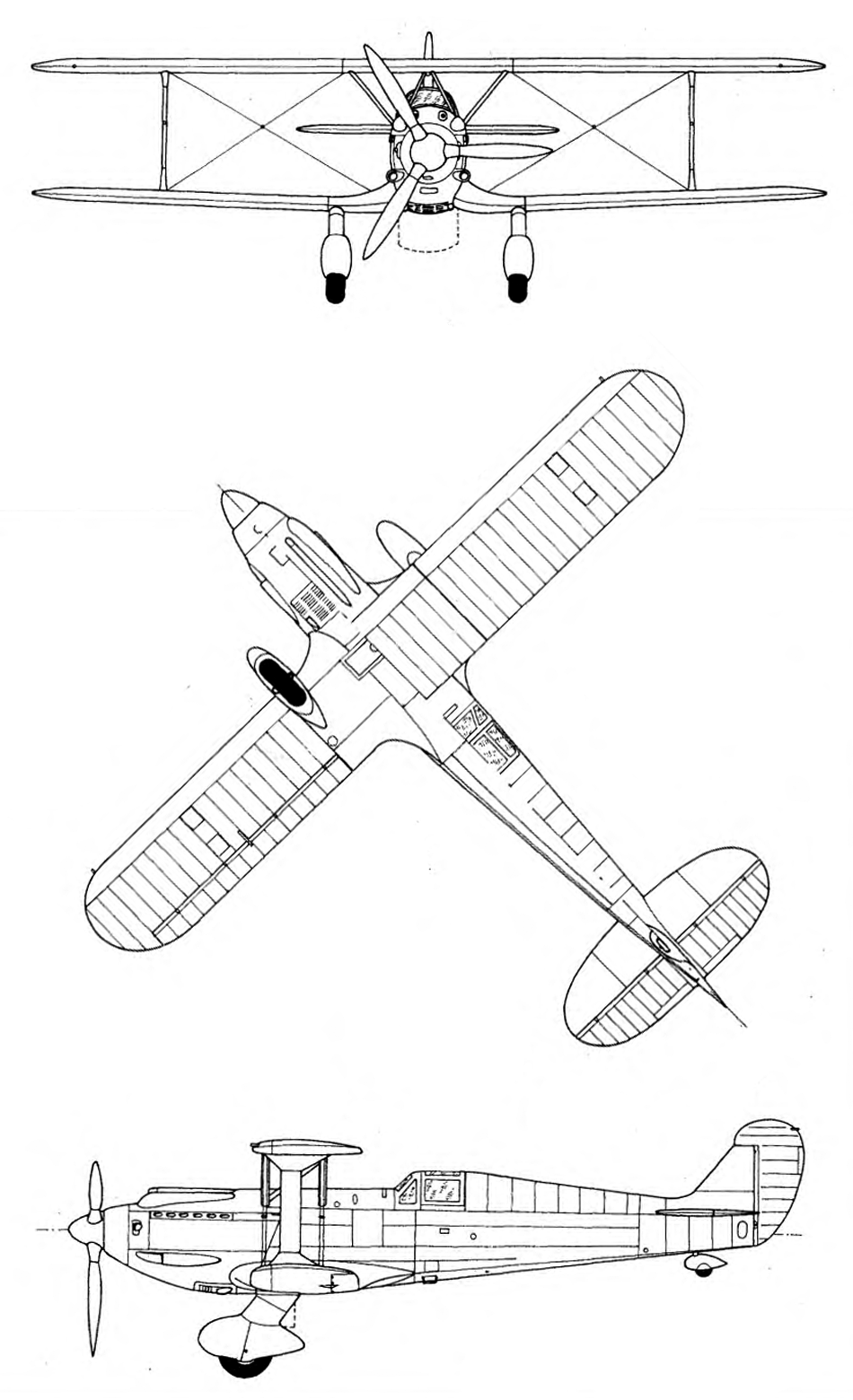
While the wing structure was nearly identical to the Ca.134, the upper wing lacked an overhang, necessitating a different strut and bracing system. The N-shaped struts of the reconnaissance aircraft were replaced with single I-shaped struts enclosed in fairings on the fighter. The Ca.165 itself featured a mixed construction, with a steel fuselage skinned in light alloys, while the wings were wooden with fabric covering. The tail unit was also metallic and covered with fabric.
Design Features & Performance Trials
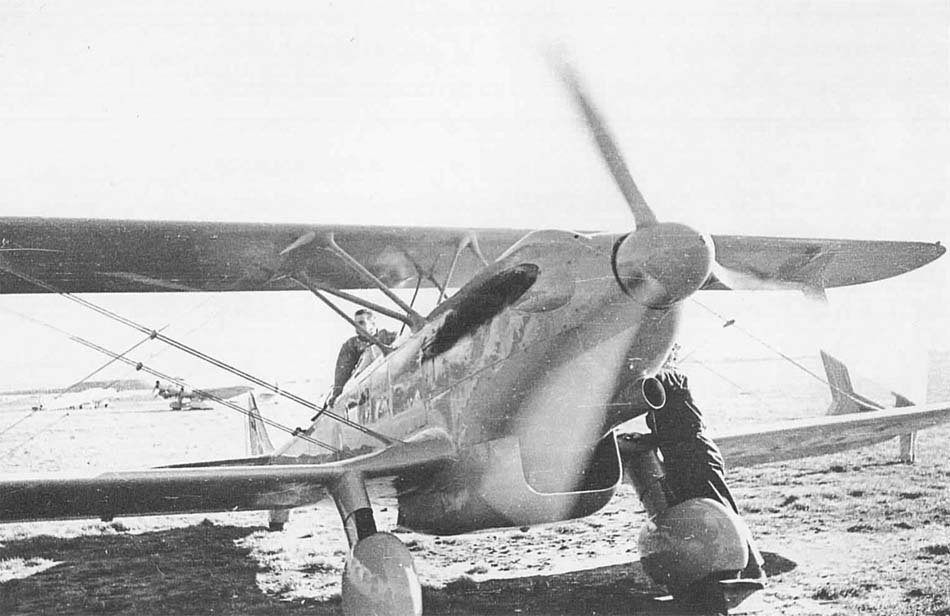
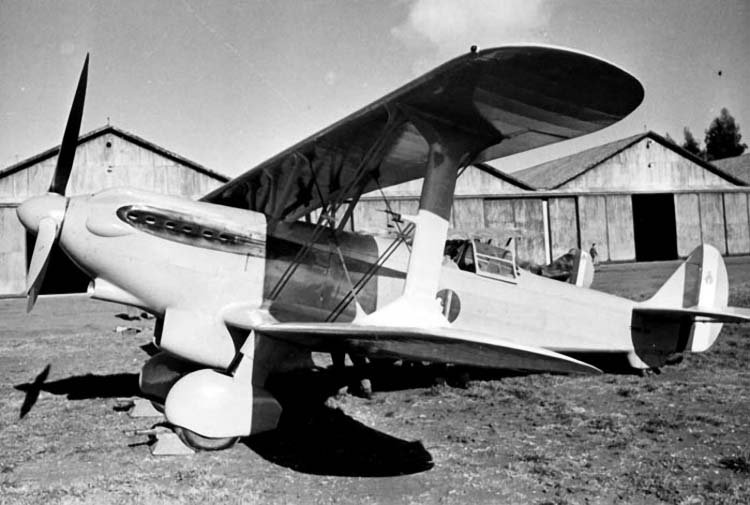
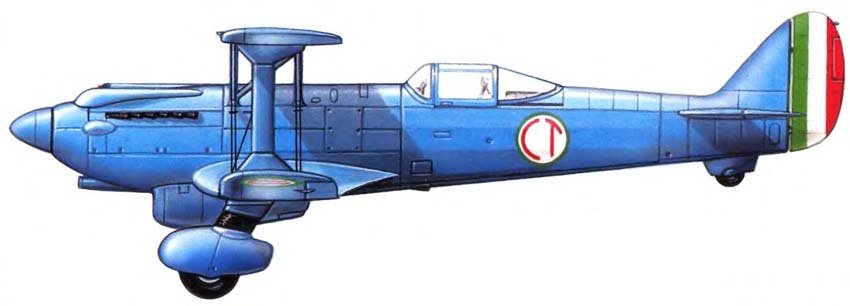
Thanks to its enclosed cockpit, the Ca.165 had a narrow fuselage. Its landing gear was non-retracting, fitted with spats over the wheels. A unique feature was its retractable radiator, which the pilot could deploy for optimal cooling or retract depending on flight conditions, similar to the Morane-Saulnier M.S.406. Deploying the radiator significantly increased drag but improved engine performance and reliability.
The fighter was powered by a 12-cylinder, liquid-cooled Isotta Fraschini L121 RC.40 engine, delivering 900 hp, coupled with a three-bladed Alfa Romeo propeller with electric pitch control. Test pilot Arturo Ferrarin first flew the prototype on February 16, 1938, several months ahead of its competitor, the CR.42.
Following factory trials, the Ca.165 was transferred to the Experimental Center in Guidonia, where it underwent evaluation alongside many other fighters. Comparative tests with the CR.42 involved several test pilots alternately flying both models to assess characteristics and determine their relative performance.
The Ca.165 had comparable payload (570 kg vs. 575 kg) and identical armament (two 12.7 mm Breda-SAFAT machine guns) to the CR.42. However, it was 200 kg heavier with a smaller wing area, resulting in a higher wing loading (113 kg/m² vs. 99 kg/m² for the CR.42). These factors, combined with less effective controls, made the Ca.165 less maneuverable. Despite these drawbacks, the Ca.165 boasted a lower minimum speed (114 km/h vs. 122 km/h), allowing for shorter takeoffs and better low-speed handling.
While its fuselage was very thin and small, it was heavier than the CR.42, likely due to different engines and construction. Caproni’s design was not a “turning fighter” but, within the limitations of biplanes, was more of an “energy fighter” with a focus on speed rather than maneuverability, as noted by test pilots.
During testing, the retractable radiator was replaced with a fixed tunnel-type. The Ca.165 also received enlarged tail surfaces and a lowered fuselage tail section to accommodate a 360° visibility cockpit canopy. In mock combat, the Ca.165 surpassed the CR.42 due to its superior aerodynamics and power. Nevertheless, the aircraft was rated lower than the CR.42, which was more maneuverable and used a reliable, series-production powerplant, whereas the Caproni relied on an experimental engine with low reliability.
The Fate of the Ca.165
Despite being declared the “winner” in mock combat, General Valle initially ordered 12 Ca.165s on September 2, 1939. This order was cancelled on October 11, 1939. However, through political maneuvering, Caproni secured an order for 12 Caproni-Vizzola F.5 fighters instead.
Caproni explored further improvements for the biplane, including plans for a 1000 hp P.XI radial engine (the same as in the Reggiane Re.2000), a 1000 hp Isotta Fraschini L.170 liquid-cooled engine, and a redesigned Ca.173 with a sesquiplane wing. None of these proposals proved successful enough to garner interest from the Regia Aeronautica, remaining in the blueprint stage, largely due to the unreliability of these experimental engines.
Another variant of the Ca.165 was designed to address cost and maneuverability concerns, built primarily from non-strategic materials like steel and wood. This approach aimed to be advantageous during wartime by reducing the burden on critical raw material industries.
Although the Ca.165 was victorious in mock combat, it ultimately lost the final evaluation. Test pilots reportedly found the Ca.165 outperformed the Falco (CR.42) but personally disliked the aircraft. The Regia Aeronautica ultimately chose the CR.42, primarily because it used an engine already common in mass-produced Italian aircraft like the SIAI-Marchetti SM.79, Macchi M.C.200, and Fiat G.50.
A significant factor in this decision was also the production cost; the Ca.165 was twice as expensive to produce as the Falco. This cost advantage, combined with engine commonality, secured Fiat the production contracts. In retrospect, high speed was a more modern concept for new-generation fighters, especially for intercepting fast bombers like the Bristol Blenheim, which often proved too quick for the Falco. Yet, the General Staff of the Air Force remained confident in the CR.42’s perceived superiority.
The Caproni Ca.165, produced only as a single prototype, thus vanished from history. Its rival, the Fiat CR.42, despite its perceived obsolescence, became Italy’s most mass-produced fighter, with over 1800 units built by 1944. Attempts to negotiate licensed production in Belgium, Bulgaria, and Hungary also proved unsuccessful.
Technical Description:
The Caproni Ca.165 was a single-seat, single-engine fighter of mixed construction with non-retracting landing gear. Its fuselage featured a metal structure with light alloy panels and a fully enclosed pilot’s cockpit. The tail unit was single-finned and metallic, with movable surfaces covered in fabric.
The aircraft’s wings were wooden, assembled into a biplane box, with the lower wing consoles attached to the fuselage’s lower section. The two wings were connected by vertical I-shaped struts and a system of metal ties. The upper wing connected to the fuselage via a central tubular frame, with minimal stagger relative to the lower wing. Movable surfaces were fabric-covered. The landing gear consisted of two main shock-absorbed struts and a tail wheel, all enclosed in fairings.
The powerplant was a 12-cylinder, liquid-cooled Isotta Fraschini Asso XI RC.40 engine, producing 900 hp, equipped with a three-bladed metal propeller. Armament comprised two 12.7 mm Breda-SAFAT machine guns located in the lower part of the engine section.
Technical Specifications
| Modification | Ca. 165 |
| Wingspan, m | 9.30 |
| Length, m | 8.10 |
| Height, m | 2.80 |
| Wing area, m2 | 21.40 |
| Empty weight | 1855 |
| Normal takeoff weight | 2425 |
| Engine type | 1 Piston engine Isotta-Fraschini L121 RC40 |
| Power, hp | 1 x 900 |
| Maximum speed, km/h | 466 |
| Cruising speed, km/h | 405 |
| Practical range, km | 672 |
| Service ceiling, m | 10000 |
| Crew, crew members | 1 |
| Armament: | two synchronized 12.7-mm Breda-SAFAT machine guns |
Image gallery of the Caproni Ca.165