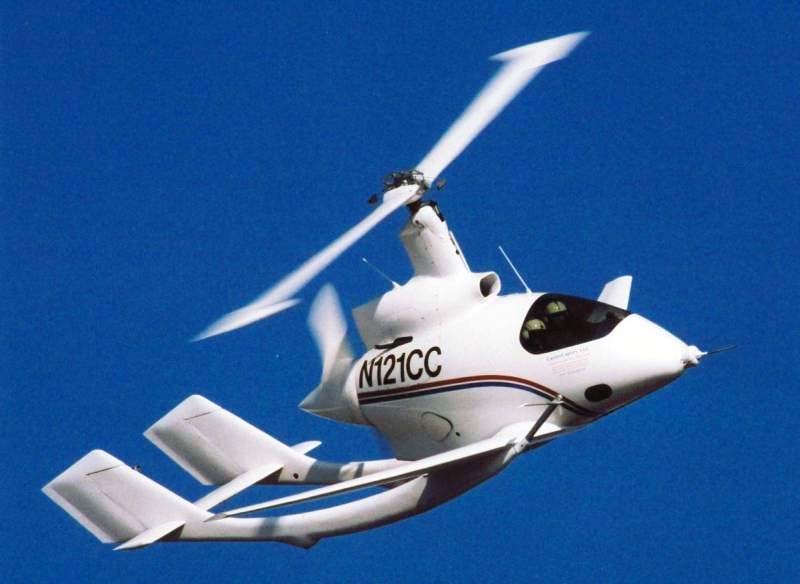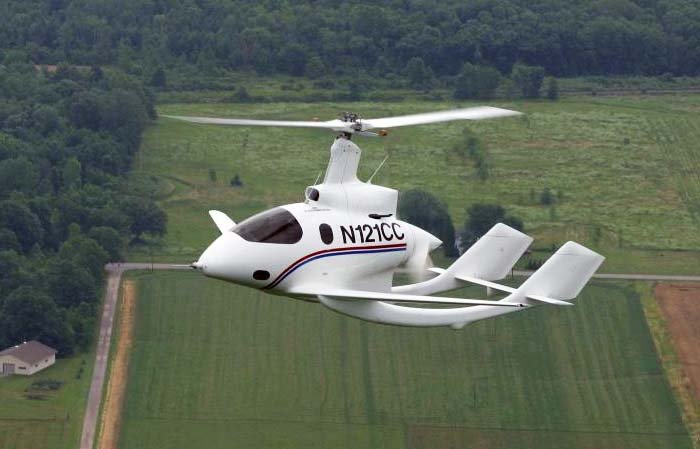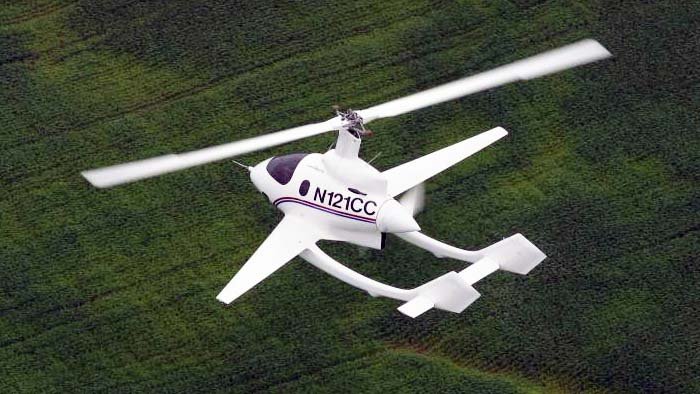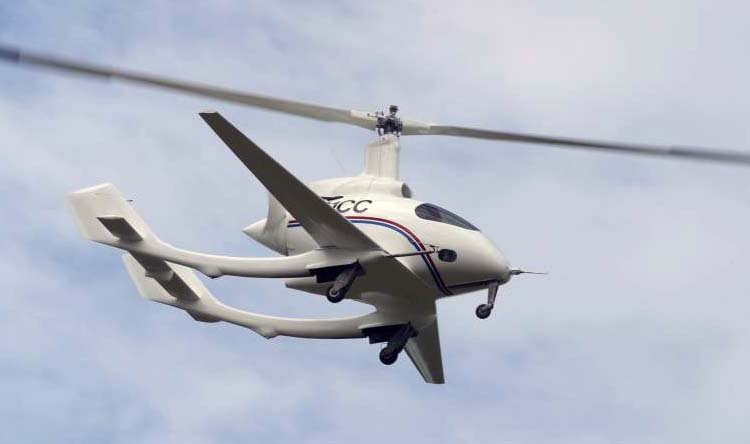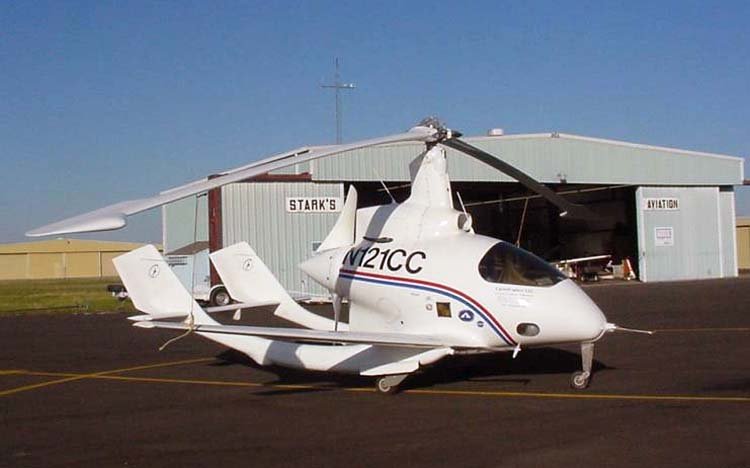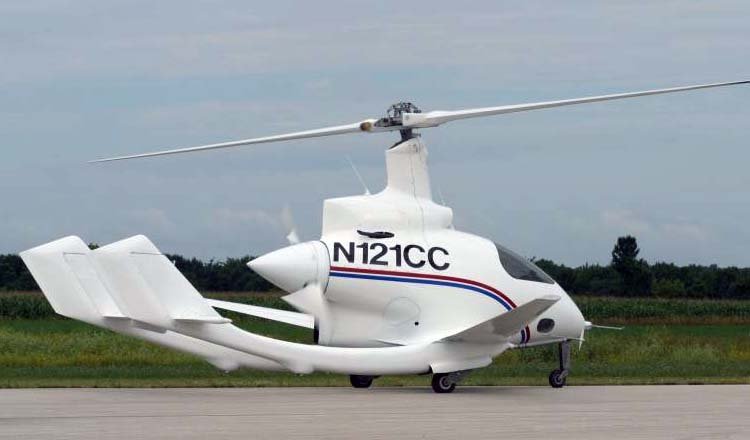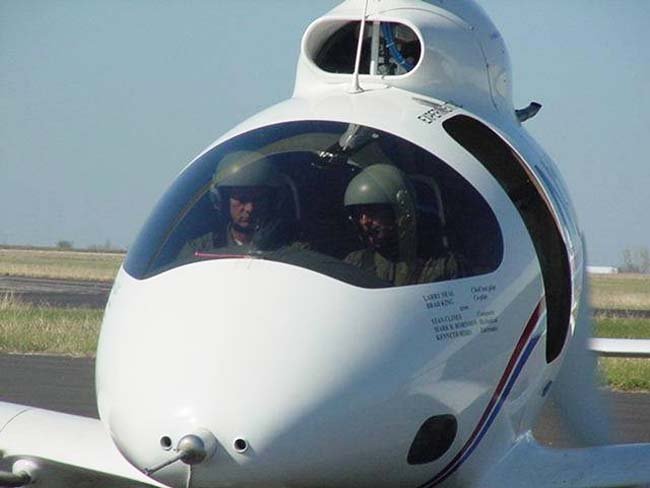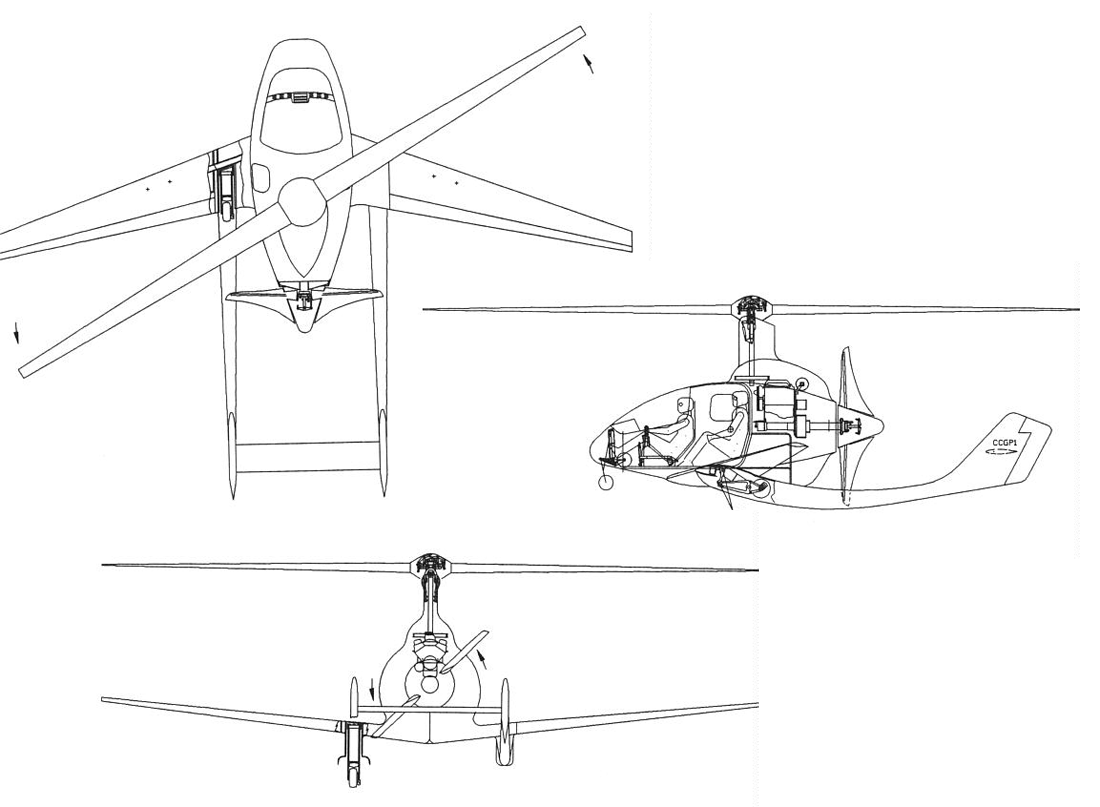
The Revolutionary CarterCopter Concept
The CarterCopter, without a doubt, could become the prototype for the transport vehicle of the future. Unlike various flying platforms, saucers, and other fantastical ‘crockery,’ this project is based on very real principles that are gradually being achieved in practice.
In short, the CarterCopter is a jump take-off autogyro capable of slowing the rotation of its main rotor in flight, transferring the lift-generating functions to a wing at high speeds. This scheme allows it to take off and land on any limited and unprepared surfaces, and then cover significant distances at a decent speed.
Jay Carter Jr.’s Path to Innovation
The project, initiated in 1991 by Jay Carter Jr., seemed to stagnate for many years, as if waiting for its time—the new century. In 2000, Carter’s team achieved the first practical positive results, and from that moment, its forward momentum has only accelerated.
Jay Carter, an engineer by both father and education, built his first autogyro in the early 1960s. In 1967, he constructed a second machine that, although it did not fly (unlike the first), embodied highly progressive solutions for its time: composite blades, fuselage, and landing gear, and a ducted pusher propeller. While “Grandpa” Bensen was gluing wooden rotors, Carter was already making a composite rotor with a twisted set.
After graduating from the Texas Technological Institute, Jay worked for two and a half years under the guidance of Ed Covington on the Bell XV-15 Tiltrotor project, a predecessor to the V-22 Osprey tiltrotor program.
In the early 1970s, father and son delved into the development of an engine that was relevant at the time (from the perspective of harmful emissions) and achieved results—earlier than the Japanese, Saab, General Motors, and others. When the 1973-1974 oil embargo hit the U.S. fuel system, the Carters, having gained vast development experience, easily shifted to another energy field and began developing wind power plants.
By 1983, they had earned over $7 million from their inventions, and in 1992, Carter Jr. was able to quietly retire from wind power ventures. But not from inventive pursuits. He wanted to make his mark in something new, and so he returned to autogyros.
Breaking Speed Barriers and Engineering Milestones
An autogyro, like a helicopter, can take off and land vertically and then fly horizontally at a decent speed. However, its rotor (main propeller), unlike a helicopter, is not connected to the engine. Both autogyros and helicopters share a common problem limiting the maximum horizontal flight speed: the “Mu number.”
This number is the ratio of horizontal flight speed to the speed of the main rotor blade tip relative to the air. In a hover, Mu is zero, but with the start of forward motion, this number increases. When Mu reaches one, the incoming airflow overtakes the retreating blade, completely depriving it of lift.
Even before reaching such a speed, elements of the retreating blade, closer to the rotor’s axis of rotation and thus having a lower air speed, lose lift, creating problems with uniform rotor rotation. The problem could be solved by increasing rotor RPMs, but these also have a limit, as the speed of a blade element should not exceed 0.7 times the speed of sound due to a sharp increase in drag losses.
The maximum Mu value achieved by a helicopter to date is 0.8 (the experimental Lockheed Cheyenne attack helicopter), and generally, a rotorcraft has reached 0.92 (the experimental McDonnell XV-1 tiltrotor-autogyro). Because of this limitation, the world helicopter speed record has not yet crossed the 400 km/h mark. The modest Jay Carter decided to simply overcome this barrier, proposing to do so by slowing the rotor in flight.
If it is possible to reduce rotor RPMs at high speeds while maintaining rotor rotation stability and control, then it can be expected that rotorcraft will fly at speeds of 600 km/h or more.
Jay Carter teamed up with Paul Redding, owner of a machine shop in Wichita, Texas. Together, they built a 1/6 scale model of the future aircraft. Jay’s calculations showed that to maintain stability at low RPMs, the unloaded rotor must possess sufficient stiffness and inertia. In this aircraft, the rotor provides lift during takeoff, at low speeds, and during landing. At cruise speeds, the rotor is fully unloaded, and lift is generated by a small, rigid wing.
The partners tested their model by mounting it on a 3-meter pole on the front of a jeep. This “super low-budget wind tunnel” was, nevertheless, equipped with many sensors, whose data were quite reliable and accurate. By October 1994, stable rotor rotation at speeds with Mu=0.8 had already been achieved on this model.
Thus, the CarterCopter was born. Four years were spent testing components on the ground before flights could begin. Some components invented during this time were indeed successful. The landing gear withstands an impact from a vertical speed of 6 m/sec.
A pusher propeller was developed and built, weighing only 12 kg with a diameter of 2.44 m, exhibiting excellent characteristics both statically and at speeds over 640 km/h, at altitudes from sea level to 12 km. The rotor with uranium weights (30 kg each) at the tips, weighing three times less than a helicopter rotor of the same diameter, and a large-area windshield capable of withstanding high-speed pressure in a pressurized cabin, are just a few examples of these innovations.
The first flight of the CarterCopter took place on September 24, 1998. On March 22, 2002, the aircraft surpassed the achievement of the Lockheed Cheyenne helicopter, reaching Mu=0.87. Of course, there were incidents, which the team honestly disclosed to the public.
Technical Specifications
| Modification | CarterCopter |
| Main rotor diameter, m | 10.20 |
| Wingspan, m | 9.75 |
| Wing area, m2 | 7.15 |
| Empty weight | 907 |
| Maximum takeoff weight | 1724 |
| Engine type | 1 Piston engine V6 NASCAR |
| Power, hp | 1 x 600 |
| Speed at sea level, km/h | 370 |
| Speed at altitude, km/h | 644 |
| Practical range, km | 4023 |
| Practical ceiling, m | 3048 |
| Crew, crew members | 1 |
| Payload | up to 5 passengers |
Image gallery of the CarterCopter