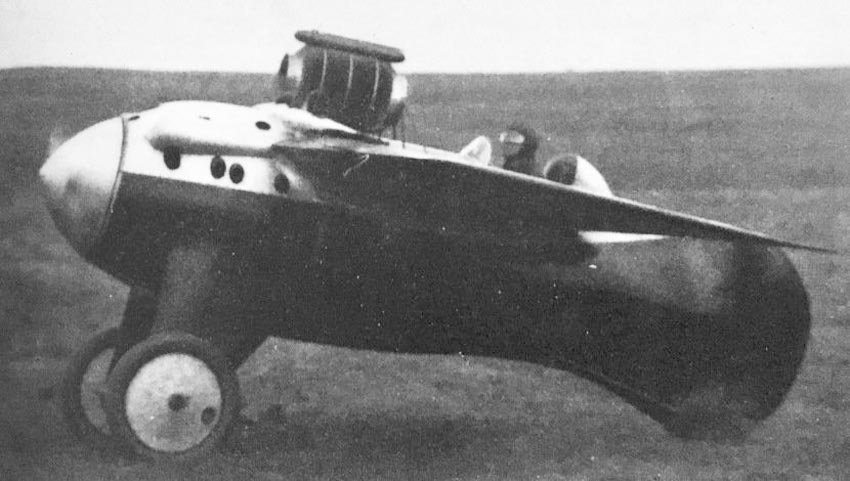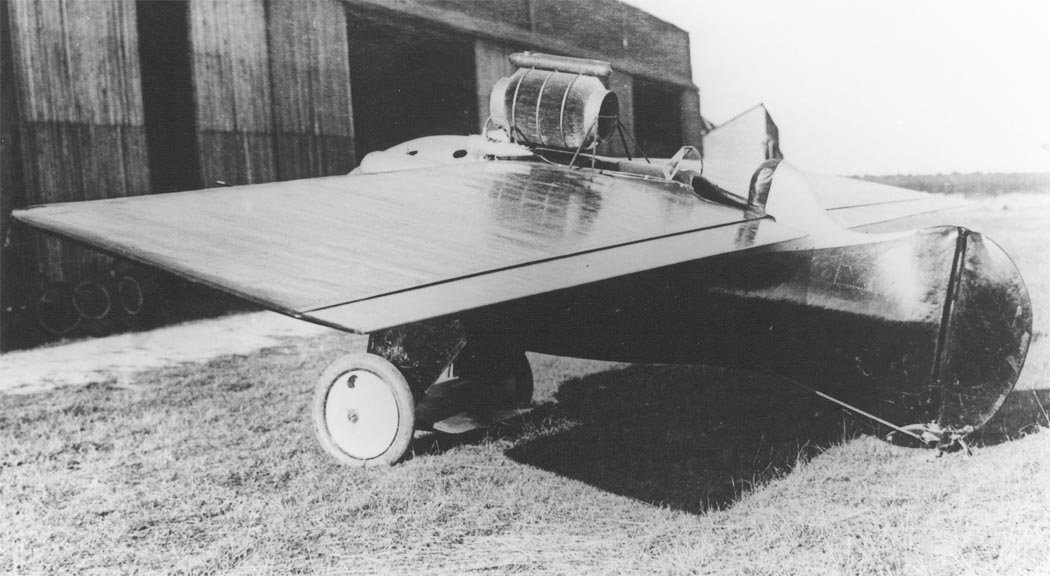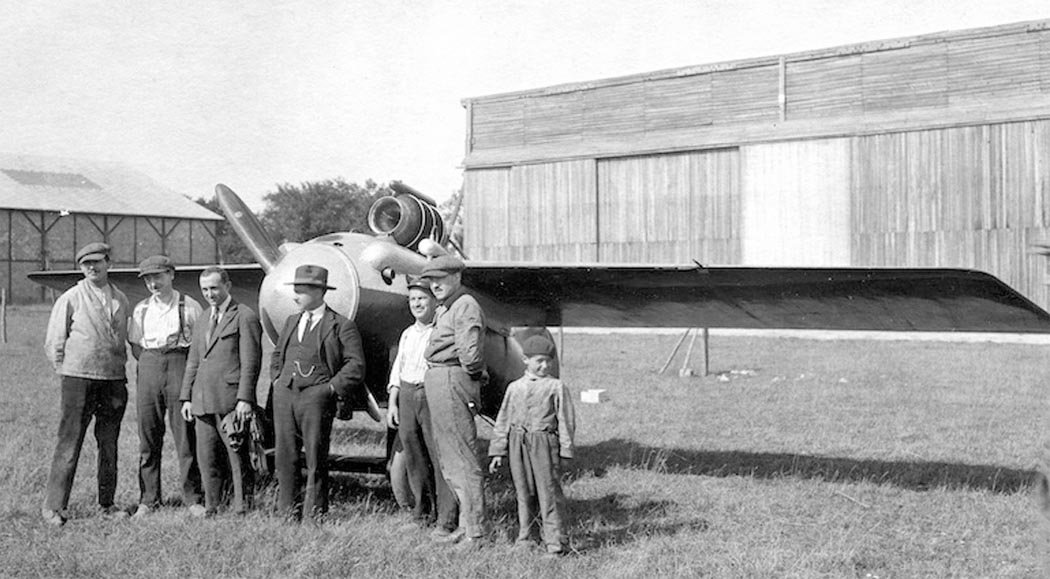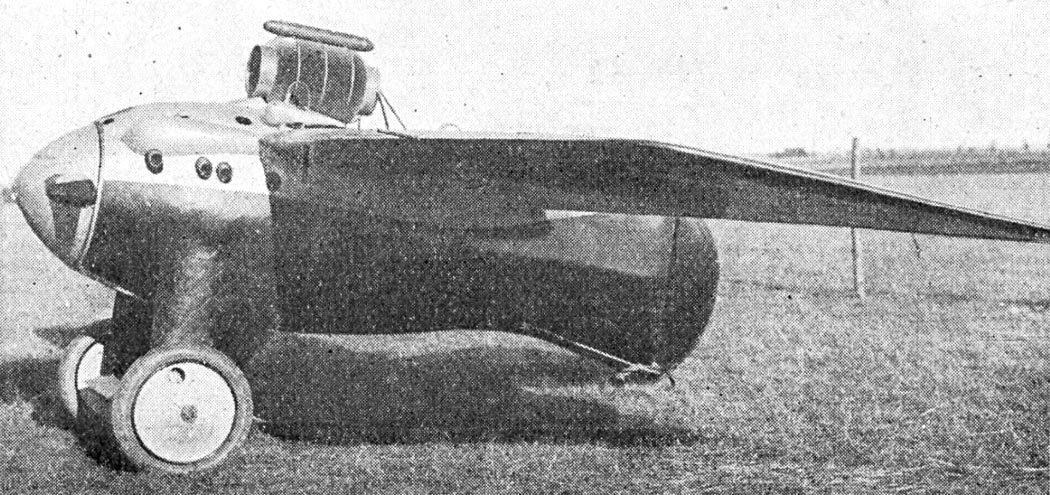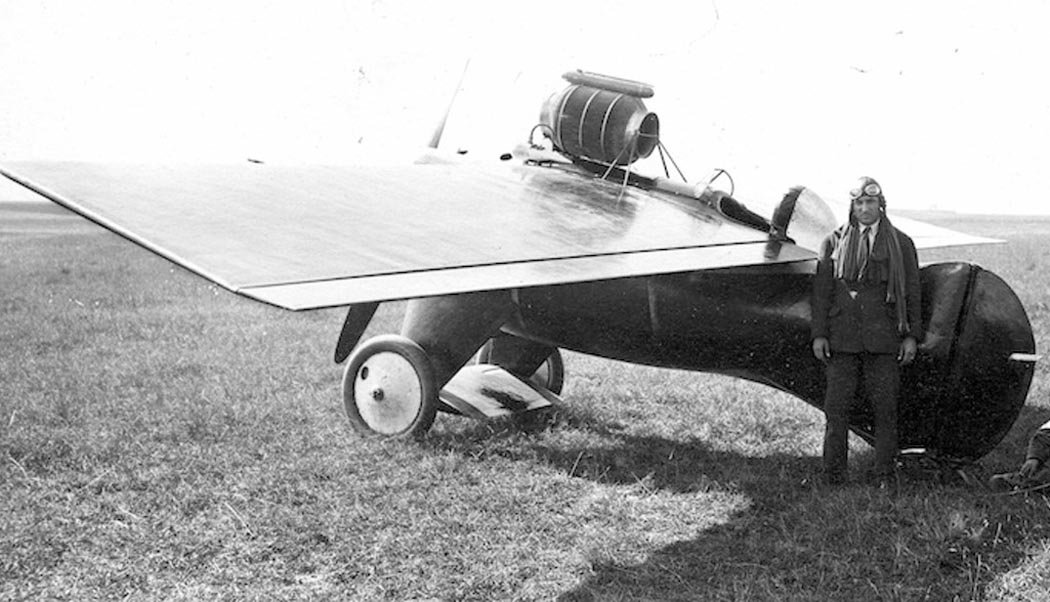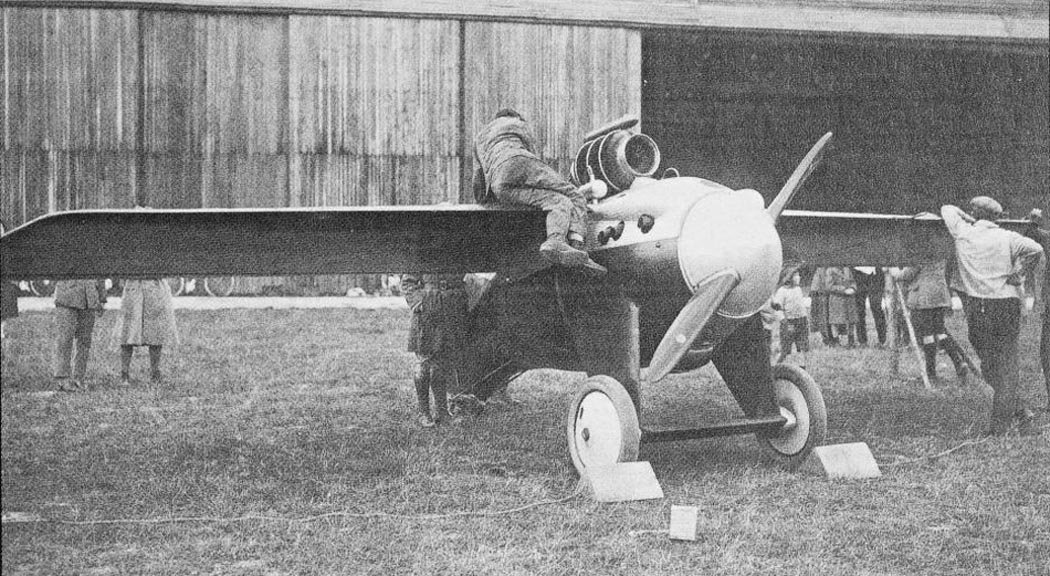
René Arnoux’s final attempt to create a successful “tailless” aircraft was a racing plane, specifically developed to participate in the 1922 Coupe Deutsch race. Another French engineer, Pierre Carmier, actively participated in its creation, which is why the aircraft is referred to as Carmier-Arnoux Simplex in most sources, and it was built by Arnoux’s company, Les Avions Simplex.
Design and Technical Specifications
The aircraft was a single-seater monoplane, equipped with a twelve-cylinder Hispano-Suiza 12Fe engine generating 320 hp. According to calculations, this engine was expected to provide a maximum speed of 360 km/h, at a time when the absolute speed record in 1920 was 309 km/h.
The aircraft’s wing featured a symmetrical profile, with longitudinal balance achieved by upward deflection of the control flaps, or elevons, located across the entire span of the trailing edge. Following the recommendation of test pilot Georges Madon, the deflection limiters for the control surfaces were removed.
Flight Tests and Tragic Accident
This, combined with the aircraft’s extreme sensitivity to changes in center of gravity and poor visibility from the cockpit, led to the aircraft crashing during flight tests on its second flight. Georges Madon also sustained injuries in the accident.
The End of a Pioneer’s Career
René Arnoux’s design activities concluded here. Having exhausted all his money and failing to find sponsors, he was forced to abandon further developments. The unfortunate aircraft designer rejoined the Air Force, was sent to serve in one of the French African colonies, and tragically died there just a year later in an ordinary aircraft crash. Apparently, he disliked them for a reason.
Technical Specifications
| Modification | Simplex |
| Wingspan, m | 9.00 |
| Aircraft length, m | 5.40 |
| Wing area (total), m2 | 14.00 |
| Empty weight | 800 |
| Maximum takeoff weight | 980 |
| Engine type | 1 Piston engine Hispano-Suiza 12Fe |
| Power, hp | 1 x 320 |
| Maximum speed, km/h | 360 |
| Crew, crew | 1 |
Image gallery of the Carmier-Arnoux Simplex