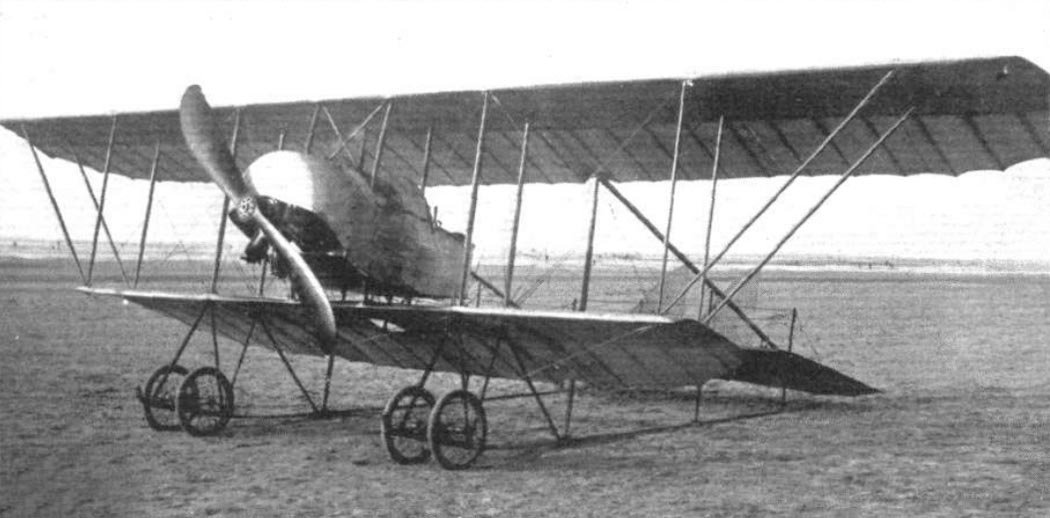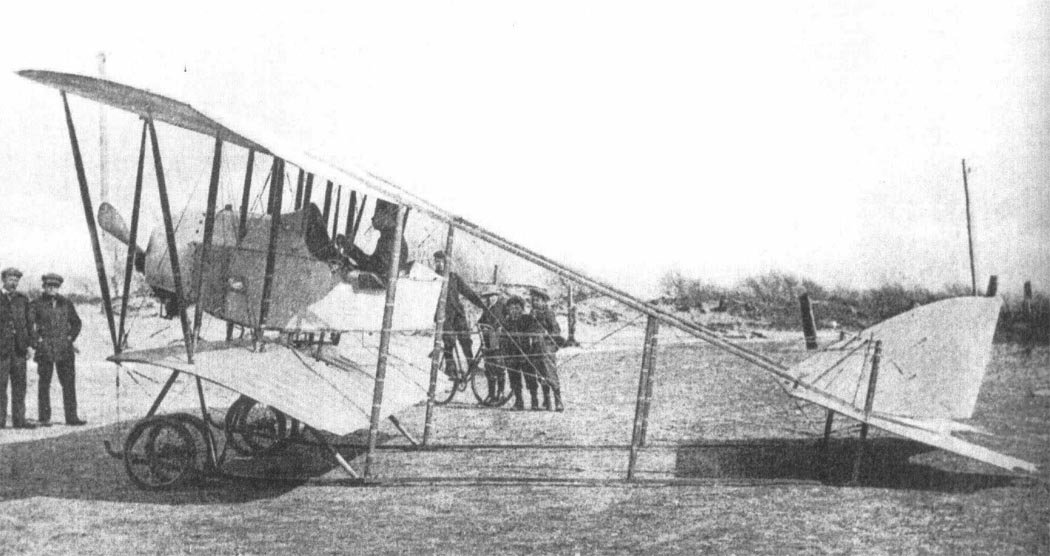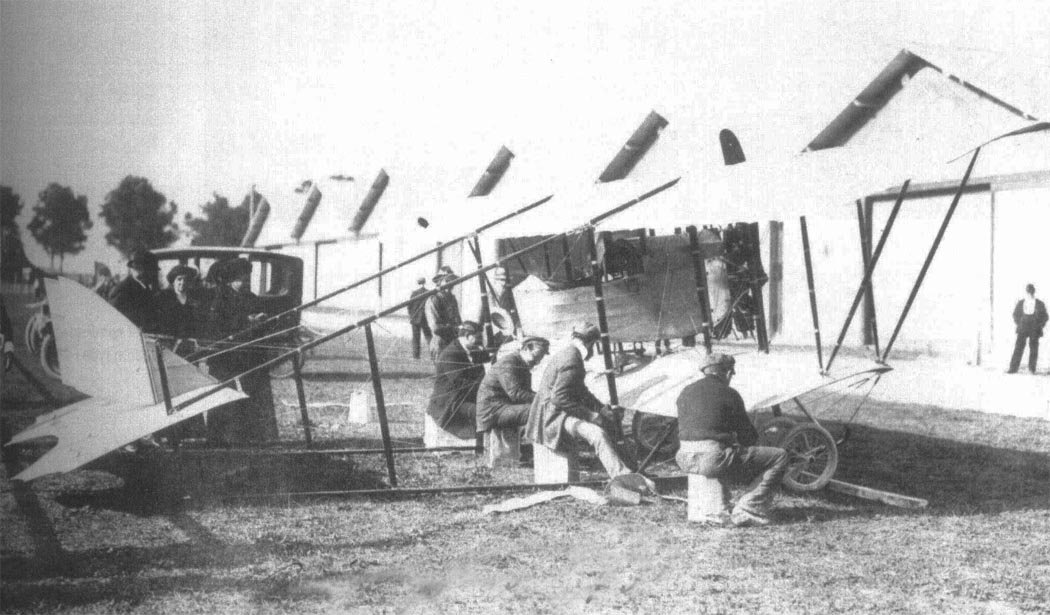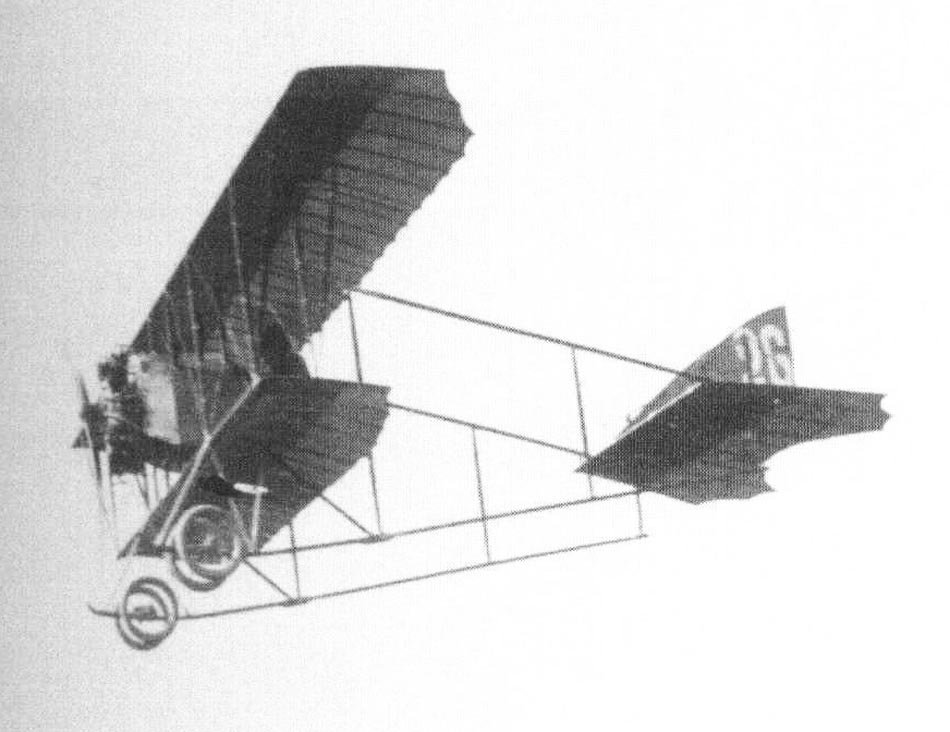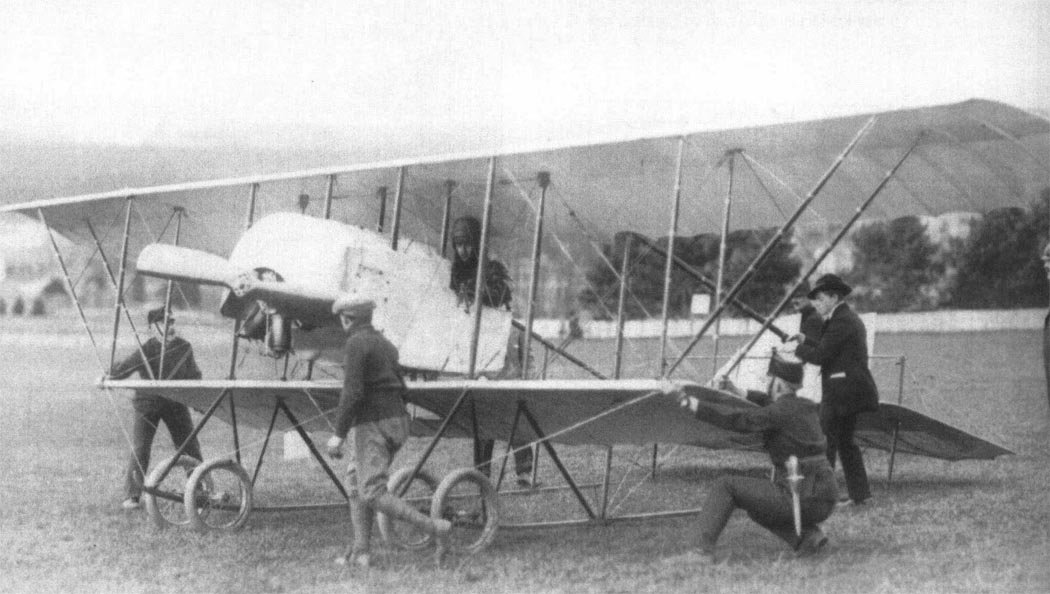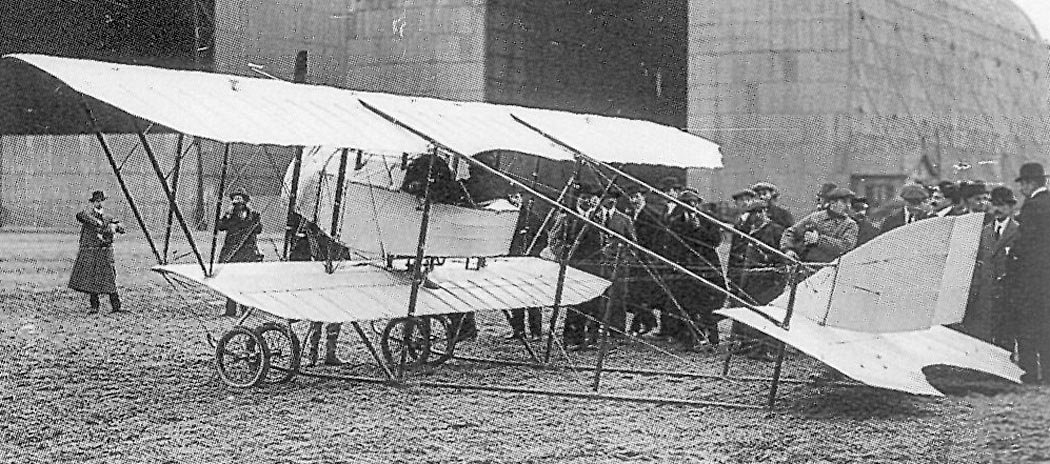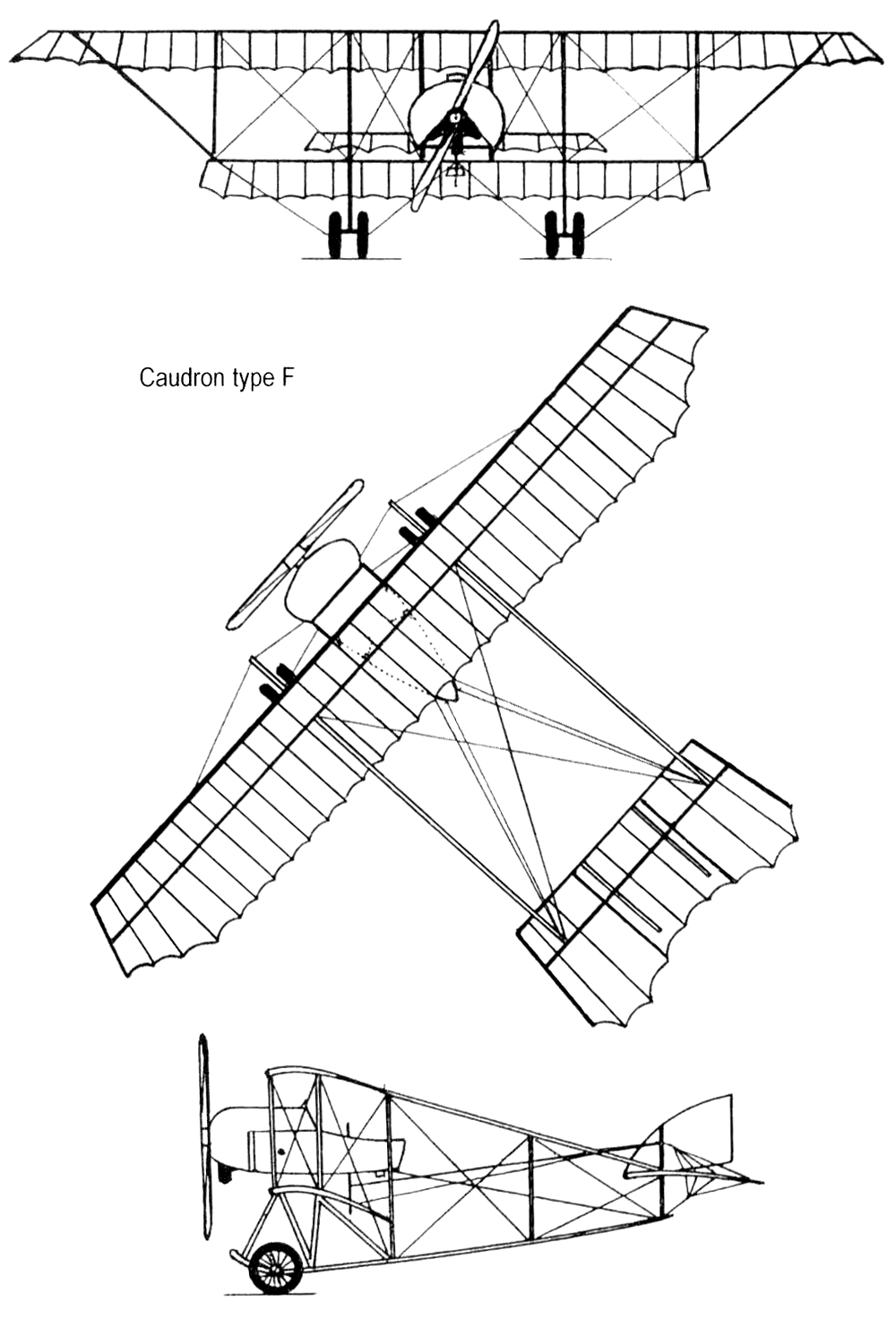
In late 1912, brothers René and Gaston Caudron developed the Caudron F multipurpose aircraft project, based on their light Caudron E model. This single-seat, two-bay wooden biplane was initially equipped with a seven-cylinder Gnome Omega radial engine delivering 50 hp (37 kW). Later, several production machines were fitted with a ten-cylinder Anzani engine.
A Milestone for Chinese Aviation
Almost immediately after successful prototype trials in early 1913, the Caudron brothers’ company received an order to build twelve light Caudron F multipurpose aircraft for China. Company specialist Emile Obre also traveled to Beijing with the machines to establish an aviation center.
Triumph at Air Races
In September of the same year, the Caudron brothers participated in the Reims air races with the Caudron F. René won first prize in the biplane category, covering the distance at an average speed of 94 km/h, with his brother taking second place, only slightly behind.
The First Biplane Loop
On November 21, 1913, Pierre Chanteloup performed the “loop” aerobatic maneuver in a Caudron F. Thus, the Caudron aircraft became the first biplane to achieve this feat, marking a significant milestone in aviation history.
Technical Specifications
| Modification | Caudron F |
| Wingspan, m | 10.10 |
| Length, m | 6.40 |
| Height, m | 2.60 |
| Wing area, m2 | 22.00 |
| Empty weight | 280 |
| Engine type | 1 Piston engine Gnome Omega |
| Power, hp | 1 x 50 |
| Maximum speed, km/h | 100 |
| Crew | 1 crew member |
Image gallery of the Caudron F