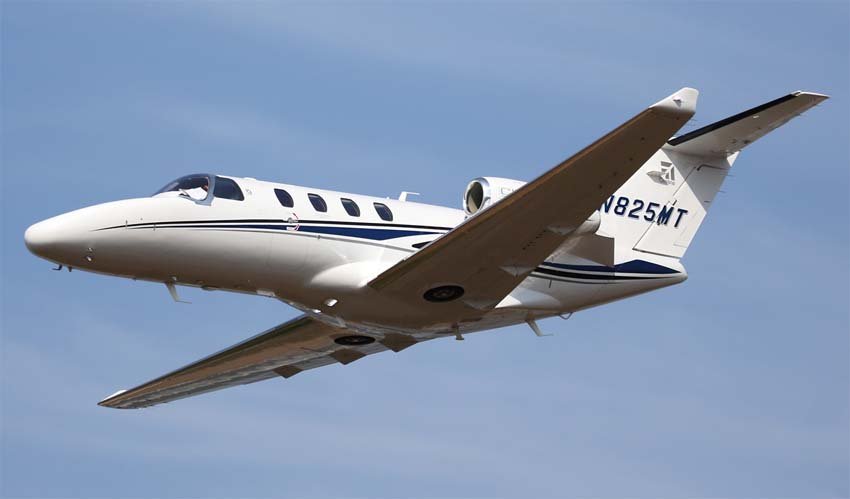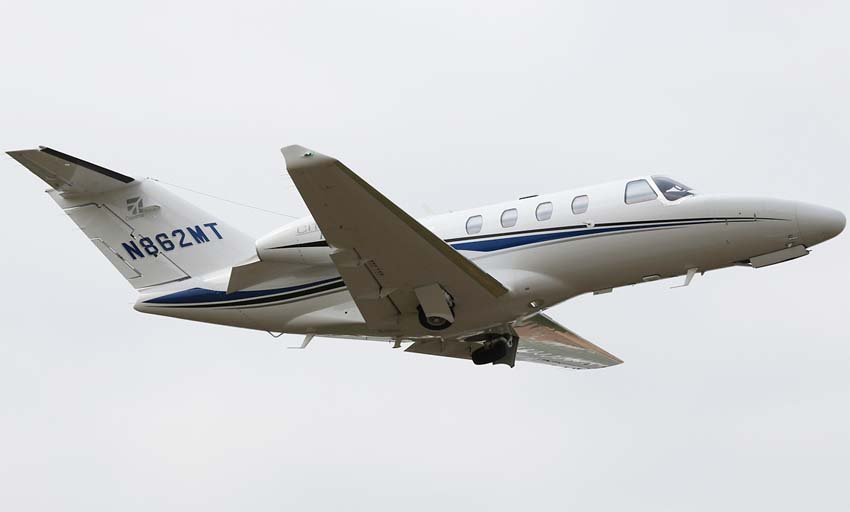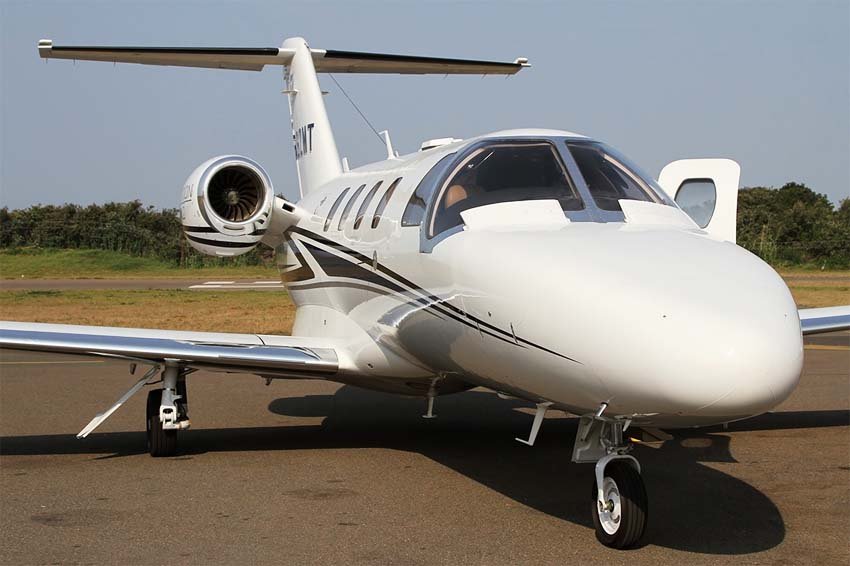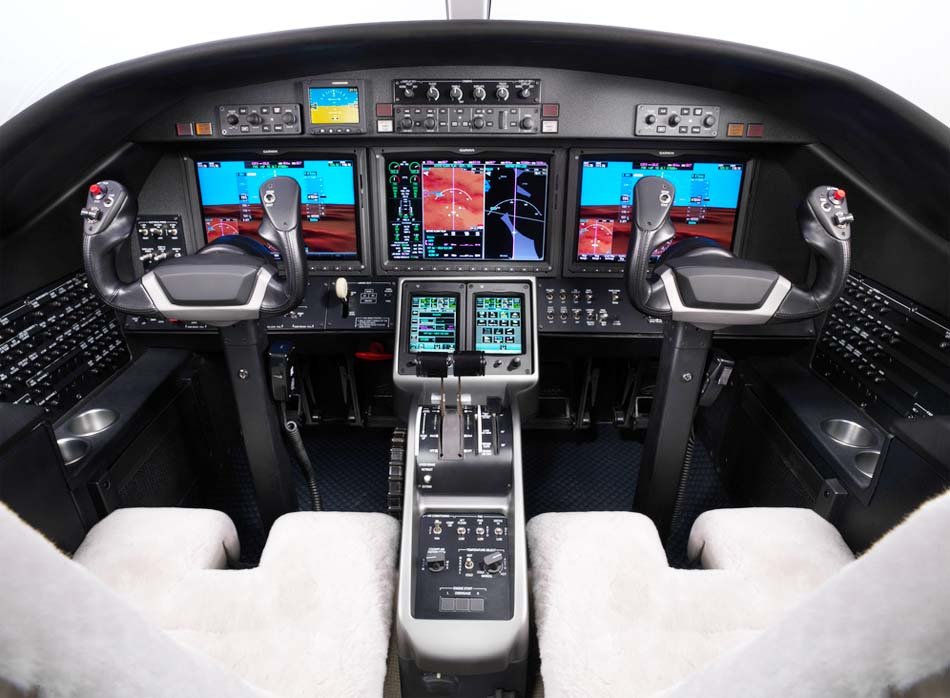
In late September 2011, shortly before the National Business Aviation Association (NBAA) exhibition in Las Vegas, the American company Cessna unveiled the light business jet Citation M2 to the public. Derived from the CJ1+ with improved characteristics and a lower price point, this model aims to compete with the Embraer Phenom 100 in the light segment. It also offers current Citation Mustang owners an attractive opportunity to upgrade to the next level of speed, range, and comfort. The development of the M2 had been underway for the past three years, with its first flight taking place on March 9, 2012.
Deliveries of Cessna’s existing Citation line suffered the most devastating blow during the light business jet market depression that began three years prior. While Cessna broke a decade-long record in 2008 by delivering 466 Citation family aircraft, the number of deliveries plummeted to 289 in 2009, and further to 178 in 2010. Based on first-half figures, the company expected to deliver 138 Citations that year. Demand for the CJ1+ model, the M2’s predecessor, was hit hardest. In 2008, Cessna delivered 20 units; in 2009, 14; and in 2010, only 3. During the first six months of the current year, only one CJ1+ was delivered.
These setbacks for the American manufacturer coincided with a time when its main competitor, Embraer, made several impressive moves to conquer the light business jet market, attracting many clients who might otherwise have purchased a CJ1+. Introduced in December 2008, the Phenom 100 overshadowed its rival with a larger cabin, similar useful load, and excellent range. Initially, it cost only $500,000 more than the Mustang and a full $1.2 million less than the CJ1+.
Thanks to this comparison, which showcased the Phenom 100 in a favorable light, its sales soared. The Phenom 100’s innovative, oval-in-width fuselage cross-section, Garmin G1000 avionics suite, and exceptional fuel efficiency immediately captured customer attention. By the end of 2008, Embraer had already delivered two such aircraft; in 2009, 97; and in 2010, 100. However, after two years, the tide receded: in the first half of the current year, Phenom 100 deliveries did not exceed a dozen.
Competition and Market Recovery
Cessna perceived the current lull in Phenom 100 deliveries as the ideal moment for a comeback. By announcing the M2, the manufacturer aimed to reclaim its market share by offering a model capable of competing with its Brazilian rival. Although the M2’s cabin size is no different from the CJ1+’s, it boasts a higher climb rate.
Furthermore, its cruising speed is 11 knots faster, and its range with a 230 kg useful load (with a single pilot) is projected to be 1300 nautical miles. The M2’s price was set at $4.195 million, with the first 47 aircraft offered for $4 million, as promised by Scott Ernest. Thus, the M2 would cost the buyer approximately $285,000 more than the Phenom 100, but it would compensate for the price difference with better takeoff and landing characteristics, a cruising speed 35 knots higher, and a range 100 nautical miles greater.
Notably, Cessna cites range values calculated at maximum cruising speed, while Embraer bases its figures on maximum range, which implies flying at lower thrust settings. Moreover, the new Citation family member offers a more attractive standard equipment package than the Phenom 100, and the list of options to enhance onboard comfort has been more meticulously developed. Cessna hoped that all these (and other) advantages would divert potential buyers away from Embraer. Another important mission for the M2 was to keep Mustang owners “in the Cessna family.”
Technical Innovations and Performance
According to documentation provided by Cessna, the M2’s structure would be a clone of the CJ1+; at least, the fuselage parameters would not change. Cessna’s designers decided not to apply the experience of installing additional external frames on the M2 to increase cabin floor width, as was done on the CJ4. This was because an extra 5 cm of floor space would not justify the significant time and financial costs of certifying a modified structure.
The most noticeable novelty is the small winglets, which increase the wingspan to 14 meters. Some aerodynamic improvements to the airframe are expected to reduce drag, contributing, in particular, to an increased cruising speed. The M2 would be slightly lighter than its predecessor, mainly due to the replacement of the Rockwell Collins Pro Line 21 avionics suite with the Garmin G3000. However, due to an increase in fuel tank capacity by 40 kg, the useful load with full tanks would slightly decrease (by approximately 13 kg). All models in the 525 series feature round fuselages. Compared to the Phenom 100’s oval cross-section fuselage, the constant-radius design is lighter and more efficiently distributes pressure loads but offers less useful cabin space for passengers.
The M2 retained the high-speed NASA 0213 laminar flow airfoil, developed in the late 1980s for the first CitationJet family. Engineers assure that stable flow is maintained at cruising speeds exceeding 400 knots. All fuel is contained in two wing tanks, each equipped with six fuel level sensors. As with most light and mid-size business jets, fueling is done through a filler port on the upper wing surface. Improvements in the tank drainage system allow for an increase in useful tank capacity by 40 kg compared to the CJ1+. The fuel-oil radiator system, which activates automatically, eliminates the need for anti-icing additives. Jet pumps supply fuel to the engines during operation, while boost pumps feed the engines during start-up, cross-feed, and in case of jet pump failure.
Following forty years of design practice for the Citation 500 series aircraft, the M2 was equipped with a closed hydraulic system. The left and right engine-driven pumps create 105.5 kg/cm² pressure for landing gear extension, speed brakes, and flaps. One pump, either of the two, is sufficient for system operation. A separate electric pump station powers the anti-skid system. Unlike the M2, the Mustang and Phenom 100 have a single hydraulic system with an electric pump for all needs. The M2 features manual control of the flight surfaces. Wing mechanization consists of flaps, speed brakes, and a yaw damper, which improves flight quality but is not essential for its execution.
Among the M2’s advantages is its lift-spoiling system, which, after touchdown, deploys the flaps to 60 degrees and activates the speed brake, thereby creating pressure on the main landing gear for more effective braking. The Embraer Phenom 100 lacks such a system (as well as a speed brake), making it harder to stop on a contaminated runway than the Citation. For external lighting, including landing lights, xenon lamps have been replaced with LEDs, which support a “pulsing” light function.
Cabin Experience and Technology
All three models – M2, Mustang, and Phenom 100 – feature an automatic cabin pressurization system that, at flight level FL410, creates pressure equivalent to 2400 m above sea level. All three also have electric turbocoolers. We had the opportunity to fly in a Phenom 100 in a tropical climate, and its air conditioning system deserves every praise. As for the M2, we still need to test it. Passengers enter the M2 cabin through a door 130 cm high and 60 cm wide (tapering at the top) via a folding staircase. It’s worth noting that the Phenom 100’s door opening is both taller and wider. Moreover, its door opens downwards, forming an air stair which, thanks to the aircraft’s high “stance,” visually creates the illusion of a “large jet.”
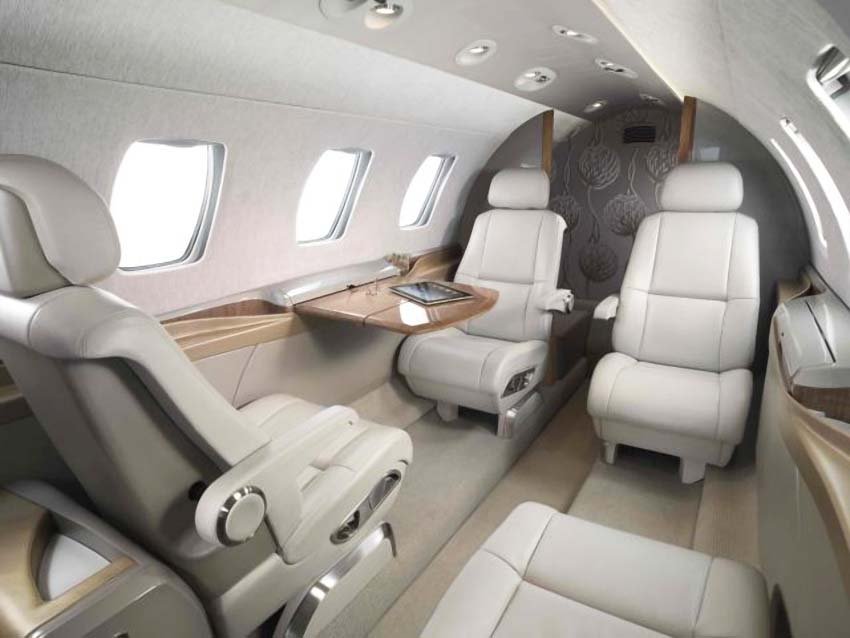
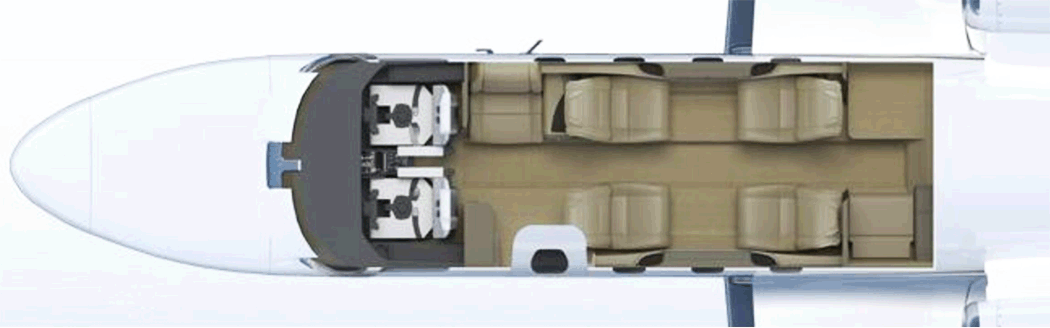
The M2 would retain the dimensions and basic cabin configuration of the CJ1+, featuring a club section with four seats in the main cabin area, one seat opposite the door, and a lavatory compartment in the aft, with an additional passenger seat over the toilet. A maximum useful load of 650 kg would allow operators to fill all available seats with passengers, with a flight range, according to our calculations, of at least 780 nautical miles (1445 km). The cabin’s width and height (in the middle of the sunken aisle) are 146 cm, and its length is 335 cm from the cockpit bulkhead to the aft pressure bulkhead. As noted earlier, the Phenom 100’s fuselage shape adds a couple of centimeters in height and 15 cm in width (at floor level), providing more shoulder room for seated passengers.
However, the M2 would delight with a new cabin design, more comfortable seats, and space-saving finishes. The surface of the folding tables, located between the face-to-face seats, would be leather-trimmed. The forward compartment would feature a “bar” with containers for hot drinks and ice, along with compartments for cold beverages. Based on our experience flying 525 series and Phenom aircraft, we can assume that the M2’s cabin noise level would be noticeably lower than that of the Phenom 100 (produced up to this point).
In the M2’s nose section, there is an unpressurized baggage compartment with a volume of 0.42 m³ accessible via outward-opening doors on the left and right sides. Main luggage can also be placed in a compartment located in the aft fuselage, with a volume of 0.85 m³. The Phenom 100’s baggage volumes are larger than the M2’s (the aft one by 50%). Onboard, passengers should appreciate the new full-featured Cabin Management System (CMS), developed based on the Citation Ten in conjunction with Heads Up Technologies. The system includes Aircell ST 3100 satellite telephony, Aircell Gogo high-speed “air-to-ground” data link, XM radio, and a suite of audio and video equipment, including jacks for connecting MP3 players.
Type certification for the Citation M2 was scheduled for the first half of 2013, with deliveries beginning in the second half. Upon entering the market, the M2 would immediately go head-to-head not only with the Phenom 100 (at $4 million) but, possibly, also with the HondaJet (at $4.5 million), if the latter were certified according to schedule by the end of 2012.
Technical Specifications
| Modification | Citation M2 |
| Wingspan, m | 14.40 |
| Aircraft length, m | 12.98 |
| Aircraft height, m | 4.24 |
| Wing area, m2 | 22.30 |
| Empty weight | 3810 |
| Maximum takeoff weight | 48 53 |
| Engine type | 2 Turbofan Williams-Rolls FJ44-1AP-21 |
| Thrust, kN | 2 x 8.74 |
| Maximum speed, km/h | 815 |
| Cruising speed, km/h | 748 |
| Practical range, km | 2852 |
| Practical ceiling, m | 12497 |
| Crew, crew | 2 |
| Payload | 6 passengers |
Image gallery of the Cessna Citation M2