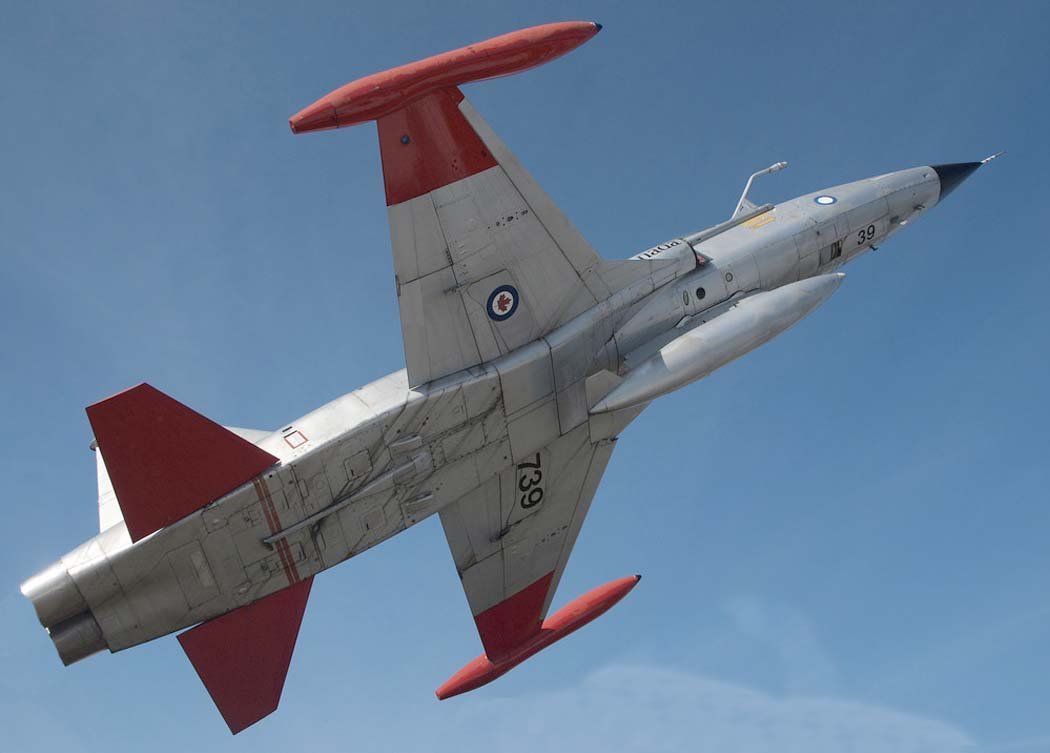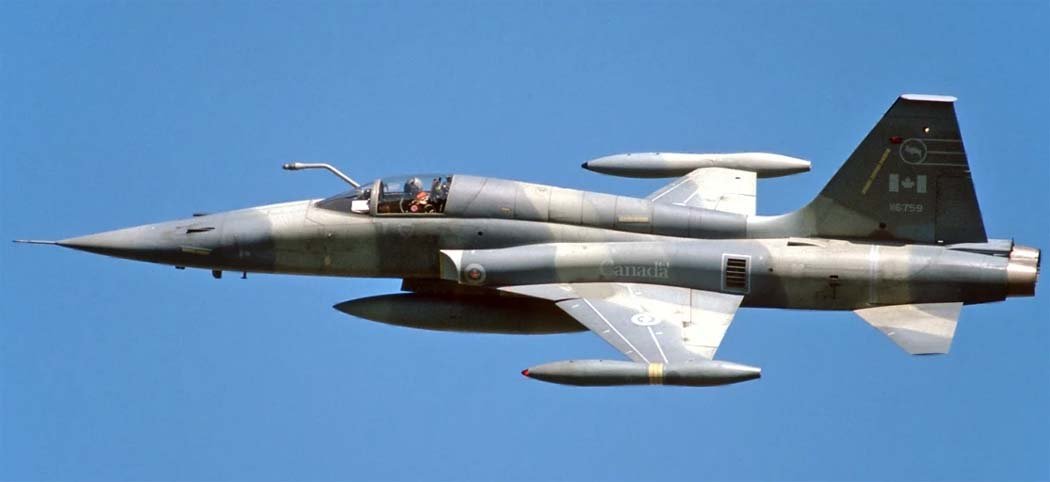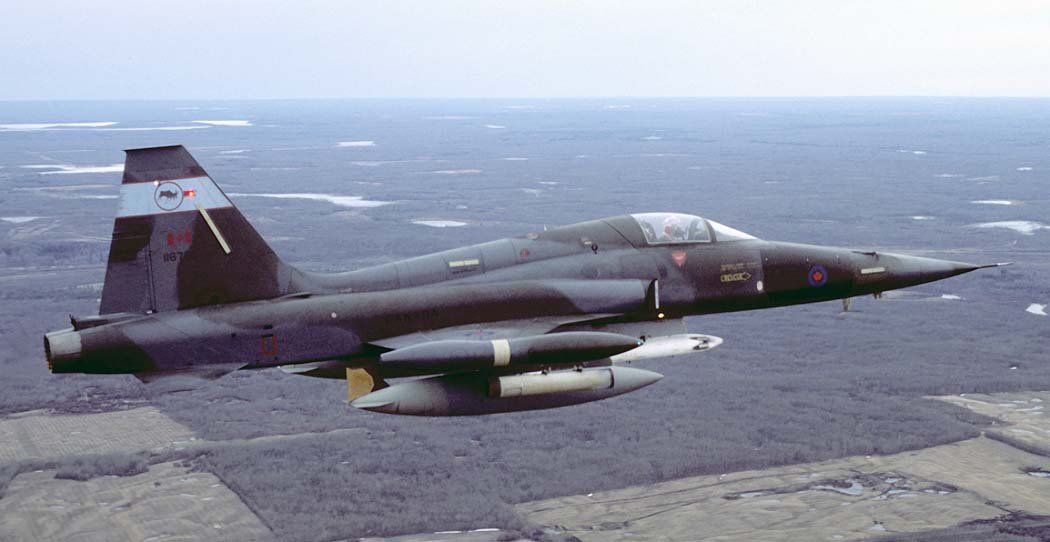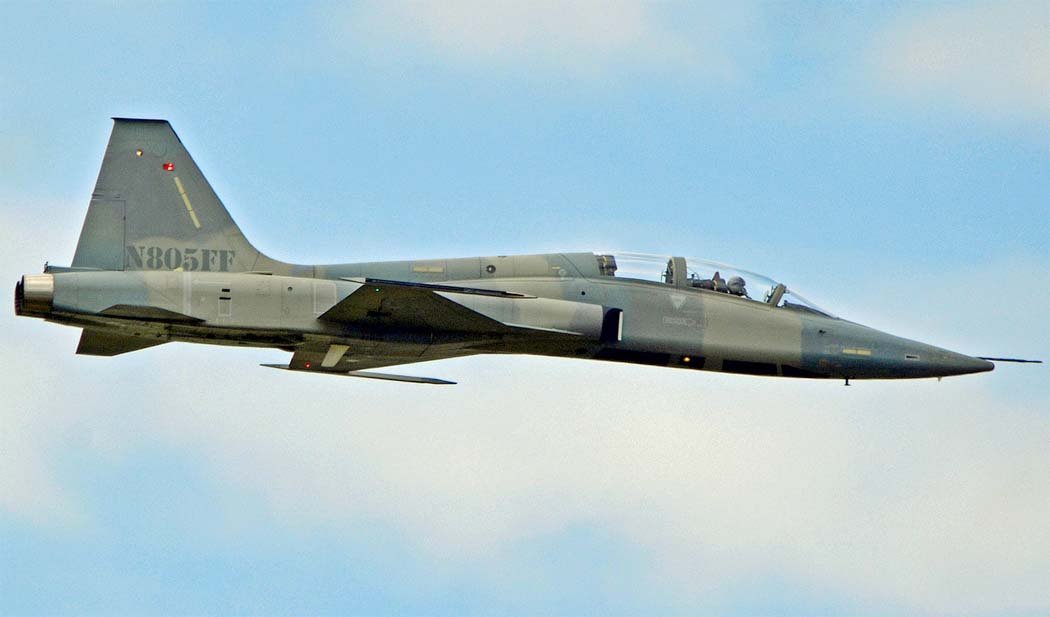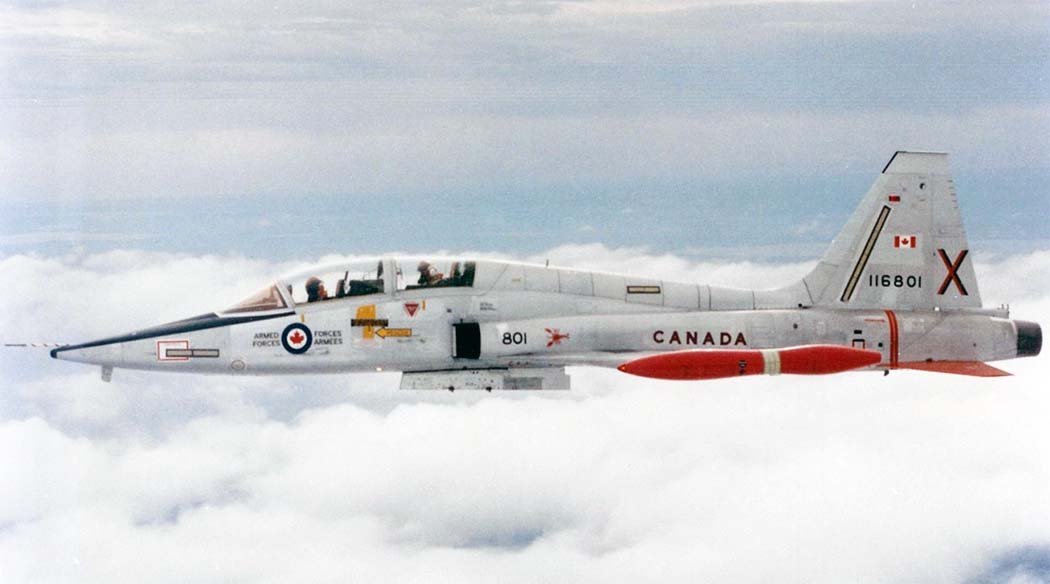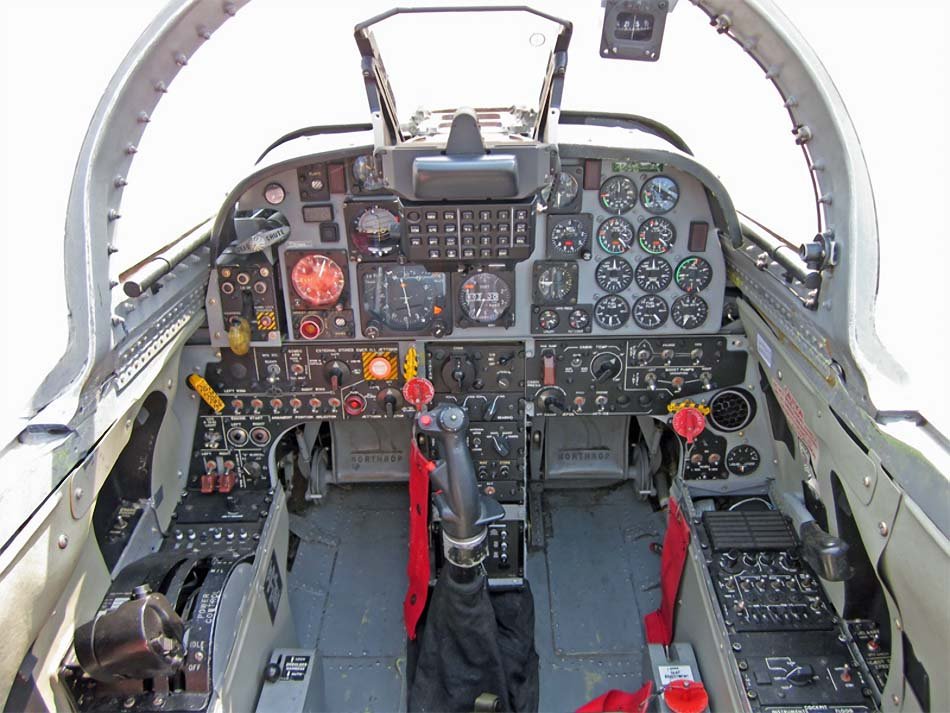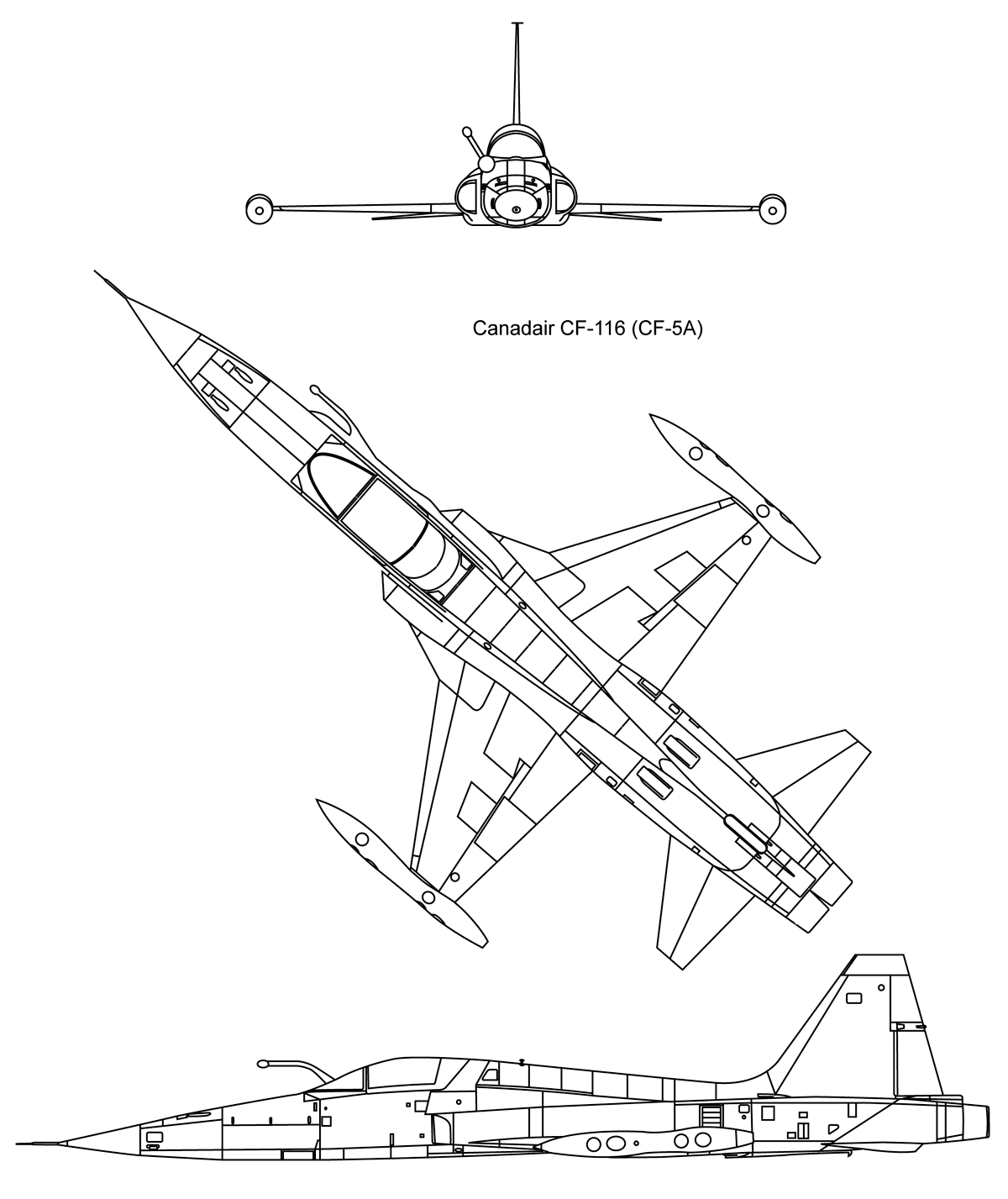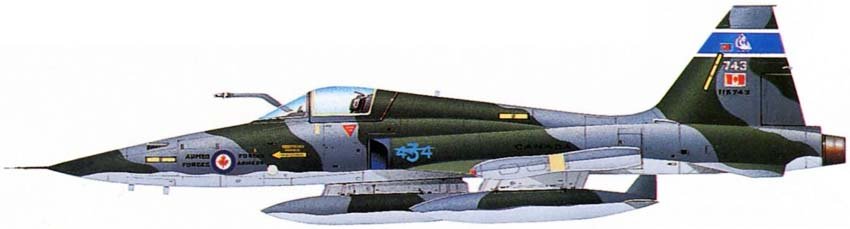
The CF-116 Freedom Fighter is a variant of the F-5A Freedom Fighter, built in the factories of the Canadian firm Canadair Ltd. under license from the American firm Northrop Corporation. Before 1976, this aircraft was designated CF-5A, and its internal company designation was CL-219.
For the Canadian version of the aircraft, Orenda J85-CAN-15 jet engines were designed, which were more powerful (19.13 kN) than the General Electric J85-GE-13 engines (12.10 kN) installed on the F-5A fighters.
Initial Improvements and Combat Experience
During the construction of the aircraft, experience from the combat use of the F-5A in Vietnam was taken into account. This led to the installation of an in-flight refueling system and a 25% reduction in the takeoff distance required with a full combat load. Furthermore, the fuselage armor was reinforced, the windshield was strengthened, and modernized electronic equipment was installed.
The F5-2000 Modernization Program
In 1987, Bristol Aerospace received a contract to modernize and extend the service life of 56 Canadian CF-5A and CF-5D aircraft, converting them into training machines for CF-18 Hornet fighter pilots. The modernization program included replacing the wing skins and vertical stabilizer, strengthening various parts of the fuselage, and installing different landing gear.
The aircraft were also fitted with new electronic equipment, including a GEC Avionics digital computer with a MIL 1553B data bus. After modernization, the service life of the machines increased by 4,000 flight hours. These aircraft were redesignated F5-2000 (the number indicating service until the year 2000). The cost of the first modernized aircraft, returned to service in 1991, was $4 million, and these aircraft were also supplied to the Botswana Air Force.
Variants and Armament
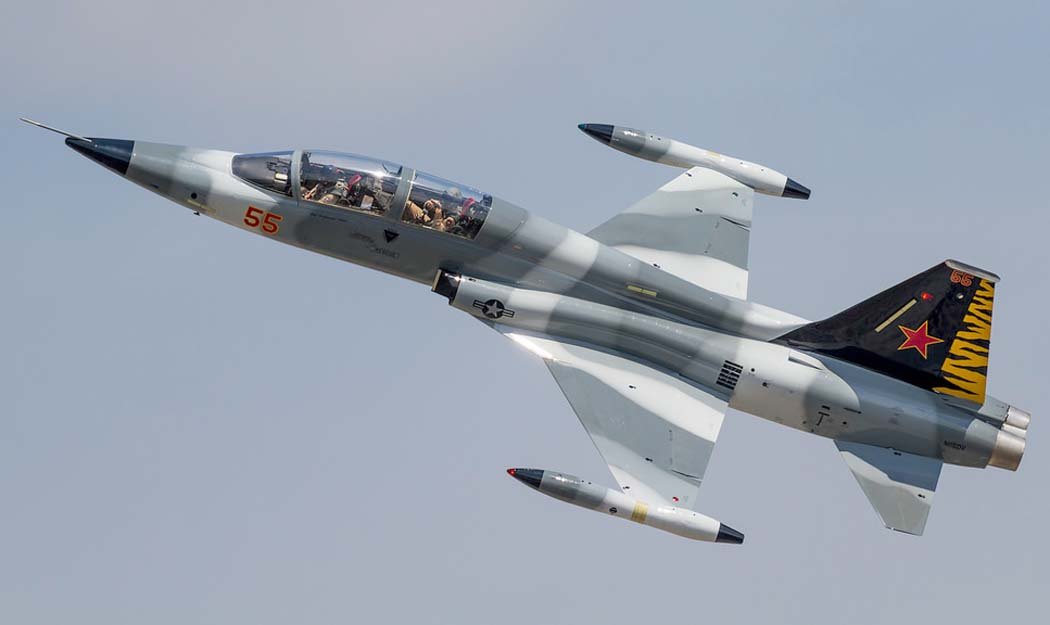
The CF-5A was the single-seat variant of the fighter, while the CF-5D was the two-seat variant, both designations used before 1976. Regarding armament, the CF-116 was equipped with two 20-mm Ford M39E cannons, each with 280 rounds.
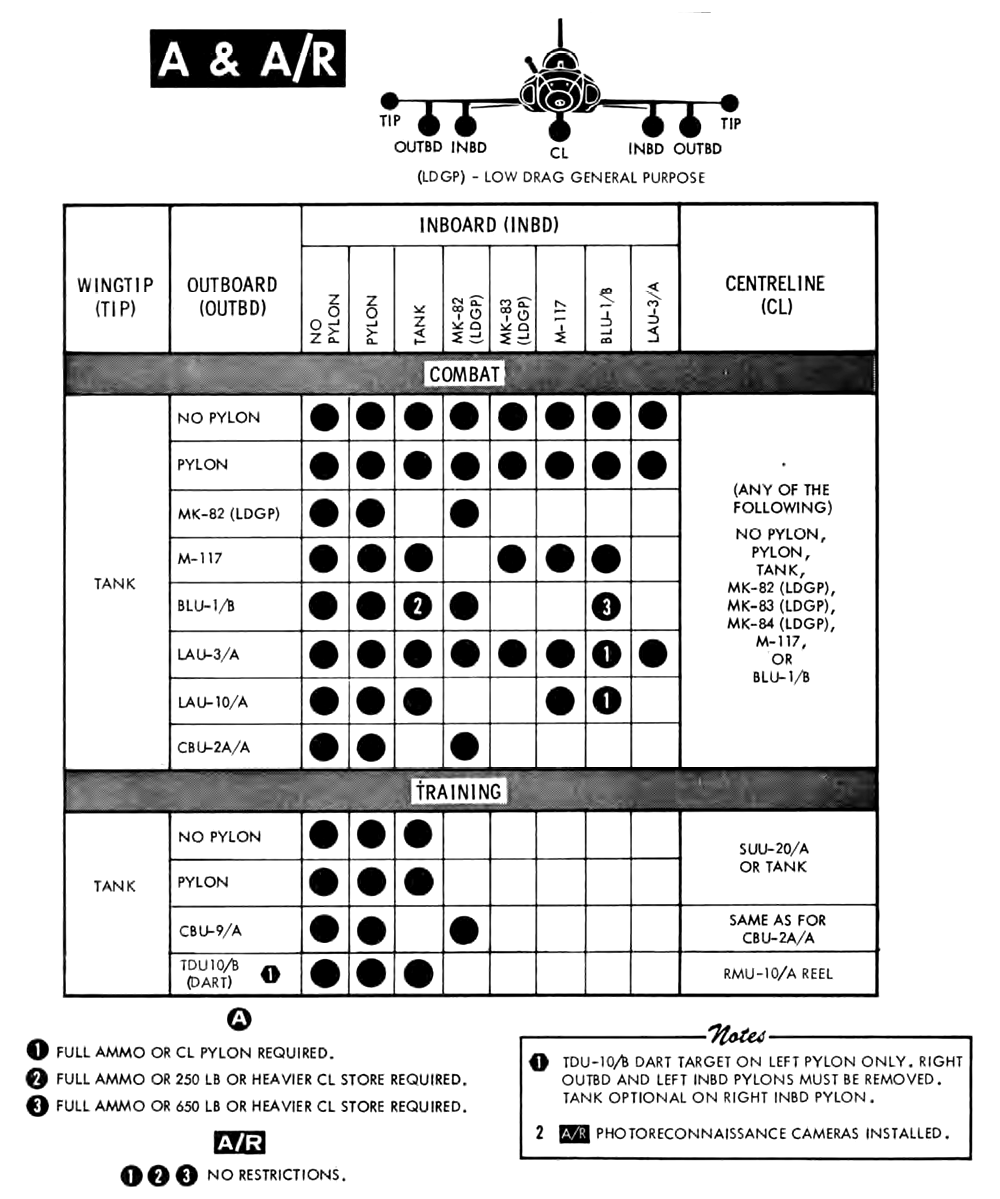
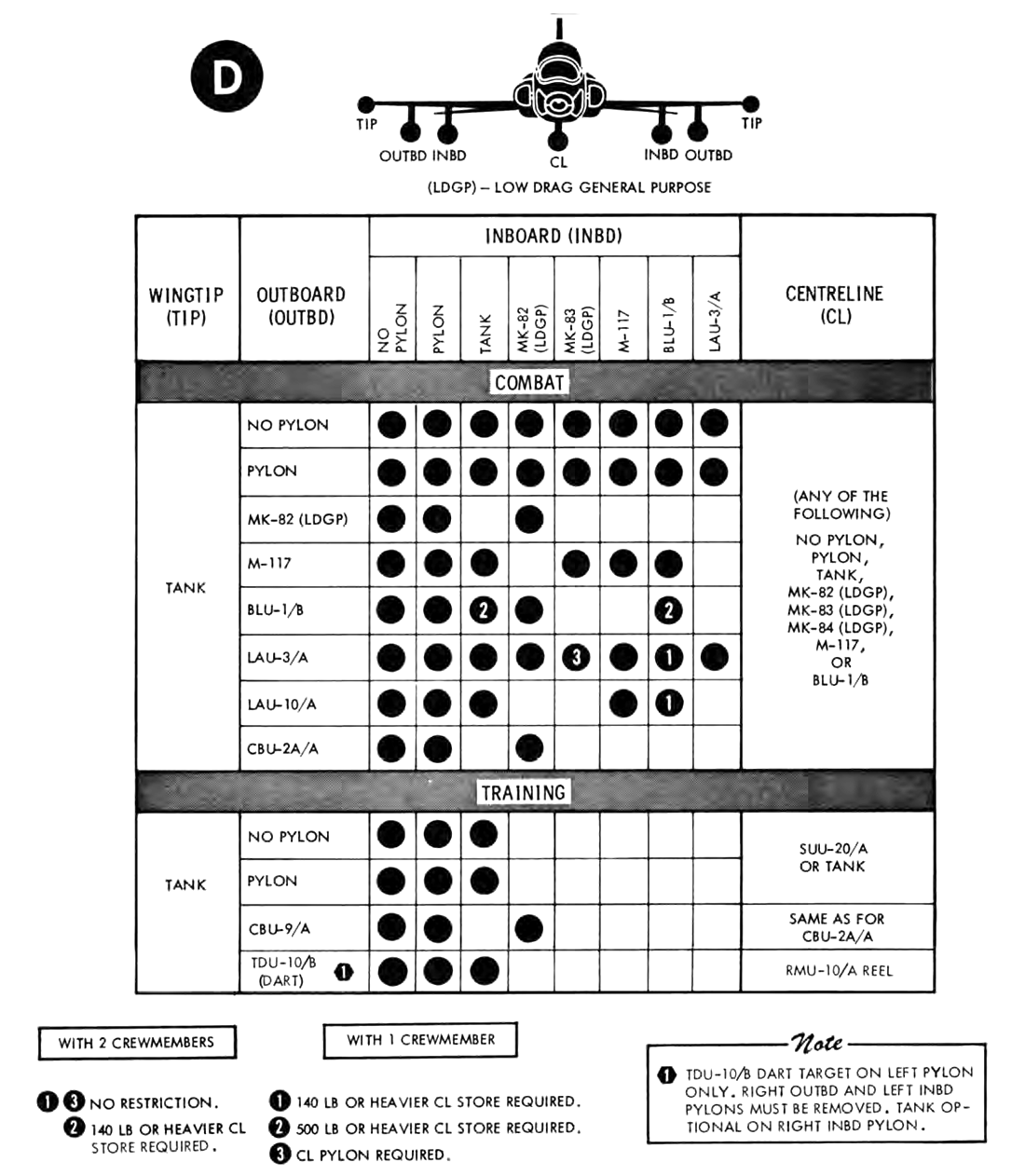
Its combat load was 1996 kg on 7 suspension pylons. This included carrying two AIM-9 Sidewinder air-to-air missiles (only on the AUP version), one 907 kg bomb, or combinations of two 454 kg bombs and two 227 kg bombs, or four 19×70-mm unguided rocket launchers.
Technical Specifications
| Modification | CF-116A |
| Wingspan, m | 7.7 |
| with wingtip tanks | 7.85 |
| Length, m | 14.38 |
| Height, m | 4.01 |
| Wing area, m2 | 16.16 |
| Empty weight | 3938 |
| Normal takeoff weight | 6418 |
| Maximum takeoff weight | 9249 |
| Engine type | 2 Turbojet Orenda J85-CAN-15 |
| Thrust, kN | 2 x 19.13 |
| Fuel in internal tanks, l | 2207 |
| additional tanks | 387.5 |
| External fuel tanks (EFT) | 3 x 567.8 |
| Maximum speed, km/h | 1572 (M=1.48) |
| Cruising speed, km/h | 1030 |
| Practical range with external fuel tanks, km | 2594 |
| Maximum combat radius, km | 989 |
| Combat radius with maximum combat load, km | 315 |
| Maximum rate of climb, m/min | 9958 |
| Service ceiling, m | 15390 |
| Crew, crew | 1 |
| Armament | two 20-mm Ford M39E cannons with 280 rounds per cannon. Combat load of 1996 kg on 7 hardpoints: 2 AIM-9 Sidewinder air-to-air missiles (AUP only) and 1×907 kg bomb or 2×454 kg bombs and 2×227 kg bombs or 4 19×70-mm unguided rocket pods. |
Image gallery of the CF-116 Freedom Fighter