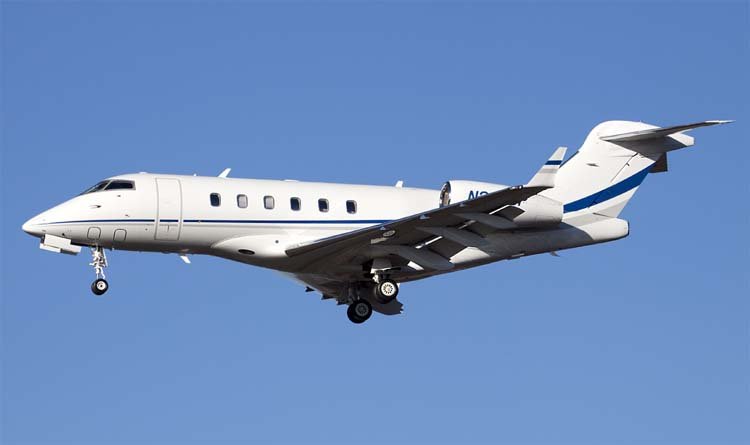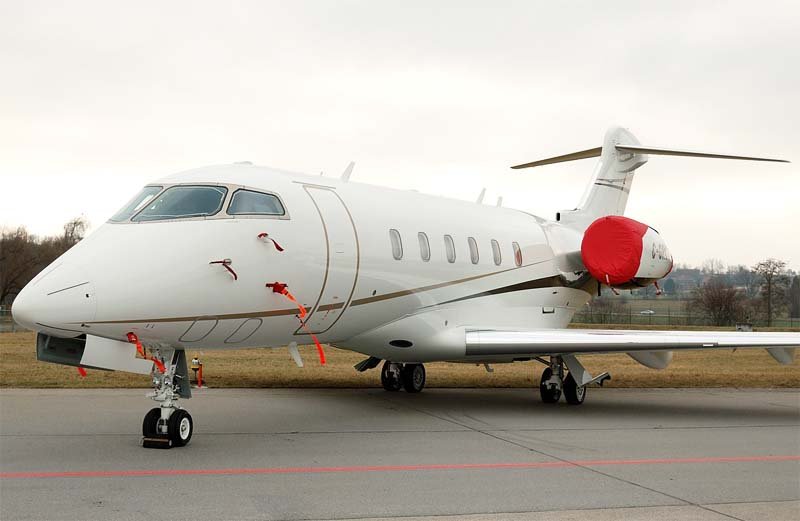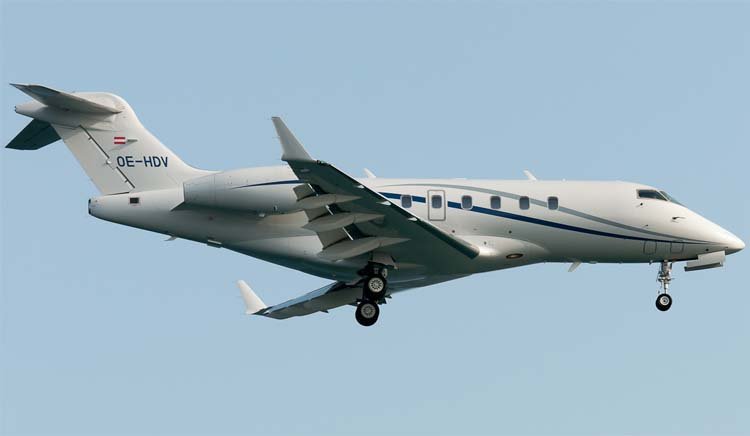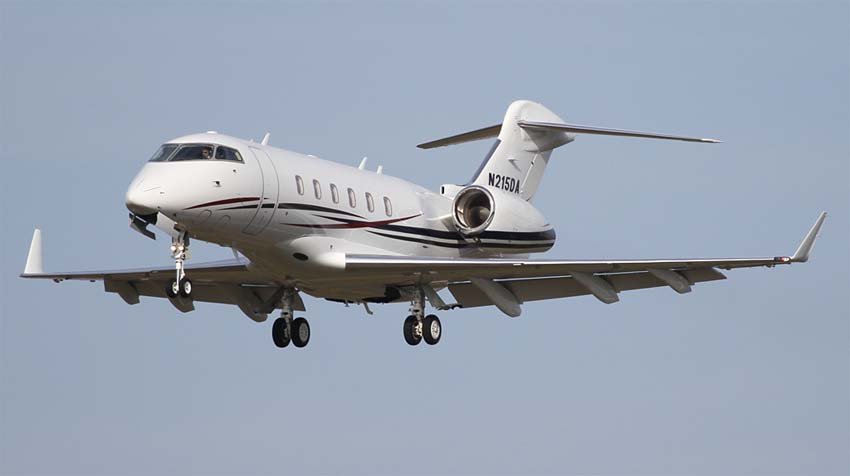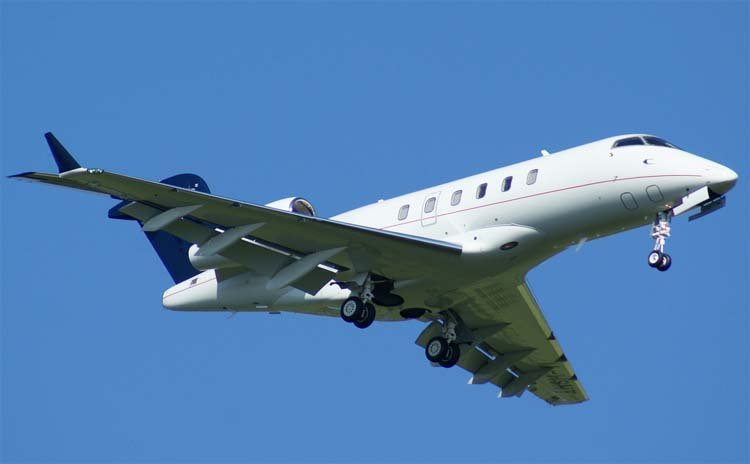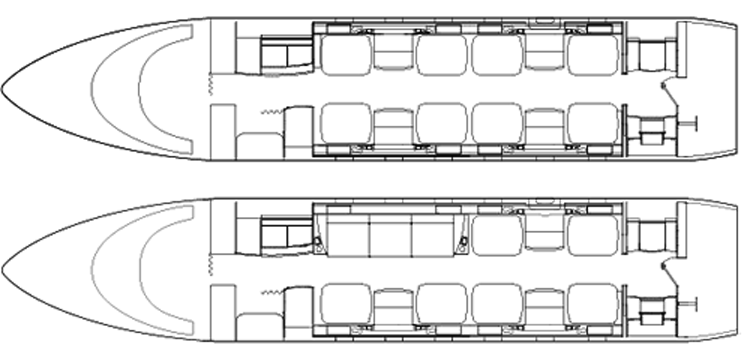
The Bombardier BD-100-1A10 Challenger 300 is a mid-size transcontinental aircraft. Unlike other models, which are various modifications of the Challenger 600 aircraft, the Challenger 300 was created from scratch, marking a distinct and independent development path.
Bombardier Aerospace announced the development of the Continental Business BD-100 (as it was then called) at the annual NBAA convention in Las Vegas in October 1998. The program was officially launched on June 13, 1999, at the Paris Air Show, indicating its global importance from the outset.
The first assembly of the wing and fuselage occurred on November 19, 2000, followed by its maiden flight on August 14, 2001. Certification was achieved by the end of 2002, with its official debut at Orlando Executive Airport on September 8, 2002, during the NBAA conference. Customer operations began in 2003.
History and Development
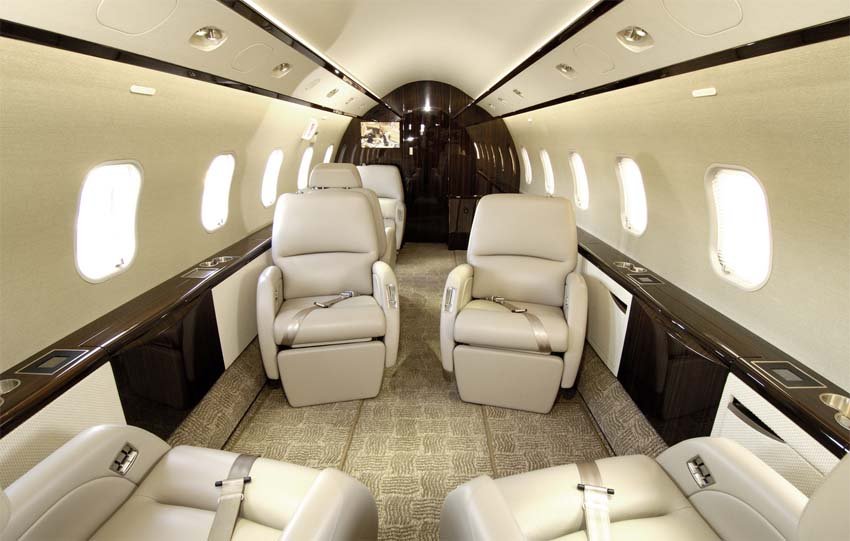
This business jet quickly gained recognition as the most maneuverable, spacious, and reliable aircraft in business aviation. It boasts numerous advantages, including high cruising speed, economical fuel consumption, a wide cabin, and a stylish interior. Amenities such as air conditioning, a vibration management system, satellite communication, a CD/DVD player, and an Airshow system further enhance passenger comfort.
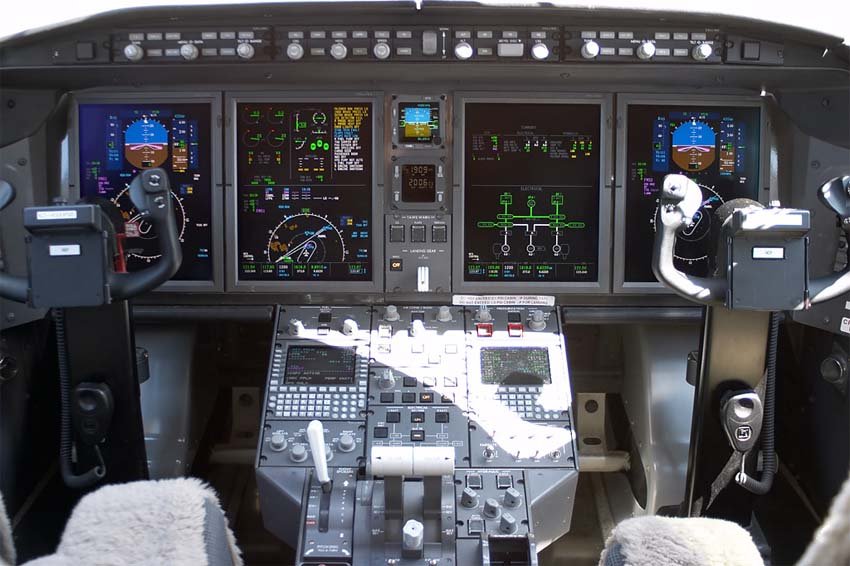
The aircraft is equipped with modern Rockwell Collins Pro Line 21 avionics. This sophisticated electronic suite includes a comprehensive set of instrument panel sensors, providing critical information for the Electronic Flight Instrumentation System (EFIS) and the Engine In-Flight Condition Monitoring System (EIFCMS).
Furthermore, it features a high-frequency omnidirectional radiotelemetry device, connected to the landing guidance system, autopilot, automatic distance measuring system, and satellite navigation and positioning system. An electronic collision avoidance system (TCAS II) and a Rockwell Collins electronic weather radar ensure maximum safety and operational awareness.
Technical Features and Comfort
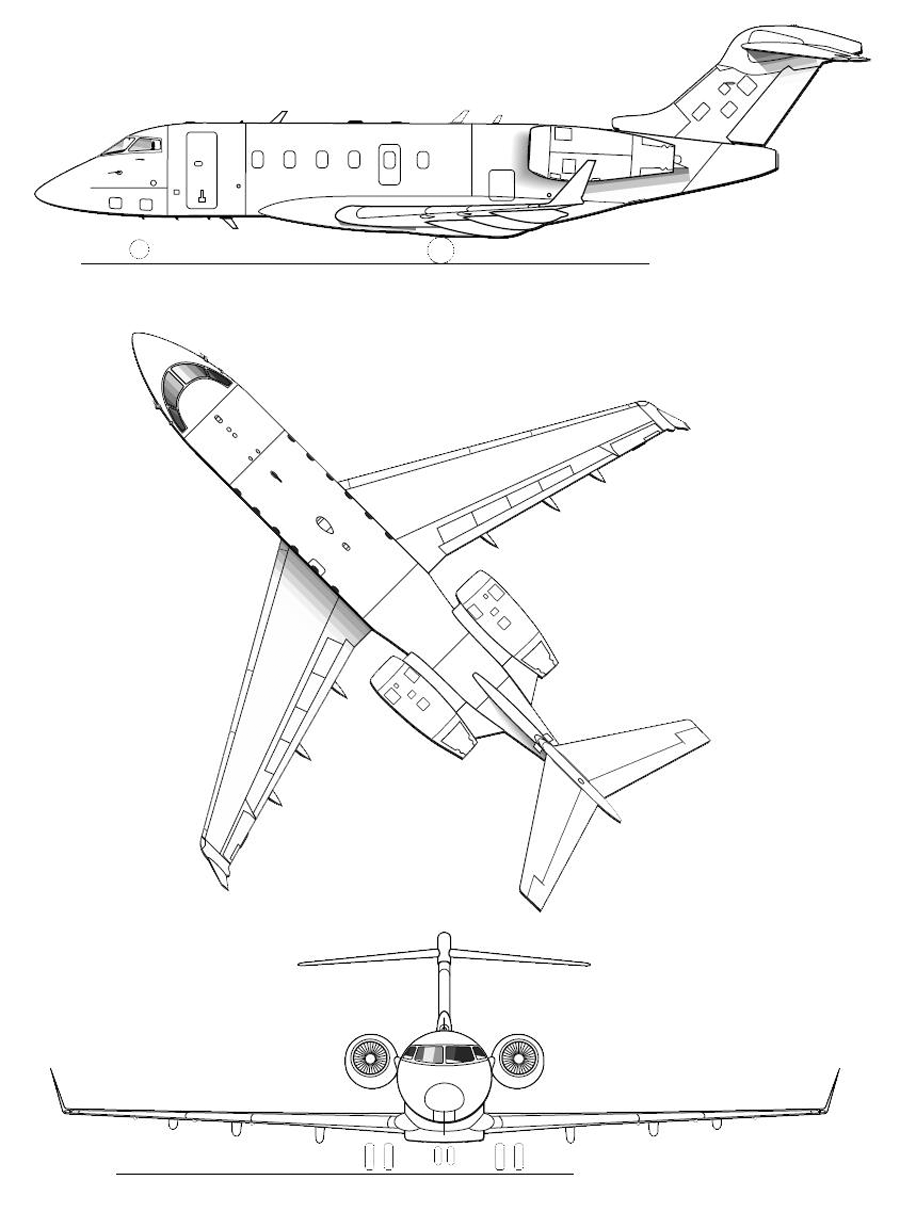
A key technical feature of the Challenger 300 is its all-metal wing, designed without leading-edge slats but equipped with flaps on each side, which significantly increases structural reliability. Structurally, the Challenger 300 utilizes a traditional all-metal airframe, ensuring robustness and durability.
The manufacturing process is globally distributed: Canadair (Canada) is responsible for the front fuselage, including the cockpit and control cabin. The wings are assembled at Mitsubishi Heavy Industries in Japan, and Bombardier Aerospace’s Belfast division (United Kingdom) produces the central fuselage section.
The aircraft’s rear section is assembled in Taiwan by AIDC, while Hawker De Havilland in Australia manufactures the tail empennage and additional equipment for the Challenger 300’s power plant. All these components are then delivered to the Bombardier Aerospace Learjet plant in Wichita for final assembly.
Manufacturing Process and Global Reach
More recently, full aircraft assembly has also commenced at the Montreal Dorval plant in Quebec, Canada, which is planned to become the primary assembly point for the Challenger 300 in the near future. The Challenger 300 embodies not only high-speed transportation but also unique comfort and superior quality.
This business jet achieves a high cruising speed of 850 km/h with economical fuel consumption. Its spacious, comfortable cabin accommodates 8 passengers and allows for full standing height, greatly enhancing comfort during long flights. Onboard amenities include a vibration management system, air conditioning, satellite communication, a CD/DVD player, and a complete office equipment suite.
For extended journeys, the cabin seats can transform into full-fledged sleeping berths. The baggage compartment is conveniently located in the rear of the aircraft, with free access throughout the flight. A climate control system manufactured by Liebherr Aerospace-Toulouse ensures optimal ventilation and air conditioning for both the cabin and baggage area.
The Challenger 300 boasts a continental flight range of 5471 km with 8 passengers on board. This aircraft offers 39% more cabin space and 20% greater range than other leading mid-size business jets, making it a highly competitive option in its class.
In November 2004, the Challenger 300 set a world speed record for aircraft in its class during a flight from Carlsbad, California, to Bangor, Maine. With two pilots and eight passengers, the Challenger 300 covered 4365 km in 4 hours and 41 minutes, achieving an average ground speed of 921 km/h.
In total, Bombardier has received orders for approximately 150 Challenger 300 aircraft, including 17 for its subsidiary Flexjet in Dallas (USA) and Flexjet Europe (Hounslow, UK). These orders highlight the aircraft’s market success and are produced under a joint coordination program.
Technical Specifications
| Modification | Challenger 300 |
| Wingspan, m | 19. 46 |
| Aircraft length, m | 20. 92 |
| Aircraft height, m | 6.1 0 |
| Wing area, m2 | 48.50 |
| Empty weight | 10750 |
| Maximum takeoff weight | 17622 |
| Fuel weight | 6418 |
| Engine type | 2 Honeywell HTF7000 Turbofan engines |
| Thrust, kN | 2 x 30.40 |
| Maximum cruising speed, km/h | 870 |
| Normal cruising speed, km/h | 8 48 |
| Practical range, km | 5741 |
| Maximum rate of climb, m/min | 1524 |
| Practical ceiling, m | 1 2497 |
| Crew, crew members | 2+1 |
| Payload | 8-9 passengers |
Image gallery of the Challenger 300