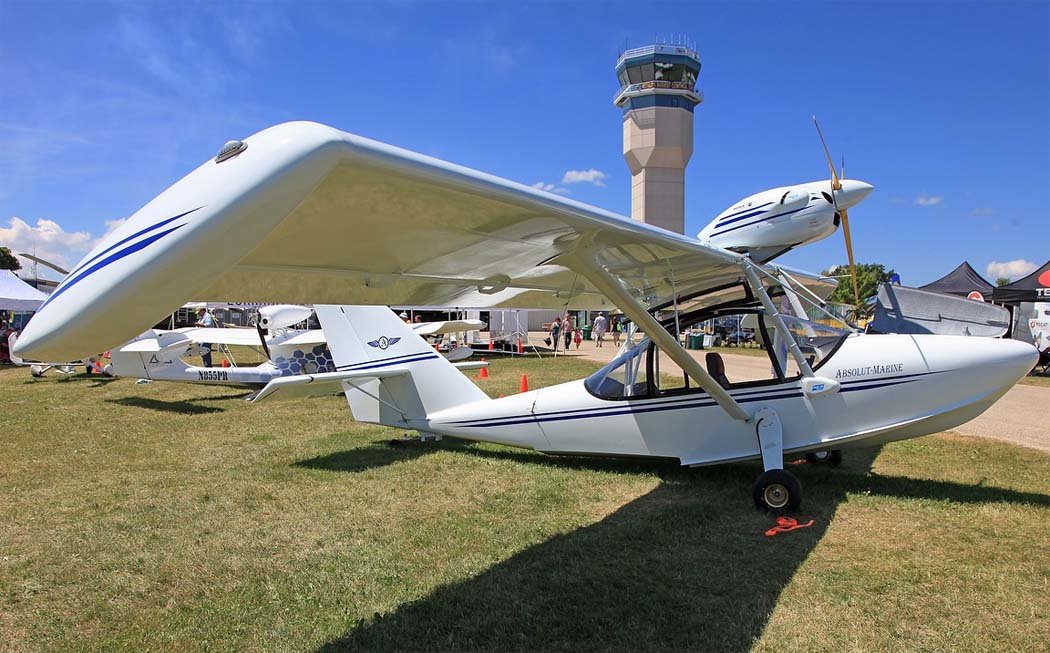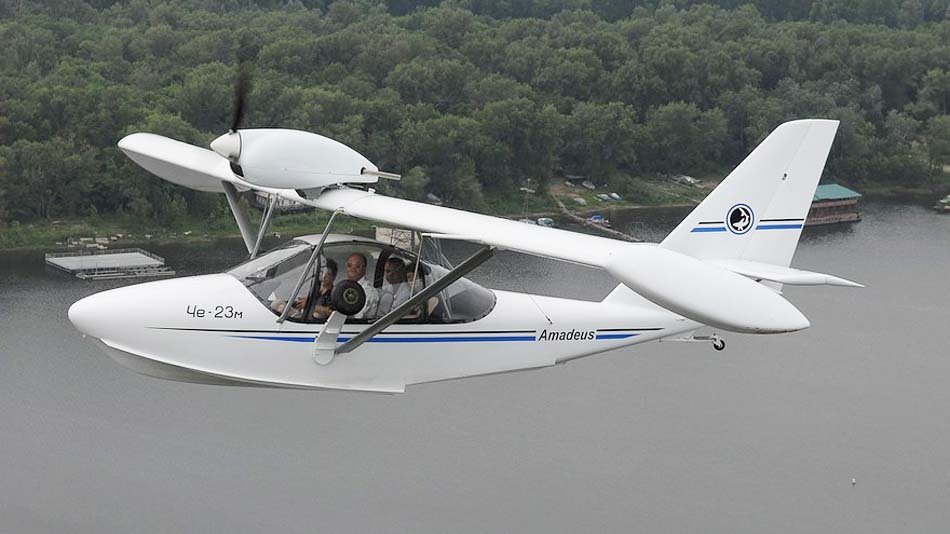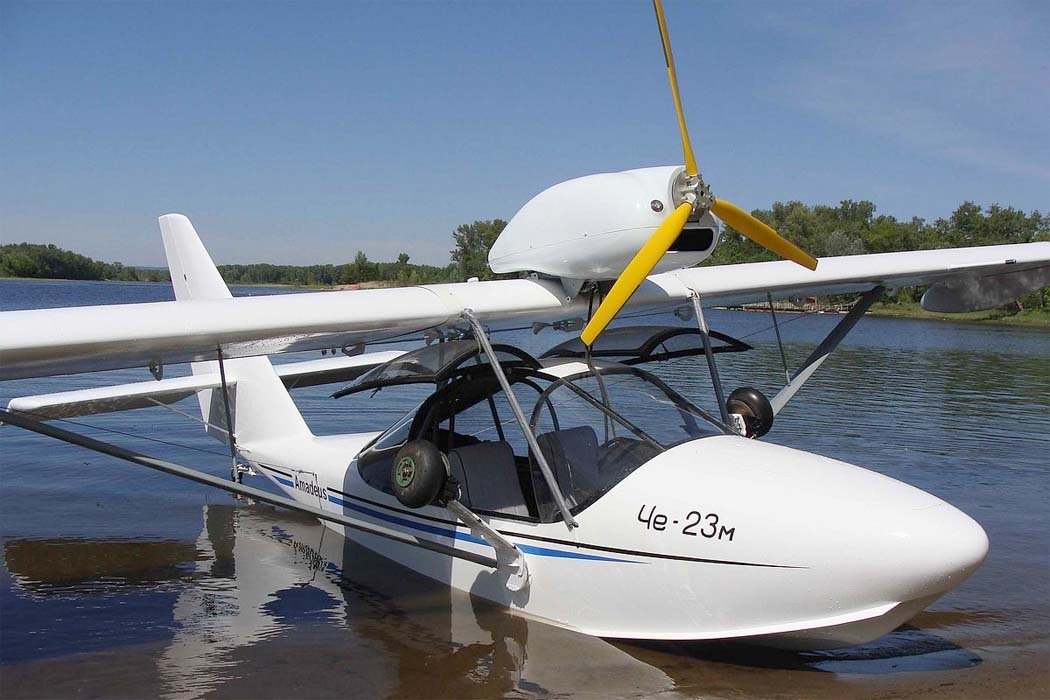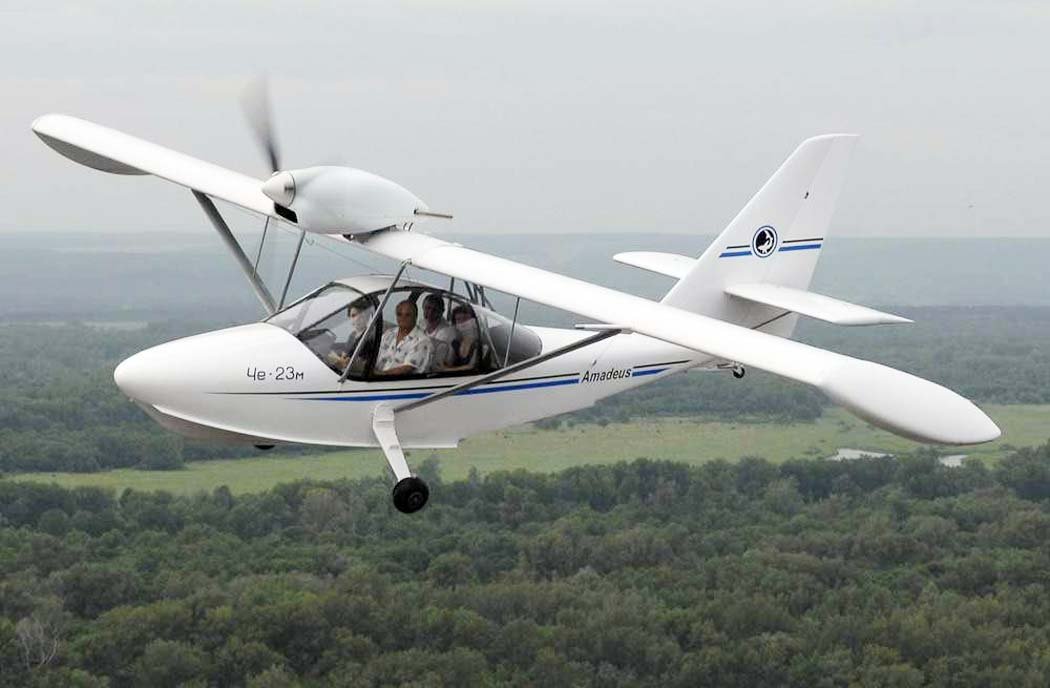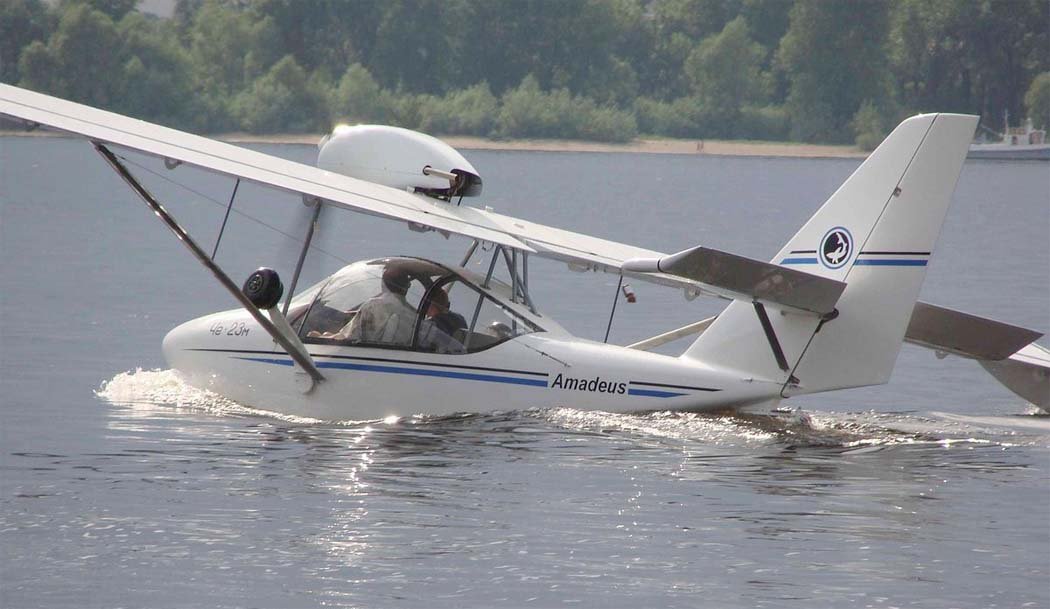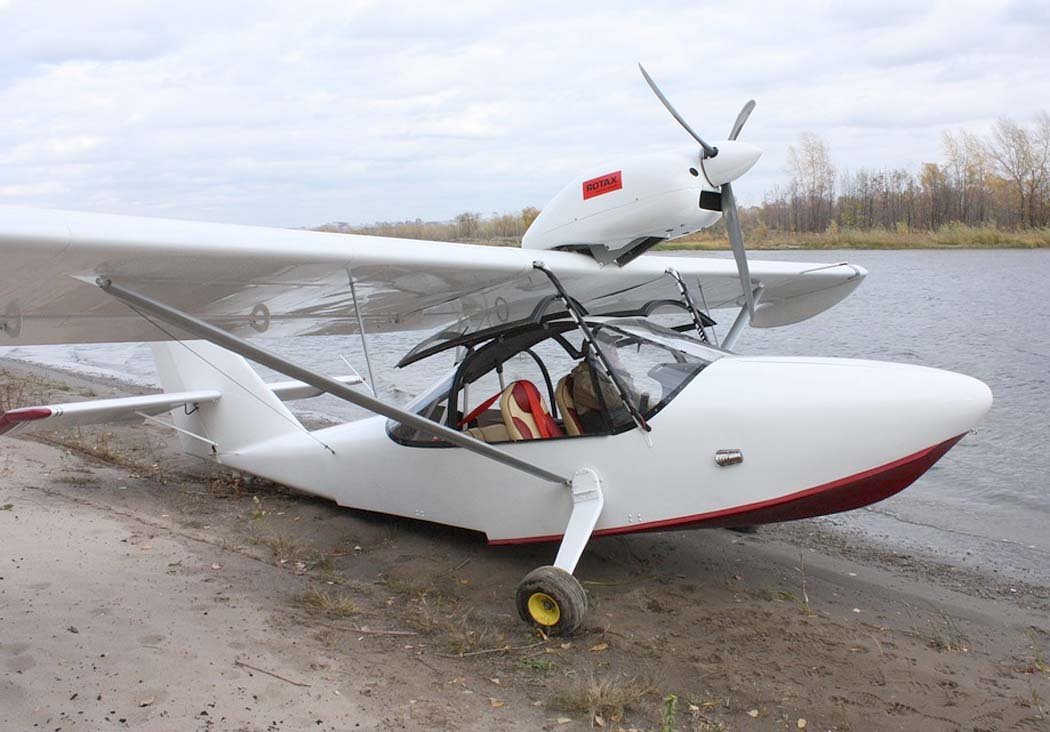
The Che-23 is a light, three-seat amphibian aircraft powered by a single Rotax 582 (or Rotax 912) engine, producing 64 (100) hp. It represents an improved, lighter, single-engine modification of the Che-22. The primary motivation for creating the Che-23 was the demand for a lighter and more affordable aircraft compared to existing twin-engine amphibians.
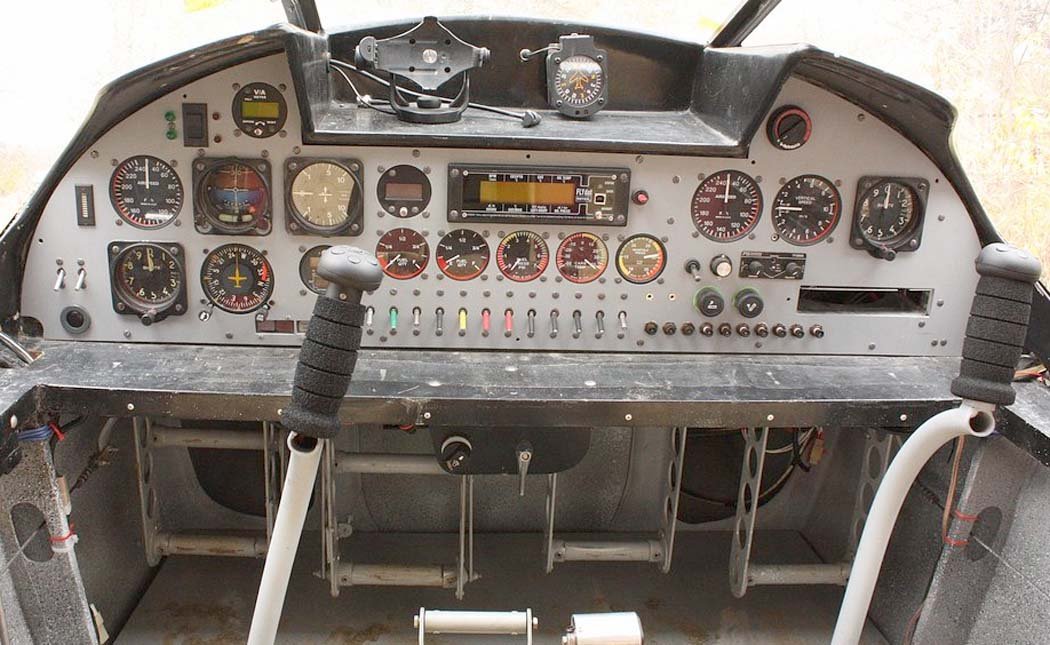
This light, single-engine, two-to-three-seat amphibian boasts a more aesthetic appearance, improved aerodynamics, reduced weight, and better seaworthiness than its predecessor, the Che-22. One of its key operational advantages is that it can be managed by a single person. The Che-23 was designed exclusively for a single engine, significantly lowering both initial cost and operational expenses.
Key Design Features and Operational Advantages
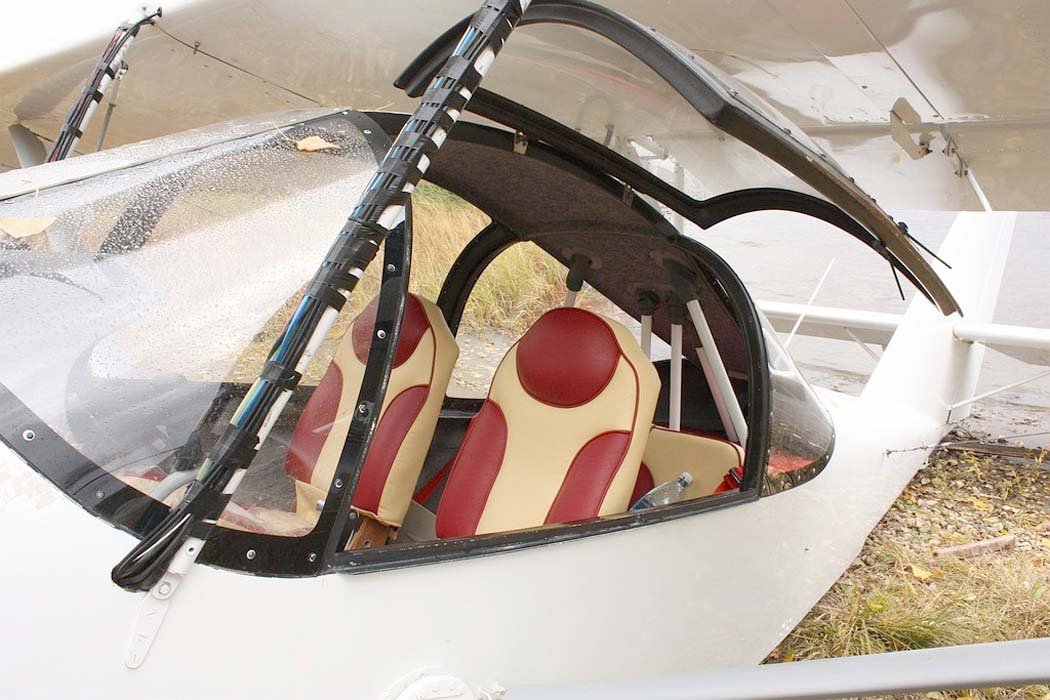
The Che-23’s single-engine configuration, compatible with engines like the Rotax 582 or 912, not only simplifies operation without requiring additional personnel but also makes the aircraft substantially lighter, opening up new possibilities. Its nominal flight weight of 495 kg qualifies it for Light Sport Aircraft (SLA) competitions. The space for a third passenger, inherited from the Che-22, was even increased for the rear occupant.
Improvements in the Che-23 were derived from 12 years of experience with the Che-22, enhancing flight performance. For instance, with the correct gearbox and propeller, an aircraft with a single Rotax 582 can lift up to four people. Seaworthiness is significantly better than the Che-22, thanks to a redesigned nose section and a much higher horizontal tail, features also seen in later Che-25 and Che-27 models.
Development, Production, and Variants
Aesthetically, the Che-23 stands out with its more rounded and pleasing forms, which not only enhance its beauty but also undoubtedly improve its aerodynamics. For reliable control on water, especially in strong winds, a retractable water rudder is incorporated. The aircraft was developed in Samara by designer Boris Chernov, with its first flight taking place in July 2003. The modified variant was named Che-23M.
From 2008 onwards, St. Petersburg-based Hydrosamolet LLC (ООО “Гидросамолет”) undertook the construction of modernized Che-23 aircraft. Three main variants were offered: the Che-23A (basic configuration, one pilot and two passengers, with a 100 hp Rotax 912 engine), the Che-23B (increased takeoff weight, one pilot and three passengers, with extended fuel capacity), and the Che-23V (featuring a more powerful 115 hp Rotax 914 engine). The last version produced was a three-seat Che-23M with a Rotax-912ULS engine.
In 2010, the base cost for new Che-23 amphibian aircraft manufactured by Hydrosamolet LLC ranged from 102,000 to 138,000 euros. Based on the Che-23, the Che-21 seaplane was developed as a lighter design without landing gear. Further evolution of the Che-23 led to the Che-24, a modernized two-to-three-seat single-engine amphibian featuring a new wing profile. By summer 2012, one Che-23M (RA-1345G) was listed in the Russian AON aircraft registry.
Technical Specifications
| Modification | Che-23 |
| Wingspan, m | 11.00 |
| Aircraft length, m | 6.50 |
| Aircraft height, m | 2.40 |
| Empty weight | 310 |
| Maximum takeoff weight | 570 |
| Fuel capacity, l | 75 |
| Engine type | 1 Piston engine Rotax 912 |
| Power, hp + kW | 1 x 100 |
| Maximum speed, km/h | 180 |
| Cruising speed, km/h | 130 |
| Practical range, km | 700 |
| Practical ceiling, m | 3000 |
| Crew, crew members | 1 |
| Payload | up to 2 passengers and up to 150 kg of cargo |
Image gallery of the Che-23