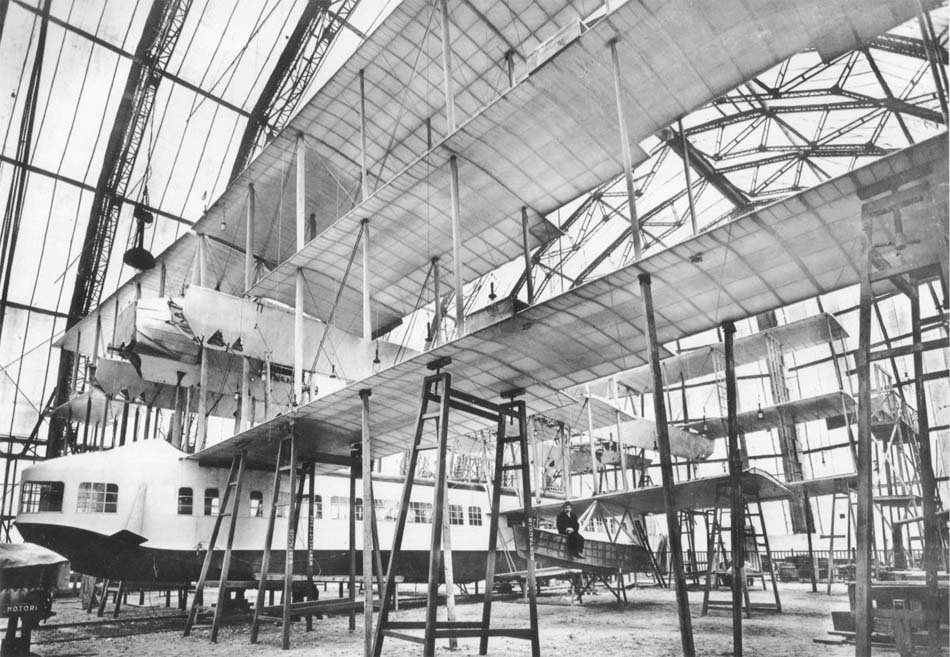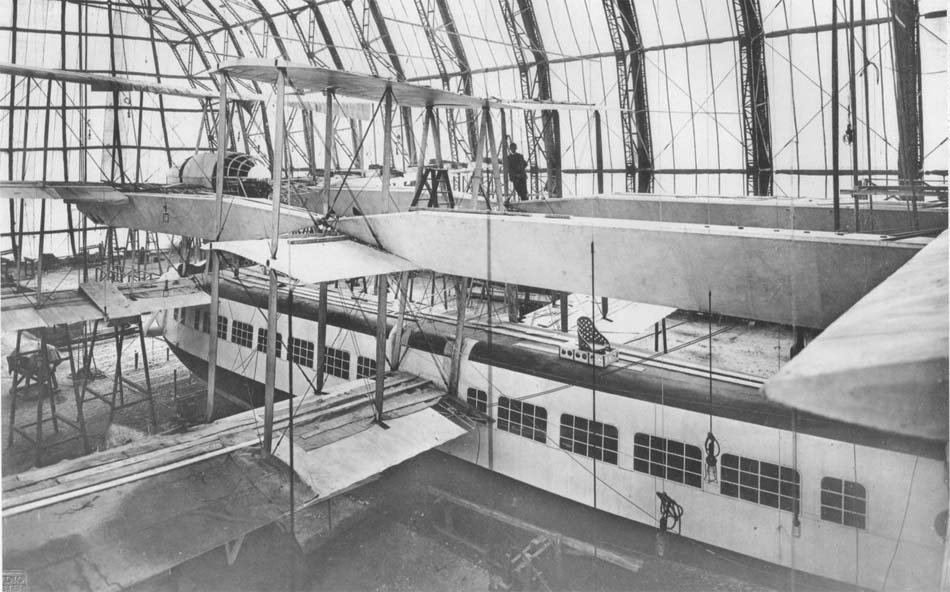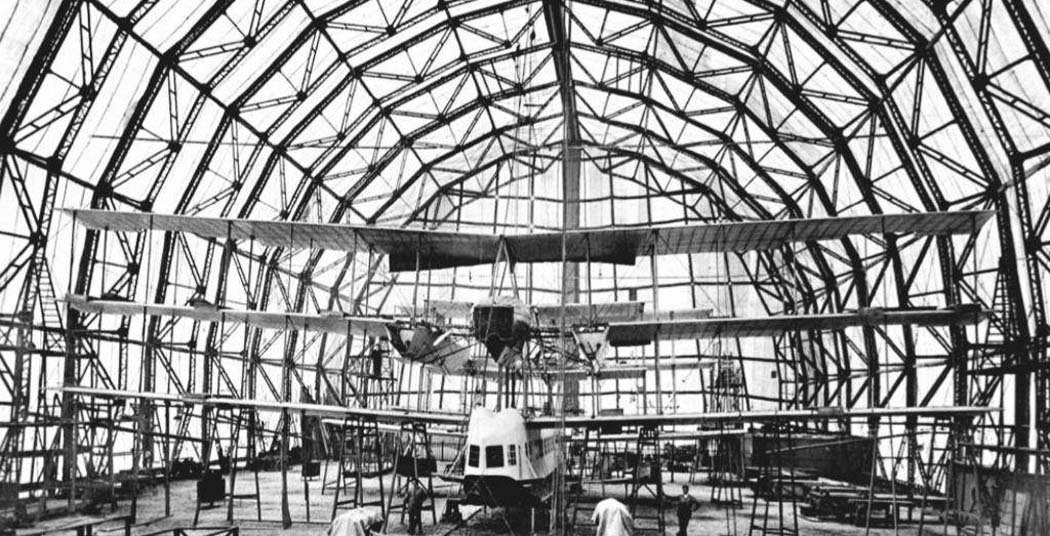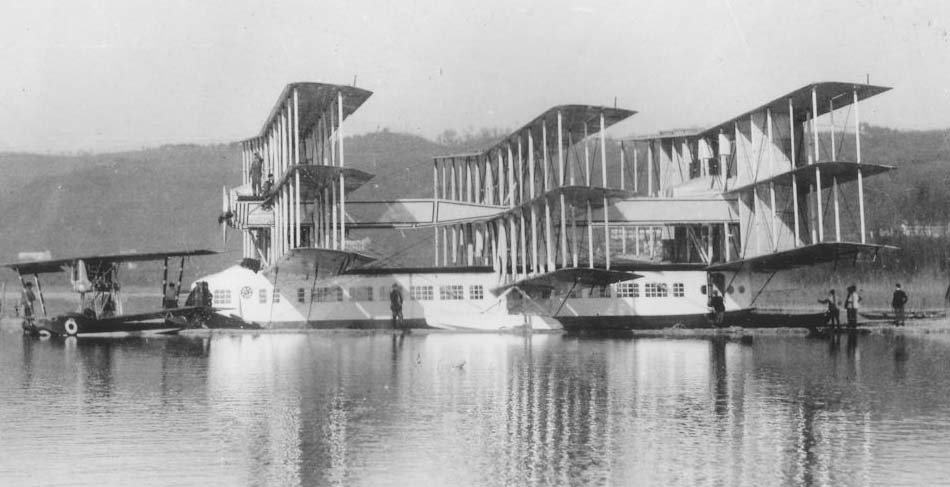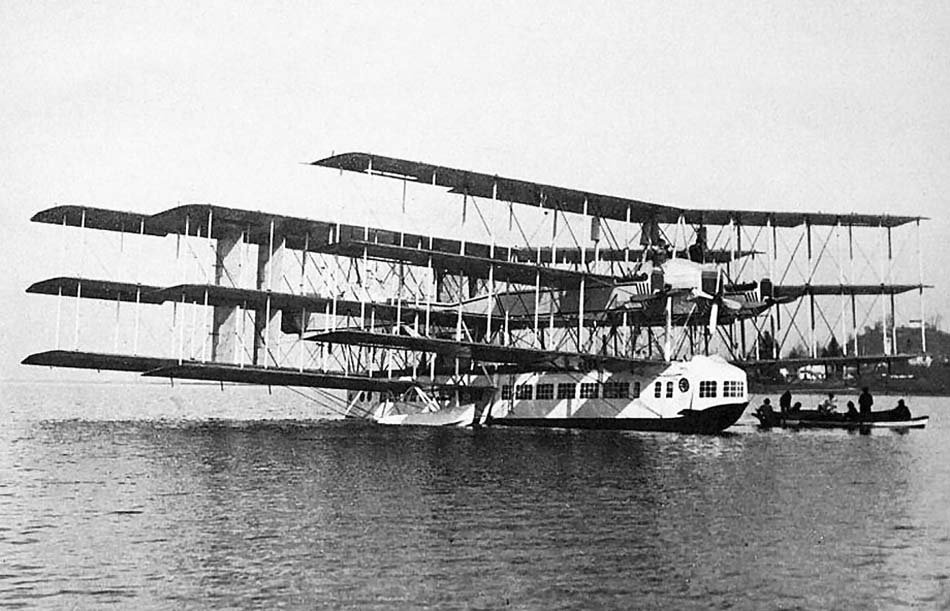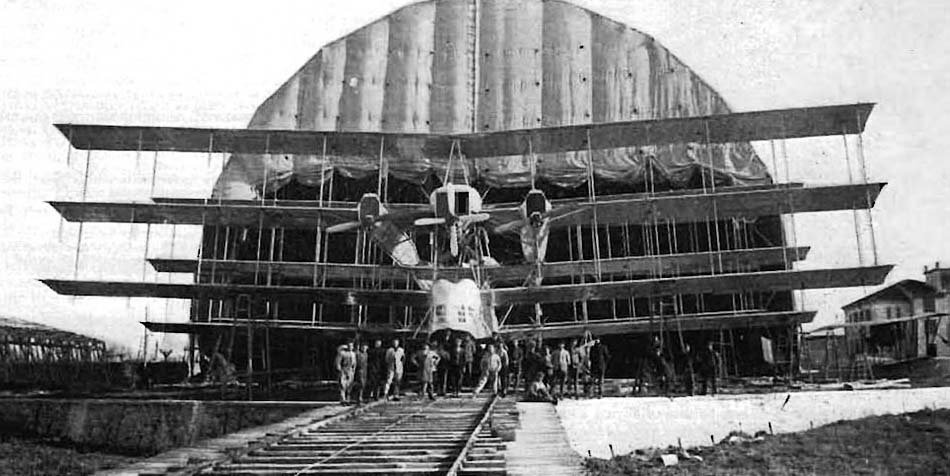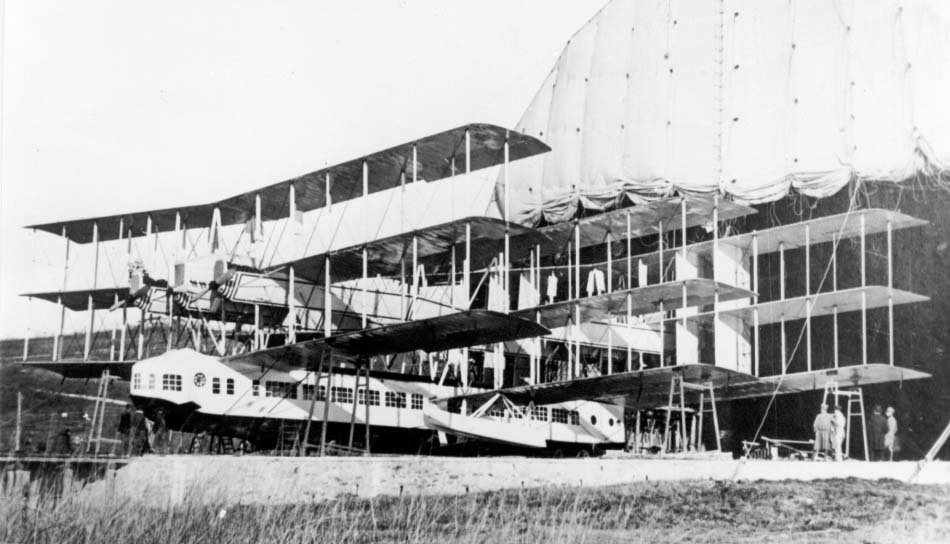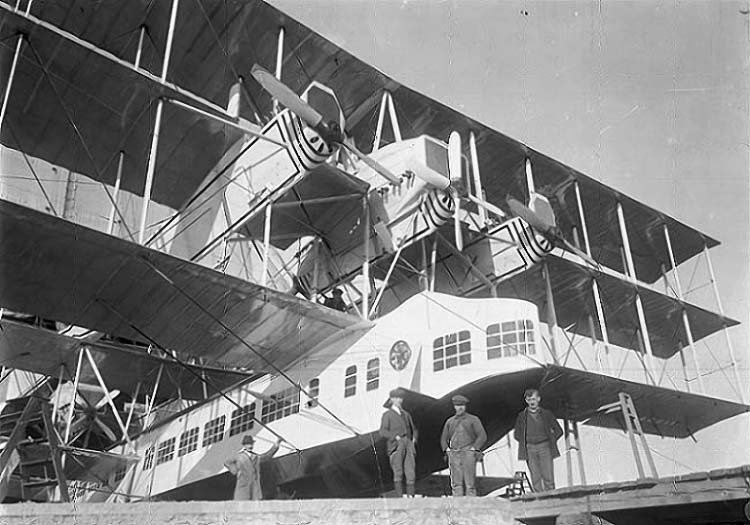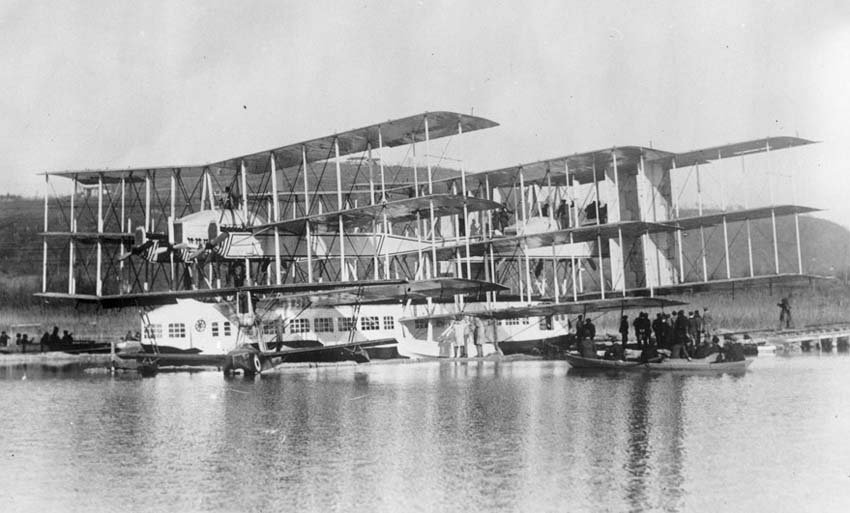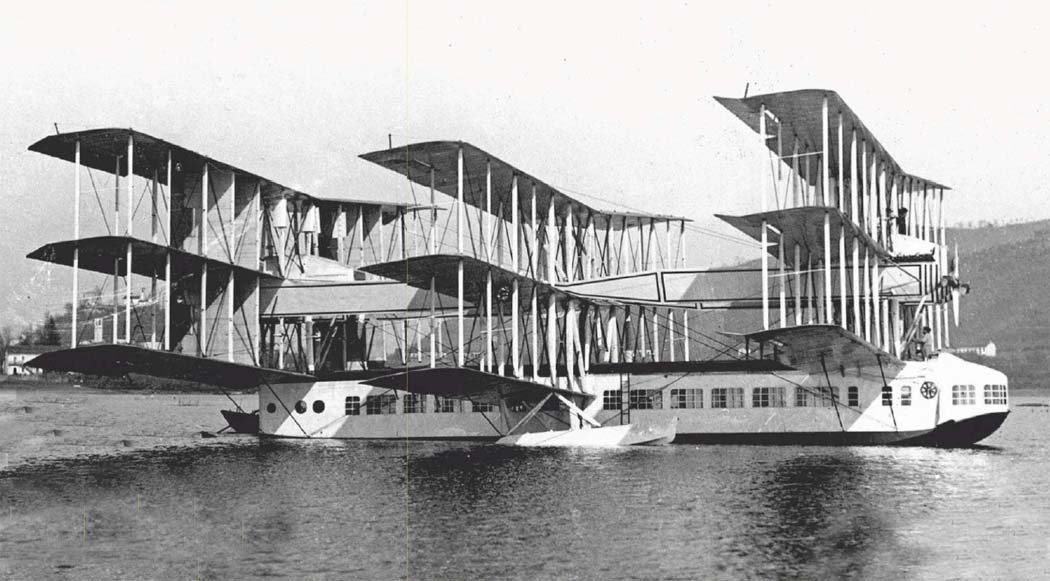
The most ambitious tandem-wing aircraft project in the history of aviation was the Italian “flying floating house” Ca.60 (Transaero, Noviplano) by the Caproni firm, created in 1920. The Caproni company was known for its gigantic twin-fuselage bombers during World War I. The scale of the Ca.60 is best expressed in Italian by the word “Capronissimo”.
Giovanni Battista Caproni, better known as Gianni Caproni, became an acclaimed aircraft designer during World War I, and his company achieved significant success, especially in the field of large multi-engine bombers. The end of the war in 1918 led to a sharp decline in military aircraft orders, so Caproni began looking for ways to enter the civil aviation market.
As early as 1913, the aircraft designer, then 27 years old, stated in an interview with Gazzetta dello Sport that “aircraft capable of carrying over a hundred passengers and able to cover transoceanic distances in a few hours will soon become a reality.” After the war, Caproni was effectively one of the first to begin designing a huge and ambitious transport-passenger seaplane, the first patent for which was issued on February 6, 1919.
The design of the multi-engine seaplane, with a capacity for over 100 people, was considered quite extravagant at the time. It would allow reaching remote or difficult-to-access areas faster than by land or sea routes, and at a significantly lower cost. Caproni believed that aircraft capable of long-haul flights would be at the forefront.
Innovative Design and Safety
Aware of the problems associated with flight safety, the Italian aircraft designer focused on improving aircraft reliability and minimizing accident damage. Firstly, he equipped the seaplane with enough engines to allow it to remain airborne even if up to three engines failed. The seaplane’s configuration provided relative ease in takeoff and landing, as even a modest-sized lake could serve as an airfield for the future flying boat. Finally, he recognized the importance of enhancing passenger comfort through increased cruising altitude, turbocharging systems, and propeller tone, which would compensate for engine power loss during takeoff.
Technical Specifications of the “Noviplano”
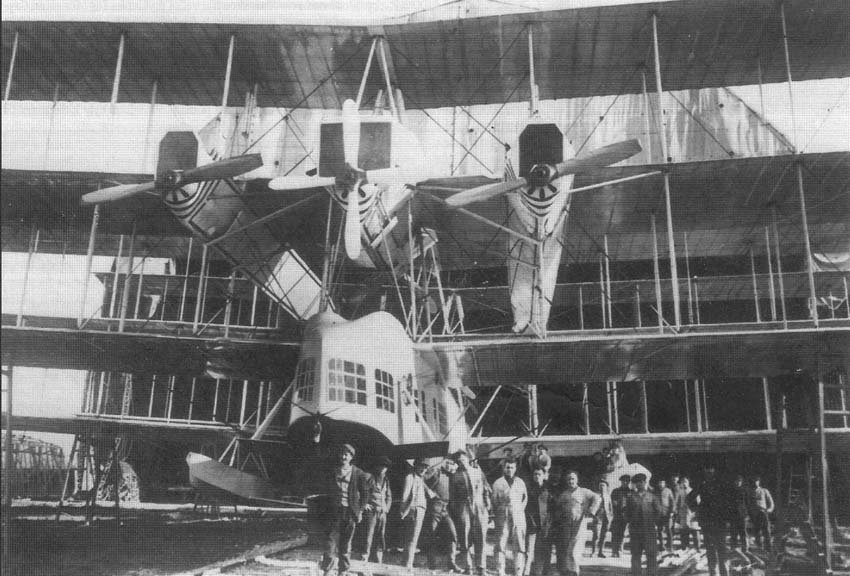
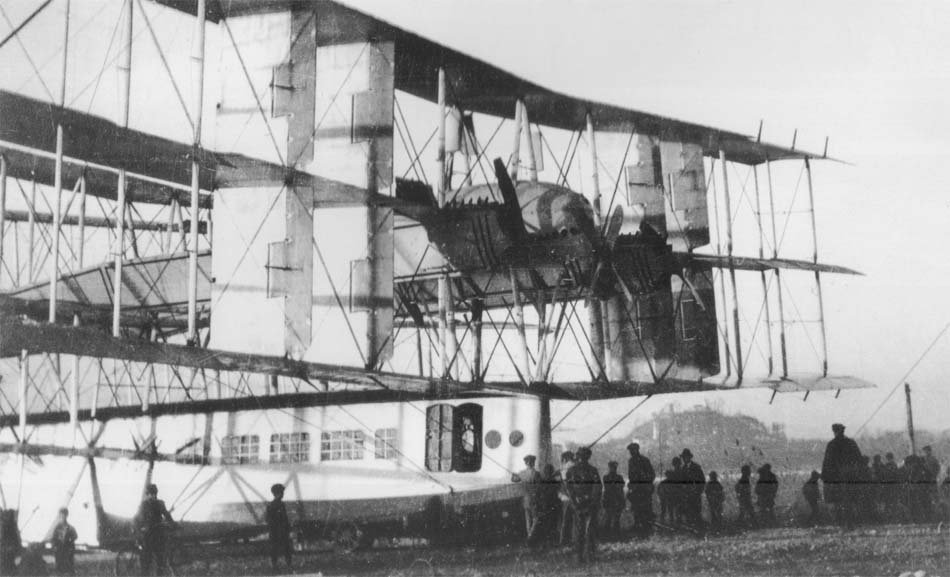
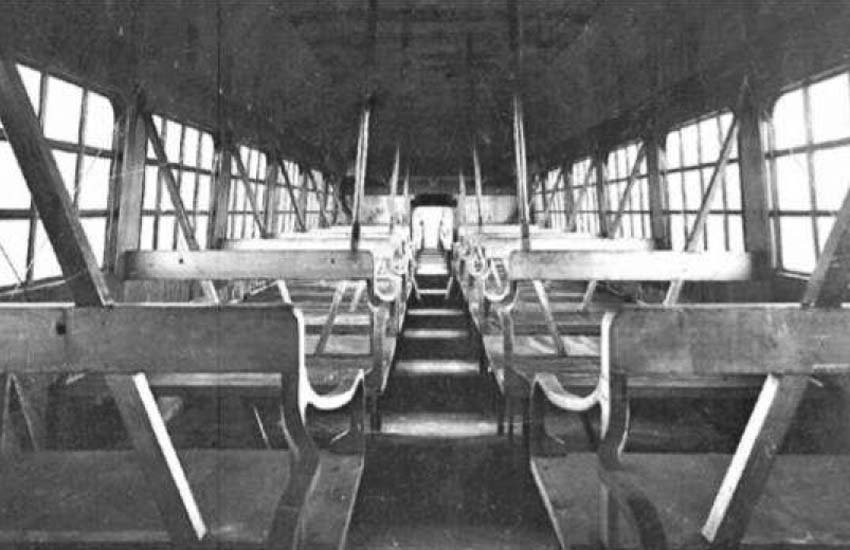
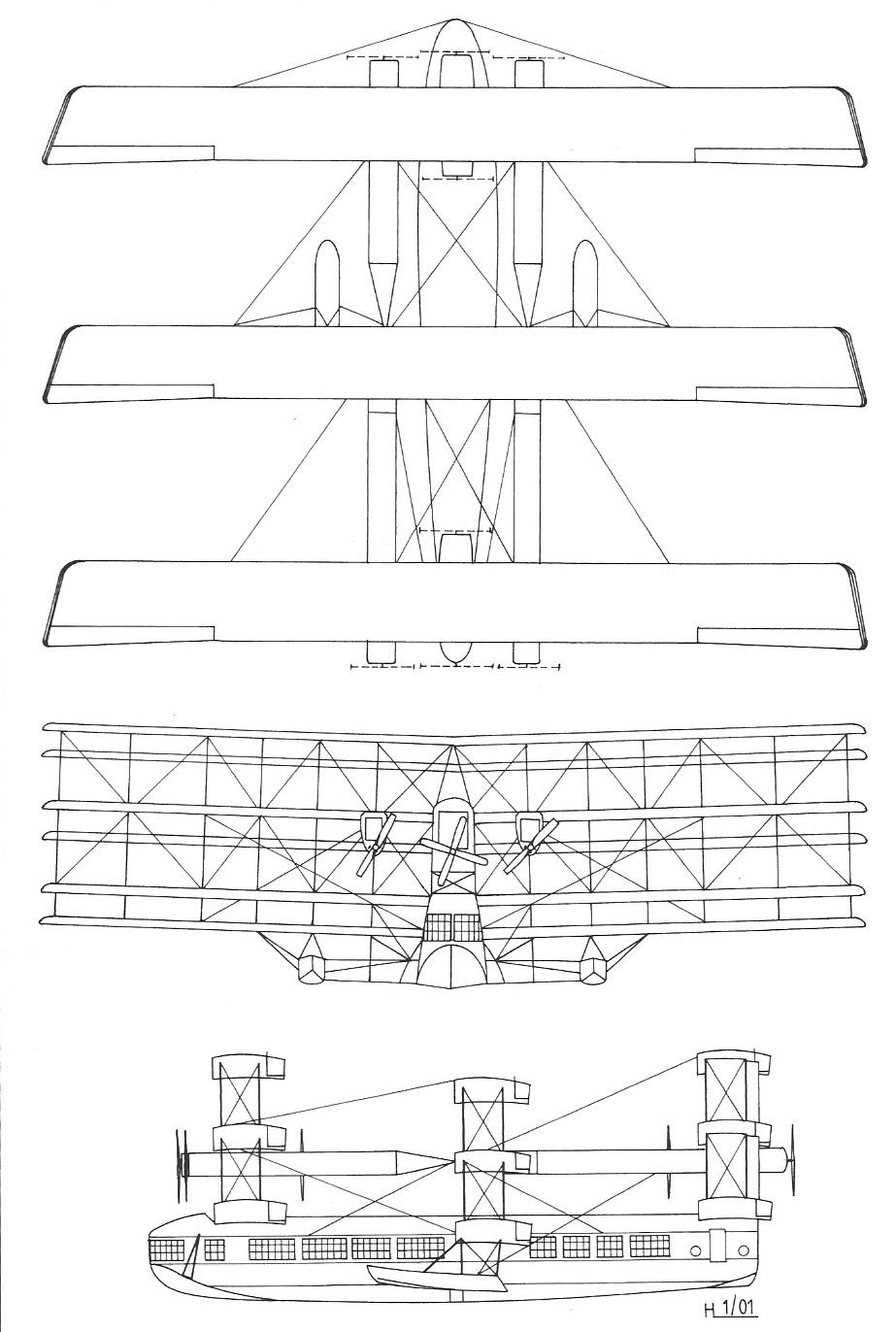
The Ca.60 “flying floating house” was equipped with three sets of triplane wings, salvaged from World War I bombers. These wings were installed over the 100-seat hull, which indeed resembled a floating house more than any known aircraft. The total area of the nine wings was 837 m2 (only one aircraft in aviation history had a larger wing area – the giant Hughes H-4 flying boat, built in 1947).
The central wings of each triplane set were connected by two parallel box structures resembling fuselages. Each of these structures (front and rear) housed a 400 hp American Liberty engine. Additional power units, consisting of one pusher and one puller engine, were located between the fuselages in the front and rear triplane wing sets. Thus, the aircraft was equipped with eight engines.
Ailerons were installed on all nine wings, but the rear ailerons also served as elevators. Vertical fins and rudders were installed on the outer side of the fuselages between all the rear wings.
Assembly, Tests, and the Fatal Final Flight
The construction of the Transaero began in the second half of 1919. A year later, a large hangar was built on the shore of Lake Maggiore, where the aircraft assembly was moved and completed. The US Ambassador, Robert Underwood Johnson, visited the construction site and was captivated by the “great seaplane.” It was announced that the aircraft could begin flight tests in January 1921 and added that if the Ca.60 successfully passed the test trials, it would become the flagship of Italian maritime civil aviation.
For the first time, the Ca.60 was rolled out of the hangar on January 20, 1921, immediately becoming a coveted object for photographers. The next day, the aircraft was scheduled for its first water landing. However, due to low water levels and some difficulties with the ramp connecting the hangar to the lake, the seaplane could not be launched. Moreover, during this attempt, the first lower wing of the aircraft was broken.
Workers toiled through the entire next night, and everything was repaired, yet—to Caproni’s disappointment—during the subsequent attempt to launch, the starter was found to be faulty. Finally, on February 9, with the engines working properly, the aircraft successfully landed on the water and began to maneuver.
The aircraft performed several turns. The tests were soon interrupted by deteriorating weather, but their outcome was deemed positive. The aircraft proved easy to control and quite maneuverable. After the tests, Caproni stated: “If I had known the difficulties I would face, I probably wouldn’t have had the courage to start everything.”
On February 12, 1921, the aircraft reached a speed of 130 kilometers per hour and took to the air for the first time. After the flight, it was noted that the aircraft responded well to commands.
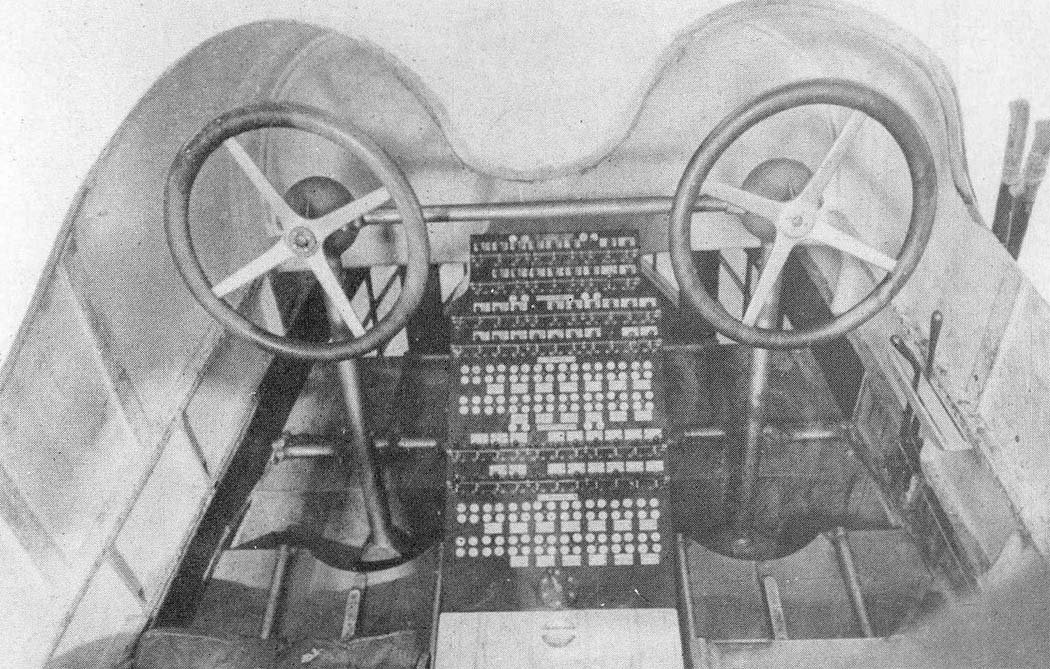
The second flight took place on March 4. The aircraft was able to accelerate to 180 kilometers per hour, however, during takeoff, the pilot pulled the yoke back too strongly. The aircraft lifted off the water with a significant tail-heavy pitch, and at that moment, the engine power was insufficient. The aircraft’s tail crashed into the water surface, and a second later, the entire aircraft plunged into the water, breaking in half. The front section and nose submerged, while the tail kept the remains of the aircraft afloat.
Caproni personally witnessed all of this from the shore. He later commented: “Thus, the fruit of many years of work, the field that was to become the foundation for the future of aviation, all lost in an instant! But we cannot afford to be confused if we want to move forward.”
Two causes for the accident were identified: pilot error by Frederico Semprini, who pulled the yoke in an attempt to gain altitude without adequate speed.
This was coupled with the movement of sandbags, placed as ballast to simulate passengers, which were not secured. At the moment of takeoff, they rolled into the tail section of the aircraft, severely shifting the center of gravity backward.
Even at first glance, the aircraft was very seriously damaged. Nevertheless, in this state, the Ca.60 was towed ashore the next day. The cockpit, having spent 17 hours underwater, was beyond repair, and a week later, the decision was made to dismantle the aircraft for scrap and build a new one. Unfortunately, in the summer of 1921, the Minister of Interior in Italy changed to Ivanoe Bonomi, who had a grudge against Caproni, and the government ceased funding the project. The story of the unique 9-wing aircraft came to an end.
Today, only the floats, one engine, and the lower part of the nose of the aircraft remain, displayed at the Gianni Caproni Aeronautics Museum in Trento.
Technical Specifications
| Modification | Ca.60 |
| Wingspan, m | 30.50 |
| Length, m | 23.45 |
| Height, m | 9.15 |
| Wing area, m2 | 837.00 |
| Empty weight | 14878 |
| Normal takeoff weight | 24950 |
| Maximum takeoff weight | 26000 |
| Engine type | 8 Piston engine Liberty 12 |
| Power, hp | 8 x 400 |
| Maximum speed, km/h | 145 |
| Cruising speed, km/h | 130 |
| Practical range, km | 660 |
| Crew | 8 |
| Payload | up to 100 passengers |
Image gallery of the Caproni Ca.60 Transaero