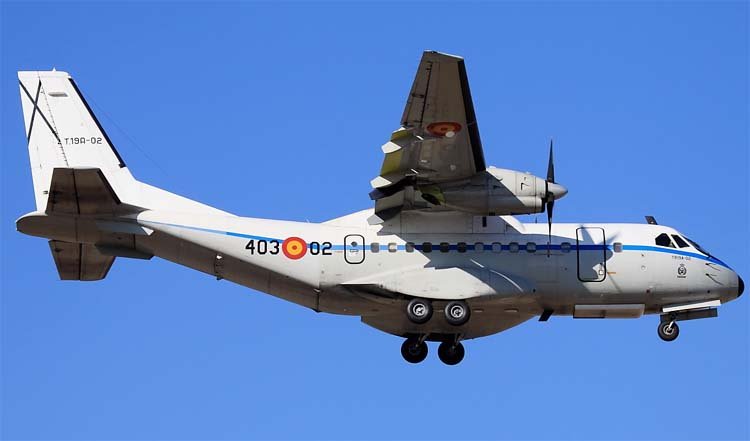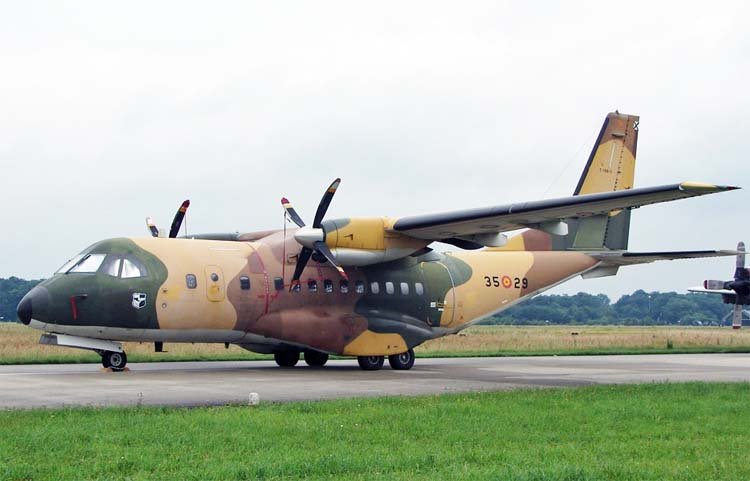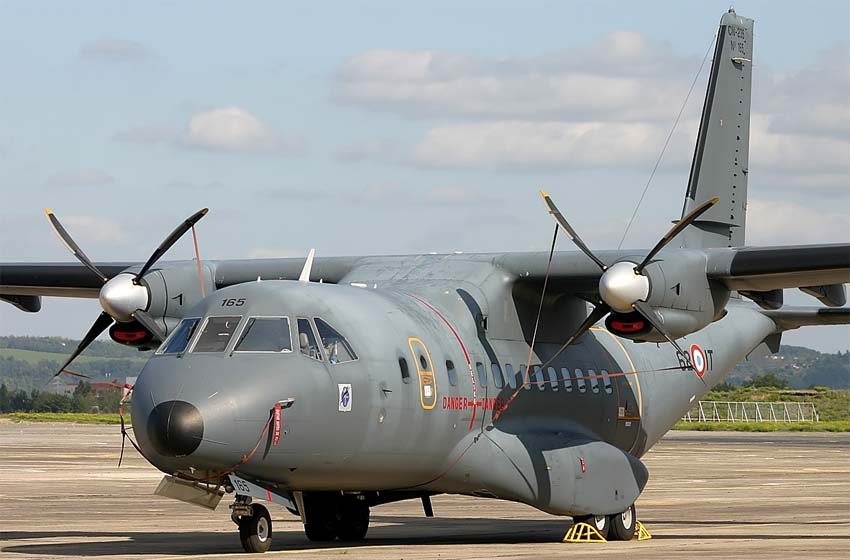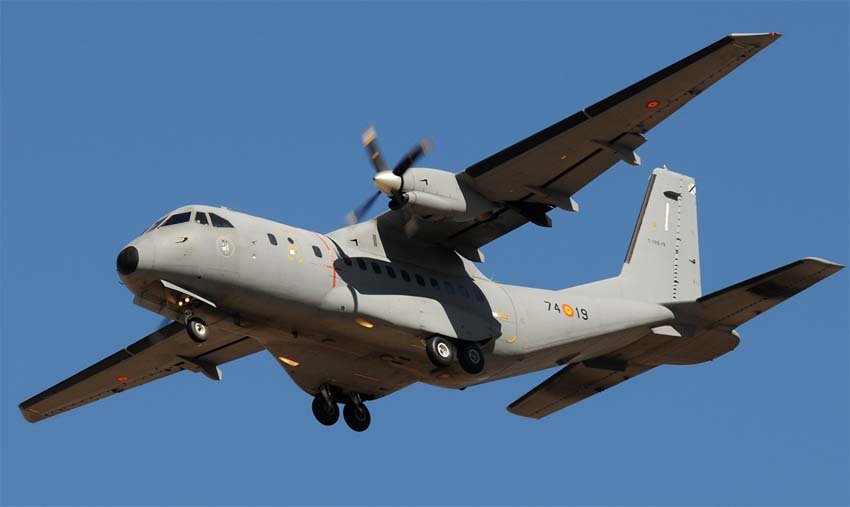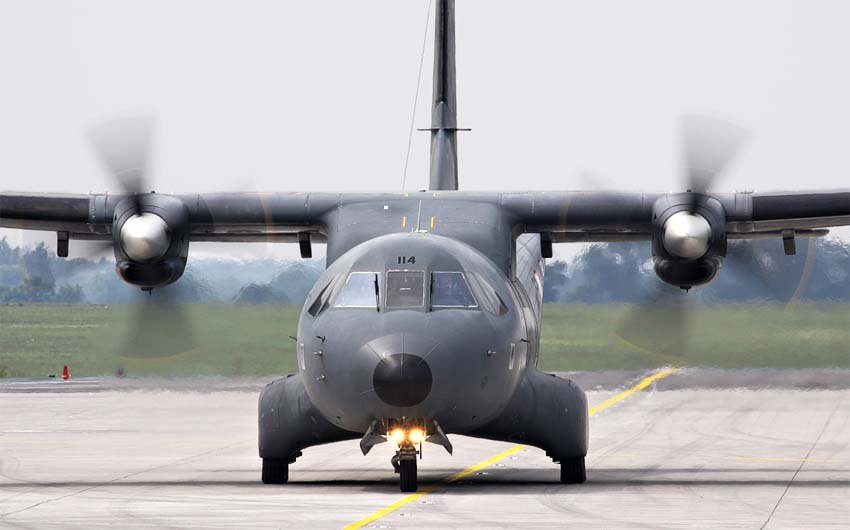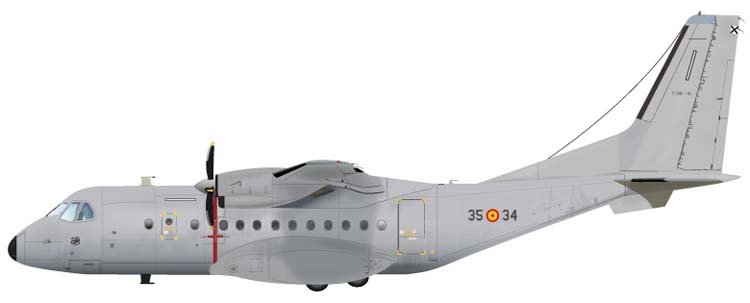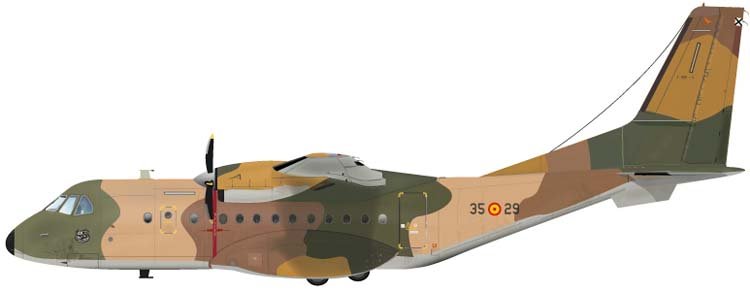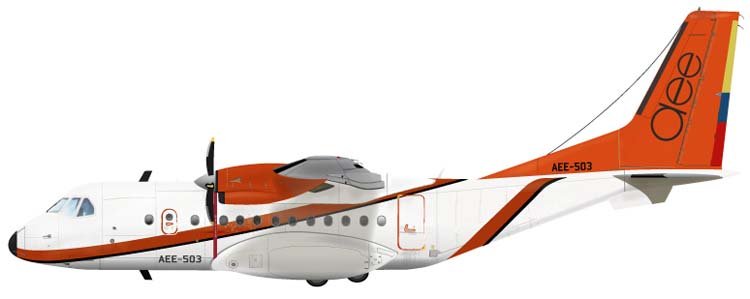
The EADS CASA CN-235 accounts for a significant share of the international market for medium military transport aircraft. This jointly developed Spanish-Indonesian aircraft did not win any bids as a passenger airliner, but its military variant is highly sought after. The aircraft continues to be improved and refined over time.
In the 1970s, the Spanish company CASA and the Indonesian firm IPTN entered into a long-term cooperation agreement. This agreement led to the licensed production of the light transport aircraft CASA Aviocar in Indonesia. Several years later, this ambitious partnership evolved into a plan to develop and produce a larger transport machine.
In 1980, the ‘Airtech’ consortium was formed, with the main task of producing a new 35-seat aircraft in both military and civilian variants. The design of the CN-235 was announced at the Paris Air Show in 1981. In its initial development stage, the CN-235 was positioned exclusively as a civilian machine, not significantly different from its competitors—the Dash 8, EMB-120, and SF-340.
Design and Features
The main advantage of the CN-235 was its ability to operate from poorly prepared airfields. Due to its high-mounted wing, landing gear housed in fuselage sponsons, and the presence of a rear ramp, the CN-235 was dubbed the “mini Hercules.” The design incorporated military requirements, such as the absence of landing gear bay doors—the wheels protrude beyond the fuselage contours when retracted, which is important for emergency landings.
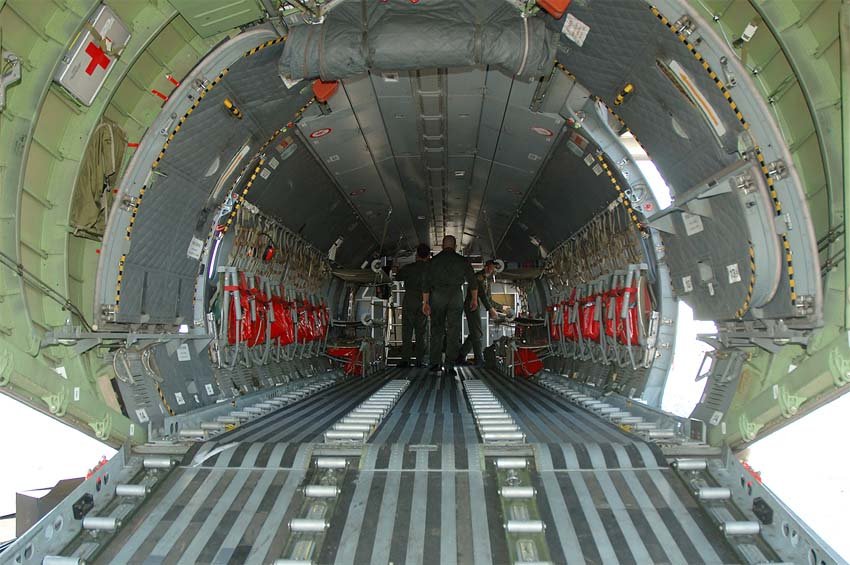
The ramp can be opened in flight and is supplemented by side doors, while the two rear cabin doors can be used for paratrooper deployment. This basic model is a versatile modification, available in passenger and military transport variants, capable of carrying 48 soldiers, 46 paratroopers, or 24 injured on stretchers with 4 accompanying personnel.
Global Development and Production
The powerplant includes two General Electric CT-7-7 turboprop engines, each with a power output of 1760 hp (1311 kW), driving four-bladed Hamilton Standard 14RF-21 propellers. The production of airframe elements was divided between CASA (nose and central fuselage sections, center wing, inner flaps, engine nacelles) and IPTN (tail fuselage section, empennage, outer wing sections, outer flaps). Later, a contract for the production of the empennage was concluded with the Chilean company ENAER.
Assembly lines were organized in both countries, and the rollout of two prototypes took place simultaneously in Spain and Indonesia on September 10, 1983. The Spanish-built prototype first flew on November 11, 1983, and the Indonesian prototype performed its maiden flight on December 30. Following test results, changes were made to the wing, empennage, landing gear sponsons, and propeller configuration. The aircraft received joint Spanish and Indonesian certification on August 19, 1986, and FAA certification on December 3.
Market and Variants
In its early years, high hopes were placed on the CN-235. The Indonesian government announced its intention to acquire 100 aircraft, but at the Paris Air Show, only 54 aircraft were declared purchased, with an option for 18 more, all in the civilian variant. In 1985, Airtech negotiated with Turkey for the delivery of 50 tactical transport aircraft.
Negotiations for more modest military orders were ongoing, but the civilian variant did not generate interest. The CN-235 did not fit the civilian market: it was too heavy, with insufficient range, and, importantly for airlines, not particularly aesthetic. For carriers operating from rough airfields, the size of the CN-235 was excessive, and the price too high. However, the order book for the military variant gradually filled up.
In December 1986, the first CN-235 was delivered to Indonesia’s Merpati Nusantara Airlines (though its operation began only a year later), and in the same month, the Royal Saudi Air Force received its first military CN-235M. The first 30 aircraft are known as Series-10 (CN-235-10, CN-235M-10), representing the first serial production modification of the transport aircraft. This series was followed by another, designated “-100” with CT-7-9C turboprop engines producing 1870 hp – these engines became standard. Aircraft built by CASA were designated -100, and those by IPTN were -110.
In 1990, Airtech introduced the CN-235-200/-220 variant with increased range and a strengthened structure. The first CASA-built aircraft was certified in March 1992, while the IPTN-built prototype made its first flight only in 1996. The aircraft designated “-200” remains the only variant currently in serial production.
Originally, Airtech planned to build the CN-235 in specialized modifications, such as a maritime patrol aircraft and an electronic reconnaissance aircraft. Both IPTN and CASA developed their own versions of the patrol aircraft, but only the variant created by CASA entered series production. The Irish Air Corps became the sole operator of the CN-235MP Persuader (a name never used in Ireland), receiving the first of two aircraft in December 1994. The CASA, as the aircraft is known worldwide, proved its suitability as a fishery protection aircraft. IPTN, for its part, developed a similar variant—the CN-235MPA Sky Guardian—from 1989. Despite announcements of orders from the Indonesian, Brunei, and UAE navies, the Sky Guardian never entered service. This fact reflects the slow pace of the entire CN-235 program in Indonesia, as IPTN aircraft were not in demand outside the country, partly due to poor manageability.
Operators and Future Outlook
The pace of production and sales volume for the CN-235 varied significantly throughout its production run. According to CASA data at the end of 1999, 189 aircraft were in service with 28 operators from 24 countries, with orders for an additional 220 machines. Civilian operators included only the Spanish company Binter Mediterraneo and Indonesian Mandala Airlines and Merpati Nusantara.
The military variant was purchased by Botswana, Brunei, Chile, Colombia, Ecuador, France, Gabon, Indonesia, Ireland, Morocco, Korea, Malaysia, Oman, Panama, Papua New Guinea, Saudi Arabia, South Africa, Spain, Thailand, Turkey, and the UAE. In 1984, TAI (Tusas Aerospace Industries) was established for the assembly of 50 of the 52 CN-235M ordered by Turkey. The first Turkish-built aircraft performed its maiden flight in 1992, and in September 1998, Turkey ordered an additional nine CN-235MP.
Orders for the aircraft continue to come in from various countries around the world. In 2011, Jordan ordered two CN-235s in a gunship variant, equipped with an optoelectronic target designation system, a laser rangefinder, and an onboard defense complex. The armament of these aircraft will consist of laser-guided Hellfire missiles, unguided rocket pods, and a 30mm M230 Chain Gun. Missiles will be carried on underwing pylons, while the gun is planned to be mounted on a turret on the left side.
The following companies operate or have operated civilian CN-235s: Inter Austal (Argentina), Merpati Nusantara Airlines and Pelita Air Service (Indonesia), Tiko Air (Madagascar), Air Namibia, Binter Canarias and Binter Mediterraneo (Spain), Safair (South Africa), L-3 Communications and Presidential Airways (USA), and Air Venezuela. Tragically, a CN-235 of Binter Mediterraneo crashed on August 29, 2001, killing three passengers and one crew member.
Technical Specifications
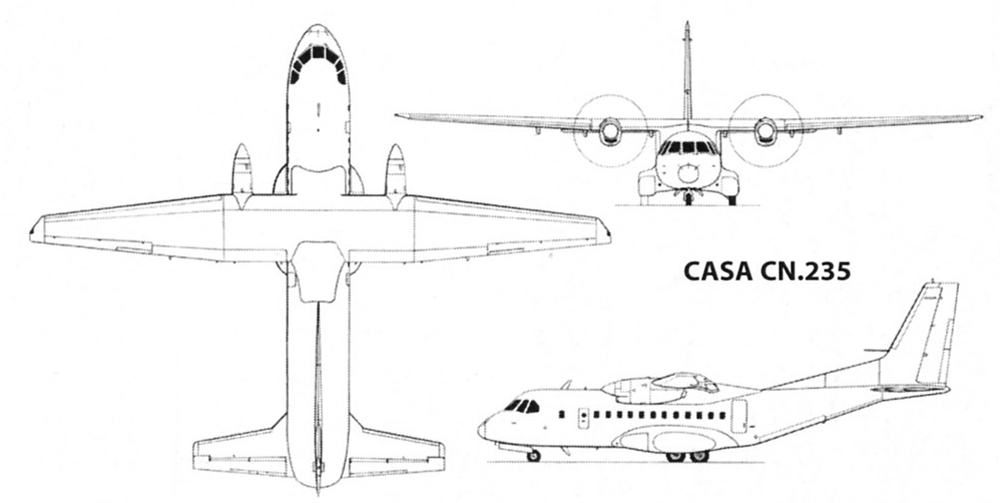
The CN-235 is a normal-scheme, high-wing cantilever monoplane of all-metal construction with the application of composite materials. The wing is straight, two-spar, box-type, with a rectangular center section and trapezoidal outer panels. The wing panels are made of sheet duralumin by chemical milling, featuring a NACA 653-218 airfoil. The dihedral angle of the wing panels is -3 degrees, and the angle of incidence is +3 degrees. The left aileron is equipped with a servo-trimmer, while the right has an electrically operated trimmer. Wing mechanization consists of four hydraulically operated single-slotted flaps.
The fuselage is of the semi-monocoque type. On the left side, behind the wing, there is a passenger door-stair of 1.70 x 0.73 m. On the right side, in front of the wing, there is a service door-stair (1.70 x 0.73 m). Emergency exits (0.92 x 0.50 m) are located on the right side in the tail section and on the left side in front of the wing. The tail section of the fuselage features a folding ramp; in its cargo-passenger configuration, the aircraft can carry 18 people and two LD-3 containers, or in the cargo variant, four LD-3 containers or two P-88 cargo pallets measuring 2.24 x 3.17 m.
The empennage is single-fin, with a low-mounted cantilever horizontal stabilizer. The fin and stabilizer are two-spar, and there is a dorsal fin. All control surfaces have trimmers. The landing gear is a tricycle type with a nose wheel. All struts are of the lever type, manufactured by Messier-Bugatti. The wheels, manufactured by Dunlop, are equipped with hydraulic disc brakes with automatic braking systems on the main gears.
The steerable nose gear has a single wheel and retracts forward into the nose section of the fuselage, against the direction of flight. The main gears, with twin wheels arranged in tandem, retract into fairings on the underside of the fuselage.
The powerplant consists of two General Electric CT7-9C turboprop engines, with a maximum power of 2 x 1850 hp (2 x 1364 kW). The specific fuel consumption in cruise mode (H=4570 m) is 0.214 kg/hp·h (0.291 kg/kW·h). The engine stages include: 5 axial low-pressure compressor stages, 1 centrifugal high-pressure compressor stage, 2 power turbine stages, and 2 high-pressure turbine stages. The engine length is 1.84 m, maximum width 0.635 m, and dry engine weight 307 kg.
The propellers are Hamilton Standard 14RF21, four-bladed, variable-pitch, with a diameter of 3.35 m, and a distance between propeller axes of 7.00 m. Fuel is stored in two tank compartments of 1040 liters each in the center wing and two tank compartments of 1590 liters each in the wing panels. The total fuel capacity is 5260 liters, with an oil reserve of 14 liters.
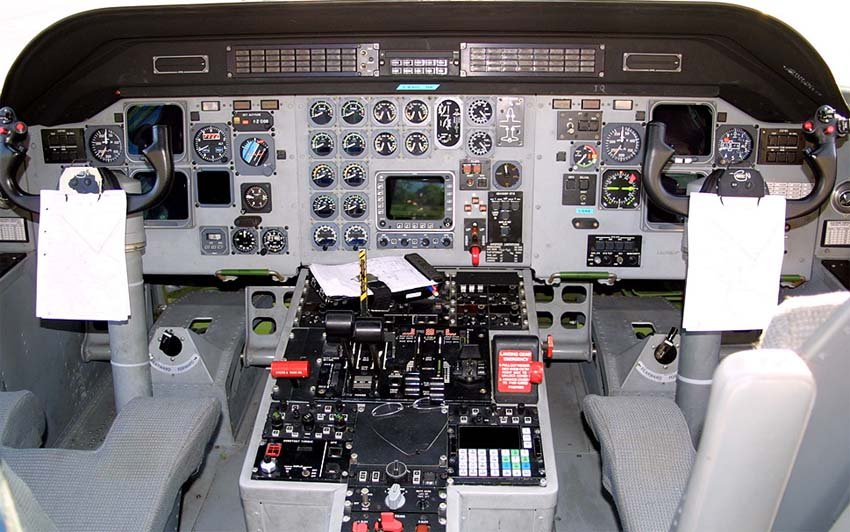
Regarding systems and equipment, the aircraft features a boosterless control system. The hydraulic system, with an operating pressure of 21 MPa, has two variable-displacement pumps driven by the engines, used to control the landing gear, flaps, wheel brakes, and cargo ramp. The electrical system includes two DC starter-generators (28 V, 400 A), three AC converters (115/220 V, 400 Hz), and two nickel-cadmium batteries (45 A·h). The air conditioning and pressurization system, manufactured by Hamilton Standard, provides a maximum cabin overpressure of 26 kPa. The aircraft is equipped with a standard suite of flight and navigation equipment, as well as a Collins APS-65 autopilot and a Collins WXR-300 weather radar.
Technical Specifications
| Modification | CN.235 |
| Wingspan, m | 25.81 |
| Aircraft length, m | 21.353 |
| Aircraft height, m | 8.177 |
| Wing area, m2 | 59.10 |
| Empty weight | 8800 |
| Maximum takeoff weight | 16500 |
| Internal fuel, kg | 4230 |
| Engine type | 2 Turboprop General Electric CT7-9C |
| Power, kW | 2 x 1394.5 |
| Maximum speed, km/h | 445 |
| Cruising speed, km/h | 248 |
| Practical range, km | 4355 |
| Operational range, km | 1501 |
| Service ceiling, m | 8110 |
| Crew, crew members | 2-3 |
| Payload | 48 soldiers or 46 paratroopers or 24 stretchers and 4 attendants or 6000 kg of cargo. |
Image gallery of the CASA CN-235