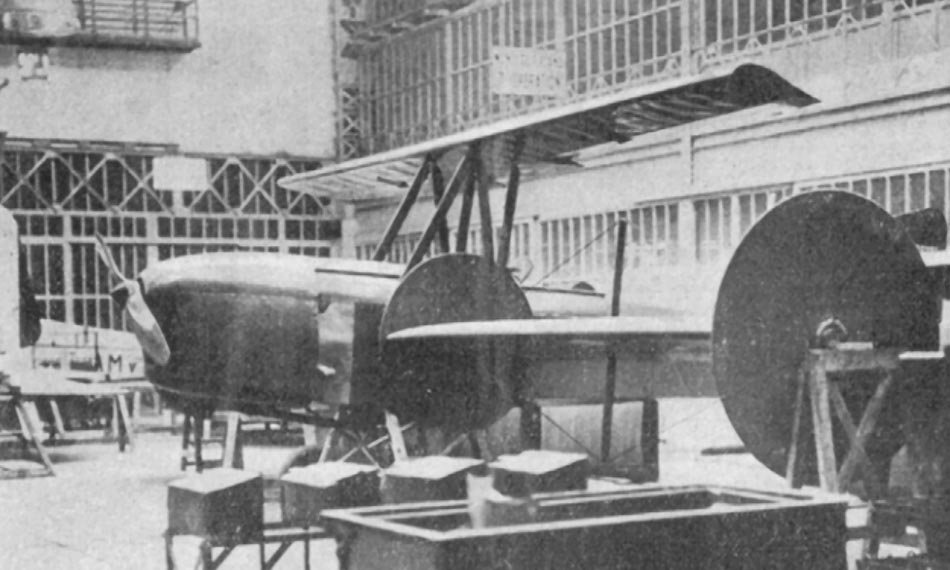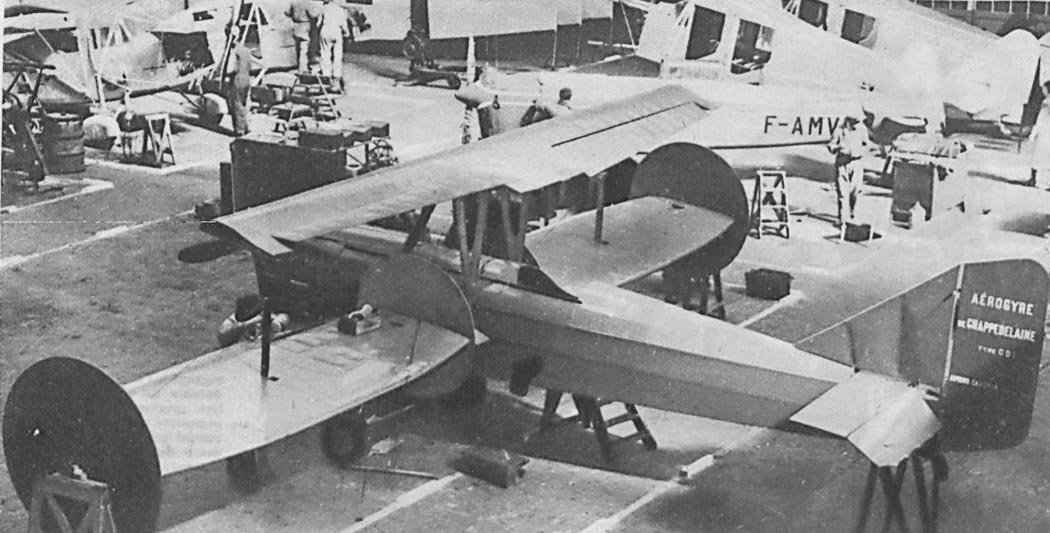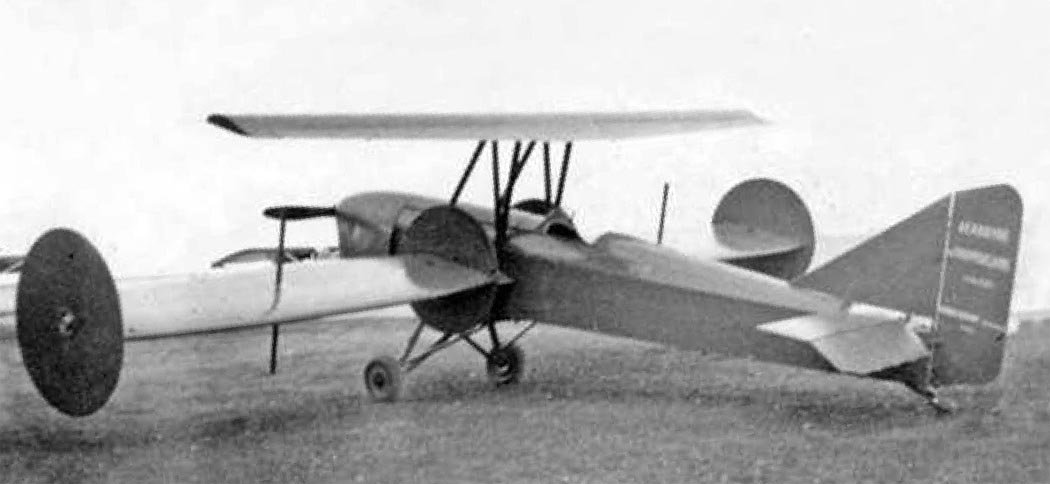
In the early 1930s, the French engineer Jean-Louis Marie Olivier de Chappedelaine began developing a “movable wing” system. In June 1931, he successfully obtained a patent for a glider equipped with such wings.
Development and Funding
By 1933, de Chappedelaine had convinced the leadership of the Service Technique Aéronautique (STAé) to allocate funds for the construction of a light aircraft featuring “rotary wings”. During the work on creating the prototype, designer Georges Desgrandschamps joined de Chappedelaine, and the project was designated CD.1.
Construction of the ‘Aérogyre’ Prototype
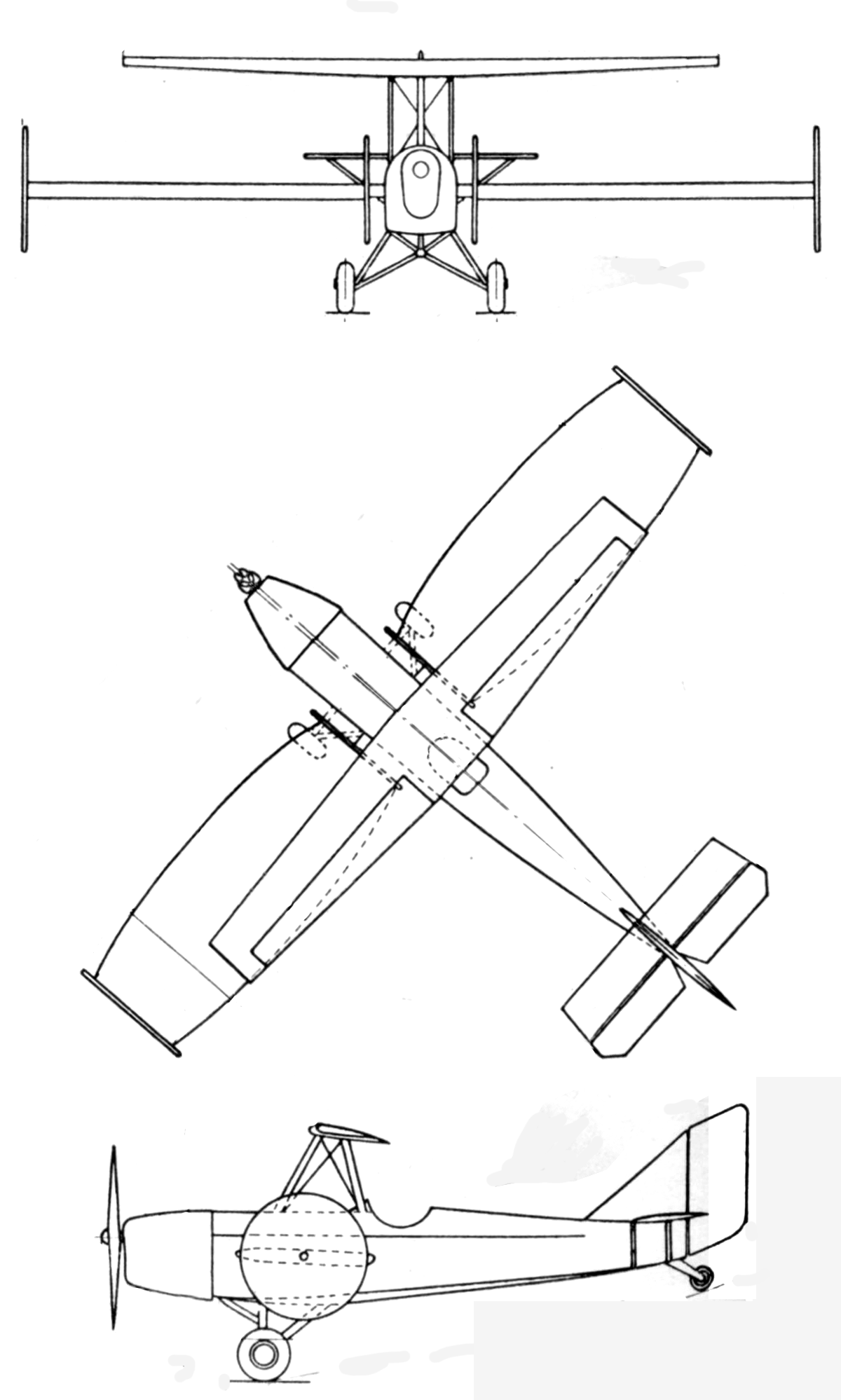
In 1934, construction of the “Aérogyre” prototype began at the Etablissements Caudron factory. The light aircraft Caudron Luciole was taken as a basis. The “Luciole’s” fuselage was reinforced, and its wings were replaced with “rotary wings” (with an area of 12 m²). The tail section also underwent significant modifications.
A fixed wing with an area of 6 m² was installed above the fuselage. The chosen powerplant was a four-cylinder inverted inline Renault 4 Pci engine, delivering 100 hp.
Flight Tests and Project Termination
The first test flights of the CD.1 took place in September 1934. During the very first flight, the projected flight characteristics were confirmed, but after 90 minutes of flight, the machine crashed. Following repairs, flights resumed in October of the same year, but shortly thereafter the aircraft crashed again, and the test pilot was killed. With this, the project was concluded.
Technical Specifications
| Modification | CD.1 |
| Wingspan, m | 9.12 |
| Aircraft length, m | 7.65 |
| Aircraft height, m | 3.00 |
| Wing area, m2 | 18.00 |
| Empty weight | 517 |
| Maximum takeoff weight | 680 |
| Engine type | 1 Piston engine Renault 4 Pci |
| Power, hp | 1 x 100 |
| Maximum speed, km/h | 140 |
| Crew, crew members | 1 |
Image gallery of the CD.1 Aérogyre