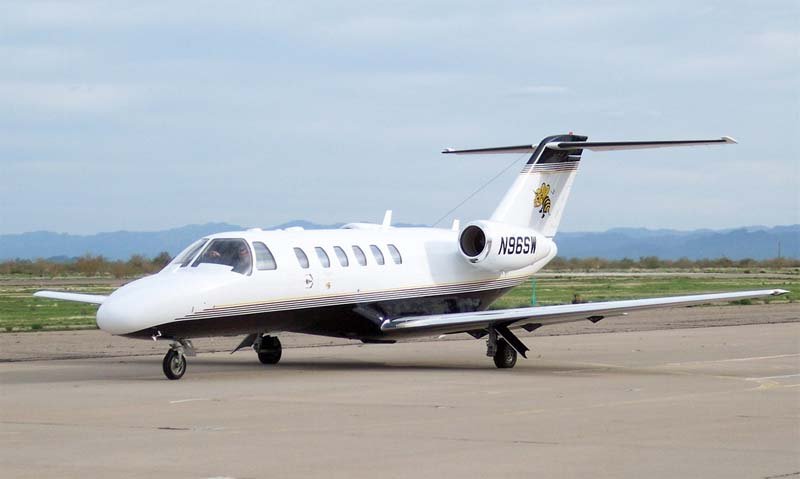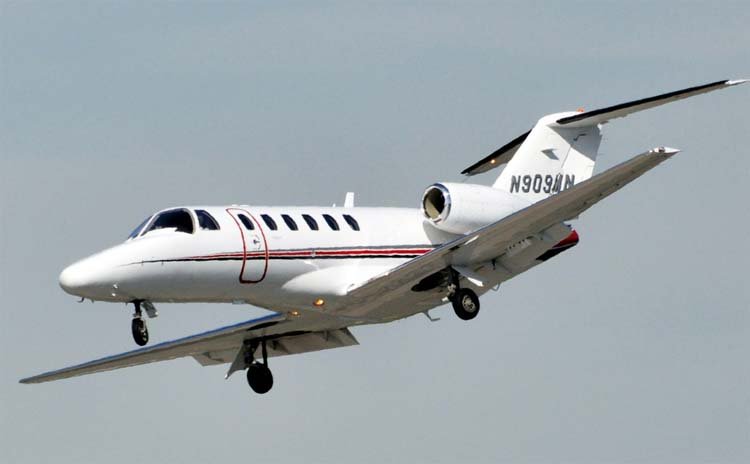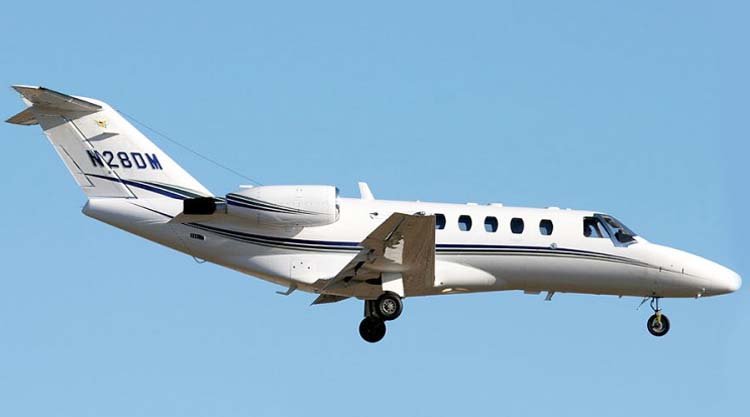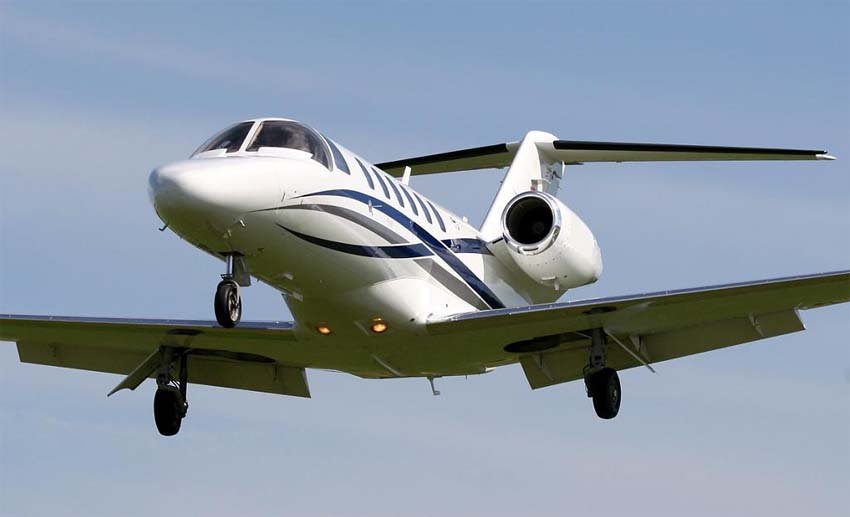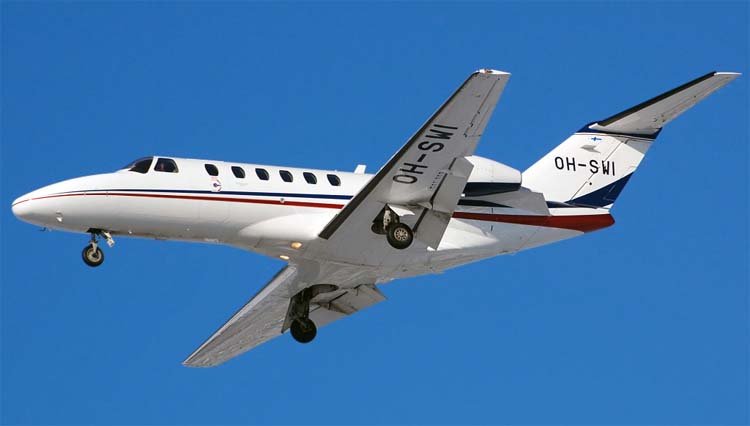
The Cessna 525A Citation CJ2+ is an aircraft developed by the American firm Cessna Aircraft Company. This successful business aviation model succeeded the CitationJet, CJ1, and the stretched CJ2.
Initial demonstrations took place at the NNBA conference in October 1998 in Las Vegas, with deliveries of the updated aircraft commencing in 2000.
Development and Advanced Avionics
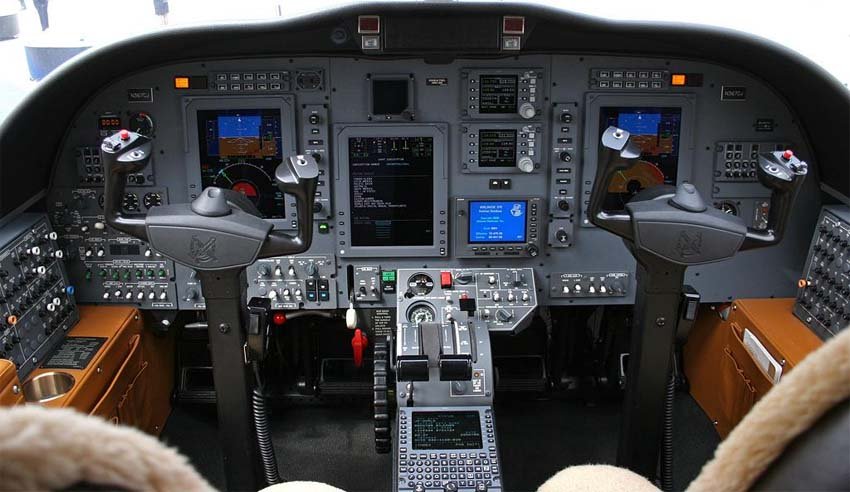
The CJ2+ shares a similar design to the CitationJet but incorporates several significant differences and innovations. These include the mandatory presence of a FADEC automatic engine control system and Collins Pro Line 21 flight navigation equipment.
This system comprises two 8×10 inch adaptive flight displays, liquid crystal primary flight displays (PFDs), a multifunction display (MFD), the Collins 3000 flight management system, and Pro Line 21 radio CNS. Standard equipment also includes a Collins autopilot with VNAV, a flight management system database, and onboard avionics diagnostics.
Furthermore, the CJ2+ is equipped with dual communication (military-naval). Like all Citation CJ aircraft, the Cessna Citation CJ2+ is certified for single-pilot operation, simplifying its management.
Comfort and Interior Design
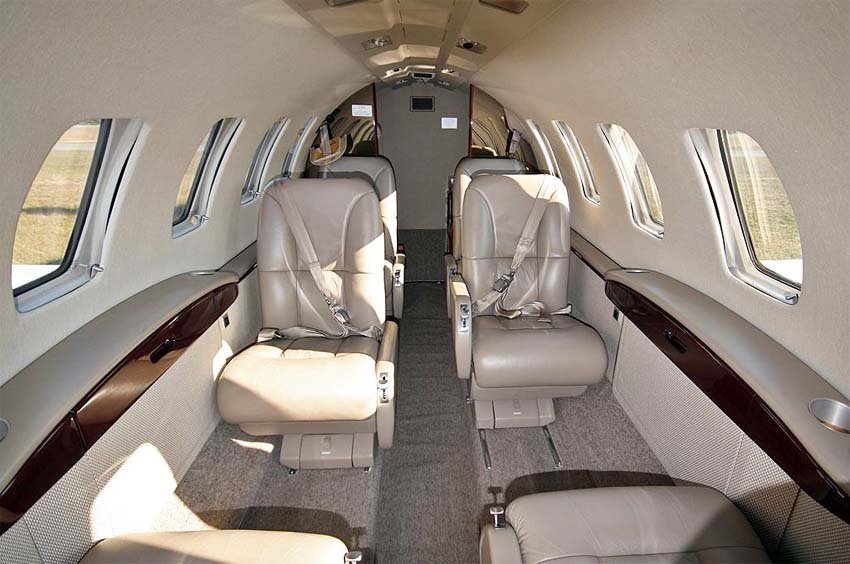
The spacious, well-lit cabin of the CJ2+ is 0.91 m longer than that of the CJ1+. It features an advanced soundproofing system and is finished in a new style using more expensive, high-quality materials.
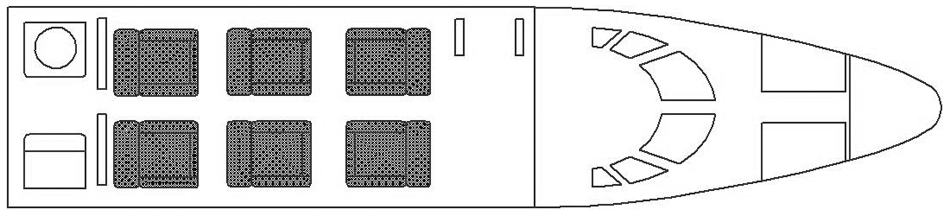
The flat floor has a depression for comfortable passenger passage and seating. The aircraft’s cabin has 6 seats, four of which are opposite each other, and convenient tables that neatly fold into the side walls when you are ready to put work aside and relax.
The Citation CJ2+ features a typical small business jet layout, providing only the essentials for a short flight. A small lavatory and wardrobe are located at the rear of the cabin, while the baggage compartment is in the aircraft’s tail section and is not accessible from the cabin during flight.
Enhanced Performance
The CJ2+ is powered by two Williams International FJ44-3A-24 engines, each providing 2,490 pounds (11.08 kN) of thrust at sea level. This has allowed for an increase in the maximum takeoff weight by 136 kg.
The aircraft also climbs more rapidly, with increased cruise flight speed and range. A direct climb to 13,716 meters (45,000 feet) takes only 28 minutes, which is eight minutes faster than the original CJ2.
Efficiency has also been boosted, with full “FADEC” electronic engine control, simplifying operation and reducing pilot workload during the busiest phases of flight. In 2008, the aircraft’s base configuration cost $6,370,000 USD.
Technical Specifications
| Modification | CJ2+ |
| Wingspan, m | 15.19 |
| Aircraft length, m | 14.53 |
| Aircraft height, m | 4.27 |
| Wing area, m2 | 24.50 |
| Empty weight | 3629 |
| Maximum takeoff weight | 5670 |
| Fuel | 1783 |
| Engine type | 2 Turbofan Williams-Rolls FJ44-3A-24 |
| Thrust, kN | 2 x 11.08 |
| Maximum speed, km/h | 835 |
| Cruising speed, km/h | 774 |
| Practical range, km | 2987 |
| Service ceiling, m | 13715 |
| Crew | 2 |
| Payload | 6-8 passengers or 670 kg of cargo |
Image gallery of the Cessna Citation CJ2+