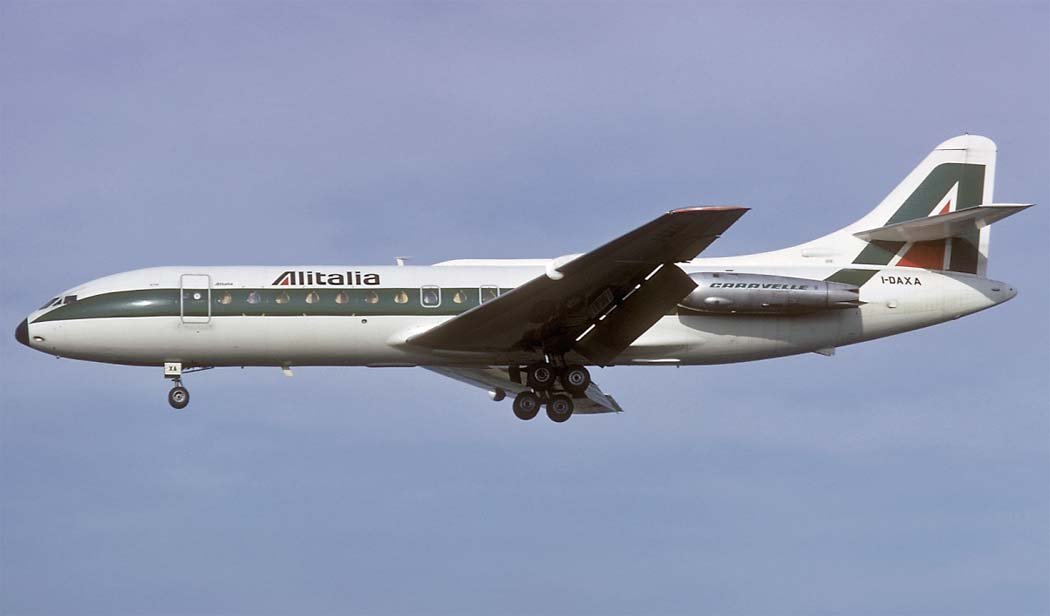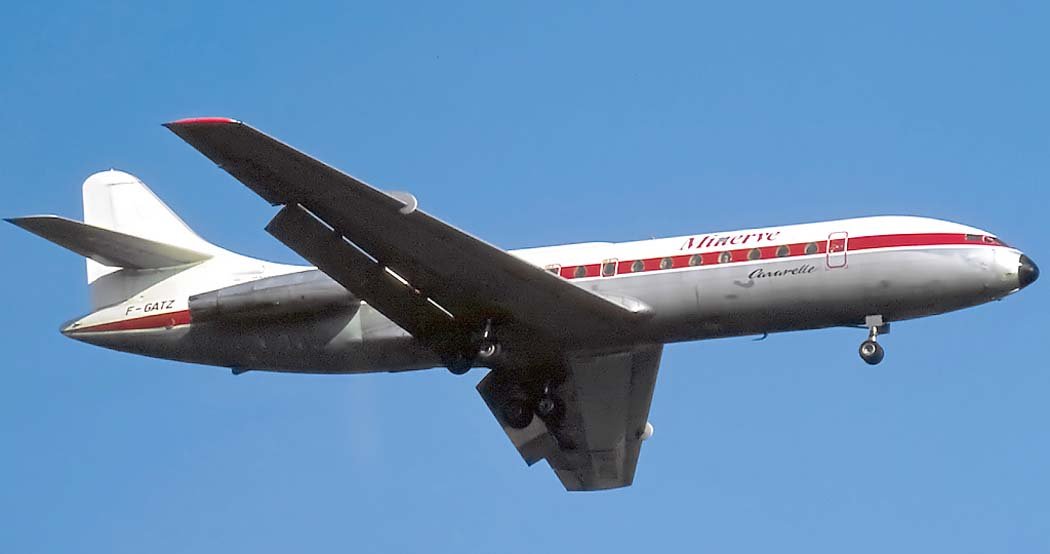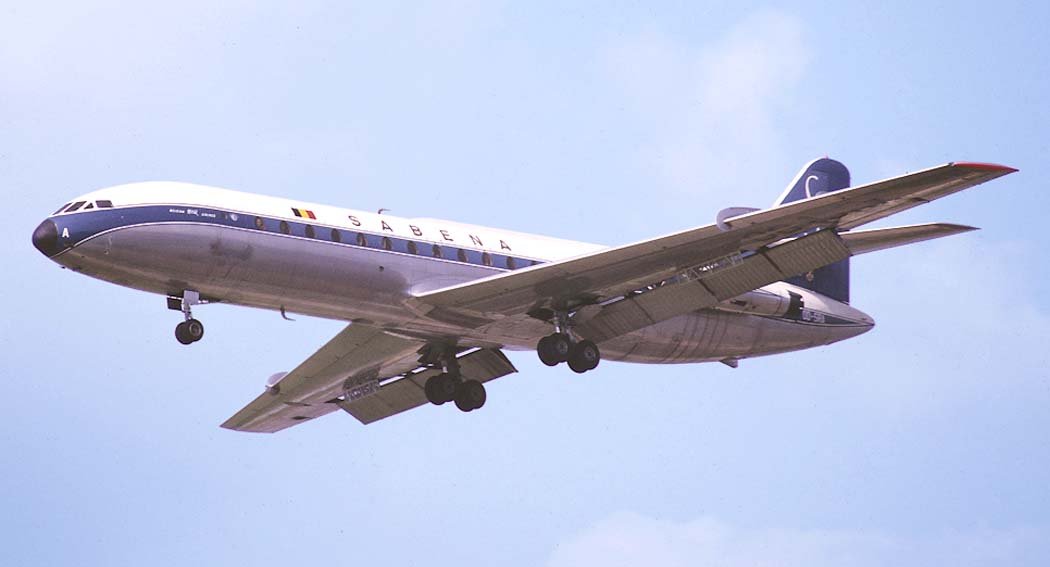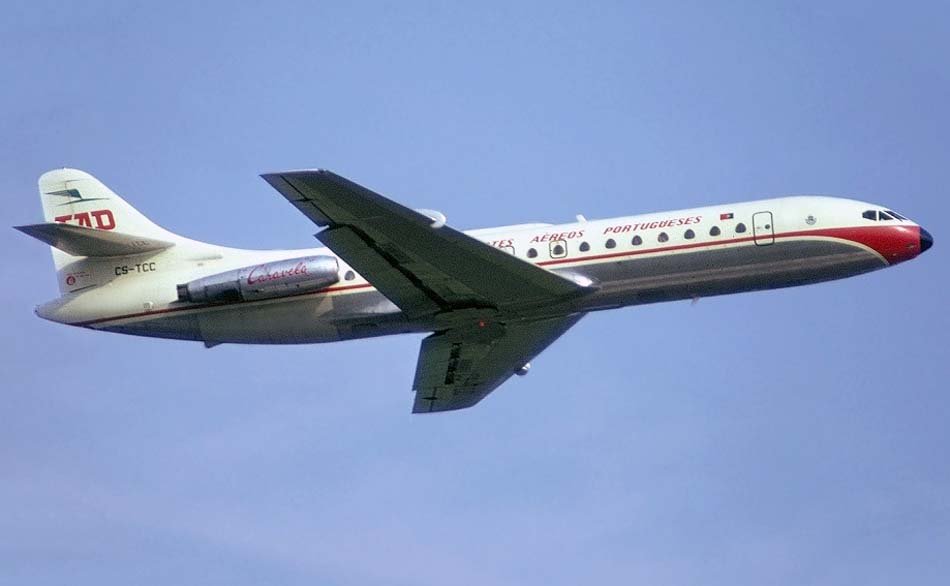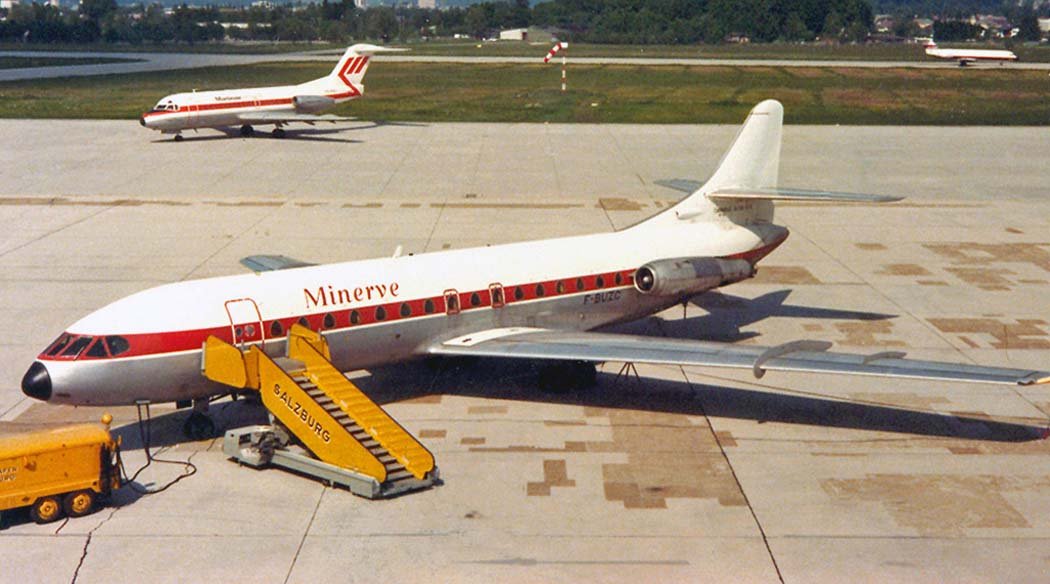
The next step in the Caravelle’s development was Model 6. Auxiliary technical devices, aerodynamic improvements to the wing’s high-lift mechanisms, and most importantly, the installation of more powerful Avon 531 engines with a thrust of 5530 kgf, increased the cruising speed to 790 km/h. An increased fuel system capacity allowed the flight range with an 8170 kg payload to reach 2335 km. These measures, combined with fuselage reinforcement, enabled the maximum takeoff weight to be raised to 45700 kg.
The first Caravelle 6, which took flight on September 10, 1960, was converted from a ‘three’ prototype. Production aircraft were designated Caravelle 6-N, and their Avon 531 turbojets were additionally equipped with effective noise suppressors. The Belgian airline Sabena was the first to operate the Caravelle 6-N, launching service on the Brussels-Nice route in February 1961.
The Caravelle 6-R and the American Market
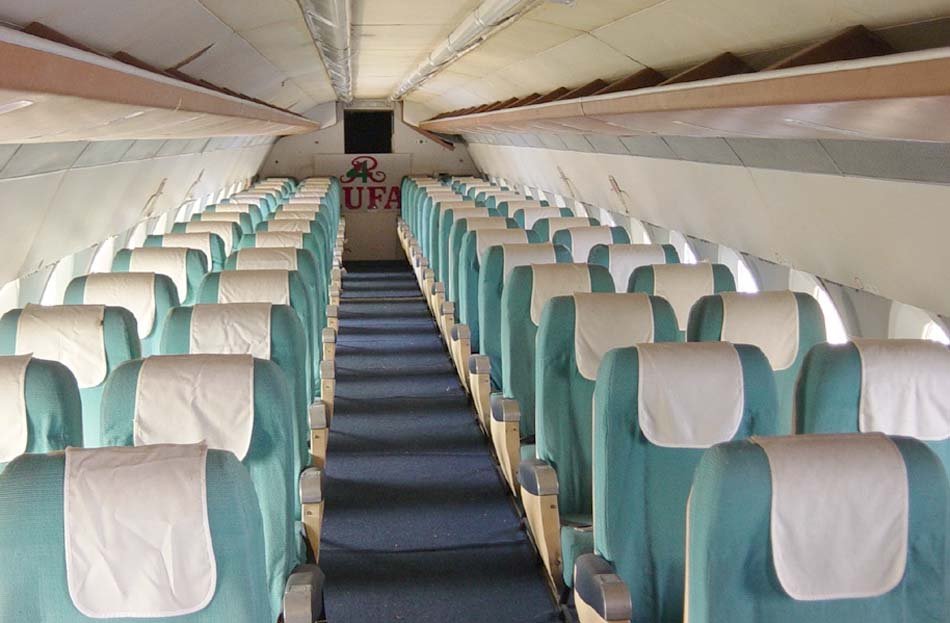
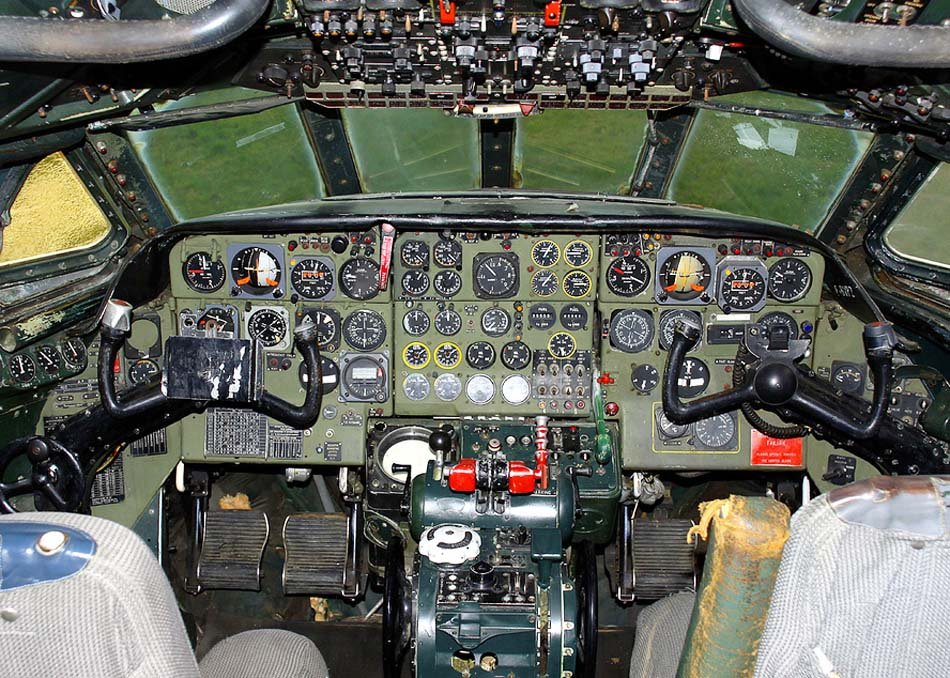
United Air Lines, one of the so-called ‘Big Four’ major American airlines, closely monitored the Caravelle’s success on European medium and short-haul routes. Consequently, it ordered twenty aircraft of an additionally improved modification, designated Model 6-R. The 6-R featured Avon 531Rc engines with 5710 kgf thrust, equipped with thrust reversers, modified cockpit glazing, improved brakes, and additional three-section spoilers on the wing console. When deployed, these spoilers reduced wing lift in their area, contributing to a shorter landing run. The Caravelle 6-R’s passenger capacity ranged from 16 to 20 in first class and 55-60 in tourist class, with an economy class cabin seating 80 passengers.
The prototype for Model 6-R was the 62nd aircraft produced, bearing registration number F-WJAP, which first flew on February 6, 1961. The American airworthiness certificate was obtained in June of the same year, and United Air Lines deployed its Caravelle 6-Rs on the New York-Chicago route. From June 1961 to October 1970, Caravelles flew 118 million km without accidents, transporting 10 million people on American domestic routes. Despite proving itself under American conditions, no further buyers for the Caravelle were found in either the USA or Canada. The American market was always difficult for European aircraft to penetrate, and exceptions proved the rule. Douglas Aircraft signed a two-year agreement with Sud Aviation, honestly ensuring service for the sold Caravelles and acting as a sales agent; at one point, even the licensed production of the Caravelle in the USA was discussed. For this purpose, Sud Aviation designed Model 10.
Douglas Aircraft, while performing service not entirely selflessly but with the future production of this successful aircraft in mind, utilized the acquired experience in creating the DC-9.
A total of 45 Caravelle 6-Ns were manufactured. Additionally, some earlier Caravelle 3s were later upgraded to this standard. Model 6-R was also supplied to other customers, with 54 units produced. At the time, these aircraft enjoyed significant popularity among Western airlines. The ‘Sixes’ conclude the basic first-generation Caravelle series.
Turbofan Innovation: The Caravelle 7
In the second half of the 1950s, the first production turbofan engines were developed. Compared to turbojets, they offered a 25% reduction in specific fuel consumption, greater thrust, lower noise levels, and increased reliability and service life. All these factors significantly enhanced the economic efficiency of air travel. Turbofans opened the door to further accelerated development of airline networks served by jet passenger aircraft.
The unique placement of the Caravelle’s power plant allowed for a seamless transition to a new engine type and, if necessary, easy modernization of aircraft already in service, effectively giving this remarkable airplane a second life.
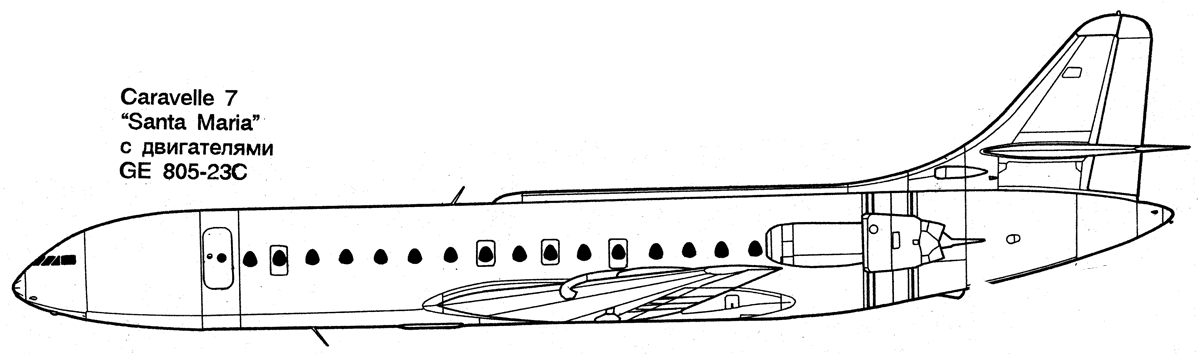
The first Caravelle equipped with turbofan engines became the prototype for Model 7. In reality, this was the 42nd production Caravelle 3, bearing registration number F-WJAM. Sud Aviation transferred it to the General Electric engine manufacturing consortium for the installation of CJ805-23C turbofan engines, each with a static thrust of 7300 kgf.
The modified aircraft was assigned the American registration number No.402GE and given the proper name “Santa Maria.” Its first flight took place on December 29, 1960. The development was subsidized by the American air transport company Trans World Airlines. In September 1961, TWA signed an agreement for the delivery of 20 Caravelle 7 aircraft. However, under pressure from Douglas Aircraft, the company withdrew its decision, favoring the DC-9 aircraft instead. Following this experience, Sud Aviation temporarily reduced its activity in the turbofan sector, but their undeniable advantages soon compelled it to return to this promising direction.
Technical Specifications
| Modification | Caravelle 6 |
| Wingspan, m | 34.30 |
| Length, m | 32.01 |
| Height, m | 9.00 |
| Wing area, m2 | 146.70 |
| Empty weight | 26240 |
| Maximum takeoff weight | 50000 |
| Internal fuel, l | 19000 |
| Engine type | 2 Turbojets Rolls-Royce Avon RA.29 Mk 533R |
| Thrust, kgf | 2 x 5710 |
| Maximum speed, km/h | 845 |
| Cruising speed, km/h | 790 |
| Practical range, km | 2550 |
| Range with maximum payload, km | 2300 |
| Practical ceiling, m | 12000 |
| Crew | 3 crew members |
| Payload | 64 passengers in two-class cabin or 80 in economy class |
Image gallery of the Sud Aviation Caravelle Models 6 and 7