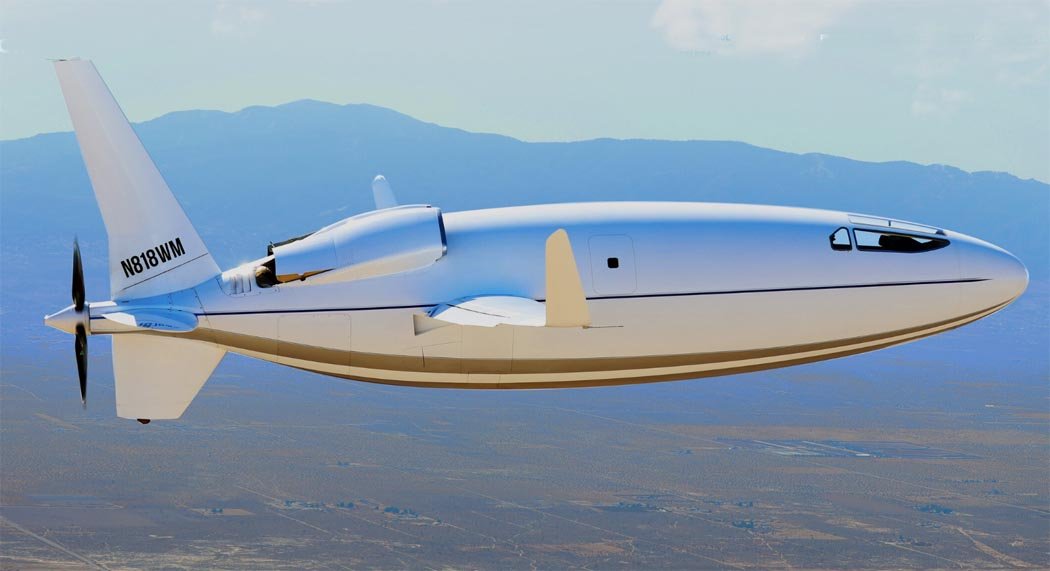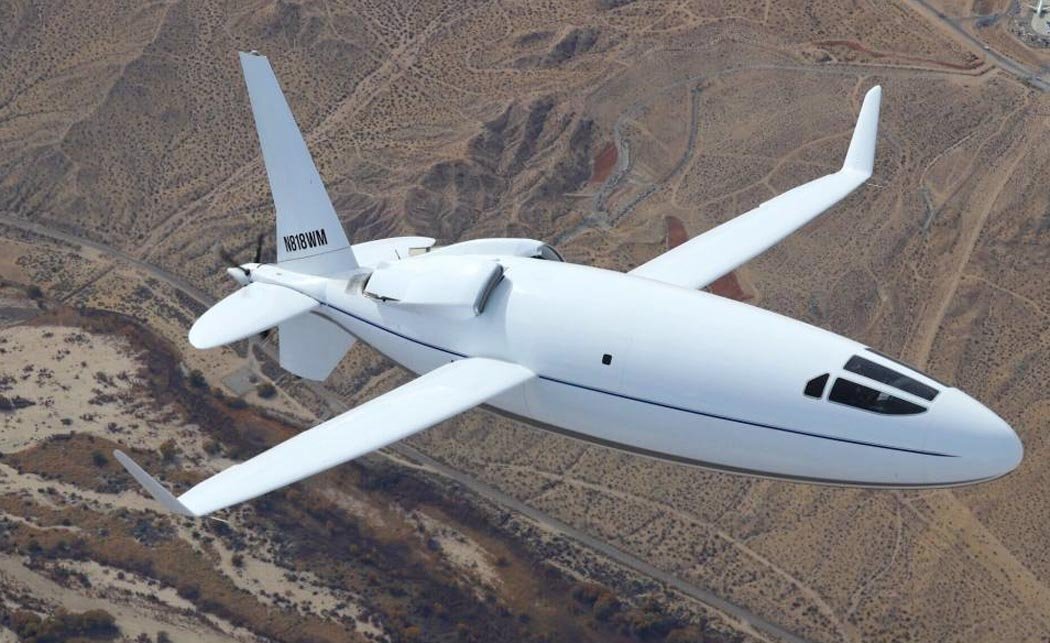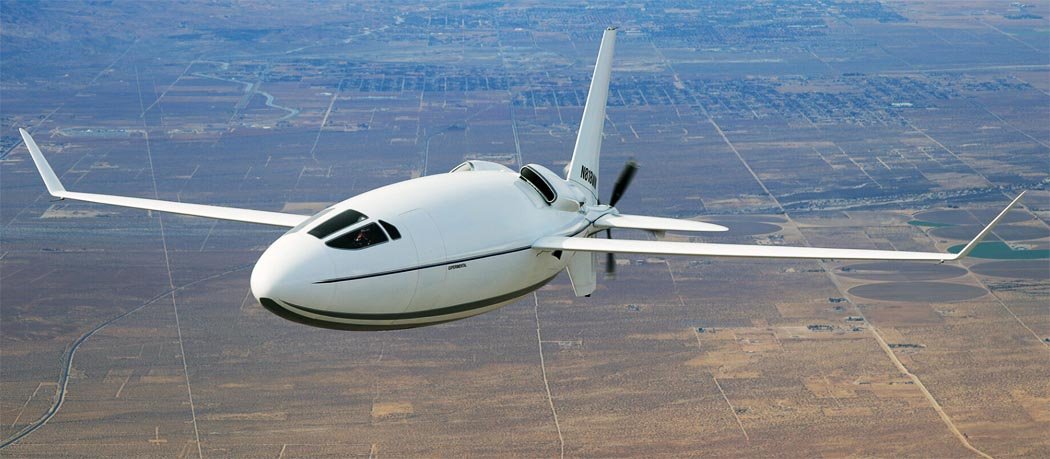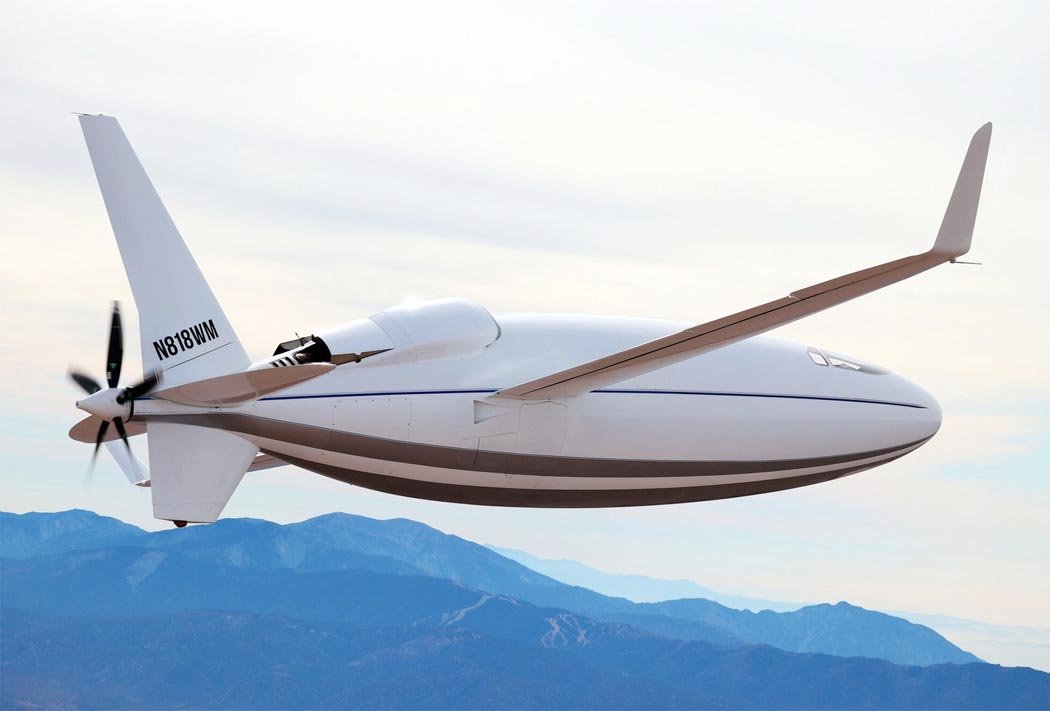
In 2018, a mysterious, futuristic-looking aircraft, unlike any known prototype, caused a minor industry stir when it was spotted at the Victorville airfield in California. Nobody knew what it was, and strangest of all, there were no military personnel around, meaning this secret machine was serviced and tested by civilian specialists.
After the first photos emerged, users of aviation forums conducted a full investigation. The registration number on the prototype’s tail revealed the name of the developing company: the mysterious Otto Aviation Group LLC, which had no track record and of which no one had ever heard. One of its founders is physicist William Otto, who worked at Rockwell International on the B-1 strategic bomber. Subsequently, a patent was found for an aircraft identical to the one spotted, and everything became much more interesting.
Revolutionary Aerodynamic Design
The Celera 500L features a bullet-like fuselage with superior aerodynamic properties. The streamlined, bullet-like shape of the Celera 500L creates a laminar flow behind the aircraft and reduces aerodynamic drag by 59% compared to a conventionally shaped aircraft of comparable size.
As a powerplant, it uses a 12-cylinder RED A03 aviation diesel engine with multi-stage turbocharging, boasting 550 hp and best-in-class energy efficiency. The engine drives a five-bladed, variable-pitch, scimitar-bladed pusher propeller. It was previously speculated that, in the future, this aircraft might be fitted with experimental alternative energy engines, such as electric or hydrogen.
The Celera 500L utilizes a very narrow, high-aspect-ratio wing with minimal sweep on the leading edge and upturned wingtips. The empennage includes an elliptical stabilizer, as well as a fin and ventral strake with straightened edges. Another interesting feature of the machine, described in the patent, is the multi-plane flap design, which allows for a wide range of wing geometry changes and, consequently, its aerodynamic characteristics. This would enable high lift for short-field takeoffs, then full retraction of the high-lift devices at high altitude to reduce drag losses.
Exceptional Performance and Efficiency
A new wave of interest in the strange aircraft arose in May 2019 when photos of the Celera 500L during high-speed taxiing at the airfield were published. This testing phase verifies the aircraft’s behavior in various ground modes. Since its first public appearance, the aircraft has acquired wingtips and two massive air intakes with elements resembling a bypass device in their rear part. This design suggests the use of the “Meredith Effect” to enhance flight performance—air passing through the engine radiators heats up and creates a small thrust that offsets the drag created by the cooling system.
The first flight of the Celera 500L took place in November 2019, and by the end of August 2020, 31 test flights had been conducted, after which the company announced that the machine had successfully completed flight tests. The company’s engineers justifiably believe that the aircraft they created is “the best thing that has happened in aviation and the travel industry in the last 50 years.”
Judge for yourselves: the experimental aircraft’s fuel consumption is 13 to 9 liters per 100 km of flight, roughly like a Honda Odyssey minivan and an order of magnitude less than comparable business jets. Plus, it uses a relatively simple Red A03 piston engine. All this reduces operating costs from $2100 to $328 per flight hour.
The Celera 500L covers 8300 km, which is twice as much as the popular Citation CJ3+ jet. This means it can fly from New York to Los Angeles using only half a tank. The speed, by the way, is almost like the CJ3+: 740 km/h. Outstanding fuel economy allows for a 30% reduction in emissions, and the glide ratio is 22:1, meaning the aircraft can glide for 200 km from an altitude of 10 km with the engine off.
Future and Potential Applications
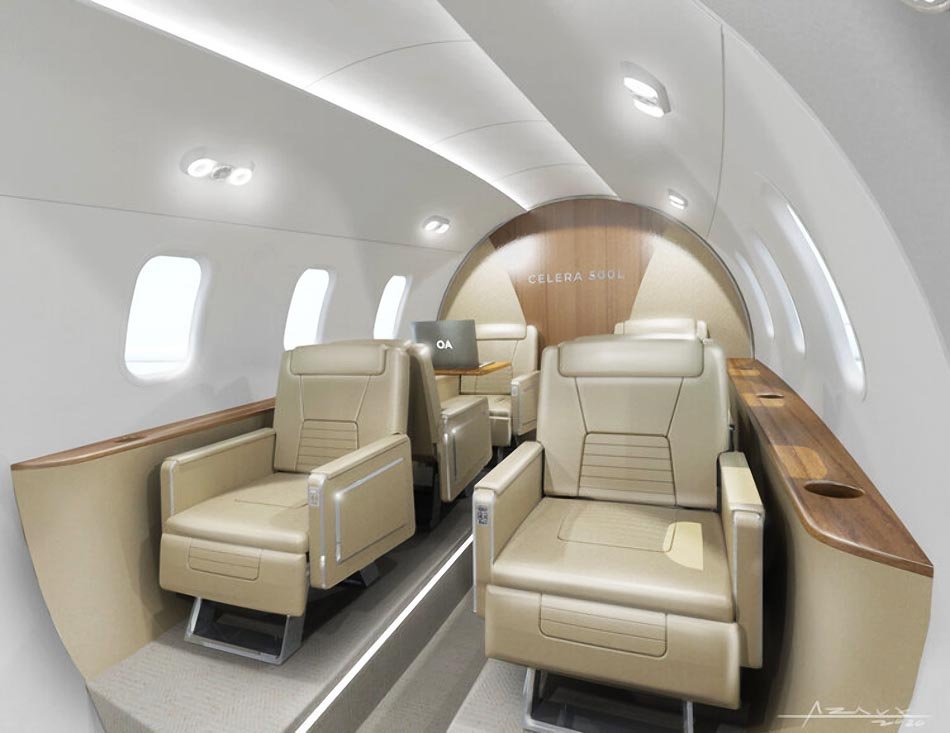
In addition to its use as a business jet for six passengers, who are accommodated in a comfortable cabin allowing one to stand upright if desired (188 cm high, about 5 m long, and a total volume of 12.7 cubic meters), potential applications for the Celera 500L include air taxi, light cargo aircraft, and drone. Military use is also possible. There is also a project for a Celera 1000L, which is 20% larger than the smaller version.
All these achievements were made possible by the unusual, bullet-like fuselage shape with small, narrow wings and upturned wingtips. It provides 59% less drag. The downside of such a design is that it cannot be scaled up to a full-size airliner—the length-to-width ratio cannot be violated.
According to founder William Otto, such an aircraft could be chartered by individuals and families at prices close to commercial passenger airline tickets, but with the benefits of private jets. Otto Aviation plans to obtain FAA certification by 2023 and establish production to begin aircraft deliveries to customers by 2025. In the first flight prototype, windows are only in the cockpit and the side door, but in the final version, they will also be in the middle part of the fuselage where the six passengers will be seated in two rows. In addition to the passenger version, the company also plans to create two cargo versions capable of accommodating D-class aviation cargo containers. One will be based on the standard Celera 500L, and the second, the Celera 1000L, will have a fuselage 20% larger in volume.
Technical Specifications
| Modification | Celera 500L |
| Engine type | 1 Diesel engine RED A03 |
| Power, hp | 1 х 550 |
| Cruising speed, km/h | 740 |
| Practical range, km | 8300 |
| Practical ceiling, m | 9144 |
| Crew, crew members | 2 |
| Payload | up to 6 passengers |
Image gallery of the Celera 500L