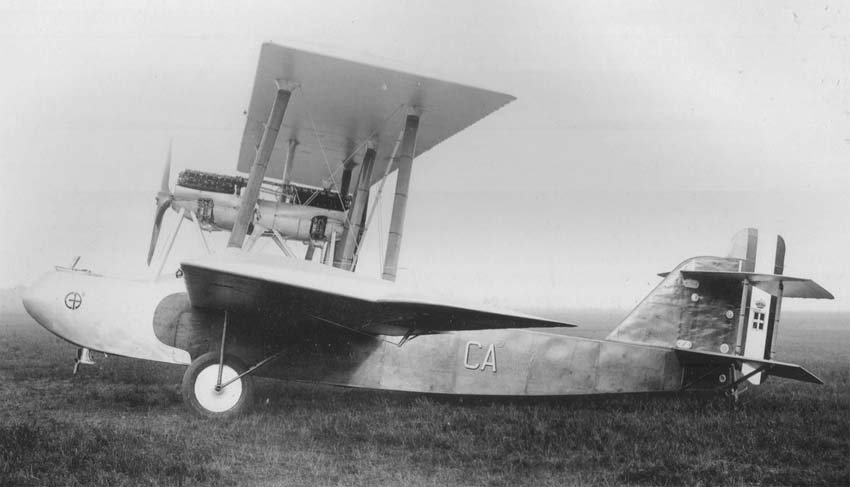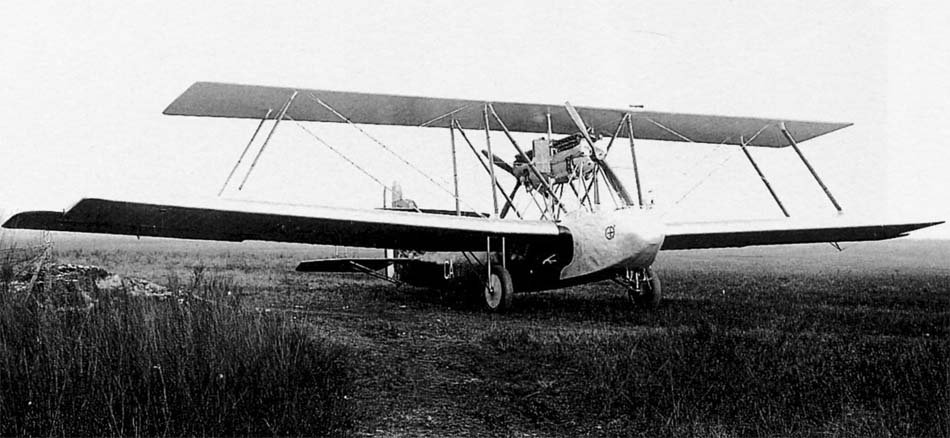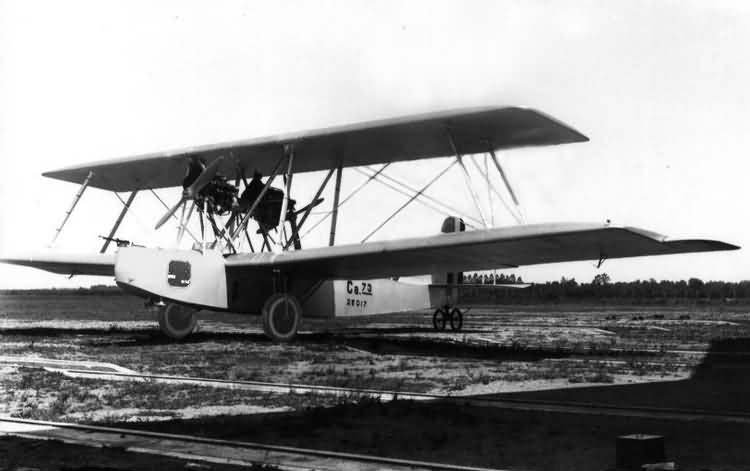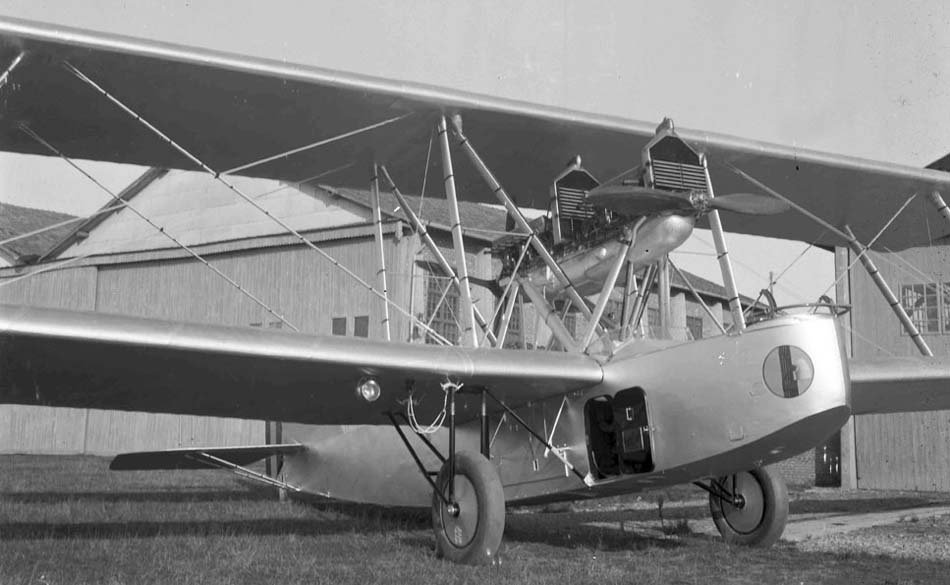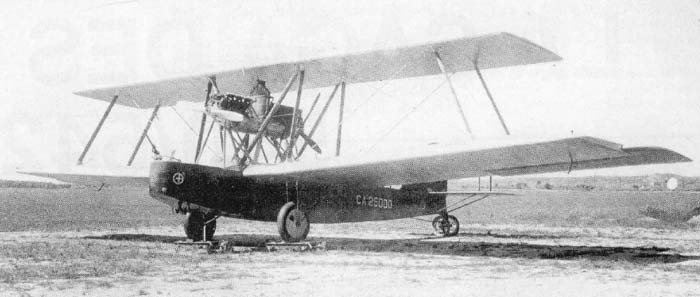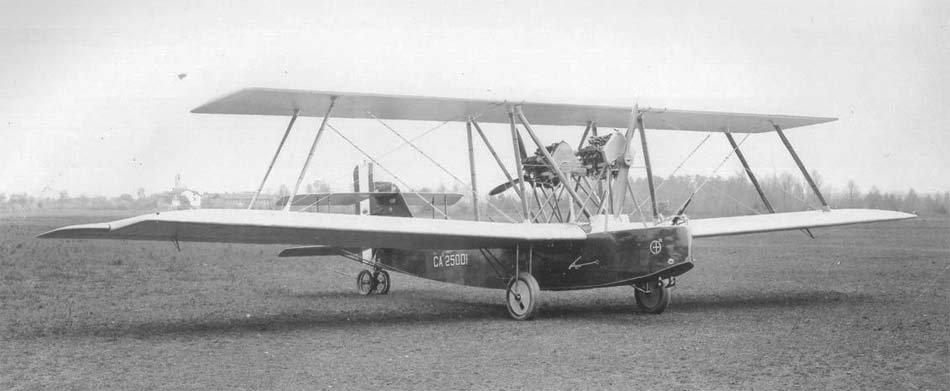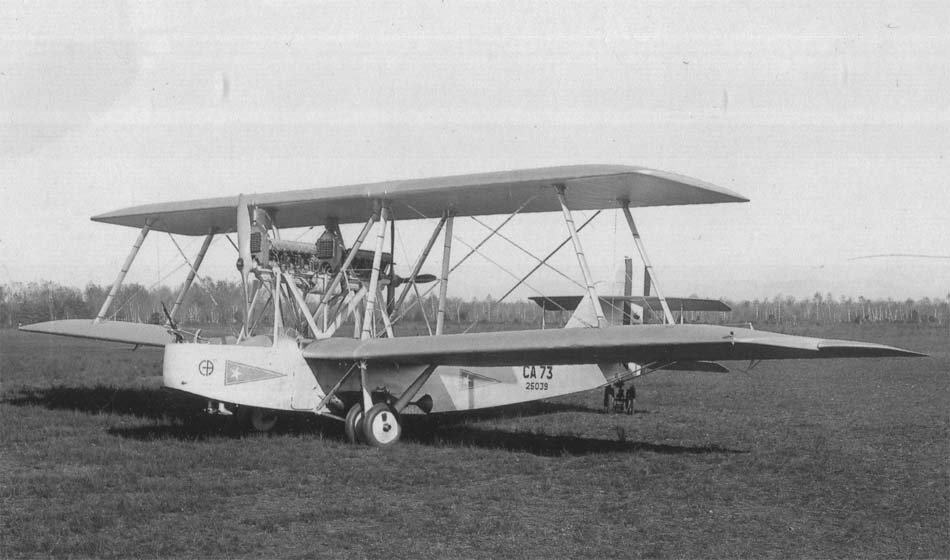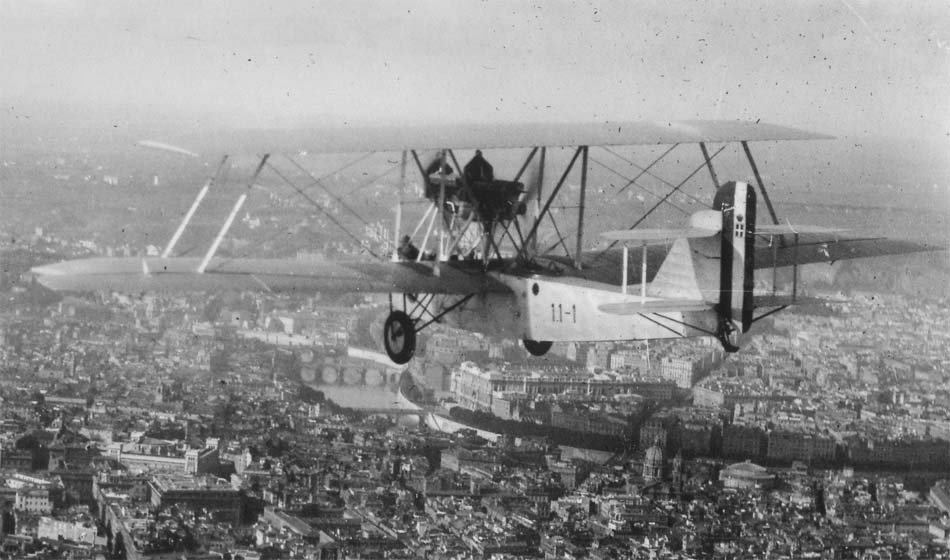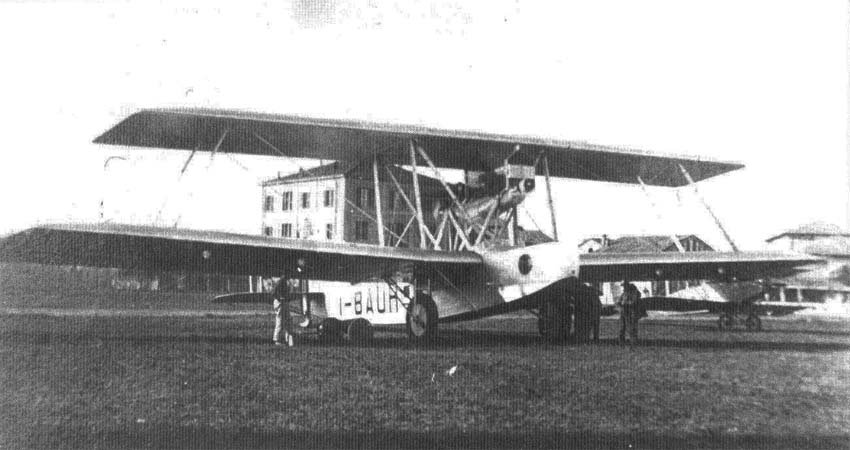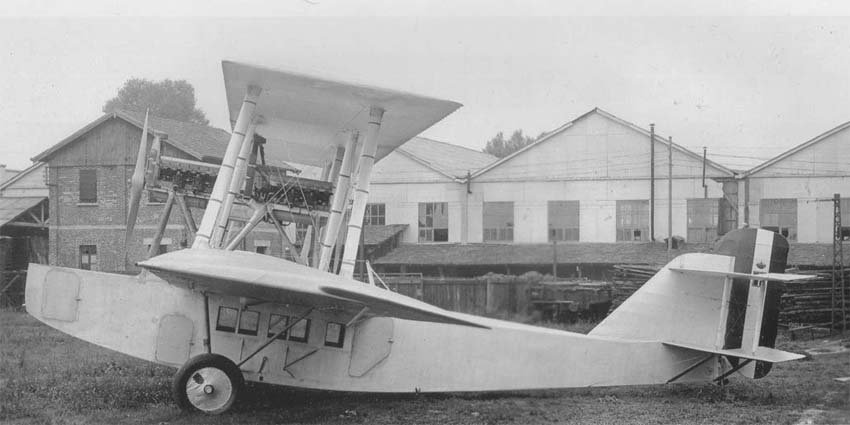
In 1925, the Caproni design team, led by Rodolfo Verduzio, engineered the Ca.73Bi.B (bimotore bombardamento), a twin-engine bomber featuring a wooden frame and wings arranged in an unusual inverted sesquiplane configuration, where the lower wing was significantly larger than the upper one. The lower wing, with a span of 24.99 m, also incorporated aerodynamically balanced ailerons. Two 400 hp Lorraine-Dietrich engines, mounted in tandem between the wings on steel tube struts, rotated two-bladed wooden propellers.
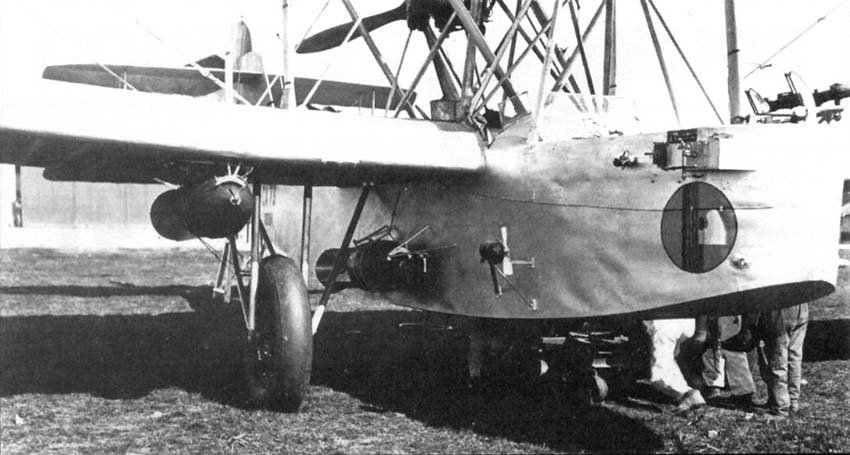
The 15.08 m long fuselage had two stabilizers and a single rudder. One machine gun was installed in the nose for the bombardier, who also served as navigator and observer. A second machine gun was positioned behind the pilot’s cockpit, and a third was mounted under the fuselage. Bombs were suspended externally from the fuselage, next to the open cockpit, where the commander and co-pilot sat side-by-side.
With a standard five-ton load, the Ca.73Bi.B achieved a maximum speed of 202 km/h, a service ceiling of 4,600 m, and a range of 748 km.
Operational History of the Ca.73
The aircraft’s first flight took place in 1925, and serial production commenced later that same year. Starting in early 1926, the Ca.73 began to enter service with the bombing units of the Italian Air Force (Regia Aeronautica). Several dozen aircraft were produced, with the last one being withdrawn from regular units in 1934.
Variants and Developments
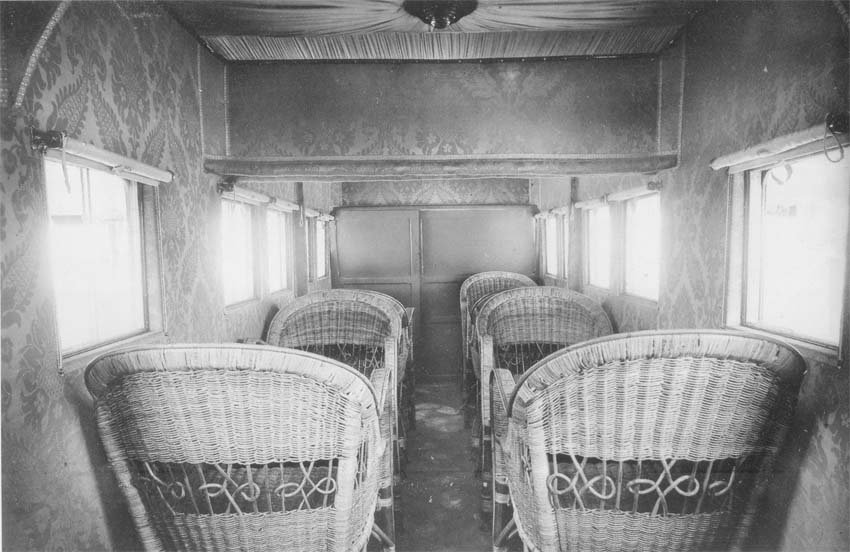
The Ca.73bis, built in 1926, utilized more powerful 440 hp Lorraine-Dietrich engines, while the Ca.73ter featured 490 hp Isotta-Fraschini engines. A transport version of this aircraft was designated Ca.82, and the Ca.82Co. (coloniale) version, adapted for operation in the harsh conditions of Italy’s African colonies, was also built.
Technical Specifications
| Modification | Са.73 |
| Wingspan, m | 25.00 |
| Length, m | 15.10 |
| Height, m | 5.60 |
| Wing area, m2 | 142.00 |
| Empty weight | 3200 |
| Normal takeoff weight | 5600 |
| Engine type | 2 Piston engine Lorraine Dietrich |
| Power, hp | 2 x 400 |
| Maximum speed, km/h | 175 |
| Cruising speed, km/h | 154 |
| Practical range, km | 650 |
| Practical ceiling, m | 4600 |
| Crew, crew members | 4 |
| Armament | three 7.7-mm machine guns, bomb load – up to 1000 kg |
Image gallery of the Caproni Ca.73